Why Regular Chimney Inspections Are Essential For Home Safety And Maintenance
Discover why regular chimney inspections are essential for home safety, helping identify fire hazards, structural damage, blockages, and maintenance issues before they worsen.

According to figures analysed by HETAS (the Heating Equipment Testing and Approval Scheme) and reported by the BBC on September 1, 2025, Devon and Somerset fire crews responded to 181 chimney fires between April 2024 and March 2025, the highest total recorded in any English region that year. Dorset and Wiltshire followed with 113 call-outs over the same period. Numbers like these show that open fires and wood burners still carry real risk when a flue is neglected.
Most chimney fires trace back to the same cause: a build-up of soot, tar, or creosote left to accumulate over one or more burning seasons. A trained eye can usually spot the warning signs long before smoke starts filling a room, which is exactly why homeowners are told to inspect chimney flues before winter rather than after a problem appears.
How Often Should You Inspect Chimney Structures In A UK Home?
Most manufacturers and fire safety bodies recommend having a flue checked once a year, ideally before the heating season begins. A single annual visit catches the majority of blockages, cracked linings, and nesting debris before they become dangerous. Wood-burning stoves used daily may need a mid-season look as well, since resinous or unseasoned timber builds up deposits faster than seasoned hardwood.
Frequency also depends on fuel type:
Wood burners: at least once a year, twice if used heavily through winter
Smokeless coal or solid fuel: once a year
Gas fires: once a year, since carbon build-up is less visible but still occurs
Oil-fired systems: once a year, usually alongside a boiler service
Skipping a season rarely causes an immediate problem, but two or three years without a check is when small issues turn into structural ones. A chimney inspection at that stage tends to reveal cracked mortar joints, a collapsed liner section, or a blocked cap nobody knew was there. Fire services in Essex and Shropshire have both urged residents to inspect chimney flues annually rather than waiting for visible smoke or a burning smell.
What Do Chimney Inspections Check For, Exactly?
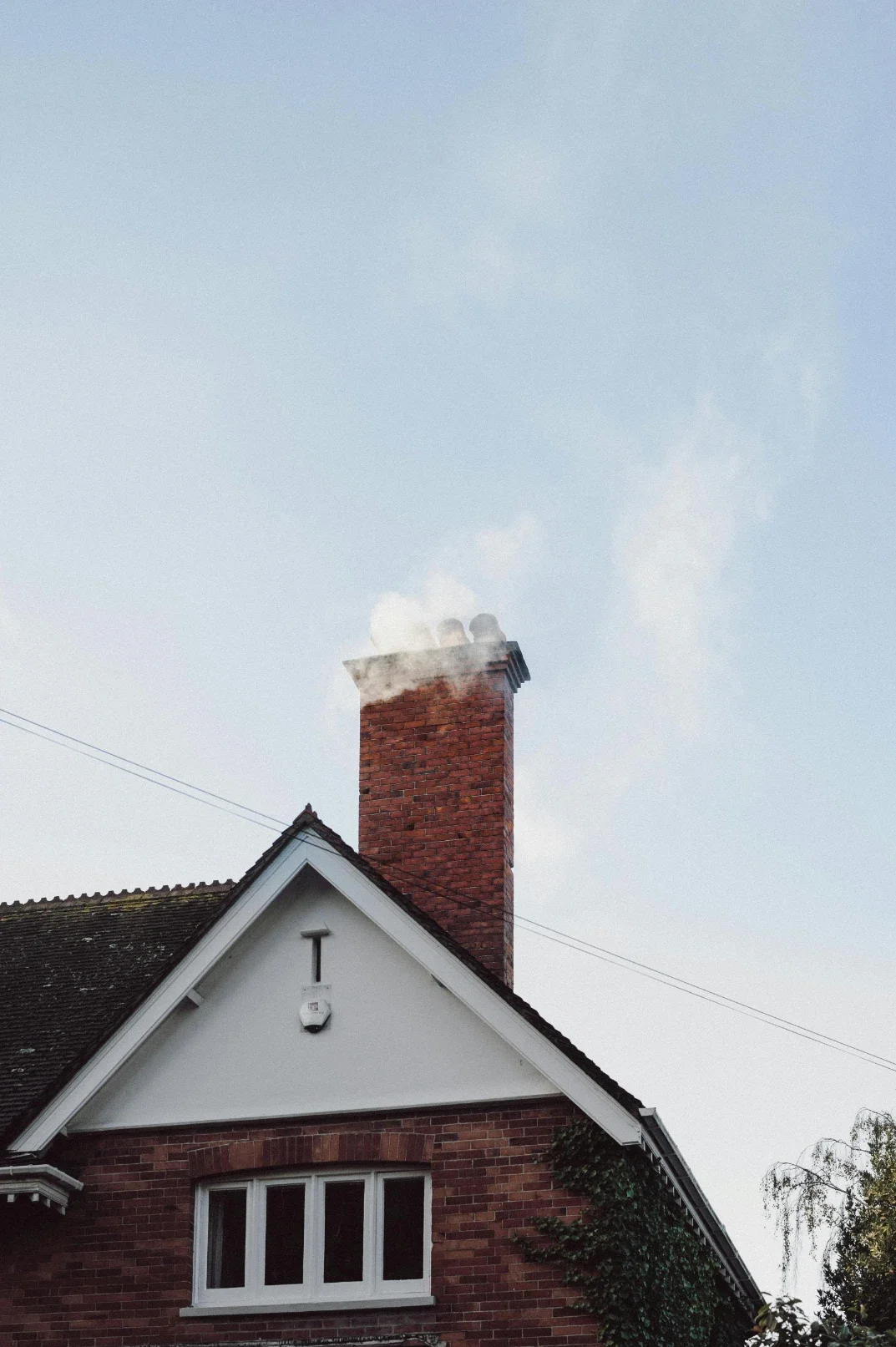
A proper visual and camera survey covers far more than surface soot. Technicians look at the full run of the flue, from the fireplace opening to the chimney pot, along with the external brickwork and the roof penetration point.
Structural Integrity Checks
Cracked mortar, spalling brick, and a leaning stack are the items most likely to affect the safety of the whole roofline. Left unaddressed, a damaged stack can shift under wind load and eventually fail.
Flue Liner Condition
Clay, stainless steel, and cast-in-place liners each degrade differently. Heat cycling causes hairline fractures over time, and once a liner is compromised, combustion gases can migrate into surrounding masonry.
Signs Of Water Damage
Rain intrusion is one of the most common findings during any thorough chimney inspection uk homeowners book. Missing flashing, a cracked crown, or a lost pot cap lets water track down inside the stack, which speeds up frost damage and can rot nearby timber joists.
Why Do Chimney Fires Still Happen Across Britain?
Chimney fires persist mainly because sweeping and checking get pushed to the bottom of the seasonal to-do list. Fire services in Essex, Devon, Somerset, and Shropshire have each published local figures showing several hundred call-outs a year, most tied to unswept flues or unseasoned fuel.
A few recurring causes show up across nearly every regional report:
Burning green or unseasoned wood, which leaves tar deposits behind
Overnight fires left to smoulder instead of burning down fully
Birds' nests or leaf litter blocking the flue during warmer months
Damaged cowls or caps that let debris and rain enter unchecked
None of these are unusual or hard to prevent. They show up repeatedly because the flue was never opened up and looked at closely enough to catch them early.
What Does Chimney Inspection Cost UK Homeowners?
Pricing varies by property type, access, and whether a CCTV survey is needed, but most homeowners can expect a fairly predictable range for a standard visit. A basic sweep and visual check sits at the low end, while a camera survey costs more but gives a clearer view of the liner's condition. Anyone comparing chimney inspection uk quotes should ask exactly which of these is included before booking.
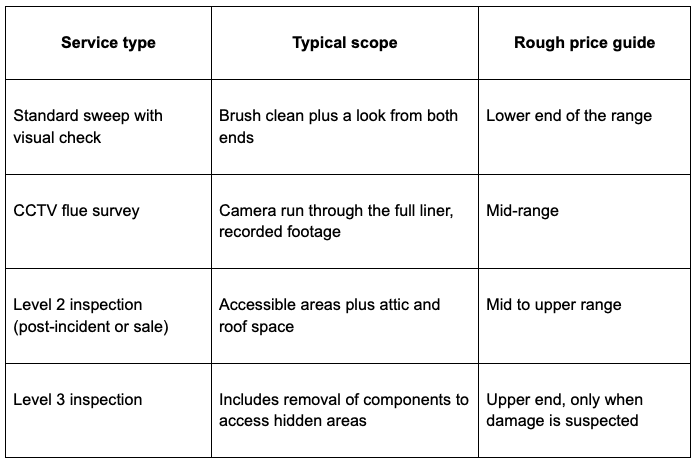
Homeowners selling a property, insuring a new build against an older chimney, or reopening a flue after years of disuse are usually pointed toward the more thorough survey options. A rough chimney inspection cost uk-wide sits well below the cost of repairing water damage or rebuilding a collapsed stack, which is the real comparison worth making.
When Should You Book A Professional Chimney Inspection?
Timing is more important than most homeowners assume, since booking late in the season means competing for appointments with everyone else who left it to the last minute.
Book before the heating season starts, ideally in late summer, before demand for sweeps peaks.
Clear the hearth area so the technician has full access to the fireplace opening.
Mention any recent symptoms, such as smoke drifting back into the room, before work begins.
Allow access to the loft or roof space if the stack needs checking from above.
Ask for a written report, including photos or footage if a survey was carried out.
Address any flagged repairs before the next fire is lit, rather than waiting a year.
Keep the certificate on file, since insurers and buyers often ask for proof of maintenance.
Frequently Asked Questions
Can a chimney be used safely between scheduled checks if no problems turned up last time? Generally yes, provided the fuel burned is dry and appropriate. Watch for smoke smell, staining, or draught changes in the months between visits regardless.
Does a gas fire need the same attention as a wood burner? Gas systems produce far less soot but can still develop blockages from debris or nesting, so an annual check remains standard practice even without visible tar.
What qualifications should a technician hold? Look for membership with a recognised body such as HETAS, the Guild of Master Sweeps, or NACS, which usually indicates ongoing training on current standards.
Is a survey necessary before fitting a new stove into an existing chimney? Most installers require a liner survey first, since an older flue may not be rated for the appliance, and skipping this step can invalidate a warranty.
How long does a typical visit take? A standard sweep and visual check usually takes under an hour, while a CCTV survey can run closer to ninety minutes depending on the flue.
Do thatched properties need extra attention? Yes. Fire services in the South West flag thatched roofs as higher risk, since a spark escaping through a damaged stack has a shorter path to combustible material.
Will home insurance ask for proof of recent maintenance? Some insurers request documentation after a claim involving fire or smoke damage, so keeping receipts and reports on file is worth the small effort.
Stay up to date with our latest ideas!