What Is My Decorating Style? A Practical Way to Find Out Before You Buy
Discover 6 of the best fixed and opening skylight suppliers for flat roofs in 2026, with key features, options, and tips for choosing the right supplier.
Most people who ask "what is my decorating style?" have already tried the obvious routes. They've taken a quiz that told them they're "Modern Farmhouse with a Boho Twist." They've saved three hundred images to a board called Dream Home. And they still stand in a furniture store unable to decide between the oak dining table and the black metal one.
The trouble is that liking a style and living with it are two different things. A room you admire online was photographed in someone else's light, with someone else's ceiling height, often by a professional stylist who removed the charging cables and the dog bed. Your room has its own proportions, its own window, and a floor you probably didn't choose.
So instead of asking which style you like, it's more useful to ask which style works in the space you actually have. Here is a practical way to get to that answer before you spend money.
Why your saved images keep contradicting each other
Open any collection of saved interiors and you'll usually find a mix that doesn't add up: a stark Scandinavian kitchen next to a dark, moody library, next to a sun-bleached coastal bedroom. That's normal. You are reacting to moods, colours and single objects, not to whole rooms you'd have to live in every day.
Rather than treating the board as a verdict, treat it as raw material. Go through it and write down what you notice in each image, not the style label. "Lots of natural wood." "One big plant." "Nothing on the coffee table." "Warm lamp light." After twenty or thirty images, patterns appear that are far more useful than any label. You might discover that you love bare surfaces and warm wood, regardless of whether the room is called Japandi or mid-century.
See a style in your own room early
This is the step most people leave until last, when it should come near the start. A style has to be seen in your room, with your window and your floor, before you know whether it works.
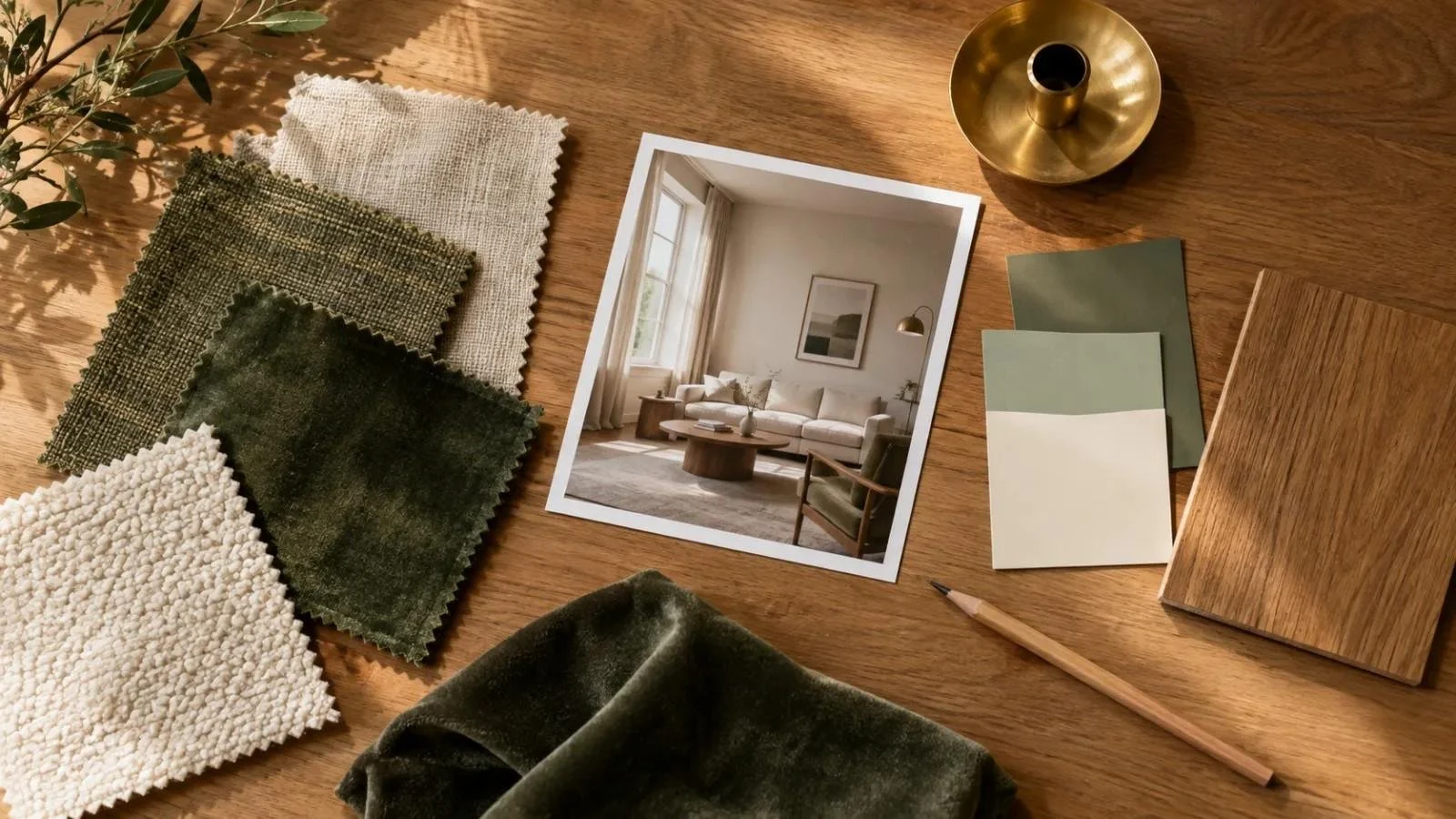
There are low-tech ways to do this. Bring home paint samples and fabric swatches and look at them at different times of day. Borrow a lamp or a throw from another room and see how it changes the corner. But swatches only show fragments, and most of us struggle to picture a whole furnished room from a square of fabric.
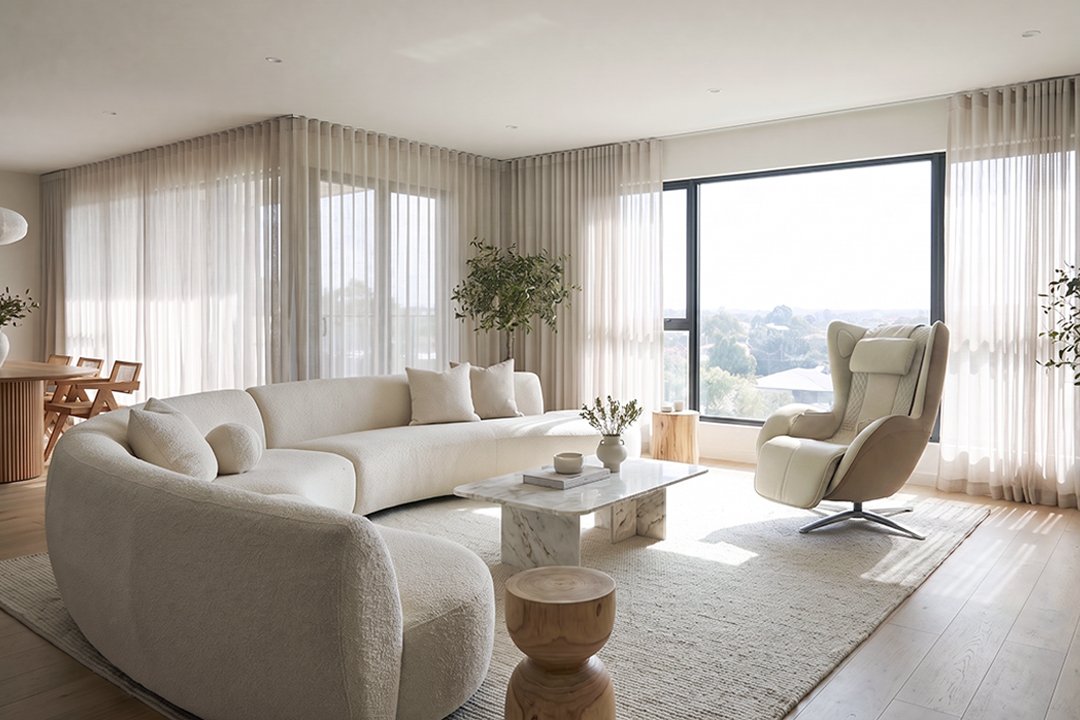
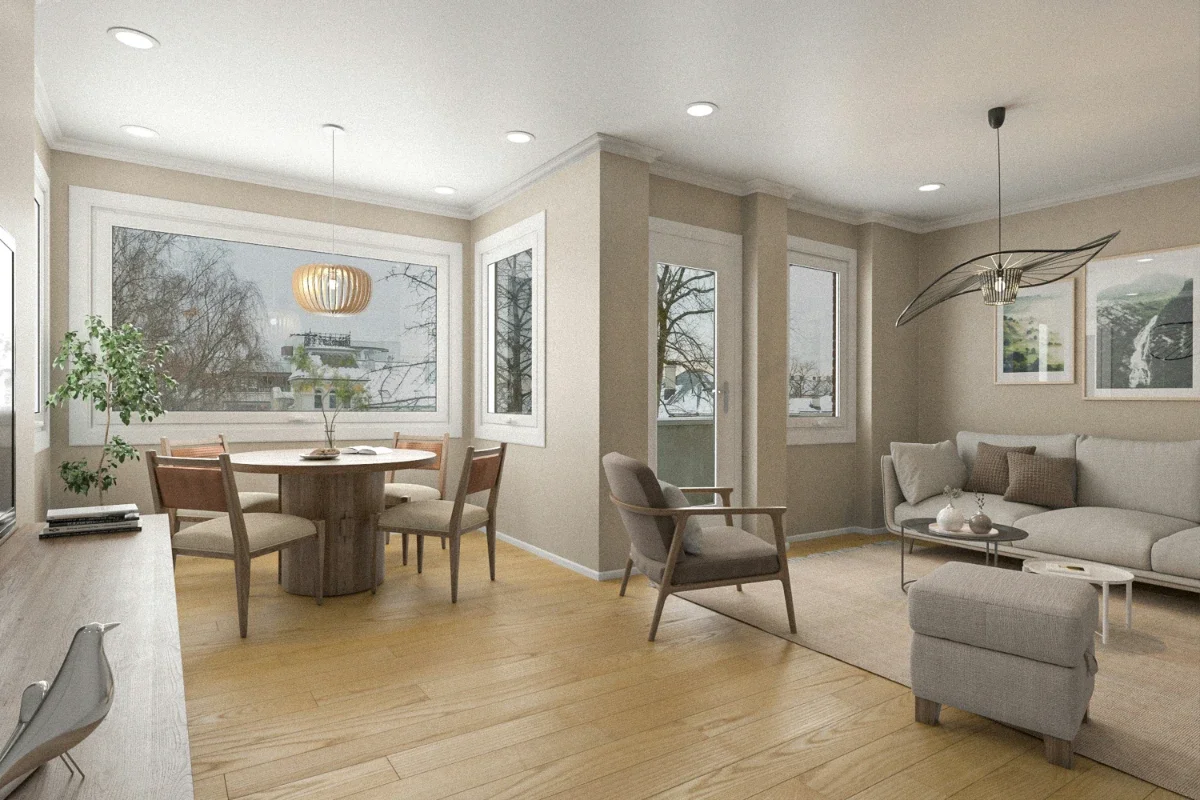
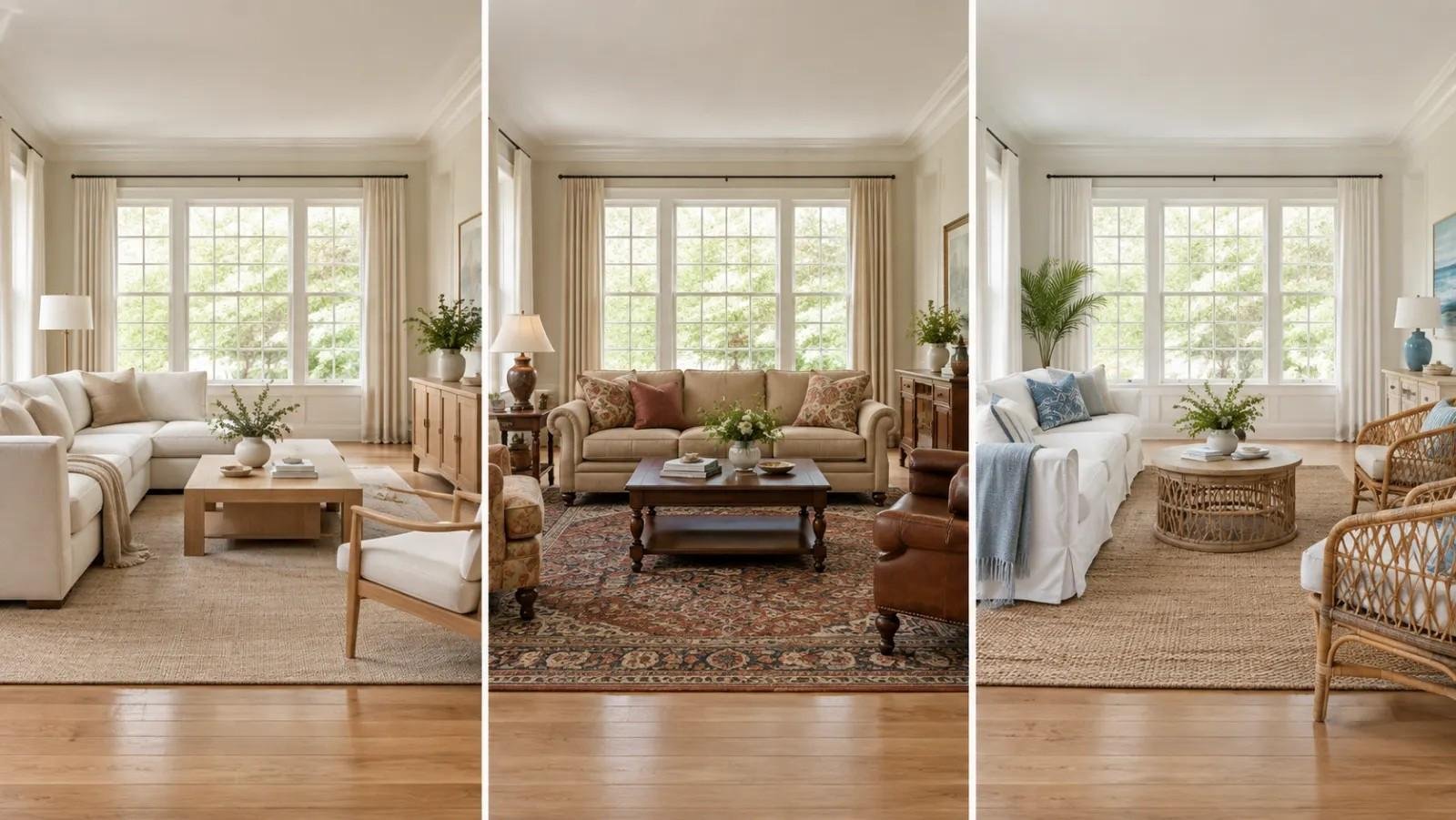
A faster route is to see the full room. InteriorStage AI, an AI room design tool for empty spaces, lets you upload a photo of an empty room and generate the same space furnished in a chosen style, so you can compare, say, a warm minimal version against a traditional one and a coastal one without moving a single chair. The walls, windows and floor stay as they are in your photo; only movable furniture and decor are added. Seeing three versions of your own living room side by side cuts through a lot of indecision, because your reaction is immediate. One will feel like home and one will feel like a hotel lobby.
Treat those images as a way to choose a direction, not as a shopping list. They show a mood and a mix of pieces, not exact products or measured dimensions.
Start with what you already own
Once you've seen a few directions in your own room, check them against the things you already live with.
The pieces you've kept through several moves say a lot about your taste, because you chose them with your own money and haven't got rid of them. Look around at the rug you still like, the chair you always end up sitting in, the mug you reach for first.
Ask a few simple questions about those objects:
Are they mostly light or dark?
Are the shapes rounded or straight-edged?
Are the materials natural, like wood, linen and wool, or sleek, like metal, glass and lacquer?
Do you prefer pattern, or plain surfaces with texture?
Your answers won't give you a style name, but they will narrow the field. Someone whose favourite things are rounded, warm-toned and textured is unlikely to be happy in a cold, glossy minimalist scheme, however striking it looks on a screen.
Use elimination instead of inspiration
It is often easier to say what you don't want. Go back to your list of styles and cross out anything that clashes with how you live. If you have young children or a large dog, all-white upholstery and glass tables are probably out. If you work from home and need calm, a maximalist room full of colour and collections may be tiring by Wednesday. If you hate dusting, open shelving filled with objects will become a chore.
Elimination is useful because it's grounded in routine rather than fantasy. Two or three directions usually survive this step. Those are your real candidates, and the ones worth rendering again in your own room before you commit.
It also helps to think about the whole home rather than one room. A style that works in a sunny living room may feel flat in a north-facing bedroom, and a bold scheme in a small hallway can clash with the calmer rooms either side of it. Walk through the house and imagine moving from room to room. The surviving style should make sense as you pass through doorways, even if each room has its own accents.
Mixing styles without losing the thread
Very few homes are one pure style, and they don't need to be. The rooms that look deliberate usually follow a simple idea: one style leads and the others support it. Many designers describe it as an 80/20 split. Most of the room, including the big furniture, the main colours and the overall shapes, follows the dominant style. The remaining fifth brings in contrast through a vintage chair, an unexpected lamp or a patterned rug.
The key is choosing which style is in charge. If your testing showed that the warm minimal version felt best, let that decide the sofa, the flooring treatment and the palette. Your love of antiques can then appear in one or two carefully chosen pieces instead of competing for every surface.
A few connecting threads help different styles sit together:
repeat one material, such as oak or brass, in several places
keep a limited colour palette and let texture add interest
balance heavy pieces with lighter ones so no corner feels crowded
Turn your style into buying rules
Once you know the direction, write it down as a short set of rules. This sounds rigid, but it saves money and prevents impulse purchases that don't fit.
A set of rules for a warm minimal living room might read:
Natural wood in mid to light tones, no high gloss.
Neutral base colours, with sage green as the only accent.
Rounded shapes for seating, simple lines for storage.
No more than three decorative objects on any surface.
When you're standing in a shop or scrolling late at night, those four lines make decisions quicker. You check whether an item fits the rules before checking whether you like it on its own. The result is a room where pieces bought months apart still look as though they belong together.
Let the style settle over time
Budget shapes style more than most guides admit. If you can only buy a few pieces this year, spend on the ones that set the direction: the sofa, the dining table, the bed and the largest rug. Smaller accessories can be cheap, borrowed or found secondhand while you wait, and they're easy to replace once the big decisions are made. A room built around four well-chosen anchors looks intentional even when half the corners are still empty.
Your decorating style isn't a test result you receive once. It shows up gradually, as you live in a space and notice which corners you use and which pieces you keep. The goal of all this is not to box yourself in with a label but to make your first big purchases with confidence and leave room for the rest to evolve.
See a few directions in your real room early, check them against what you already own, cross out what doesn't fit your life, and write down the rules that come out of it. By the time the sofa arrives, you'll already know it belongs.
Stay up to date with our latest ideas!