Learn how to style bookcases and display cabinets with a balance of decorative accents, organized storage, and practical design ideas for a clutter-free home.
A bookcase styled for a photo and a bookcase used every day are often two different things. The styled version has airy shelves, a few carefully placed objects, and books arranged in tidy color bands. Then daily life arrives. The novel you want is wedged behind a ceramic vase, the charging cables have nowhere to go, and the open shelf meant for display has quietly become a landing spot for mail, remotes, and receipts.
You don't have to choose between shelves that look considered and shelves that work. The approach that tends to hold up is deciding what each shelf is for before deciding how it should look. Styling belongs at the end of the process, not the beginning.
Start by Sorting What You Actually Reach For
Before rearranging anything, take stock of what lives on or near your shelves and sort it into three rough groups.
The first is what you use often: the books you're reading or return to, reference titles, the cookbooks you actually cook from, the board games that come out every weekend. These deserve the easiest access, usually the shelves you can reach without crouching or stretching.
The second is what you want to see: a small pottery collection, framed photos, travel souvenirs, a few art books with beautiful covers. These earn their place by being looked at, so they belong where the eye naturally lands. They don't need to be within easy reach unless you handle them.
The third is what you need to keep but would rather not look at: chargers, paperwork, spare batteries, craft supplies, the overflow paperbacks you keep for sentimental reasons. These are what make open shelving look cluttered, and they are the strongest argument for some closed storage.
The sorting isn't permanent. A book you finished last month can move up a shelf; a seasonal object can rotate out. It also isn't mandatory. If you have very little to hide, or your collection is mostly working books, forcing three categories can waste space you'd rather give to books.
Match the Cabinet Type to the Job
Once you know what you're storing, the type of furniture shapes how well any arrangement will work.
Open bookcases are the most flexible and the quickest to use. Everything is one motion away, which suits books in active rotation and households where people grab things in a hurry. The trade-off is that nothing is hidden: every stray item shows, and dust settles on books and objects alike. Open shelving makes sense when the contents are mostly things you're happy to look at.
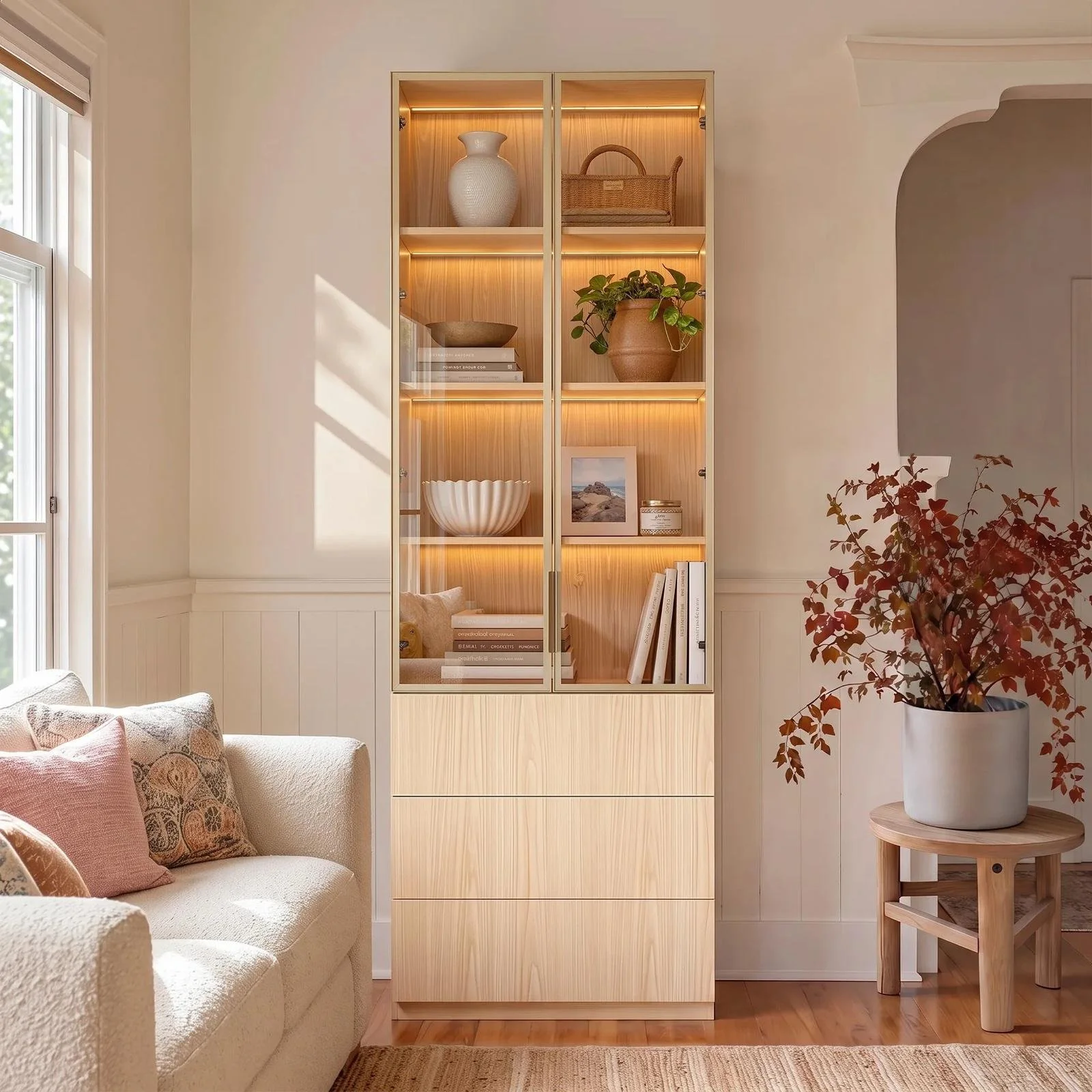
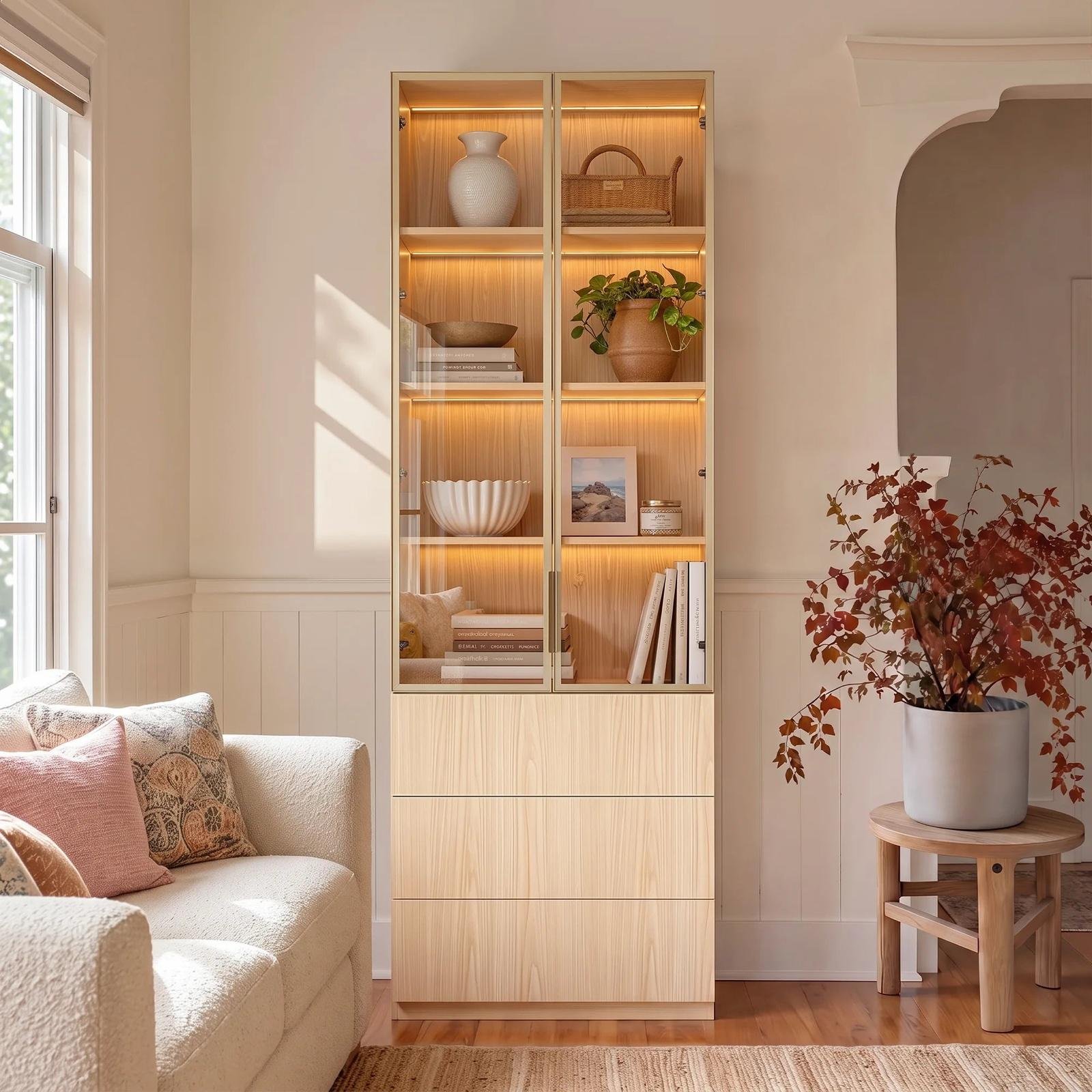
Glass-door display cabinets keep the view but add a barrier. That suits objects you rarely touch and would rather not dust every week, such as glassware, ceramics, or collectibles. It's less convenient for books you pull out daily, since opening a door each time adds friction. Glass also shows whatever is behind it, so a glass-front cabinet crowded with mismatched items can look busier than an open shelf. Some display cabinets include interior lighting that helps objects read in the evening, but that varies from piece to piece, so check the specific product rather than assuming it.
Pieces with closed storage, whether solid doors or drawers, handle the things you'd rather not see. Paperwork and cables disappear, and the shelves above can stay calmer. The catch is that whatever goes behind doors is easy to forget, and drawers drift toward junk-drawer status without some internal order. If you're comparing configurations, looking through HOMSEE’s bookcases and display cabinets shows how open shelving, glass fronts, and drawers or doors are combined in different pieces. Details such as materials and shelf adjustability vary by item, so read each product's own specifications.
Many homes end up with a mix: open shelves for everyday books, a glazed section for display, and closed storage low down for everything else.
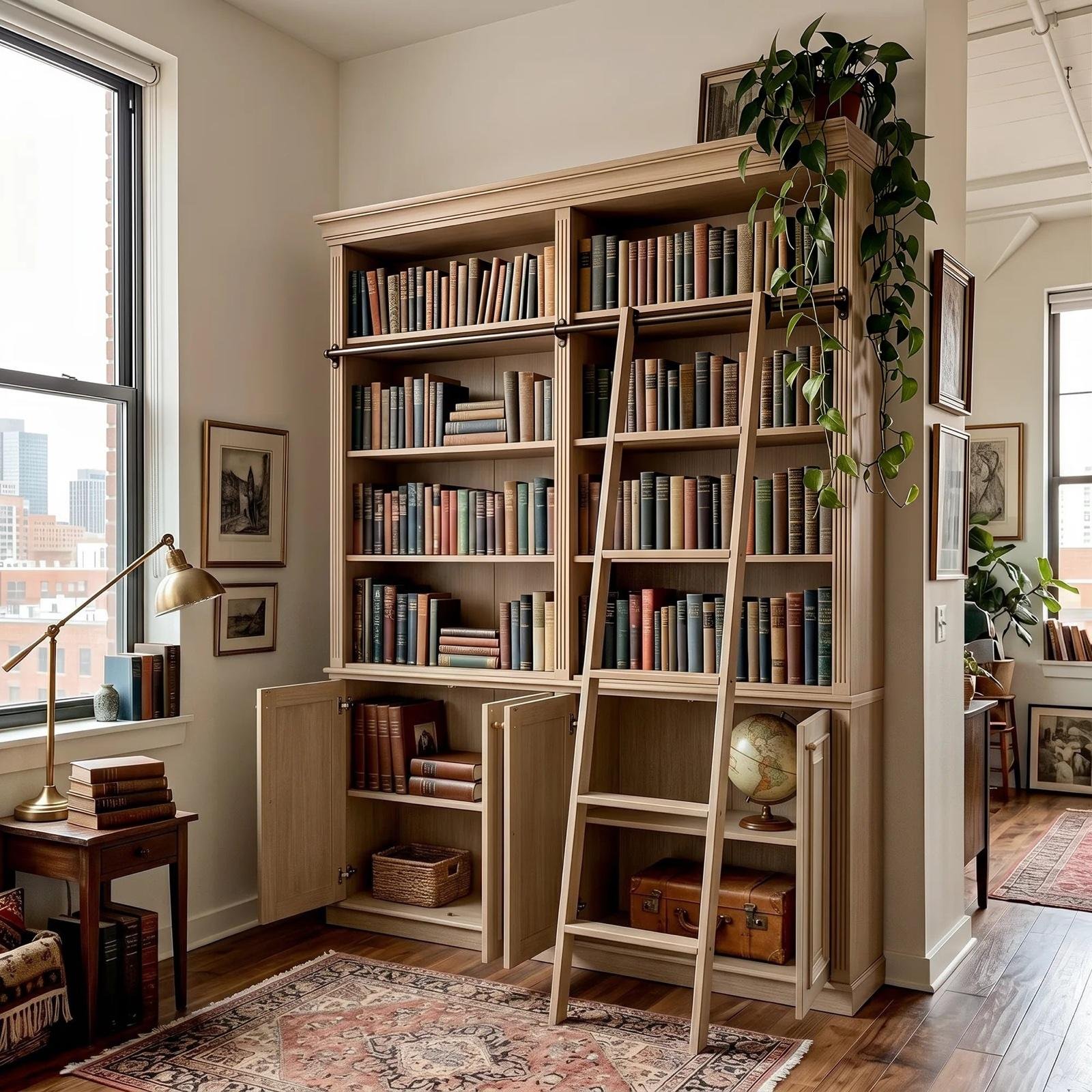
Layer Books and Objects So You Can Still Grab Them
Shelves that look natural usually combine a few arrangements rather than repeating one. Upright rows are the most efficient way to store books and the easiest to browse, since spines are readable at a glance. A short horizontal stack breaks up a long row and can double as a bookend or a base for a small object. Photos and decorative pieces add contrast and a sense of who lives there.
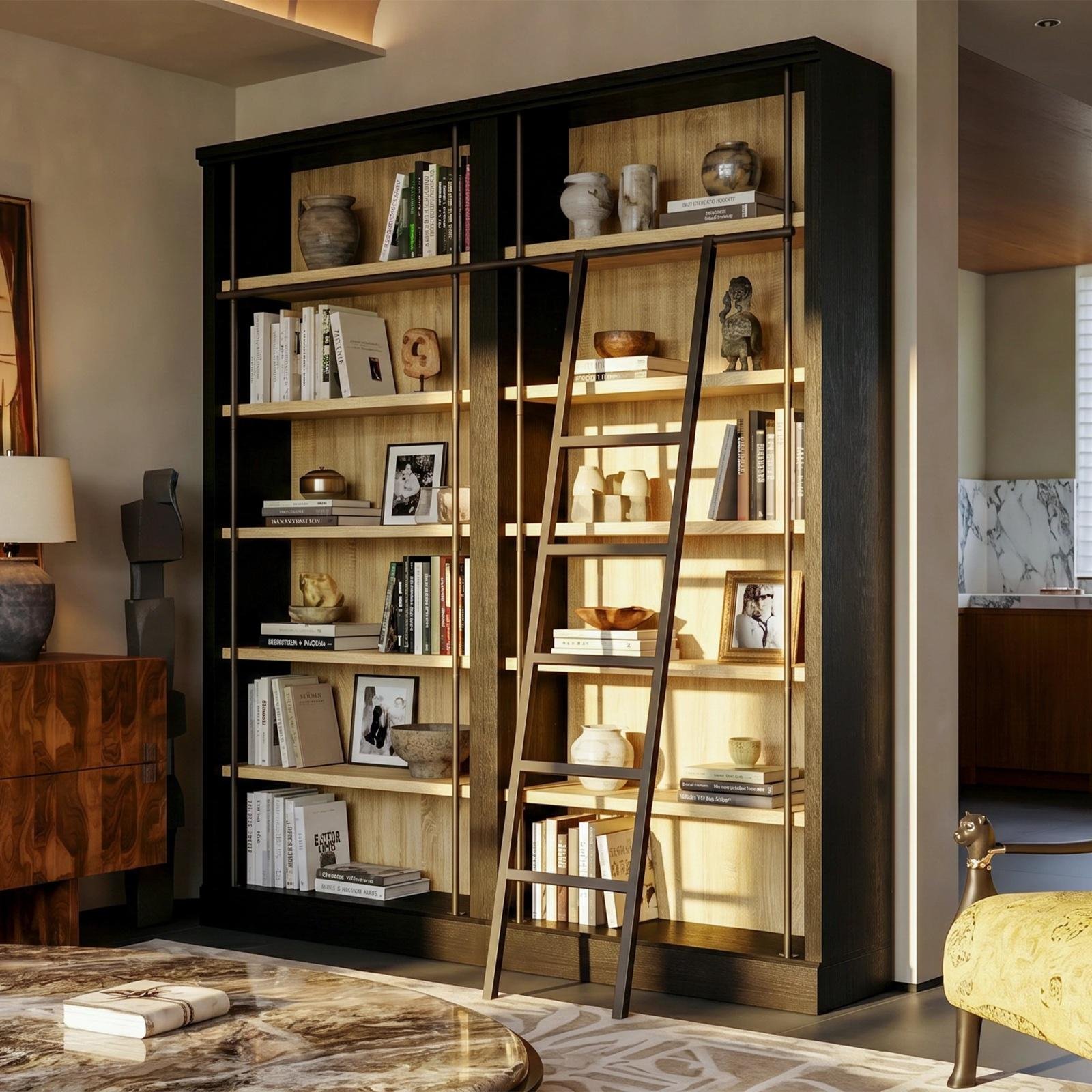
What makes this work day to day is deciding which shelves are mainly for books and which are mainly for display, instead of spreading objects evenly across every shelf. On a shelf of frequently used books, keep decorative items at the ends of rows or on top of a stack, never in front of spines. On a display-focused shelf, a few books can support the objects rather than the other way around.
Horizontal stacks have one practical drawback: the bottom book is awkward to remove. Save stacks for books you rarely open, such as oversized art or coffee-table volumes, and keep reading and reference books upright.
Leave some breathing room. A little empty space beside an object makes it easier to see and easier to move when you need the book next to it. There's no correct amount. If your collection is large and still growing, a shelf full of books can look intentional on its own, and that's a reasonable choice. Heavy stacks are worth a quick check against the manufacturer's guidance on shelf load, and tall units should be secured with the anti-tip hardware and instructions that come with them, taking your wall type into account.
Two Hypothetical Setups
Imagine a living room in a household that reads a lot. The shelves at a comfortable height hold current reads and favorites, grouped by author or genre so they're easy to find. Upper shelves hold books that stay in the collection but rarely come down. A few objects, perhaps a plant and a framed photo, sit at the ends of rows instead of in front of them. If the bookcase has a closed lower section, it might take remotes, coasters, and throw blankets, the things that otherwise creep onto the shelves. The display is light by design, because the books are the decoration.
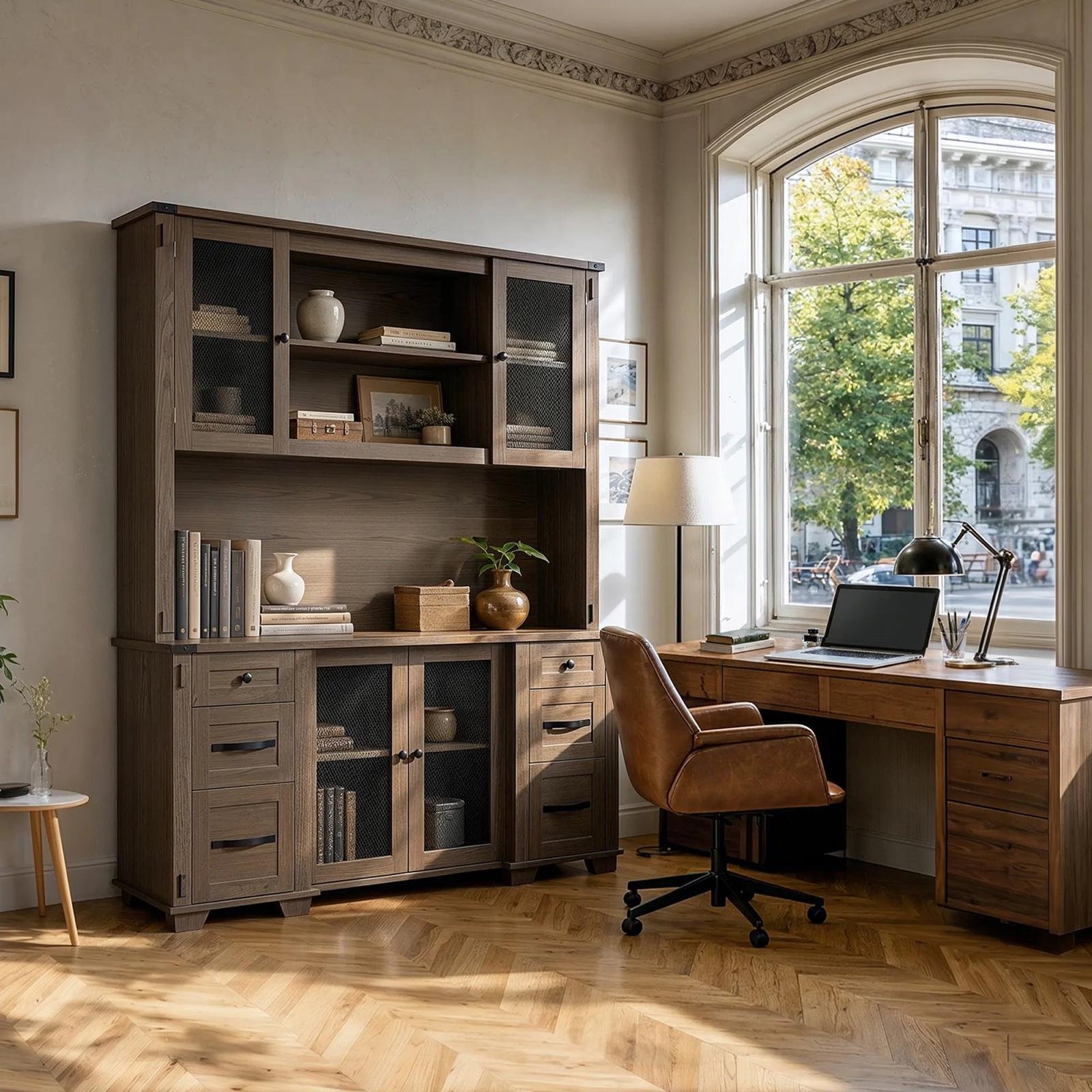
Now picture a home office that needs to hold files and supplies while still looking presentable on video calls. Here closed storage does more of the work. Printer paper, folders, and cables go into drawers or behind doors near the desk. Open shelves within arm's reach hold the binders and reference books used each week, clearly labeled. Higher shelves, or a glass-front section, carry the display: a few books with good covers, an object or two, maybe a framed print. The camera sees order, and the work stays within reach. Display space is limited, which makes sense when the room's main job is work.
Common Mistakes and How to Fix Them
Filling every shelf to the edge. When every inch is used, nothing stands out and returning a book becomes a wrestling match. Take a few items off each crowded shelf and decide whether they belong in closed storage, another room, or out of the house.
Decor blocking the books you use. A vase in front of the cookbooks looks fine until dinnertime. Move objects to the ends of rows, to higher shelves, or to a display-only section.
Too many small objects. Lots of little pieces read as clutter and take ages to dust. Group similar items on a tray or in a single cluster, or keep fewer, larger pieces. If you love a collection of small things, a glass-front cabinet can contain it visually.
Organizing only by color. Rainbow shelves photograph well, but if you can't remember a spine's color, finding a book becomes guesswork. Keep color arrangements for a display shelf or for books you rarely look up, and organize working books by author, subject, or use. If you genuinely remember books by their covers, color may work for you; what matters is how you search.
A Simple Routine for Setting Up and Keeping It Up
Work on one bookcase, or a few shelves, at a time so the job stays manageable.
Sort items into use often, display, and hide, and set aside what you no longer want.
Place everyday items at the easiest heights first, then put hidden items behind doors, then add display pieces.
Before loading heavy items, check the product's instructions on shelf load and anti-tip installation.
Step back and remove one or two things from any shelf that feels crowded.
Dust open shelves and wipe glass doors on whatever rhythm suits your home, and do a quick reset every few months: return strays, rotate display pieces, and move finished books to their long-term spots.
Stay up to date with our latest ideas!