Discover practical kitchen upgrades that improve functionality, safety, and efficiency, helping create a more reliable home with smarter storage, durable materials, and modern appliances.

A reliable kitchen combines thoughtful lighting, efficient storage, properly maintained appliances, and preparation for unexpected power outages. Practical kitchen upgrades do not necessarily require extensive renovations or expensive equipment.
Improving countertop visibility, organizing frequently used items, following manufacturer-recommended maintenance, and considering refrigerator backup power can make everyday tasks easier while reducing avoidable disruptions.
The most effective improvements address specific household needs, fit the available space, and remain manageable over time.
Easy Kitchen Upgrades for Better Lighting
Good kitchen lighting improves visibility, supports safer food preparation, and makes the space more comfortable. Rather than relying on a single ceiling fixture, consider combining task, ambient, and accent lighting to illuminate different areas effectively.
Task Lighting for Food Preparation
Task lighting concentrates illumination where activities such as chopping, measuring, and cooking take place. Under-cabinet LED fixtures can reduce shadows created by overhead cabinets, making countertops easier to use.
Battery-powered LED strips offer a convenient option where electrical outlets are unavailable. However, their brightness, battery life, and mounting suitability vary, so homeowners should compare specifications before purchasing.
Hardwired fixtures may require professional installation, particularly when new wiring or electrical connections are involved.
Ambient and Accent Lighting
Ambient lighting provides general illumination throughout the kitchen. Ceiling-mounted fixtures, recessed lights, and suitable pendant lights can distribute brightness more evenly across the room.
Accent lighting serves a different purpose by drawing attention to architectural details, open shelving, or decorative features. A pendant fixture above an island, for example, can complement the room's design while contributing additional illumination.
For accurate color appearance, homeowners should consider the Color Rendering Index (CRI), which measures how faithfully a light source represents colors. CRI is an important measure of lighting quality, with higher values generally indicating better color representation.
Warm or cool color temperatures influence visual atmosphere, but neither automatically guarantees accurate color representation. Select lighting according to brightness requirements, color quality, and personal preference.
Storage Upgrades That Make the Most of Available Space
Improving kitchen storage often involves making existing cupboards and drawers more accessible rather than adding new cabinetry. The most useful changes reduce clutter while keeping regularly used equipment within comfortable reach.
Improve Accessibility With Pull-Out Shelves and Organizers
Pull-out shelves make items at the back of deep cabinets easier to retrieve. Drawer dividers can also separate utensils, lids, and smaller accessories that otherwise become disorganized.
Before purchasing organizers, measure the cabinet's internal width, depth, and height. Account for hinges, plumbing, and other obstructions that could restrict movement.
Check the manufacturer's stated weight capacity, particularly when storing heavy cookware or small appliances. Installation requirements vary, and some systems need secure mounting to the cabinet structure.
Use Vertical Space Without Compromising Safety
Wall shelves, hanging rails, and overhead racks can free valuable countertop and cupboard space. However, their suitability depends on the wall construction, available clearance, and expected load.
Heavy racks should be fixed using appropriate hardware and suitable structural support. When load-bearing capacity or fixing methods are uncertain, professional installation is advisable.
Avoid positioning heavy items where they could fall onto food preparation areas. Frequently used cookware should remain accessible without uncomfortable reaching or climbing.
Make Pantry Organization More Practical
Clear containers, shelf risers, and rotating organizers can improve visibility inside crowded pantries. Grouping similar ingredients also makes it easier to identify what needs replenishing.
Choose containers suited to their intended food-storage purpose, and label ingredients with relevant dates where appropriate. Store newer products behind older supplies to encourage their use before expiration.
Appliance Maintenance That Supports Long-Term Reliability
Kitchen appliances generally perform more consistently when maintained according to their manufacturers' instructions. However, maintenance requirements differ between models, making universal cleaning schedules unreliable.
Follow Model-Specific Maintenance Guidance
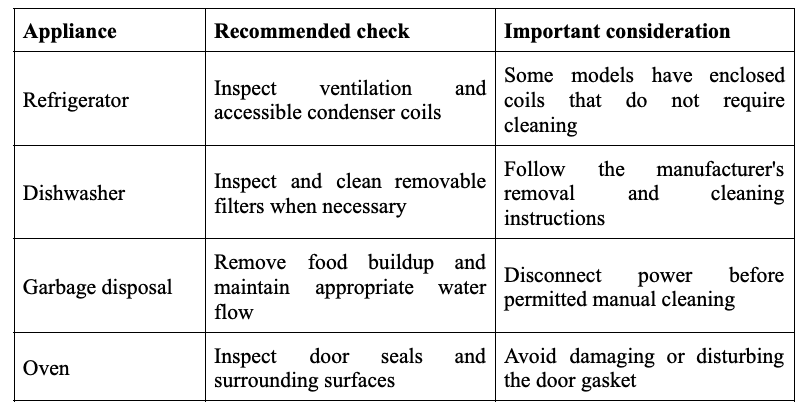
The following table summarizes useful checks for common kitchen appliances.
Refrigerator and Dishwasher Maintenance
Refrigerator condenser coils can collect dust that affects cooling efficiency, but they are not accessible on every model. GE Appliances explains that some refrigerators use enclosed condenser systems requiring no routine owner cleaning.
Consult the appliance manual before removing panels or attempting maintenance. Where cleaning is permitted, disconnect electrical power and follow the specified procedure.
Dishwasher filters also vary by design. Removable filters can generally be rinsed with water and gently cleaned using a soft brush, so consult the appliance manual for the correct method.
Cleaning frequency depends on appliance usage, filter type, and accumulated debris. Always reinstall removable filters securely before operating the dishwasher.
Garbage Disposal and Oven Care
Garbage disposals benefit from appropriate water flow and regular removal of accumulated food residue. Cold water should be used during operation, and grease should never be poured into the disposal.
For odor-related cleaning, disconnect power before following manufacturer-approved procedures. Never place your hand inside an operating disposal.
Oven door gaskets require particular care because damaging them can compromise the seal. Whirlpool advises owners not to scrub, move, or damage the gasket during cleaning.
Inspect seals for visible deterioration and consult a qualified technician when replacement appears necessary. Following the appliance manual is safer than applying the same cleaning technique to every model.
A Refrigerator Battery Backup for Unexpected Power Outages
Reliable kitchen planning should also consider what happens when household electricity becomes unavailable. Refrigeration is particularly important because prolonged outages can affect perishable food storage.
The USDA's FoodSafety.gov guidance states that a closed refrigerator generally keeps food safely cold for approximately four hours during an outage. A full, unopened freezer may retain its temperature for approximately 48 hours, compared with 24 hours for a half-full freezer.
Refrigerators should normally remain at or below 40°F (4°C), while freezers should remain at or below 0°F (-18°C). Appliance thermometers help homeowners assess temperatures when electricity returns.
After four hours without power, refrigerated perishables generally require disposal unless a suitable alternative cold source has kept them safe.
How to Choose a Suitable Refrigerator Backup
Battery backup for refrigerator systems can help maintain electricity to compatible appliances during an outage. However, selecting an appropriate system requires examining capacity, electrical output, and expected operating duration rather than relying on promotional runtime claims.
Important specifications include:
Battery capacity: Stored energy, measured in watt-hours (Wh).
Continuous output: Power available for normal appliance operation.
Peak output: Short-duration power needed during compressor startup.
Transfer time: The interval required to change from utility electricity to battery power.
Compatibility: Appropriate voltage, connections, placement, and installation requirements.
The LiTime Lares K1 as a Practical Example
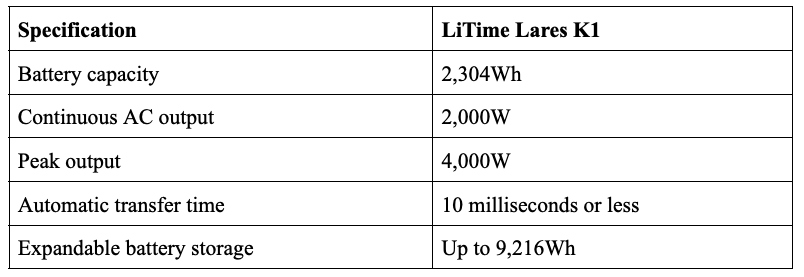
The LiTime Lares K1 is designed to provide backup electricity for refrigerators and compatible kitchen appliances.
According to LiTime's official product specifications, the system offers:
Calculate an Estimated Refrigerator Runtime
A straightforward energy calculation helps homeowners assess whether a backup system suits their needs.
Suppose a refrigerator consumes 2,000Wh, or 2kWh, during a typical 24-hour period. Assume that 90% of the Lares K1's rated battery capacity is available after inverter conversion losses.
Estimated usable energy = 2,304Wh × 0.90 = 2,073.6Wh
Estimated runtime = 2,073.6Wh ÷ 83.3W = approximately 24.9 hours
This simplified estimate assumes an average refrigerator consumption of approximately 83.3W and excludes other connected appliances and additional system losses.
Actual duration depends on refrigerator efficiency, ambient temperature, compressor operation, battery condition, and equipment consumption. LiTime's manufacturer estimate similarly assumes a refrigerator using approximately 2kWh daily.
Homeowners must also confirm that the system can accommodate the refrigerator's compressor startup requirements. A suitable battery capacity alone does not establish electrical compatibility.
Conclusion
A more reliable kitchen begins with practical improvements that support everyday convenience and long-term functionality. Appropriate lighting makes food preparation easier, organized storage improves accessibility, and manufacturer-recommended maintenance helps appliances operate as intended.
Preparing for electricity interruptions adds another layer of reliability. By assessing refrigeration needs, understanding food-safety limits, and selecting compatible backup equipment, homeowners can make informed improvements that support a safer, more functional kitchen without unnecessary expenditure.
Stay up to date with our latest ideas!