Discover 10 common packing mistakes McLean homeowners make before moving and learn practical tips to protect belongings, stay organized, and avoid moving day stress.

U.S. Census Bureau QuickFacts puts the median value of an owner-occupied home in McLean at $1,304,900, based on 2019-2023 American Community Survey estimates. Homes at that level tend to hold a lot: fine furniture, art, collections, home offices, and years of family belongings. Packing all of it takes far more time and care than most people expect.
That gap between expectation and reality is where packing mistakes happen. Boxes get overloaded, fragile pieces get underprotected, and important papers end up somewhere on a truck.
Most moving-day damage and stress can be traced back to decisions made during packing. The ten mistakes below are the ones McLean homeowners make most often, along with simple ways to avoid them.
Why Packing a McLean Home Takes More Planning
Many McLean homes are large single-family houses with finished basements, home offices, guest suites, and garages. Each of those spaces adds dozens of boxes. A busy household juggling work, school, and a home sale often underestimates how many hours packing will take.
Several features of local homes make packing harder:
Higher-value contents, including art, antiques, china, and electronics that need specialty materials
Large square footage with storage areas that hide years of belongings
Home offices with files, equipment, and sensitive documents
Wine collections, instruments, and heirlooms that need careful handling
Tight timelines tied to closing dates, school calendars, or job start dates
Because of this, many families split the work. Some pack everyday items themselves and book packing services in McLean for the kitchen, fragile decor, and artwork, where a professional crew's materials and experience make the biggest difference. Deciding early which rooms you'll pack and which you'll hand off sets the pace for the whole move.
Packing Mistakes 1 to 5: Timing, Supplies, and Box Weight
1. Starting the Packing Process Too Late
A large home can take two to three weeks to pack properly when you're doing it around work and family life. Starting a few days before the truck arrives leads to rushed packing, loose items thrown into bags, and late nights. Begin with rooms you use least, like guest rooms, basements, and storage areas, about four weeks before moving day.
2. Packing Items You Don't Plan to Keep
Every box you pack costs time, materials, and moving space. Packing old clothes, broken electronics, and forgotten basement items only to sort them at the new home doubles the work. Go room by room first and set aside anything you'll sell, donate, or throw away.
3. Using Worn-Out or Mismatched Boxes
Grocery store boxes and old moving cartons often have weak corners and soft bottoms. Mixed sizes also stack poorly in a truck, which can crush lower boxes during transport. Use sturdy, uniform moving boxes in a few standard sizes, plus specialty cartons where needed:
Dish packs with thicker walls for plates, glassware, and china
Wardrobe boxes for hanging clothes
Picture and mirror cartons for framed art and glass
Mattress bags to keep bedding clean and dry
4. Overloading Large Boxes
A large box filled with books can be too heavy to lift safely and is likely to split. Heavy items belong in small boxes, and light, bulky items belong in large ones. Keep most boxes under about 50 pounds, so they're easy to carry up and down stairs.
5. Leaving Empty Space Inside Boxes
Boxes with gaps at the top cave in when others are stacked on them. Items also shift and break when there's room to move. Fill empty spaces with packing paper, towels, or linens, and tape every box closed across the top and bottom seams.
Packing Mistakes 6 to 10: Labels, Valuables, and Protection
6. Labeling Boxes Too Vaguely
A box marked "kitchen" or "misc" doesn't help much in a home with two kitchens, a butler's pantry, and a basement bar. Write the destination room and a short list of contents on at least two sides of each box. Mark fragile boxes clearly and number them, so you can check that every box arrives.
7. Putting Valuables and Documents on the Truck
Jewelry, passports, financial records, and estate documents should never ride with the general shipment. Keep irreplaceable items with you in your own car. The same goes for laptops, external drives, and anything you'll need during the first days in the new home.
8. Underprotecting Art, China, and Electronics
Original artwork, antiques, crystal, and large TVs need careful wrapping and the right cartons. Wrap each piece individually, use corner protectors on frames, and pack plates on their edges in dish packs. For high-value pieces, ask your mover about custom crating, and photograph each item before packing in case you ever need to file a claim.
9. Packing Items Movers Can't Transport
Most moving companies won't carry hazardous or perishable items. Packing them by mistake can delay loading or cause damage to other belongings. Set these aside before the crew arrives:
Paint, solvents, and pool chemicals
Propane tanks and gasoline
Aerosol cans and cleaning supplies
Ammunition and fireworks
Perishable food and live plants
10. Forgetting a First-Night Essentials Box
After a long moving day, nobody wants to search through a hundred boxes for a phone charger or toothbrush. Pack one or two clearly marked boxes per person with medications, toiletries, chargers, a change of clothes, bedding, basic tools, and snacks. Load them last so they come off the truck first.
McLean Packing Mistakes and Quick Fixes
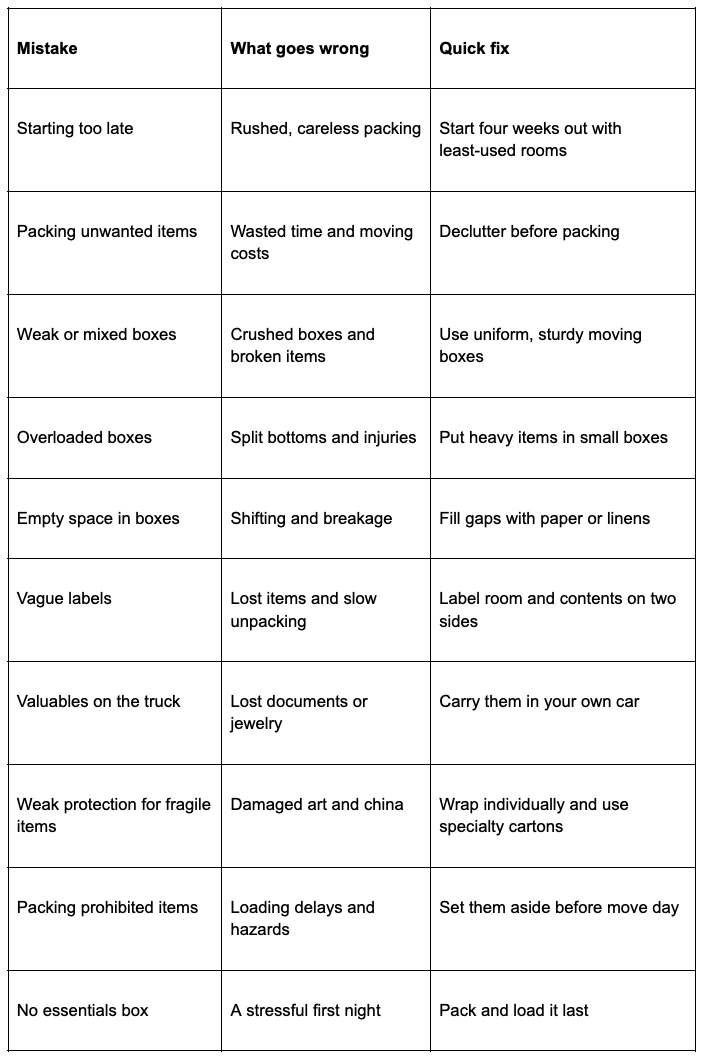
A Four-Week Packing Timeline for a McLean Move
A clear schedule keeps packing steady and prevents a last-minute rush. This timeline works well for most McLean homes, whether you pack everything yourself or share the work with a professional crew:
Four weeks out: Declutter every room, order boxes and supplies, and book any professional packing help.
Three weeks out: Pack guest rooms, basements, storage areas, and out-of-season clothing.
Two weeks out: Pack books, decor, artwork, and rarely used kitchen items.
One week out: Pack most of the kitchen, home office, and remaining closets.
Three days out: Set aside valuables, documents, and prohibited items, and pack your essentials boxes.
Moving day: Strip beds, pack the last bathroom items, and do a final walkthrough of closets, cabinets, and the garage.
Packing a few rooms each week is far easier than trying to pack a whole house in a weekend. It also leaves room to deal with surprises, like a crowded attic or an unexpected closing date change.
Rooms That Take the Longest to Pack
Some spaces need extra time in the schedule. Plan for these to take longer than the rest of the house:
The kitchen, with dishes, glassware, small appliances, and pantry items
The home office, with files, equipment, and cables to sort and label
The basement and garage, where years of storage tend to collect
Display areas with art, collectibles, and fragile decor
If time runs short, these are the best rooms to hand off to a professional crew.
Early Starts and the Right Materials Prevent Most Packing Mistakes
Nearly every packing mistake on this list comes from running short on either time or proper materials. Starting four weeks ahead with sturdy boxes and specialty cartons solves most of them before they happen.
For McLean homeowners with large homes and valuable belongings, a little extra planning pays off on moving day. Keep valuables with you, label every box clearly, and decide early which rooms deserve a professional's touch. The result is a move with fewer broken items and a much calmer first night in the new home.
Frequently Asked Questions
How early should I start packing for a move?
For a large home, start about four weeks before moving day. Begin with rooms you use least, like guest rooms, basements, and storage areas, and save the kitchen and daily essentials for the final week.
What should I not pack when moving?
Keep jewelry, important documents, medications, and laptops with you. Also set aside hazardous and perishable items, such as paint, propane, aerosols, and food, since most movers won't transport them.
How heavy should a moving box be?
Try to keep most boxes under about 50 pounds. Put heavy items like books in small boxes and lighter, bulky items like linens in larger ones.
Is it worth paying for professional packing?
For large homes, tight timelines, or valuable and fragile items, professional packing often saves time and reduces damage. Many homeowners pack everyday items themselves and hire help for the kitchen, art, and china.
How do I pack artwork and mirrors for a move?
Wrap each piece in packing paper or bubble wrap, add corner protectors, and place it in a picture or mirror carton. Mark the box as fragile and keep it upright during the move.
Stay up to date with our latest ideas!