Style green sofas with confidence. Compare olive, moss and forest shades, choose a fabric and find colour pairings for walls, rugs, timber and cushions.
Key Takeaways
Green is a flexible colour, but the shade you choose changes the mood of a room, from earthy and warm to cool and dramatic.
Light, wall colour and the size of the room should guide whether you pick a soft, mid or deep green.
Fabric changes how a green looks, so compare textures in daylight and in the evening before you decide.
Pair green with natural timber, warm neutrals and a few accent colours to keep the room balanced.
Introduction
For years the safe choice for a lounge was grey, beige or charcoal. Green has quietly changed that. It reads as a neutral in many rooms, because it sits close to the plants, trees and natural tones people already enjoy. At the same time, it adds personality that a plain grey sofa cannot.
This styling guide explains how to choose and style green sofas. It covers shades, fabrics, walls, rugs, timber, cushions and a few common mistakes, so you can bring home a sofa you will still love in years to come.
Why green works in the living room
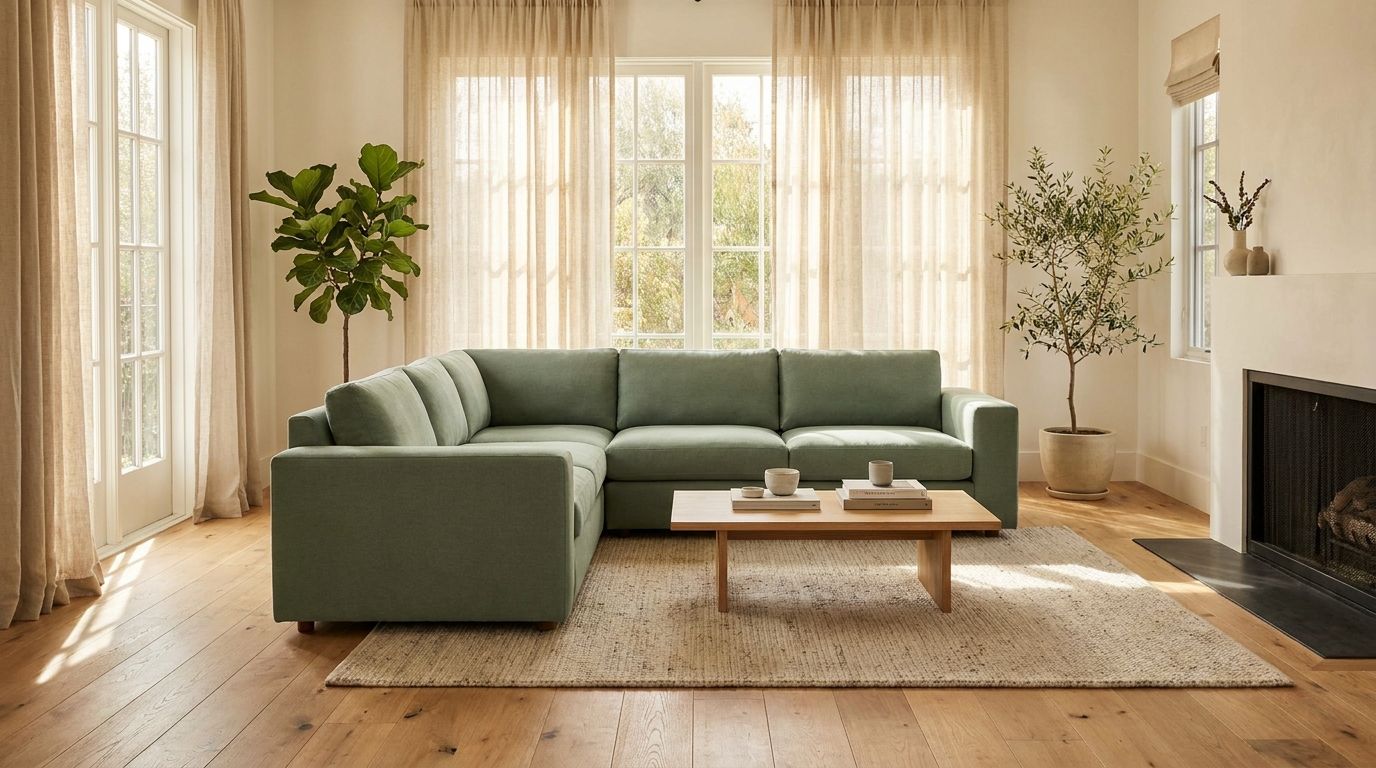
Choosing among green sofas starts with understanding why the colour is so popular.
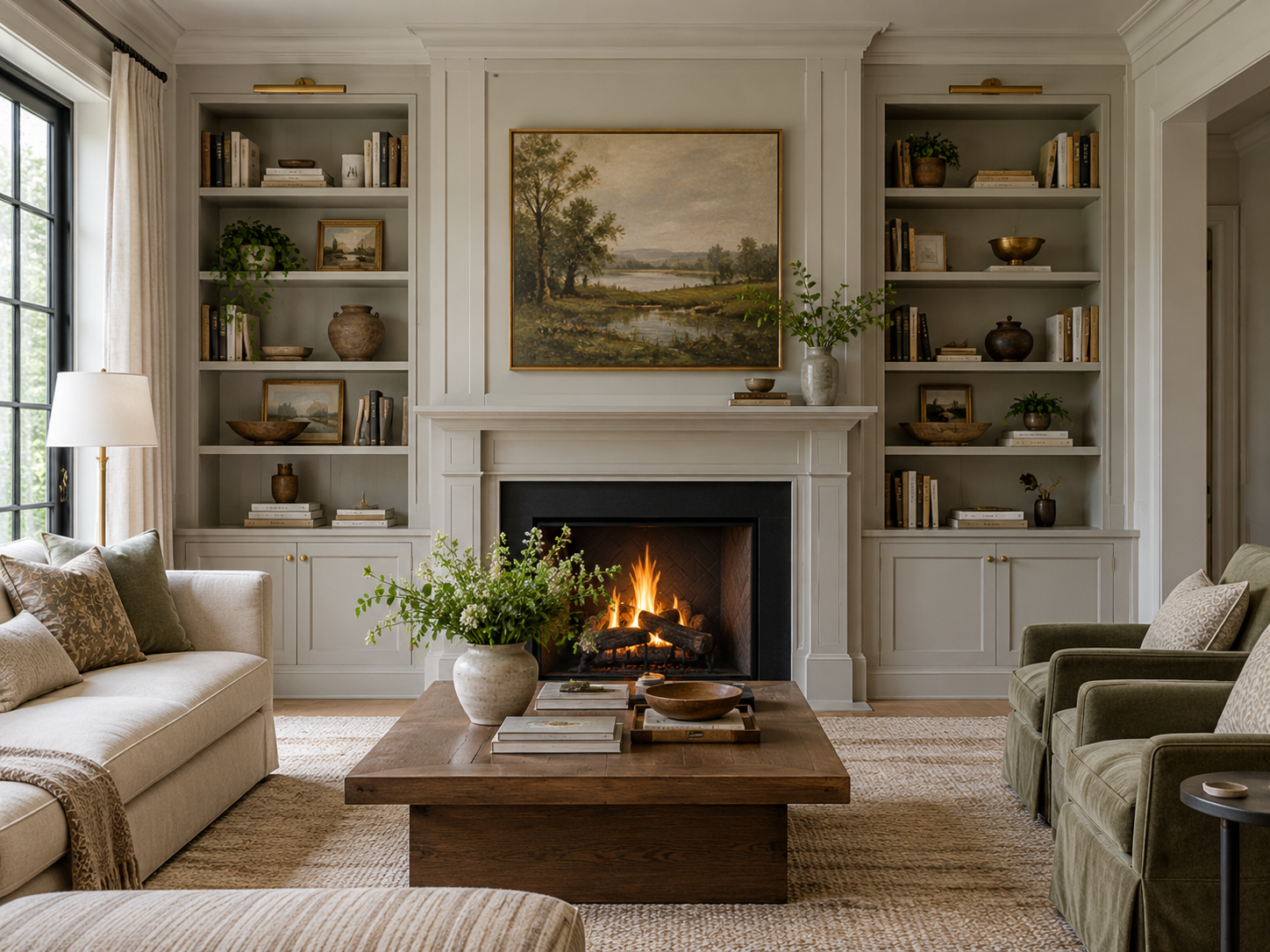
Green is calming. It has long been linked with nature, rest and balance, which suits a room where people unwind. It also pairs easily with other colours, since it appears in so many natural settings, from leaves to moss to eucalypt bark.
Green can also anchor a room. A sofa is usually the largest piece of furniture, so a strong colour gives the space a focal point. The rest of the decor can then stay simple and restful.
Choosing your shade
Not every green behaves the same way, so compare shades carefully.
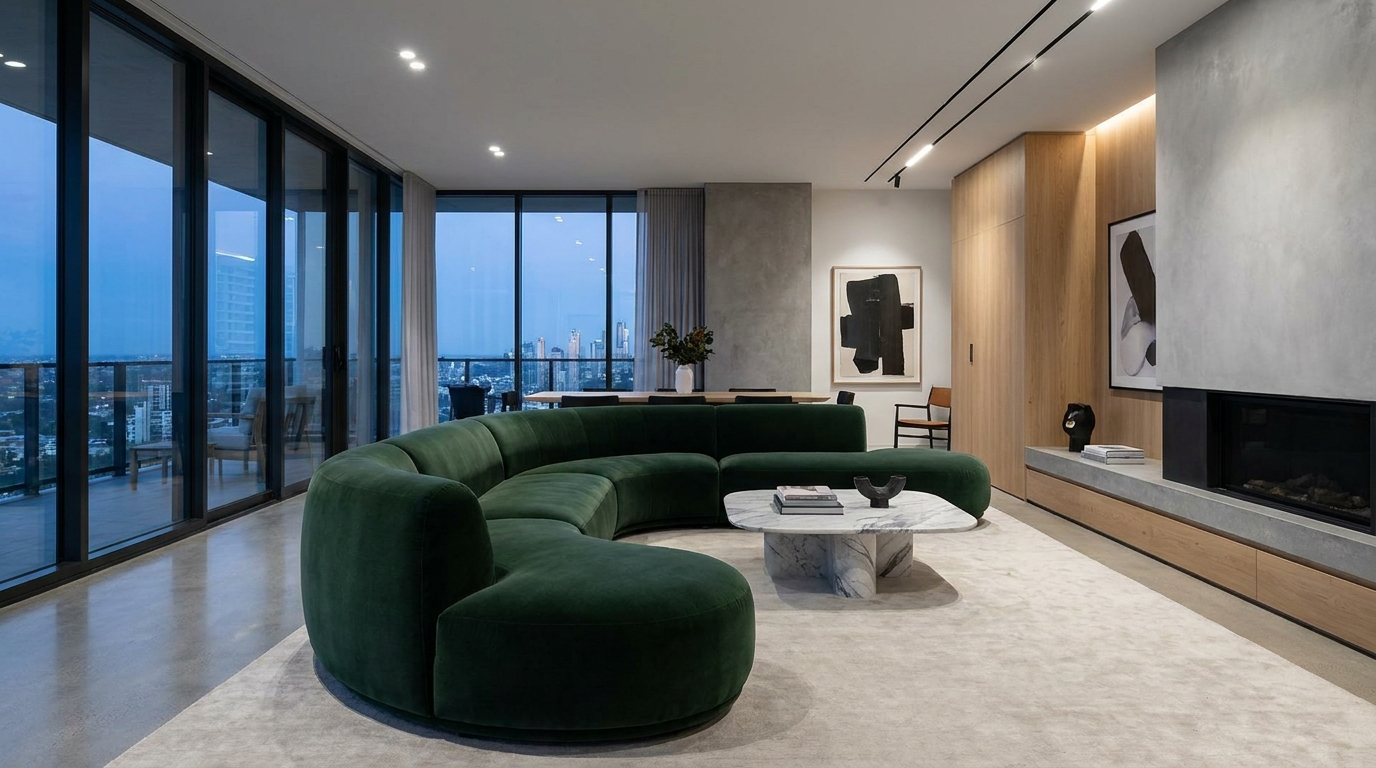
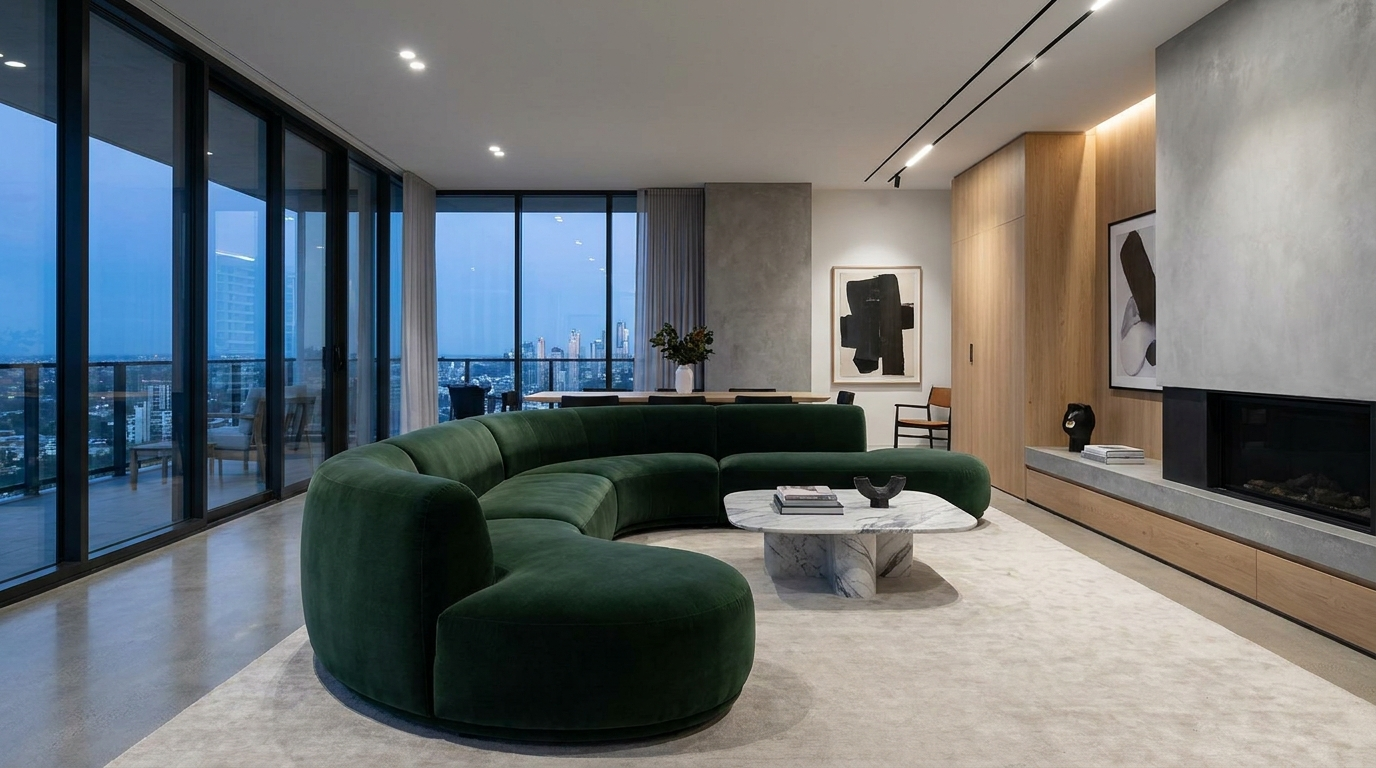
Olive is a warm, yellow-leaning green with an earthy feel. It suits relaxed, natural rooms with plenty of timber and texture. Moss is a little cooler and softer, with a grey undertone that works in calm, modern spaces. Forest is deep and rich, almost like a very dark teal or bottle green, and it creates a dramatic, cosy mood.
Sage and mint sit at the lighter end. They look fresh and airy, and they suit small rooms or those with plenty of daylight. Emerald is bright and bold, and it makes a statement in a room that has lots of neutrals.
Think about light
Light changes colour more than most people expect.
North-facing rooms receive strong, warm light, and most greens look lively and rich in them. South-facing rooms can feel cooler, so a warmer olive may balance the room. Dark rooms with little daylight can make deep greens look almost black, so a softer or brighter shade can lift the space.
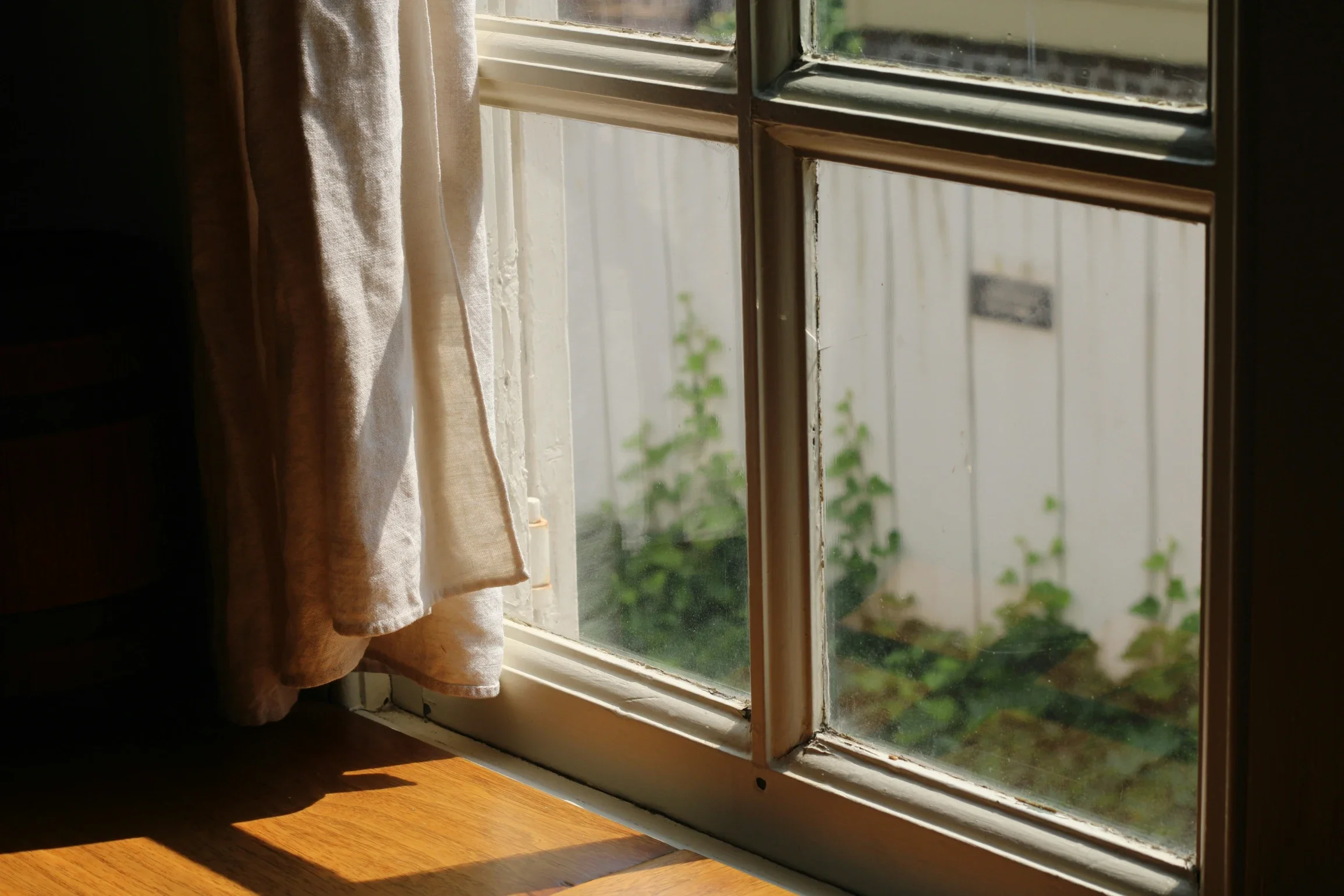
Look at samples in your own room at different times of day. Morning light, afternoon sun and lamplight can all make the same swatch look different. Strong sunlight can also fade fabric over time, so think about window position and consider a sheer curtain if the sofa sits close to the glass.
Fabric and texture
The fabric changes how a green looks and feels.
Velvet gives a deep, glowing finish, and it makes darker greens look luxurious. It can show pressure marks and pet hair, so think about daily use. Chenille has a soft, tactile surface with a subtle sheen. Linen and linen blends look relaxed and natural, though they crease. Boucle adds a textured, cosy look, and it works well in paler greens.
Performance fabrics are ideal for busy homes. They resist stains and wear while still looking attractive. A flat weave tends to look modern, while a heavier texture feels warmer.
Think about maintenance, too. Darker greens can show dust and lint more than mid tones, and light greens can show marks. A quick vacuum with an upholstery attachment each week keeps most fabrics fresh. Removable and washable covers make life easier.
Wall colours that work
The wall behind the sofa sets the tone.
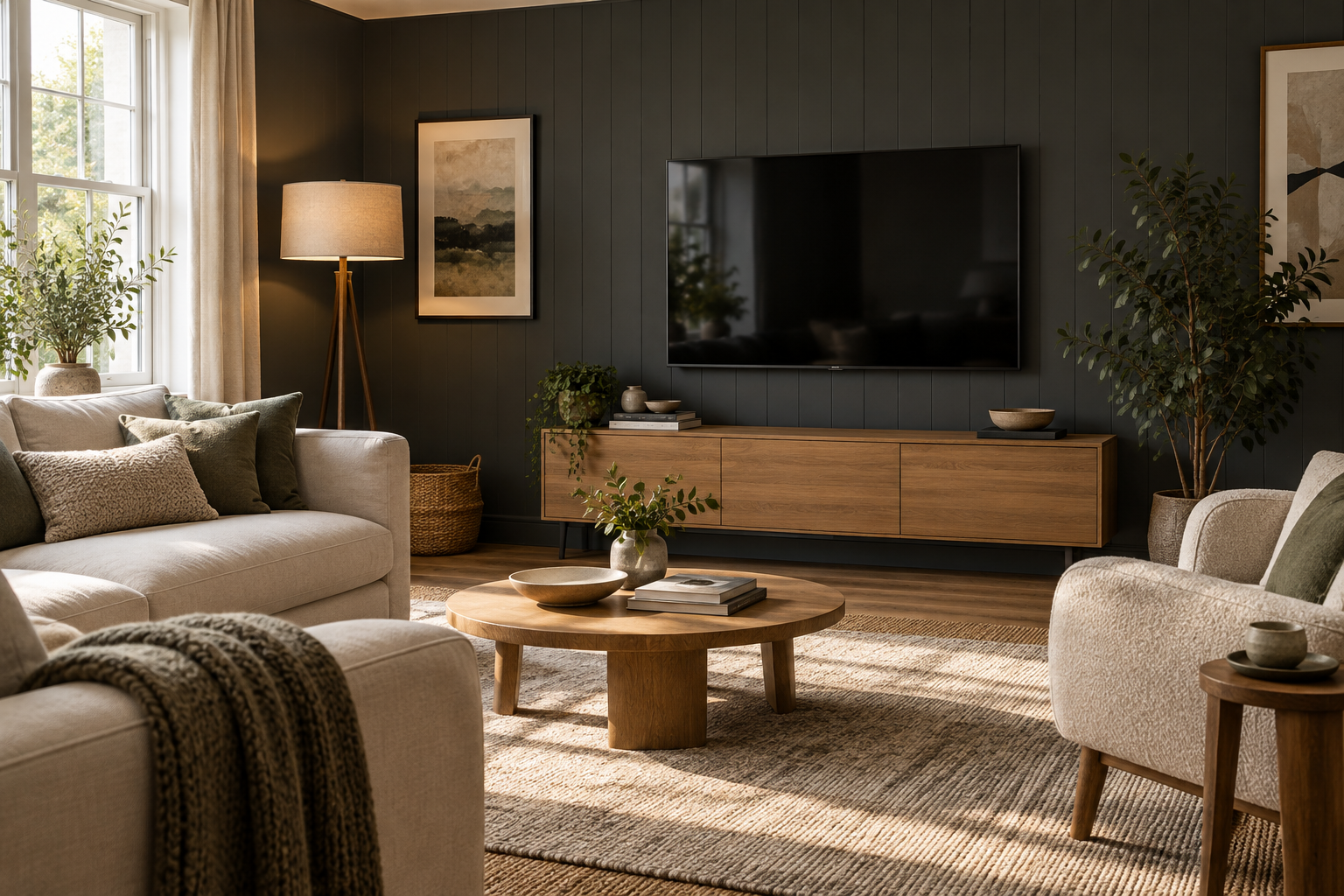
Warm white and cream walls make green feel soft and welcoming. They work especially well with olive and moss, and they keep the room bright. Pale grey walls suit cooler greens and create a calm, modern look. For a bold approach, a deep wall colour such as navy or charcoal can make green look rich, though it needs good lighting.
Avoid colours that fight with the green. Strong reds and oranges can look jarring unless they are used in small accents. If you are unsure, start with neutral walls and add colour through accessories.
Timber, metal and natural materials
Green sofas love natural materials.
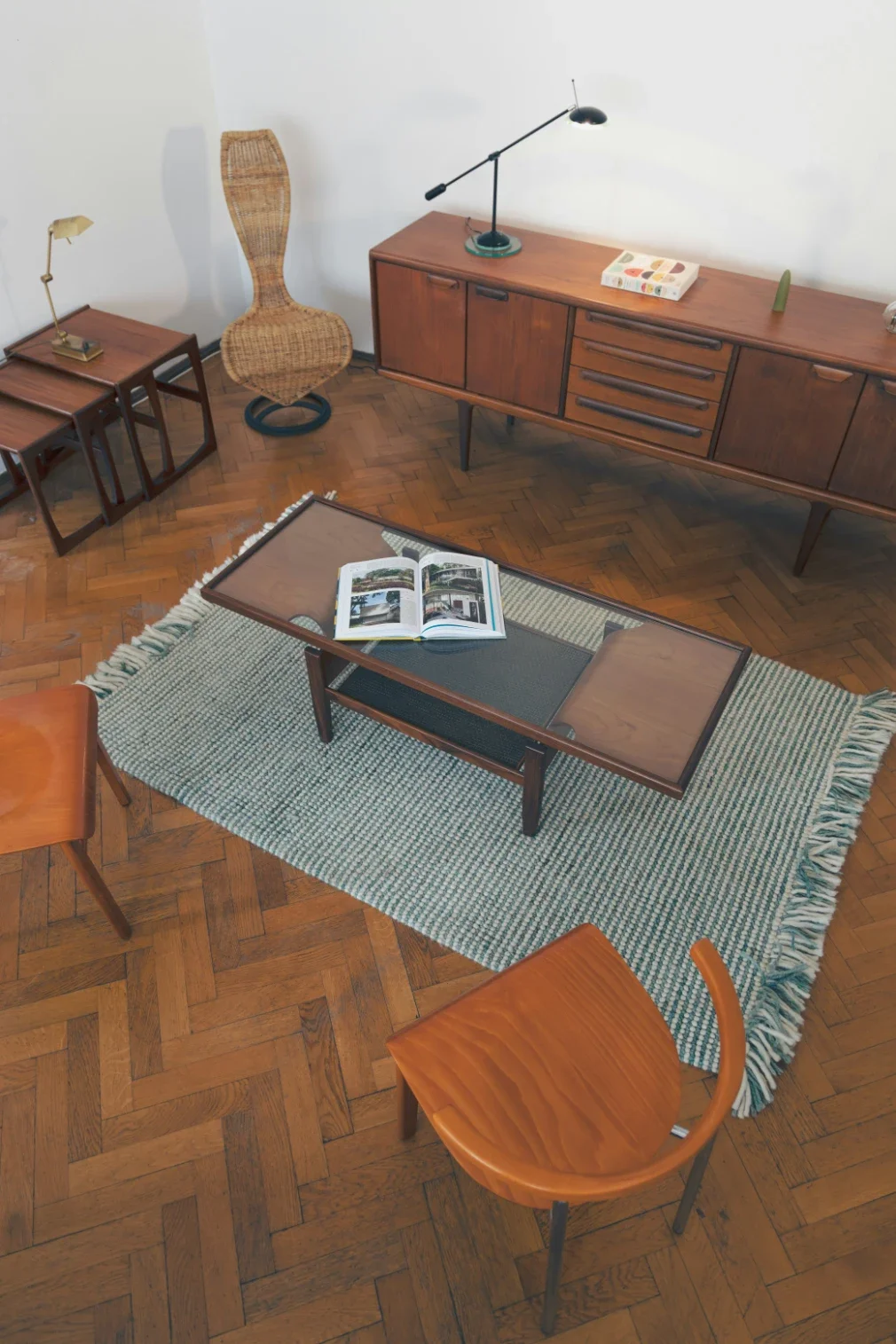
Light timber, such as ash or oak, gives a fresh, Scandinavian feel. Warm timber, such as walnut or jarrah, brings richness and depth. Raw and unfinished timber suits a relaxed, earthy look. Cane, rattan, jute and wool all add texture, and they echo the natural character of green.
Metal finishes can add polish. Brass and gold give a warm glow, while black adds a crisp, modern edge. Chrome and silver suit cooler, contemporary rooms.
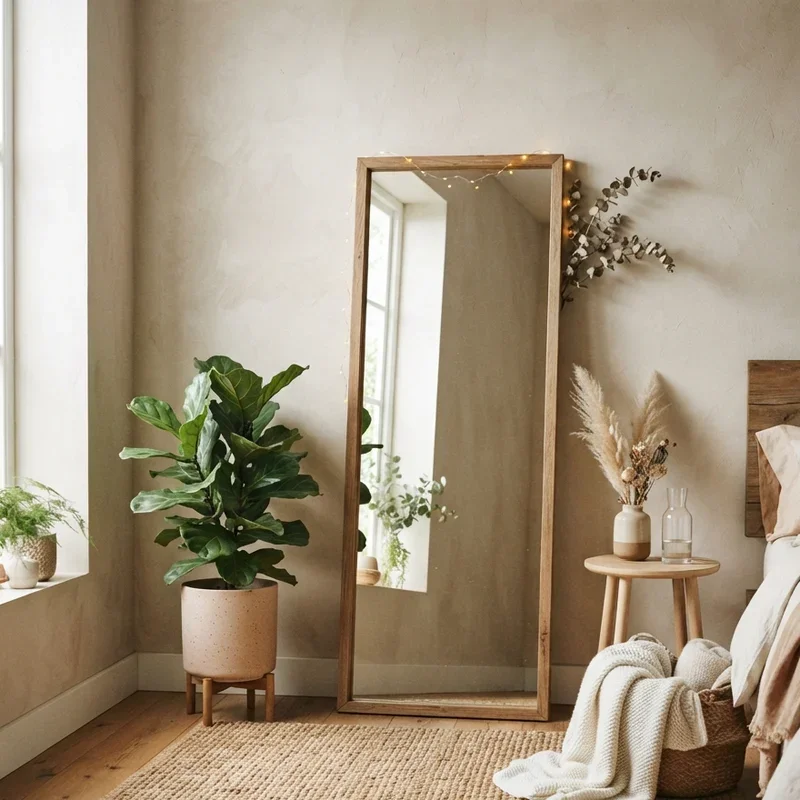
Plants belong with a green sofa, but do not overdo them. A few leafy plants in ceramic pots add life, and they link the sofa to the rest of the room.
Rugs, cushions and throws
Soft furnishings let you refresh green sofas without replacing anything.
A neutral rug in cream, sand or pale grey lets the sofa take centre stage. A patterned rug adds energy, but keep the colours tonal so the room feels calm. Deeper greens often look best with a light rug to balance the weight of the sofa.
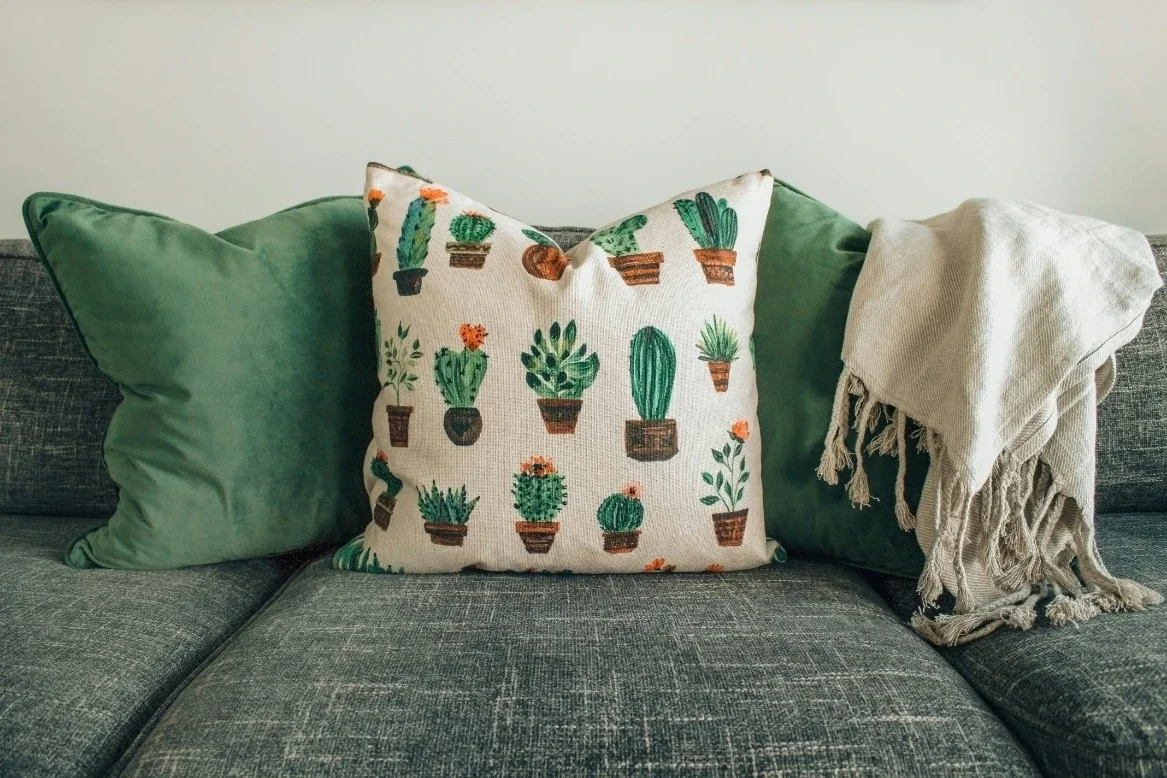
Cushions are the easiest way to introduce accent colours. Rust, terracotta, mustard and dusty pink all complement green. Cream, white and soft grey keep the look quiet. Blue and navy create a deep, layered palette.
Throws add texture. Choose wool, linen or knit in a colour that echoes something else in the room. Mix patterns and textures, but limit yourself to a few colours.
Styling for different rooms
The same green sofas can look very different depending on the space.
In a small room, choose a lighter or brighter green and keep the surrounding colours light. Use a rug and mirror to add space. In a large room, a deep green sofa can anchor the area and define a seating zone.
In an open-plan home, use the sofa to separate living and dining areas. Repeat the green in a plant, vase or artwork elsewhere in the space so the colour feels connected.
In a family room, prioritise durable fabric and covers that wash easily.
Mistakes to avoid
The most common mistake is choosing a shade from a screen. Look at samples in your own home before you buy.
Another is matching everything to the sofa. A room where every item is green can feel flat, so mix in neutrals and accent colours.
Some people forget about wear and fading. Check the fabric, and plan the position near windows.
Making your choice
Start with the mood you want, then compare shades in your own light. Choose a fabric that suits your household, and plan wall colours, timber and accessories around it. Add a few accent colours through cushions and throws, and keep the rest of the room calm. With a thoughtful approach, a green sofa can be the most welcoming piece in the house.
Frequently asked questions
What colours go well with a green sofa?
Cream, warm white, soft grey and natural timber are easy partners. For accents, try rust, terracotta, mustard, dusty pink or navy.
Is a green sofa a good choice for a small living room?
Yes, particularly in lighter or softer shades. Pair it with pale walls and a light rug so the room feels open.
Will a dark green sofa show dust and pet hair?
Darker shades can show lint more easily, but a weekly vacuum with an upholstery attachment usually keeps them looking fresh.
Stay up to date with our latest ideas!