Cost to Install a Heat Pump in Seattle, WA in 2026
Learn the cost to install a heat pump in Seattle, WA in 2026, including pricing factors, system types, incentives, and potential energy savings.
Seattle homeowners shopping for a heat pump in 2026 keep running into the same frustrating experience: two contractors visit the same house, look at the same ductwork, and come back with quotes that differ by $8,000 or more.
“As a homeowner, you don't understand why the numbers are so different. As a contractor, you know exactly why,” says Serge Nikolin, co-founder of Product Air Heating, Cooling, and Electric. “Most companies don't explain it. That's where a lot of the confusion comes from.”
That range is real, and it exists for a reason. Heat pump installation in Seattle isn't a commodity job. The final price depends on what the home actually requires, which equipment tier you choose, and whether the contractor is handling permits and rebates correctly from start to finish.
This guide breaks down what installation actually costs in 2026, why the numbers shift the way they do, and what incentive programs can reduce the total before you sign anything.
Quick Overview of Heat Pump Installation Pricing in Seattle
Here's where costs land across the four main scenarios in Seattle in 2026:
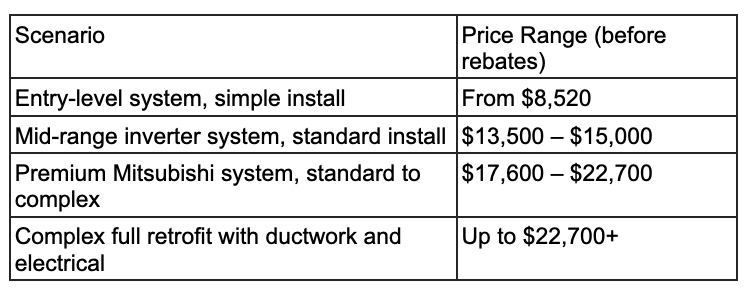
All figures are before Washington state sales tax. Rebates from Seattle City Light, PSE, and other programs can reduce these totals by $600 to $4,000 or more depending on utility provider and household income.
For a detailed breakdown of what contractors in the area actually charge, across twelve specific job scenarios with real installation prices from projects completed in Seattle, this Product Air heat pump pricing guide documents 2026 numbers by equipment tier, installation type, and applicable rebates.
Heat Pump Installation Cost Factors
Three variables determine the final price on a heat pump installation in Seattle: equipment tier, installation complexity, and permit requirements.
“The equipment is only one part of the equation,” Serge Nikolin says. “What really changes the price is the complexity of the installation. Two homes can use similar equipment and still have very different project costs.”
Equipment accounts for roughly 45% of a typical total. A single-stage entry unit like the Runtru by Trane sits at the lowest professional price point. Mid-range inverter systems (the Midea EVOX G3 or Trane Resolute Quest, rated 15 to 19 SEER2) represent where most Seattle homeowners land. Premium Mitsubishi systems modulate continuously between 30% and 100% of capacity and can operate in cold-climate configurations down to -13°F. They cost more upfront but offer meaningful performance advantages in Seattle's older, less-insulated homes.
Installation complexity moves the price significantly. A simple add-on (short line set, no new electrical, outdoor unit where the old one sat) is the least expensive scenario. Standard installations, which describe most jobs in Seattle's 1940s and 1950s homes, involve longer refrigerant runs, electrical work, multiple permits, and often duct modification. Complex retrofits, converting from oil or gas heat, relocating air handlers, panel upgrades, cover the full upper range.
Permits run $149 to $500. Seattle SDCI requires a mechanical permit, a refrigeration permit, and in most cases an electrical permit for any heat pump installation. A licensed contractor pulls and manages all three; skipping permits can create warranty issues and may disqualify the homeowner from utility rebates.
“A permit protects the homeowner,” Serge says. “It creates a record that the work was inspected and approved, and it preserves eligibility for rebates.”
Which Heat Pump Brand is the Most Reliable?
The right brand depends on the home's needs and the budget available.
Entry-level: Runtru by Trane (14 SEER2) is a single-stage unit built for homeowners who need a licensed, warrantied installation at the most accessible price point. It carries a 10-year manufacturer warranty and is a genuine Trane product, not a rebranded off-brand unit.
Mid-range: The Midea EVOX G3 and Trane Resolute Quest (15–19 SEER2) are the most common choices in the Seattle market. Both are inverter-driven and perform well through mild but wet Pacific Northwest heating seasons. The Trane carries broader brand recognition; the Midea typically comes in slightly lower with comparable specifications.
Premium: Mitsubishi Electric consistently earns the highest marks for long-term reliability. Cold Climate H2i units deliver rated performance to 5°F and continue operating to negative 13°F, which matters in Seattle's older homes that lose heat faster on cold nights.
Contractors holding Mitsubishi Diamond Elite certification can offer a 12-year manufacturer warranty, two years longer than the industry standard. Product Air, which holds Elite Diamond status, notes that the extended warranty is one of the most significant advantages for homeowners investing in premium Mitsubishi equipment.
What's Included in a Heat Pump Installation Quote in Seattle?
A complete quote should cover equipment, labor, and permits as a single total, not as a starting price that climbs after signing.
Equipment (~45%): outdoor condensing unit, indoor air handler or coil, refrigerant line set, mounting hardware, and any necessary accessories.
Labor (~30%): installation of all components, refrigerant charging, electrical connections, system commissioning, and any return visits required for permit inspections.
Permits ($149–$500): Seattle requires two to three permits depending on scope. A licensed contractor manages the application process, coordinates inspections, and closes all permits after sign-off.
A well-prepared quote should apply eligible rebates before the homeowner signs. The customer should see only the reduced final number on the invoice.
What are HVAC Rebates and Incentives in Seattle in 2026?
Washington State and Seattle-area utilities currently offer some of the most accessible heat pump incentive programs in the country.
Seattle City Light (most of Seattle proper): $300 at SEER2 15.2 / HSPF2 8.1, or $600 at SEER2 16 / HSPF2 9.1. Homes converting from oil heat qualify for the No More Oil Heat program, $2,000 instant rebate, plus up to $4,000 additional for income-qualified households. This program currently requires Mitsubishi equipment.
PSE (King, Snohomish, and Skagit counties outside Seattle): $300–$600 base rebate, plus upgrade incentives of $1,500 to $4,000 depending on the system being replaced and household income.
Energy Smart Eastside (Issaquah, Bellevue, Mercer Island, Kirkland, Redmond, Sammamish): $1,000 to $10,000 income-based.
Snohomish PUD: $1,800 for a qualifying ducted conversion system; $2,500 for an inverter-driven ducted system at HSPF2 8.5.
One program no longer on the table: the federal 25C tax credit expired January 1, 2026. Any contractor or listing still advertising it is working from outdated information.
Does a Heat Pump Increase Home Value?
Yes, and in Seattle's market, the increase is meaningful. A heat pump installation typically adds around 7% to home value, driven by two factors that Seattle buyers increasingly understand.
First, a heat pump handles both heating and cooling in a single compact system. In a city where full central air conditioning is now expected but historically uncommon, that matters at inspection and negotiation. Second, the operating cost reduction is real: homeowners who replaced gas or electric resistance systems with heat pumps have reported utility bill reductions of 25% to 50%. That combination of lower monthly costs, dual-function comfort, a smaller mechanical footprint is an increasingly attractive line item on a disclosure form.
A heat pump installed correctly, with permits closed and manufacturer warranties intact, is a documented transferable asset. One installed without permits is a liability that Seattle buyers and their inspectors are well-equipped to find.
Heat pump installation in Seattle in 2026 runs from roughly $8,500 on the entry end to over $22,000 for a full complex retrofit, with most homeowners landing in the $13,500 to $20,000 range before rebates.
The variables that move the price (equipment tier, installation complexity, permit requirements) are all determinable before anyone signs anything. An accurate quote for a specific home requires an in-person assessment, but the structure of the pricing shouldn't be a mystery going in.
Stay up to date with our latest ideas!