New Home Setup: Keep Bills Low and Rooms Comfortable
Set up your new home to keep bills low and rooms comfortable with smart energy tips, efficient systems, and simple changes that improve everyday living.

The first utility bill in a new home has a way of getting your attention. You moved in, turned everything on, and lived a normal life for a month. Then the envelope arrived. For many people, the number inside is nothing like what they expected.
A 2024 HOP Energy survey found that nearly one in three homeowners underestimated their utility bills, and one in five were outright surprised by how high they were. That's not bad luck. That's what happens when you move into a home without understanding how it uses energy, or without making the setup decisions that keep costs from running away from you.
A new home is the best time to get this right. You haven't formed habits yet. The rooms aren't locked in. And the decisions that save real money over the next decade cost less to make now than they will two years down the road.
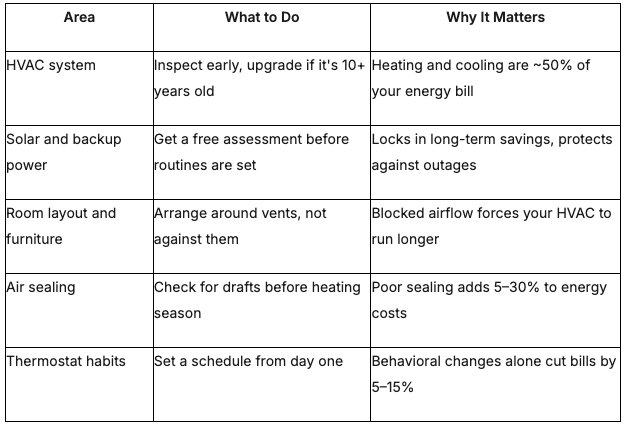
TL;DR
The Bill Nobody Told You About
Average US residential electricity costs climbed from $121 per month in 2021 to $156 per month in 2025, a jump of nearly 29%, according to MoneyGeek's analysis of EIA data. Prices rose another 7% between June 2024 and June 2025 alone, outpacing general inflation by a wide margin. NEADA estimated the average household would spend close to $1,000 just on winter heating in 2025–2026.
New homeowners feel this the sharpest. They moved from apartments where heat was bundled, or from spaces they understood well enough to manage. A new property brings unknown equipment, unfamiliar insulation quality, and no history of what any given month should cost.
Getting the setup right means closing those unknowns fast, before they become expensive habits you repeat for years.
Start With Heating and Cooling
Heating and cooling account for roughly half of the energy a typical US home consumes. Anything that makes that system run better has more financial impact than almost anything else you can do in the house.
The most common mistake is inheriting whatever system the previous owner had, assuming it works because it turns on, and moving on. An aging unit can burn significantly more energy while delivering less comfort. According to the US Department of Energy, upgrading an outdated HVAC system can reduce monthly utility bills by 20 to 40 percent.
If you discover your unit is nearing its end of life, sourcing high-efficiencyHVAC equipment online can help you compare modern specifications and prices before the next season hits. On a $156 monthly bill, even the low end of that range is over $370 saved per year.
Why Year One Is the Right Time for Solar
Most new homeowners push the solar conversation to year two or three, by which point the budget has gone elsewhere, and installation feels disruptive. That's exactly backward.
Panel costs have dropped around 50 percent over the past decade. The national average payback period sits between 7 and 10 years, according to EnergySage marketplace data, and it shortens further each year that utility rates rise.
A well-sized system can offset a large portion, sometimes all, of a home's electricity consumption. Beyond the bill savings, solar paired with battery backup changes what a grid outage means for your household. Rather than losing your HVAC, refrigerator, and everything else on the circuit, you stay running.
That point matters from day one. The financial case for solar holds up, but only if the system continues to produce as designed. Getting an assessment early and building maintenance into your routine closes that gap before it costs you.
Room Layout Is an Energy Decision Too
This one surprises people: how you arrange a room affects what you pay each month.
Before you commit to a layout, locate every supply and return vent and work around them. Leave at least a foot of clearance wherever possible.
High-quality furniture collections featuring Murphy cabinet beds, dining sets, and a full range of indoor and outdoor pieces, including the outdoor kitchen grill, are worth reviewing when making those foundational layout purchases that define how you'll use your home's total square footage. These versatile options ensure your space remains functional without compromising your home's energy efficiency.
Comparing Your Setup Options
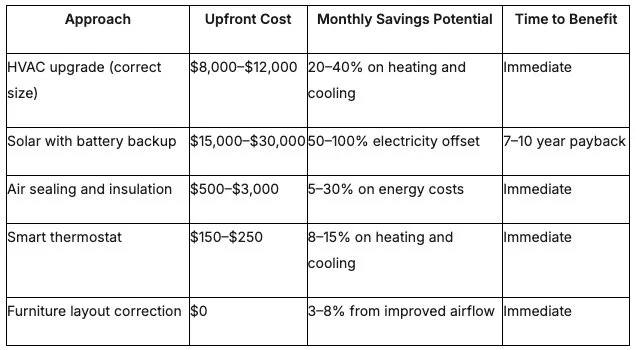
The top two rows are where the largest long-term savings live. Both decisions also get more expensive and more disruptive the longer they're delayed.
Your First 60 Days
The first two months in a new home are when the patterns get set. Use that window deliberately. In the first week, locate every vent and plan furniture placement around them before anything gets moved in permanently. In the first two weeks, get the HVAC inspected. Ask how old the system is, whether it was sized correctly for the home, and when it was last serviced.
In the first month, contact a solar provider for a free roof assessment. Most offer them at no cost, and knowing your specific numbers removes the guesswork.
Before any of that, do a draft check. Walk the perimeter of the house with a lit candle near window frames, door edges, and baseboards. Where it flickers, there's air moving that shouldn't be. Seal those spots with weatherstripping or caulk. It costs under $50 and can cut heating and cooling losses by 10 to 20 percent on its own.
The cosmetic work can wait. The systems that control temperature and cost in every room cannot.
Frequently Asked Questions
1. How do I know if the HVAC system in my new home is worth keeping?
Age and consistency are the two clearest signals. If the system is 10 or more years old, or if certain rooms run noticeably warmer or cooler than others, get a professional inspection before assuming everything is fine. The inspection cost is a small fraction of what a year of running an inefficient system costs you in higher bills.
2. Is solar still worth considering given recent policy changes?
The hardware economics hold regardless of incentive status. Panel costs have fallen dramatically, and electricity rates keep rising in most states. A free home assessment from a solar provider gives you a real payback estimate based on your roof, location, and usage. That's a better basis for a decision than national averages.
3. Can furniture placement really change my energy bill?
Yes, though it's one factor among several. Blocked vents force the HVAC to run longer to reach the same setpoint, which shows up on your bill. The bigger savings come from how you use rooms: space you're conditioning but not occupying is a cost without return. Furniture that makes every room functional day-to-day means you're getting full value from the energy you spend.
Q: What's the fastest way to lower bills in the first month without spending much?
Set a thermostat schedule and seal visible drafts around windows and doors. Together, those two changes cost under $100 and can reduce heating and cooling costs by 10 to 25 percent. Switch any remaining incandescent bulbs to LEDs while you're at it. The big savings come from HVAC and solar, but the behavioral and sealing work delivers the fastest return with the least friction.
Stay up to date with our latest ideas!