The Science Behind Soft Washing: How to Preserve Your Roof in San Antonio
Weathering and bioorganisms ruin your roof and its aesthetic appeal due to volatile San Antonio climate. Learn how soft washing works to protect and “heal” your roofing.

The roof of your house is a vital element that needs regular care and maintenance. Its “health” preserves the wholeness and beauty of your interior. Yet, Texas weather can be severe and quite changeable, which affects the roofing. While some San Antonio residents simply stay at home during storms and the extreme summer heat, others try to protect their roofs first.
Any roof cleaning company in San Antonio, TX, will tell you that pressure washing can hurt the roof surface, leading to deeper corrosion and cracks. As a result, weathering can have a stronger destructive effect on the facade and, over time, the interior. On the contrary, the soft washing technique promises gentle and deep cleaning that helps your roof withstand the weathering. Professional maintenance prevents the accumulation of living organisms in the holes and cracks of the roof.
The Biological Landscape of San Antonio Roofs
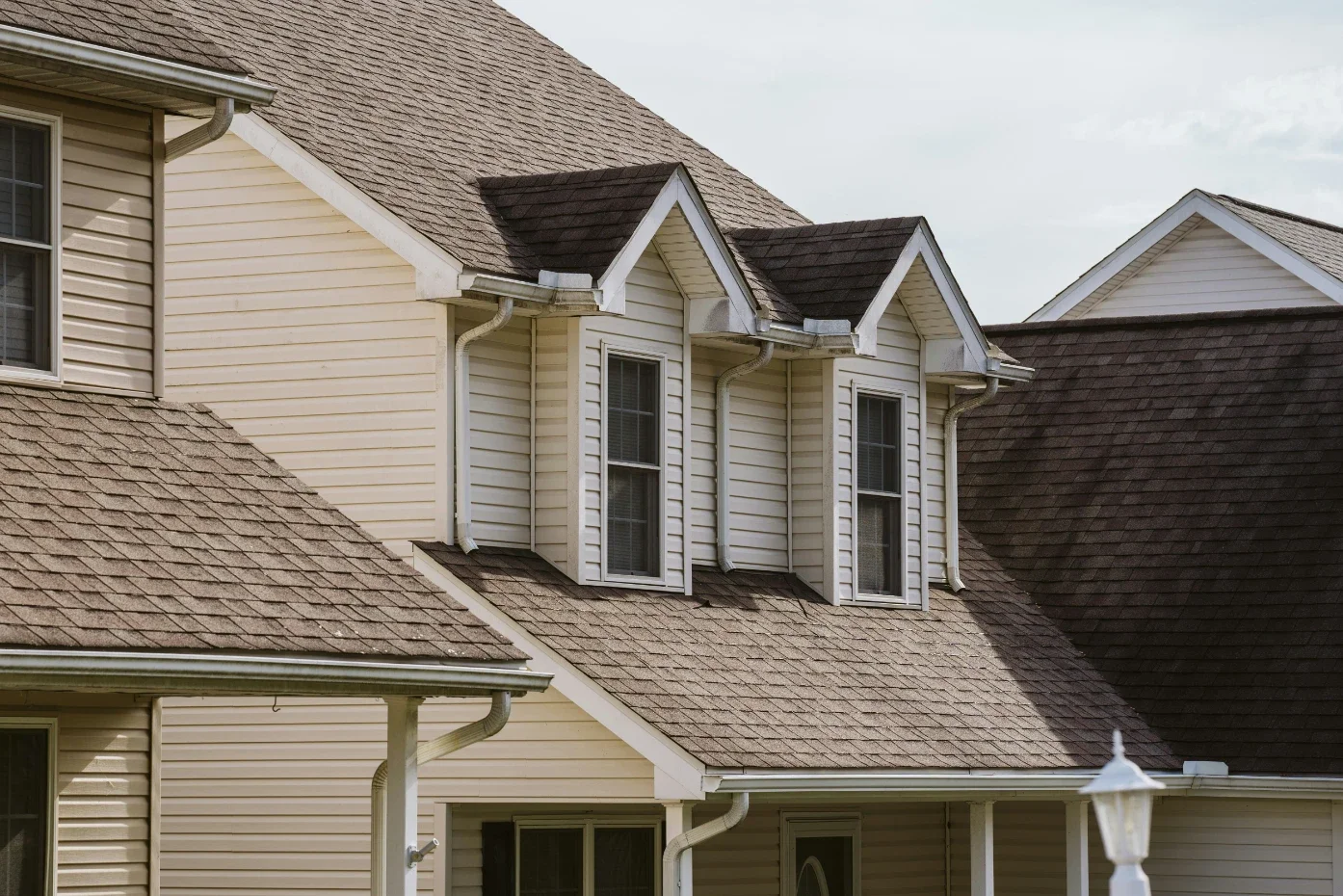
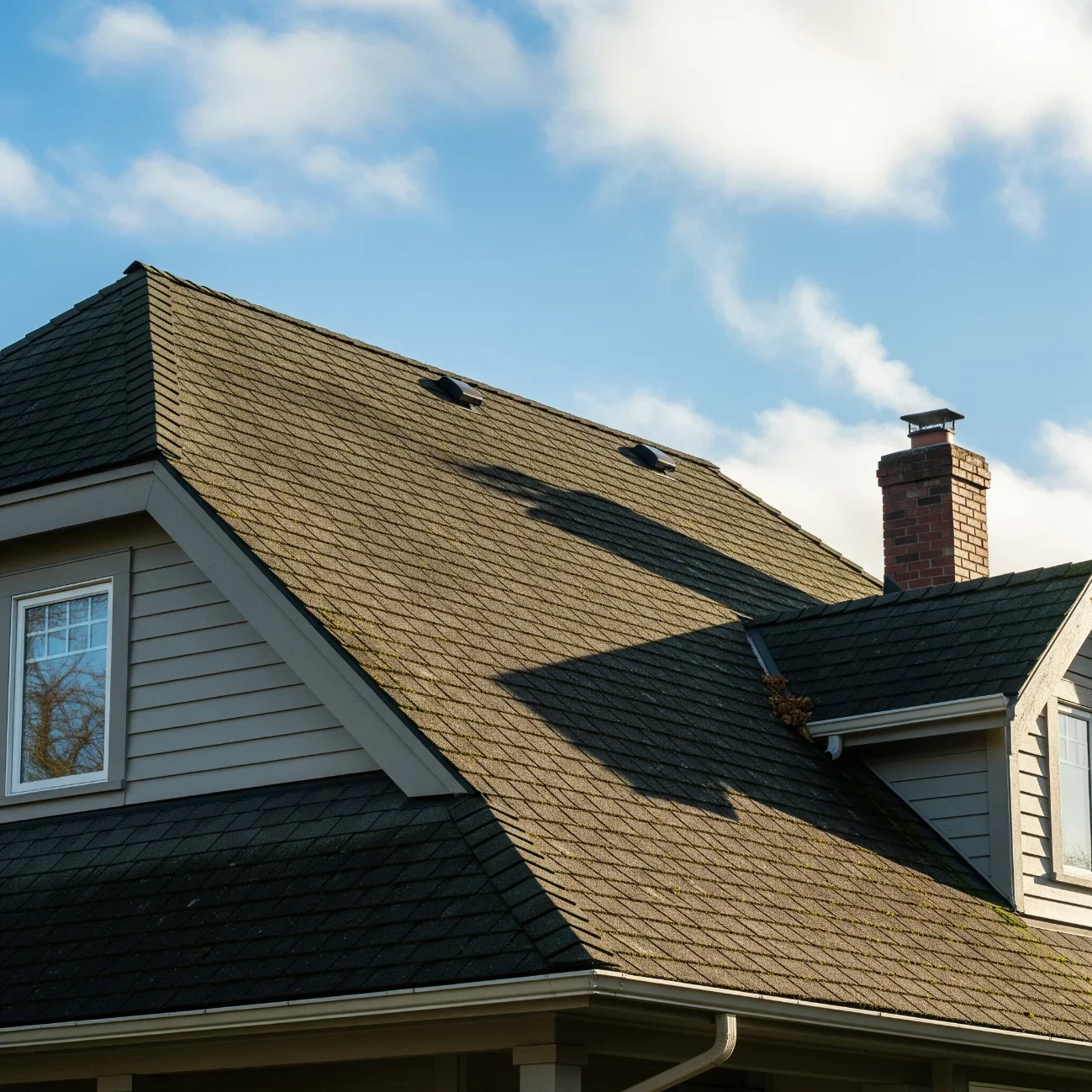
If you are a San Antonio citizen, you might have noticed dark spots on the roofs of neighbouring houses or even your own. Even though they look like an accumulation of dirt, they are living organisms that inhabit moist, dark, and dirty places. Modern shingles containing limestone fillers create a perfect habitat for a hardy bacterium, Gloeocapsa magma.
In addition to bacteria and plants that can destroy the roofing, there is atmospheric debris, which is also destructive. When homeowners clean their roofs, they get rid of all the harmful accumulations. While an unprofessional wash can only remove the dirt and dust, professional soft cleaning can handle the problem of an invasive infestation. What is the difference?
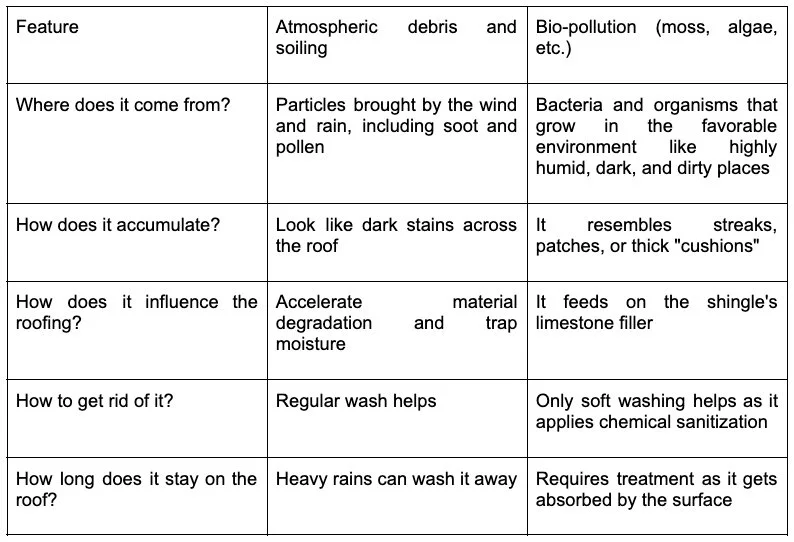
So, if your roof is affected by the two types of pollutants, it is better to consult San Antonio Pressure Washing experts to choose the best washing technique and stop the deterioration of your “fifth-side” facade.
Roof Cleaning as a Part of the Designer and Architect’s Project
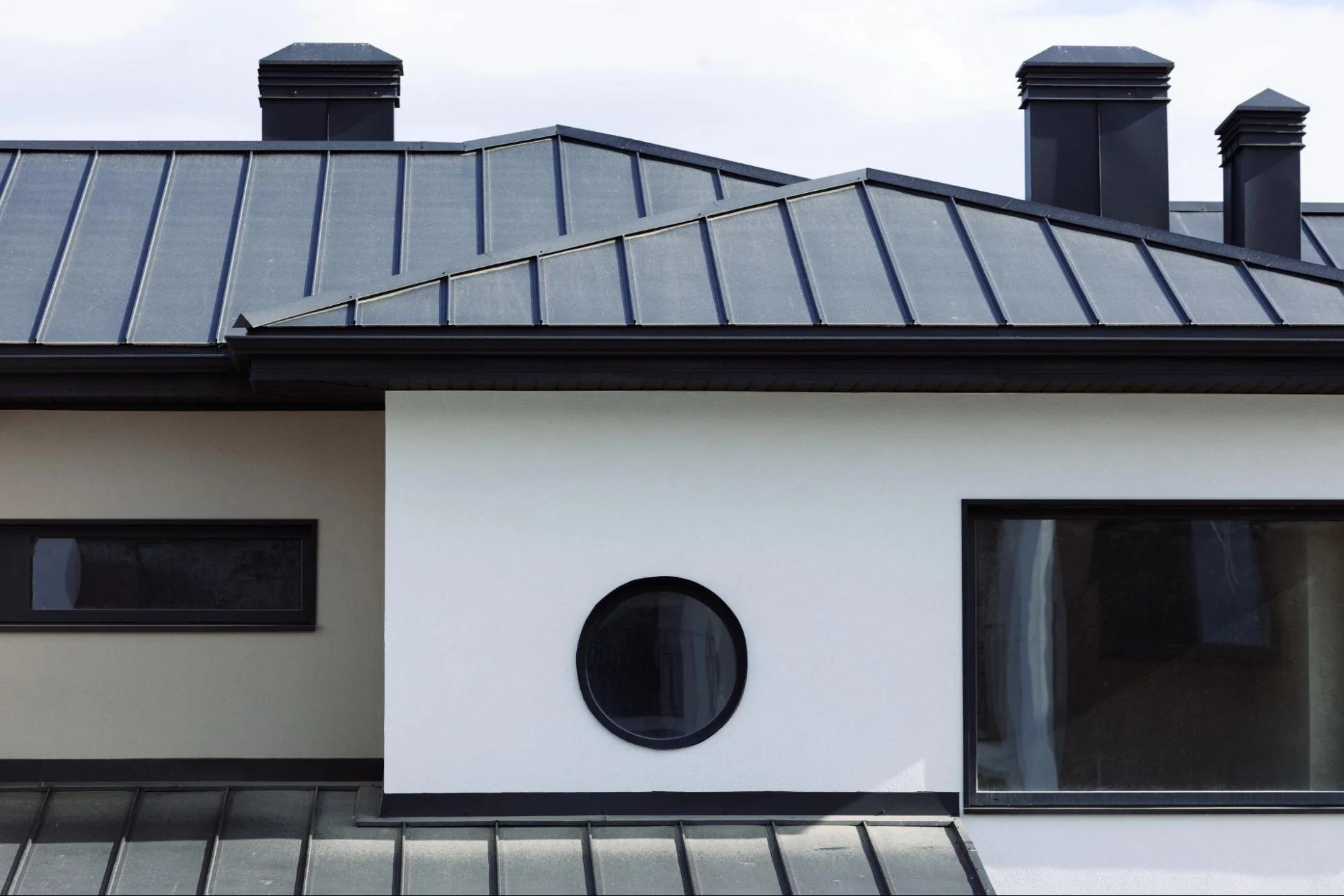
Every home is the result of a collaboration between an architect and a designer. While an architect crafts a stable and durable building, a designer is responsible for its appeal. An attractive facade involves a careful selection of roofing tones. Over time, weathering and living organisms affect the paint, leading to its fading and peeling.
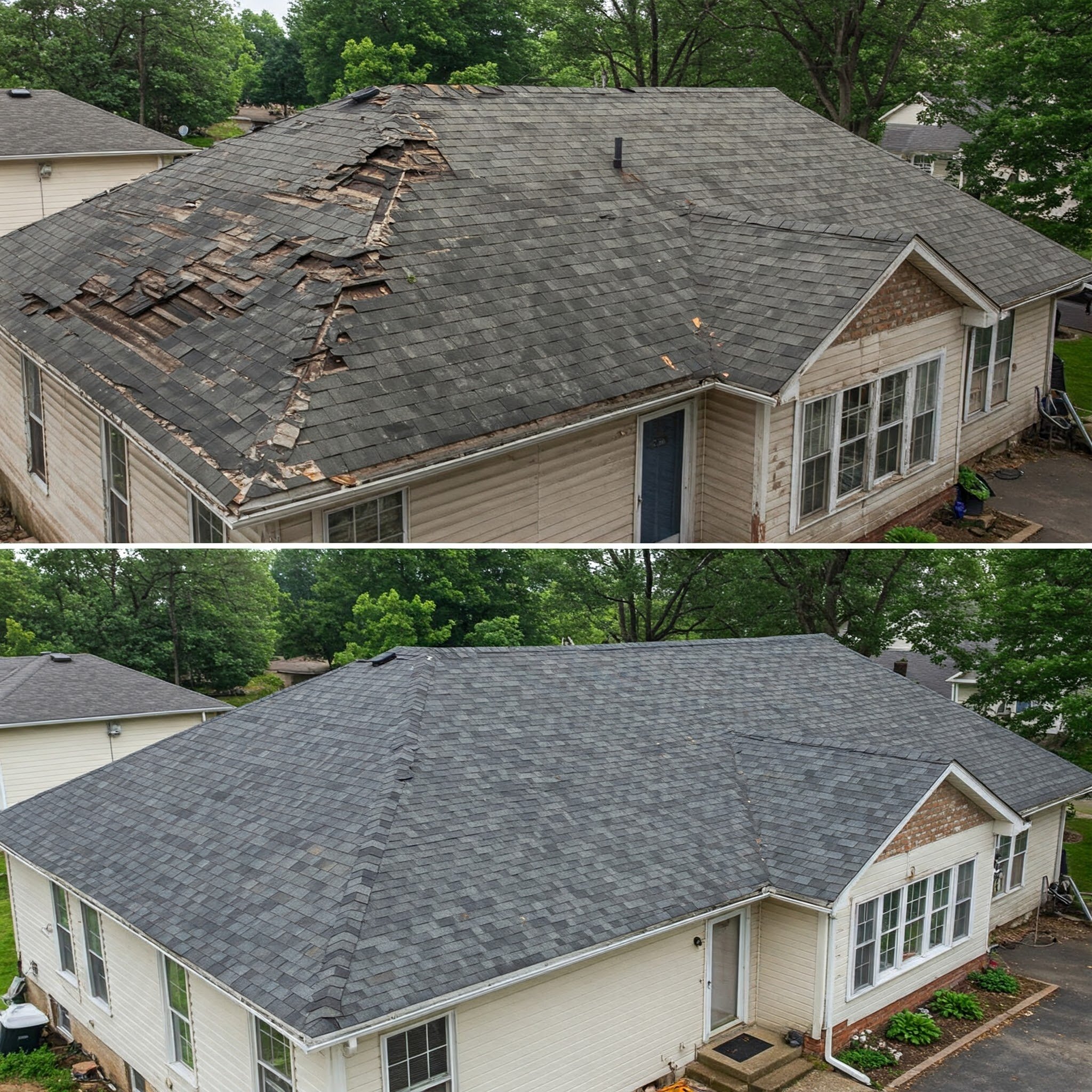
Soft cleaning allows you to preserve the intentional color palettes. Due to that, you save on structural and cosmetic roof repairs longer than with just simple rinsing. At the same time, aggressive cleaning can create quite the opposite effect. It can result in bleaching or color stripping out of roof materials. Unprofessional high-pressure rinsing can also damage materials, weaken structural bonds, and make the existing pores and cracks larger.
Soft Washing Technique Explained
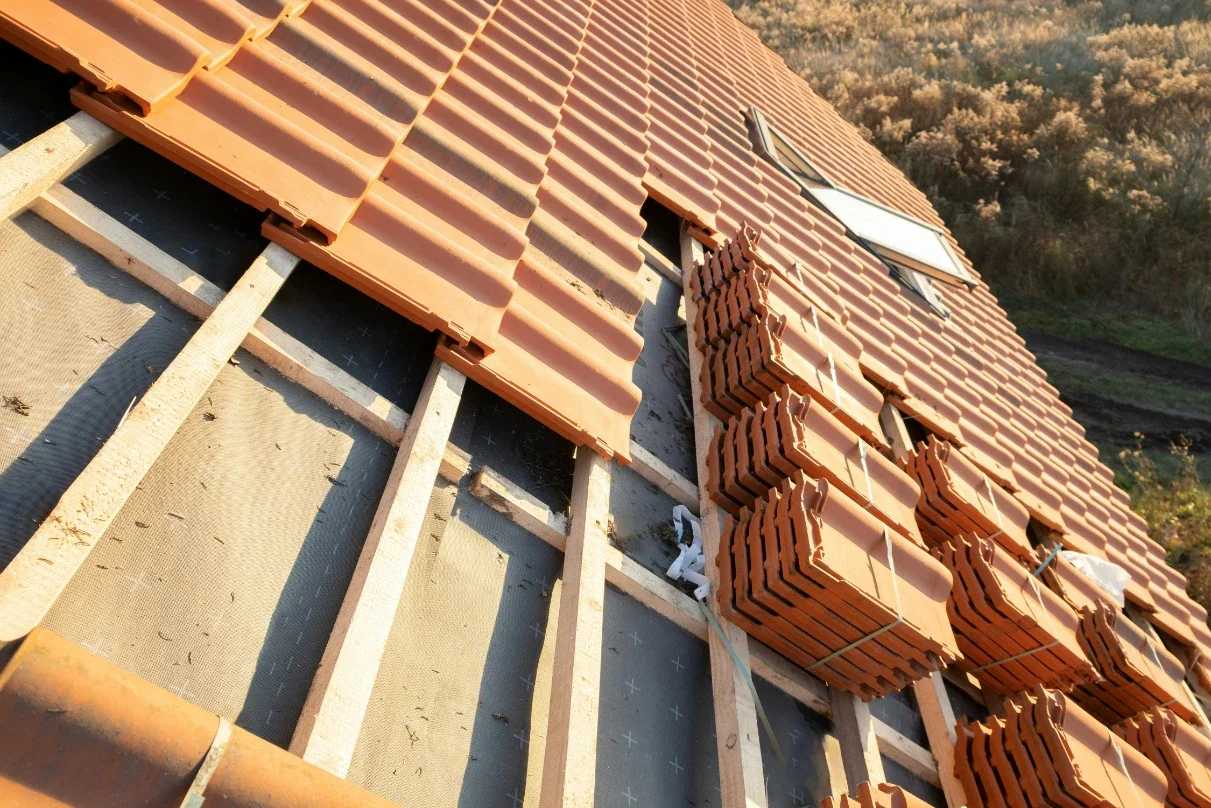
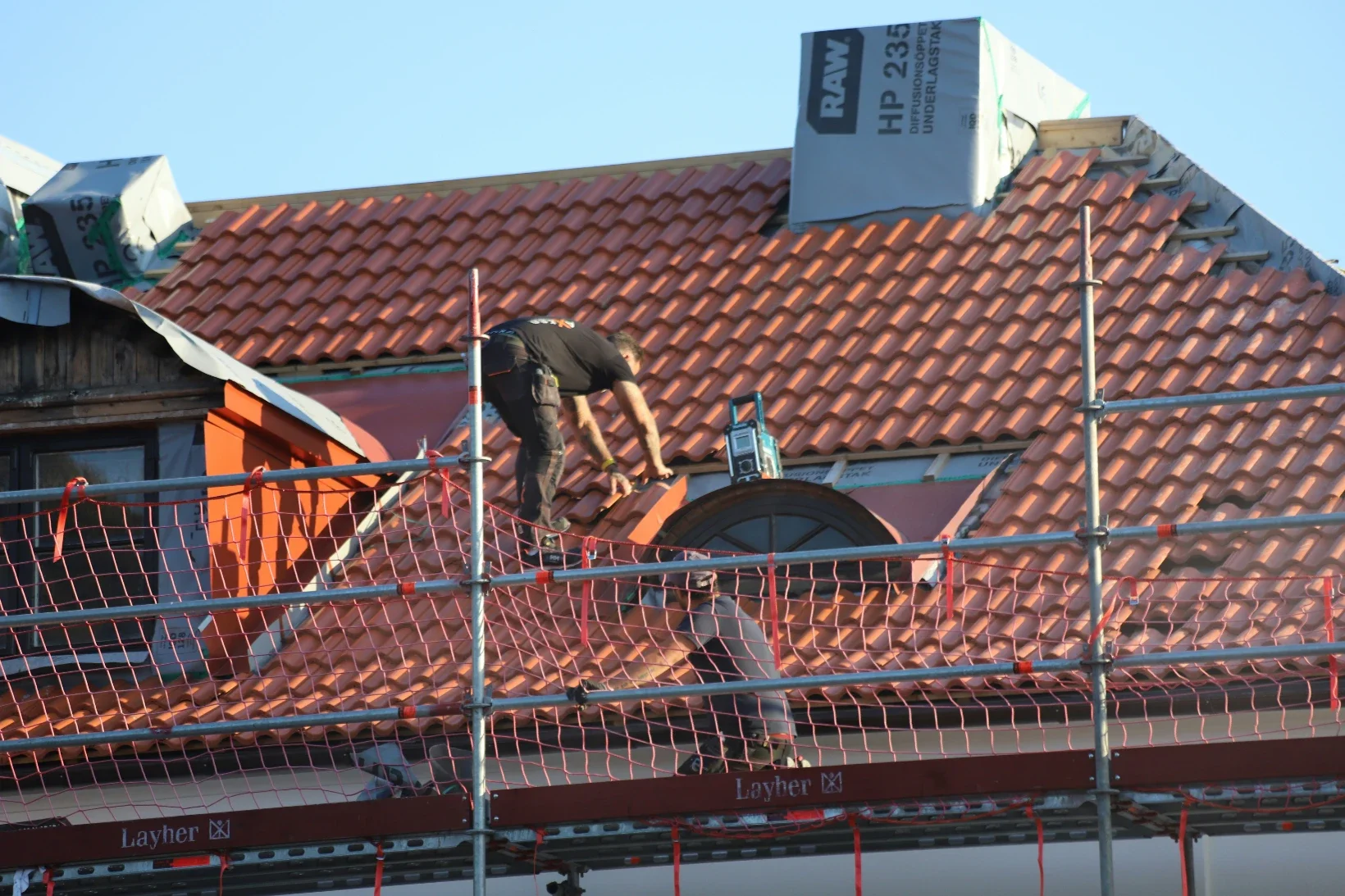
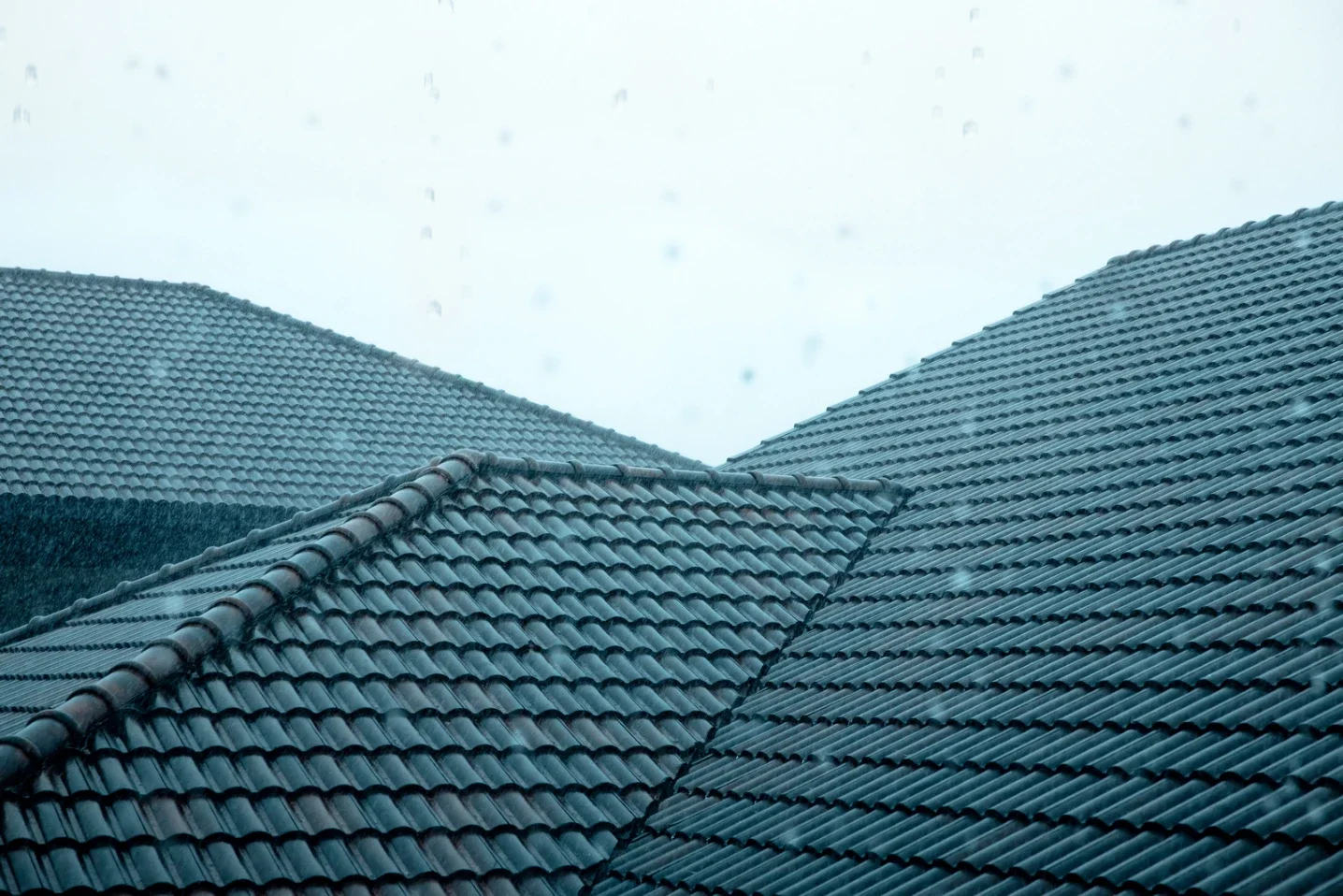
When the roof and other parts of the facade get “infected” by bacteria and damaged by dirt, their composition becomes unstable. Due to that, the roof starts leaking, and the house loses its thermal protection. Previously, people simply used force to remove all the stains, moss, and other debris. However, today, modern roofs are covered with asphalt shingles, clay tiles, or slate that are vulnerable to high-pressure cleaning.
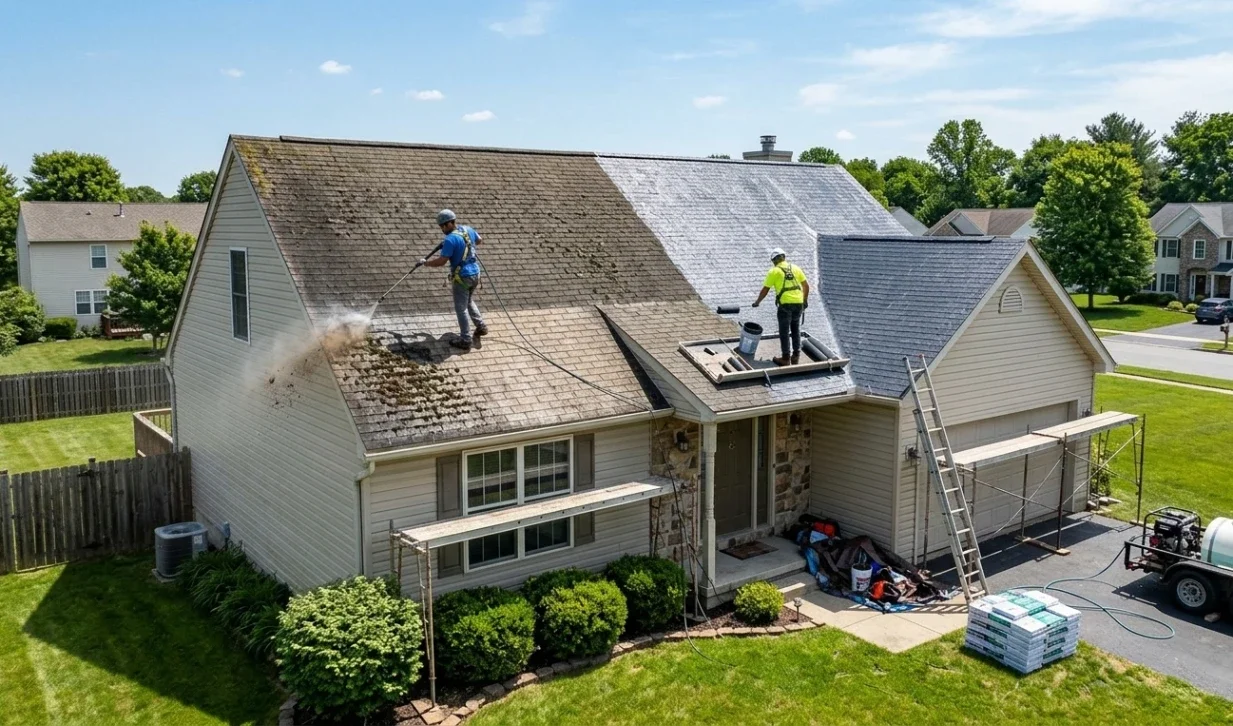
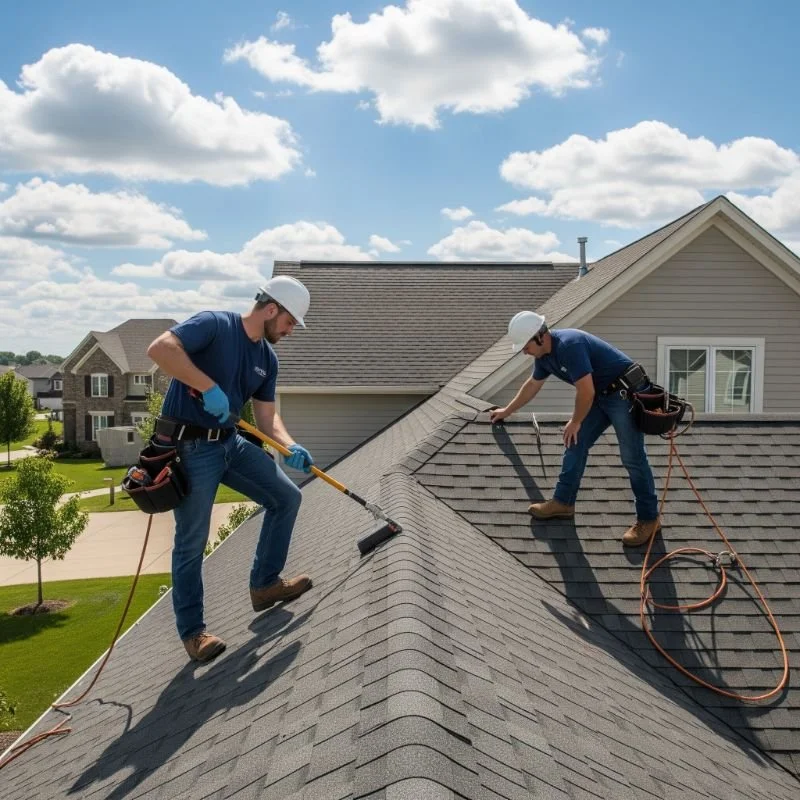
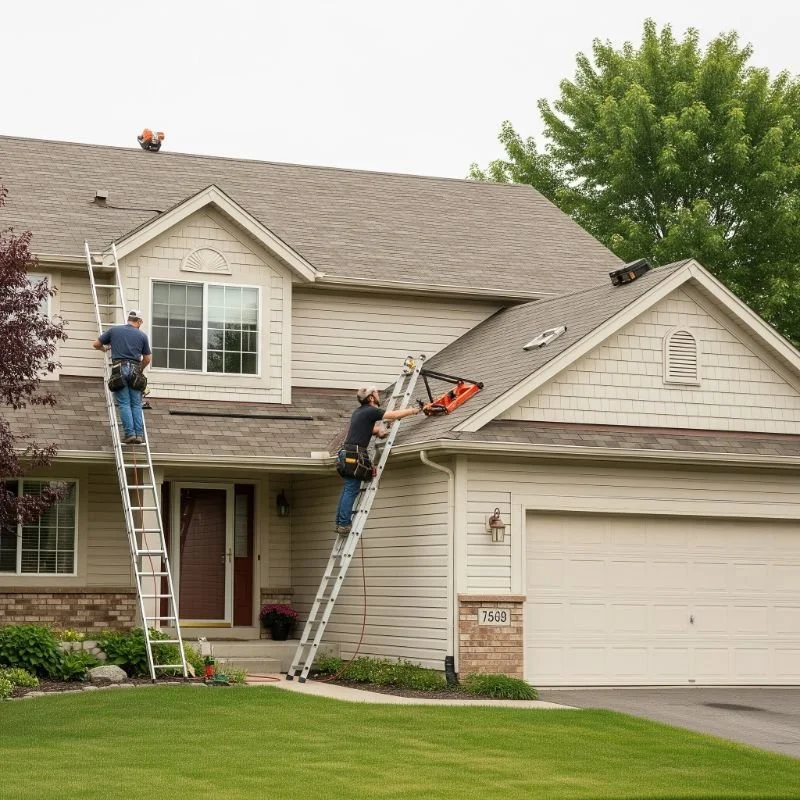
As a result, cleaning companies developed the soft washing technique. They apply biodegradable cleaning materials to remove both atmospheric and biological pollutants. They work delicately so as not to damage the surface and, of course, the paint and even color palette of the roof. While some solutions simply remove the dirt, others interact with living organisms, killing them and destroying the roots of the organic growth.
Experts recommend regular or seasonal soft washing to not create a favorable environment for living organisms and not allow algae and moss to attach to the cover with their roots. Soft washing works as a gentle sanitising of roofs. As a result, the underlying structure of the roof remains undisturbed. Such cleaning perfectly suits San Antonio, TX, where the architectural diversity ranges from historic Spanish colonial styles with delicate tiles to modern suburban builds.
The Thermal Impact of Roof Hygiene
Summer temperatures can get extremely high in San Antonio, TX. Houses, covered with dark spots of organic growth and dirt, absorb UV rays instead of reflecting them. Due to that, the attic temperature also rises. So, homeowners have to exhaust their HVAC systems to cool down the space to make it comfortable for living. As a result, the mechanical systems start wearing out faster, and the utility bills rise.
In winter, damaged roofs also affect the heating system, as the house needs more heat to warm up. If the homeowner decides to save costs on heating, the interior can also get covered with mold. The increased humidity is harmful not only to the interior materials but to human health as well.
Takeaways
Soft cleaning is not only about aesthetics. It’s also about the longevity of your roofing and interior materials. Besides, it helps to preserve the reflective properties of the roofing materials, which prevents the attic from overheating. In other seasons, soft cleaning allows homeowners in San Antonio to reduce their utility expenses and avoid unexpected roof and interior collapse caused by mold, algae, dirt, moss, and other external pollutants.
Stay up to date with our latest ideas!