Explore roof restoration with this comprehensive guide to reviving your home's crown, improving durability, appearance, and long term protection.

Roof restoration is a vital process in maintaining and enhancing the longevity and aesthetic appeal of a home. This guide delves into the essential steps and considerations involved in reviving your roof, from assessing damage and selecting materials to implementing effective repair techniques. By exploring the benefits of professional versus DIY restoration, cost implications, and sustainability options, homeowners can make informed decisions to protect their investment and ensure their home's crown remains resilient and visually appealing.
Introduction to Roof Restoration
Importance of Roof Maintenance
Roof maintenance is a critical aspect of home care that often goes overlooked until significant issues arise. The roof serves as the first line of defense against environmental elements such as rain, wind, snow, and sun. Over time, exposure to these elements can lead to wear and tear, compromising the roof's integrity. Regular maintenance helps in identifying potential problems early, preventing minor issues from escalating into major repairs. It also extends the lifespan of the roof, ensuring that it continues to protect the home effectively. By investing in routine inspections and upkeep, homeowners can safeguard their property and avoid costly repairs in the future.
Benefits of Roof Restoration
Roof restoration offers numerous advantages that go beyond mere aesthetic improvements. One of the primary benefits is the enhancement of the roof's durability and performance. Restoration involves repairing and reinforcing the existing structure, which can significantly extend the roof's lifespan. This process is often more cost-effective than a complete roof replacement, providing homeowners with substantial savings. Moreover, a restored roof can improve energy efficiency by addressing issues such as leaks and poor insulation, leading to reduced energy bills. A well-maintained roof also boosts the overall value of the property, making it an attractive option for potential buyers. Furthermore, restoration can enhance the curb appeal of a home, giving it a fresh and updated look.
Overview of the Restoration Process
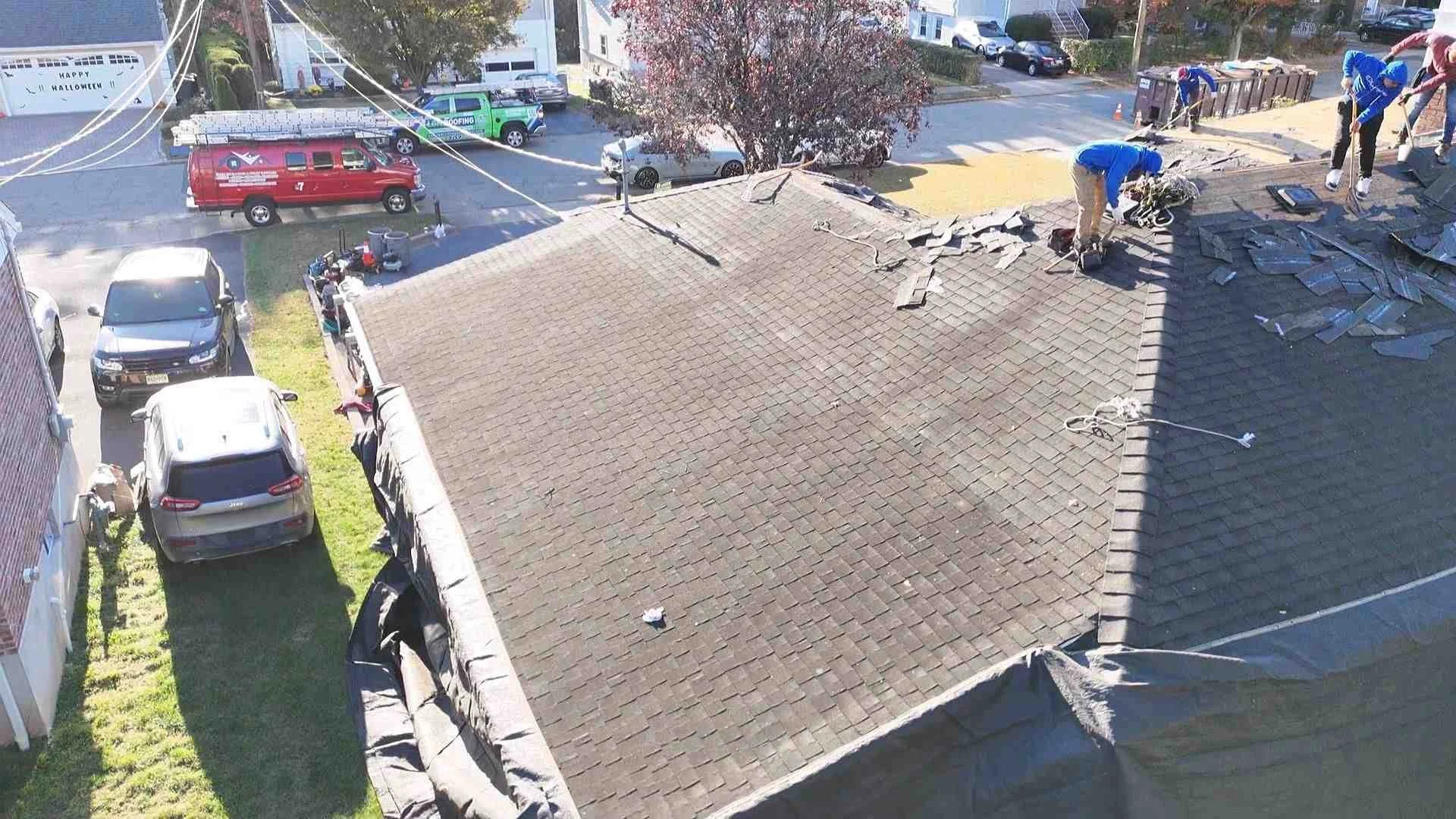
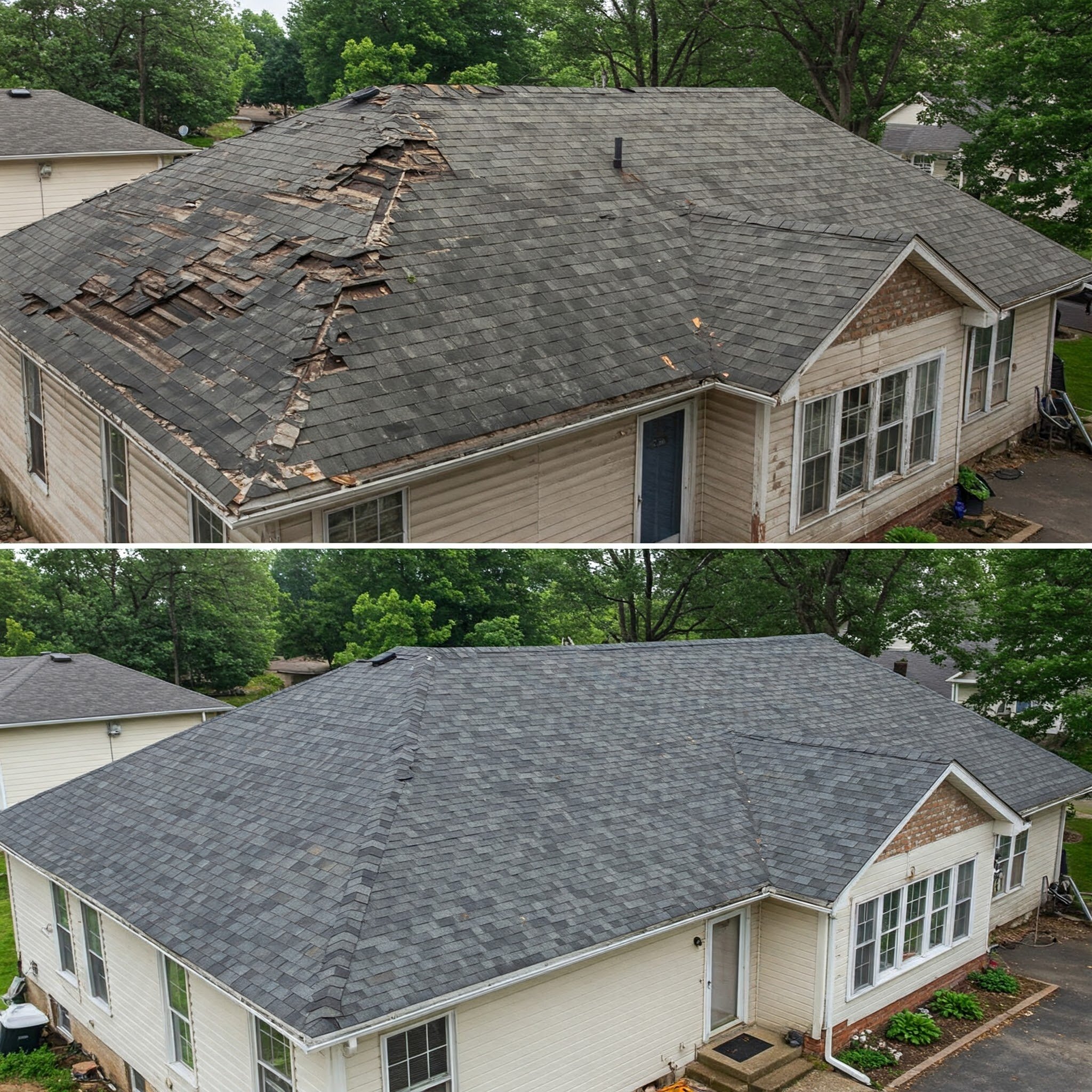
The roof restoration process is a comprehensive approach that involves several key steps to ensure the roof is returned to optimal condition. It typically begins with a thorough inspection to assess the current state of the roof and identify any areas of concern. This is followed by cleaning, which removes dirt, debris, and any biological growth such as moss or algae. Once the roof is clean, any necessary repairs are made, including fixing leaks, replacing damaged tiles or shingles, and addressing structural issues. After repairs, a protective coating is applied to seal the roof and provide an additional layer of protection against the elements. This coating can also enhance the roof's appearance and improve its resistance to UV rays and weathering. The final step involves a detailed inspection to ensure all work has been completed to a high standard, providing peace of mind that the roof is ready to withstand future challenges.
Assessing the Condition of Your Roof
Identifying Common Roof Problems
Understanding the typical issues that can affect your roof is the first step in assessing its condition. Common roof problems include:
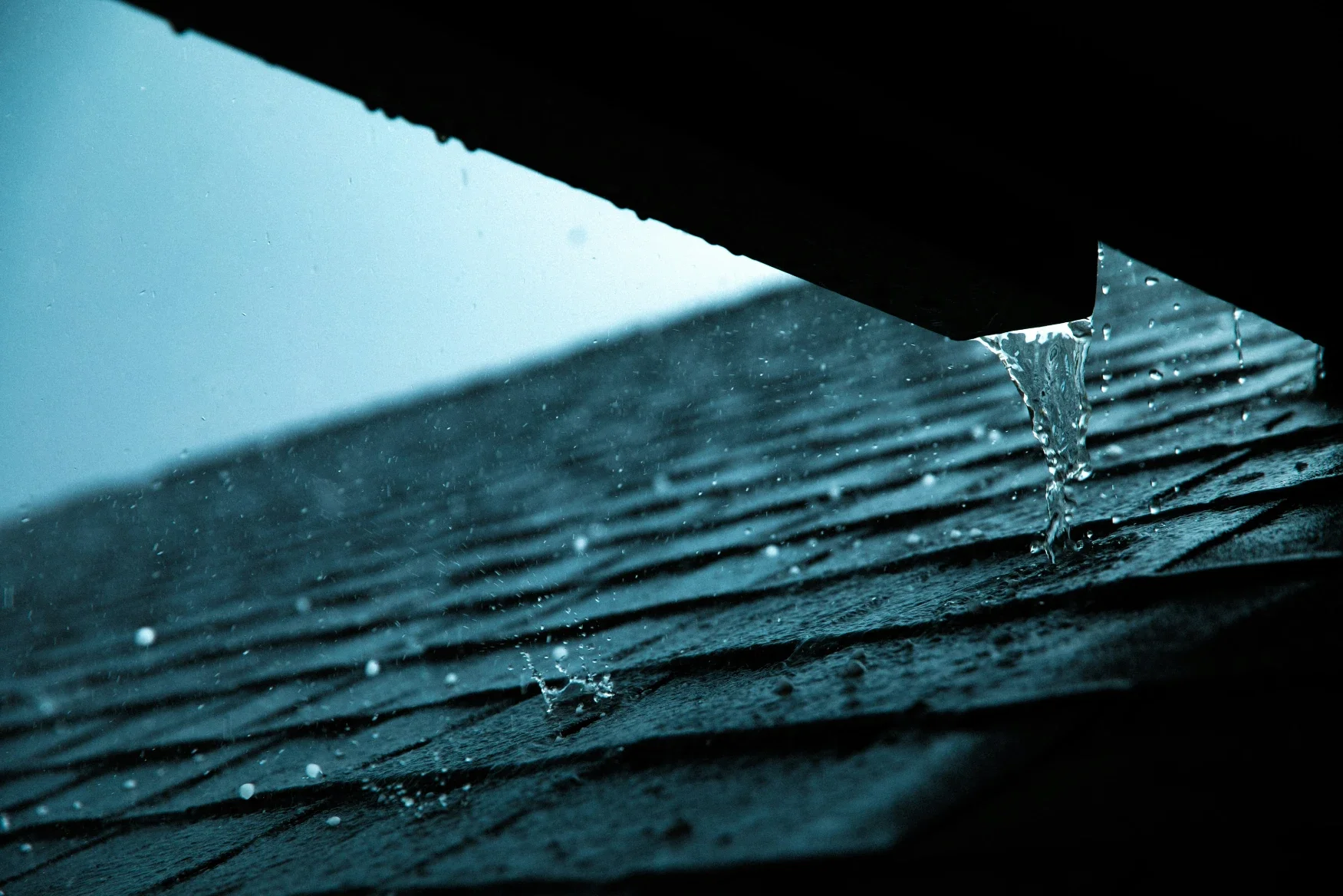
Leaks and Moisture: Water infiltration can lead to significant damage, including mold growth and structural deterioration. Look for water stains on ceilings and walls, which may indicate a leak.
Missing or Damaged Shingles: Shingles can become cracked, curled, or completely detached due to weather conditions. This can expose the underlying materials to the elements, leading to further damage.
Sagging Roof Deck: A sagging roof deck is a serious issue that may indicate structural problems. This can be caused by prolonged exposure to moisture or the weight of accumulated snow and ice.
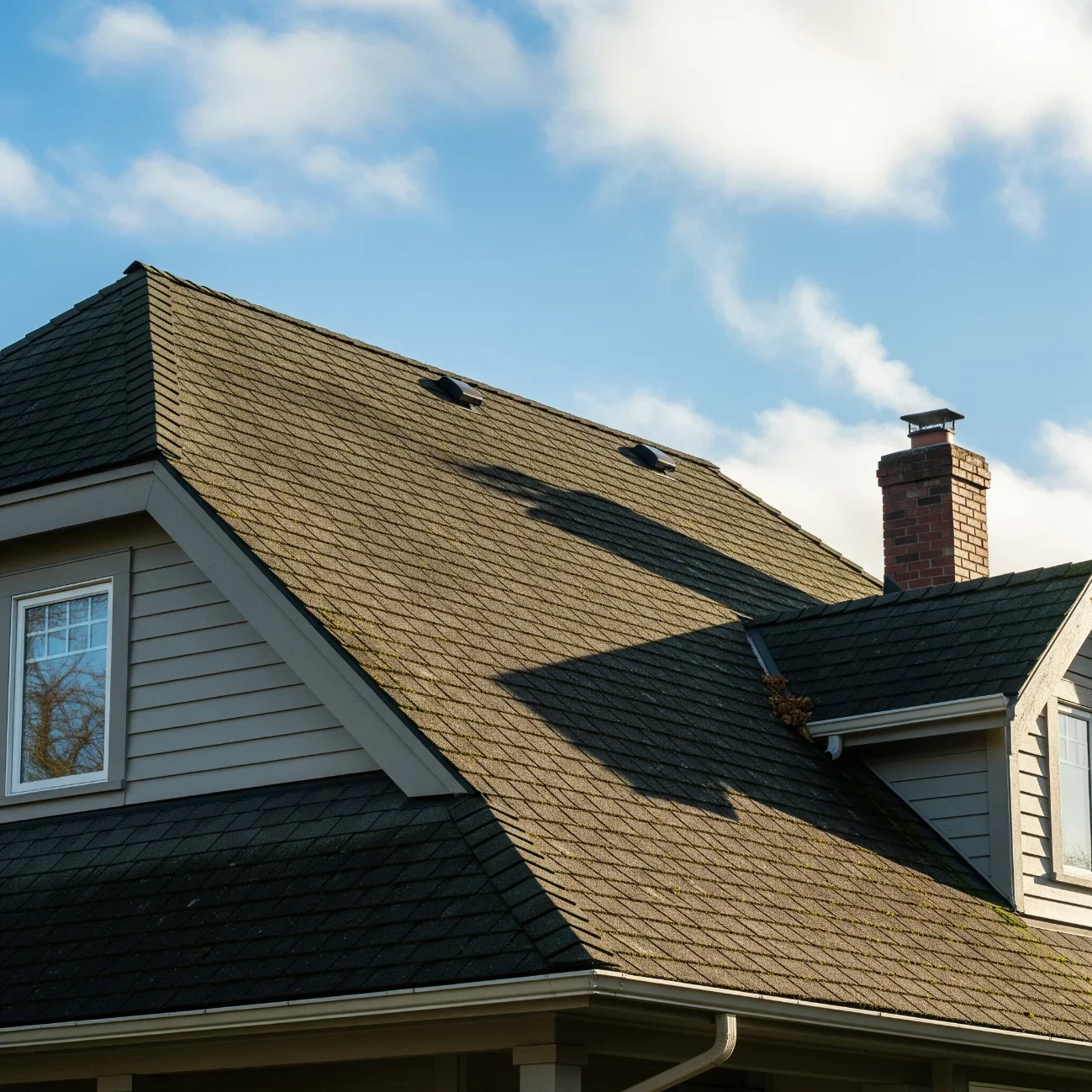
Granule Loss: Asphalt shingles are coated with granules that protect them from UV rays. If you notice granules in your gutters or downspouts, it may be a sign that your shingles are nearing the end of their lifespan.
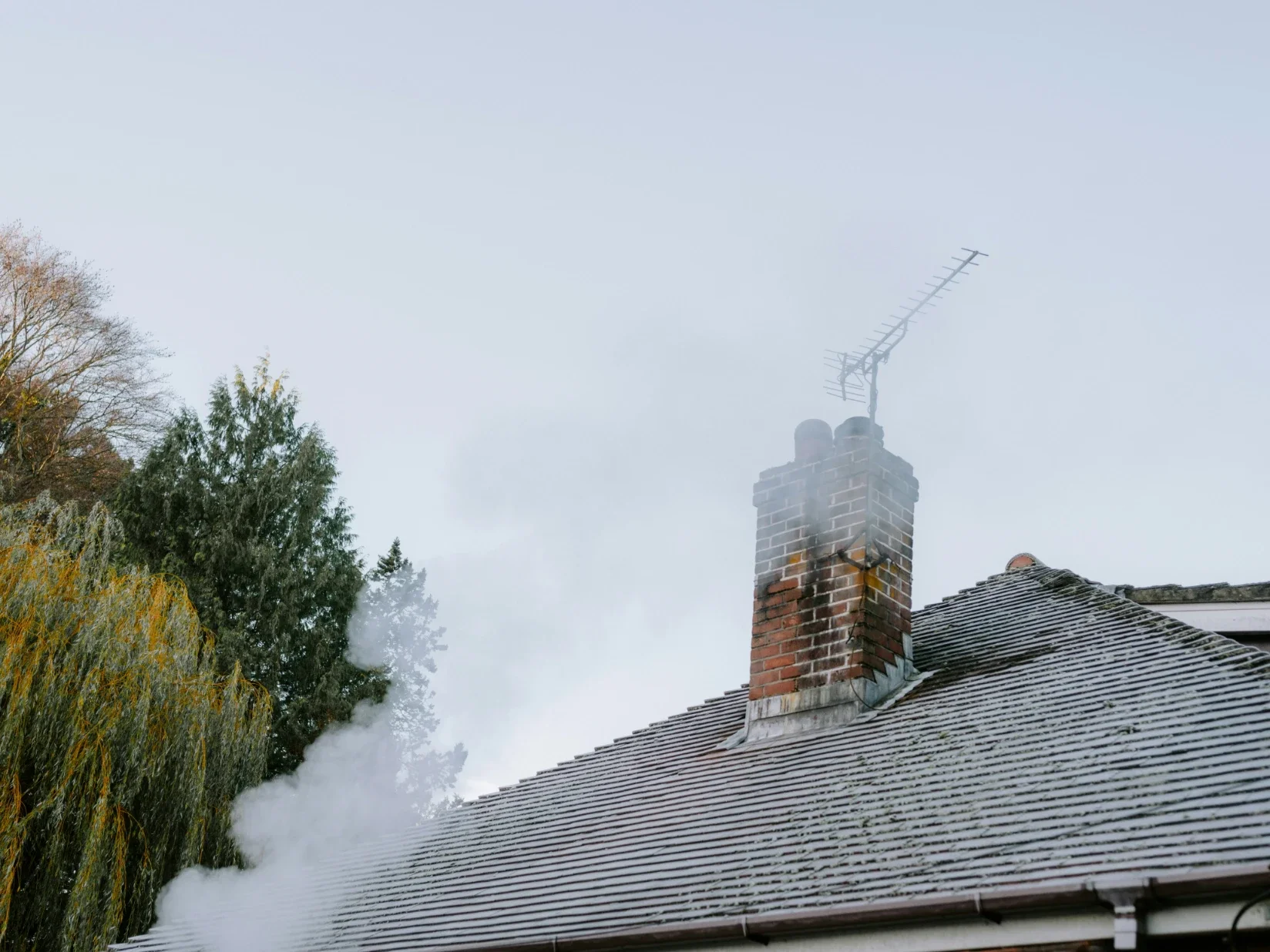
Flashing Damage: Flashing is used to seal joints and prevent water penetration. Damaged or corroded flashing can lead to leaks, especially around chimneys, vents, and skylights.
Conducting a Roof Inspection
Performing a thorough roof inspection is crucial to identifying potential problems early. Here’s how to conduct an effective inspection:
Visual Inspection from the Ground: Start by examining your roof from the ground using binoculars. Look for any obvious signs of damage, such as missing shingles or sagging areas.
Check the Attic: Inspect your attic for signs of water damage, such as stains, mold, or damp insulation. This can help identify leaks that may not be visible from the outside.
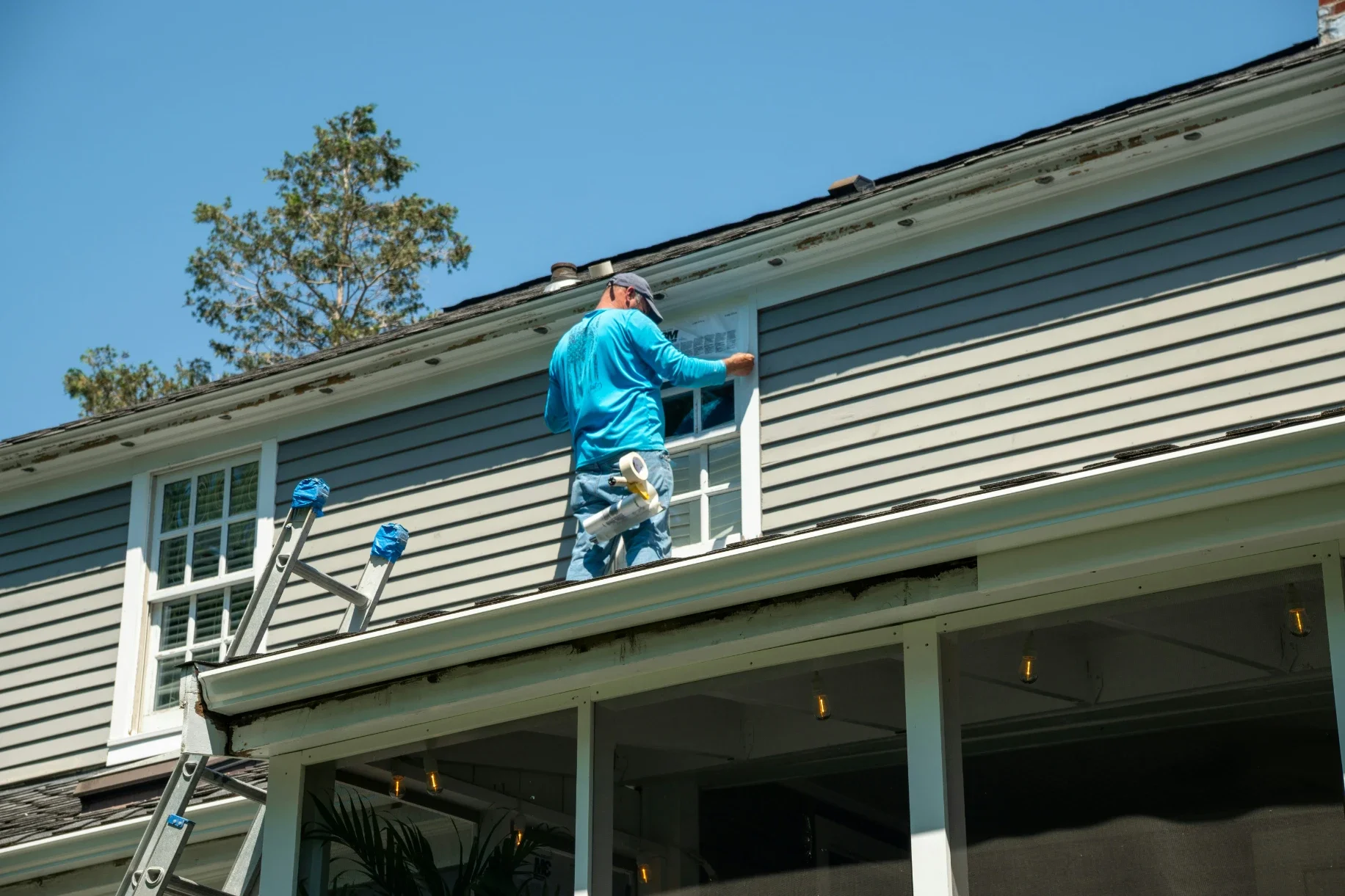
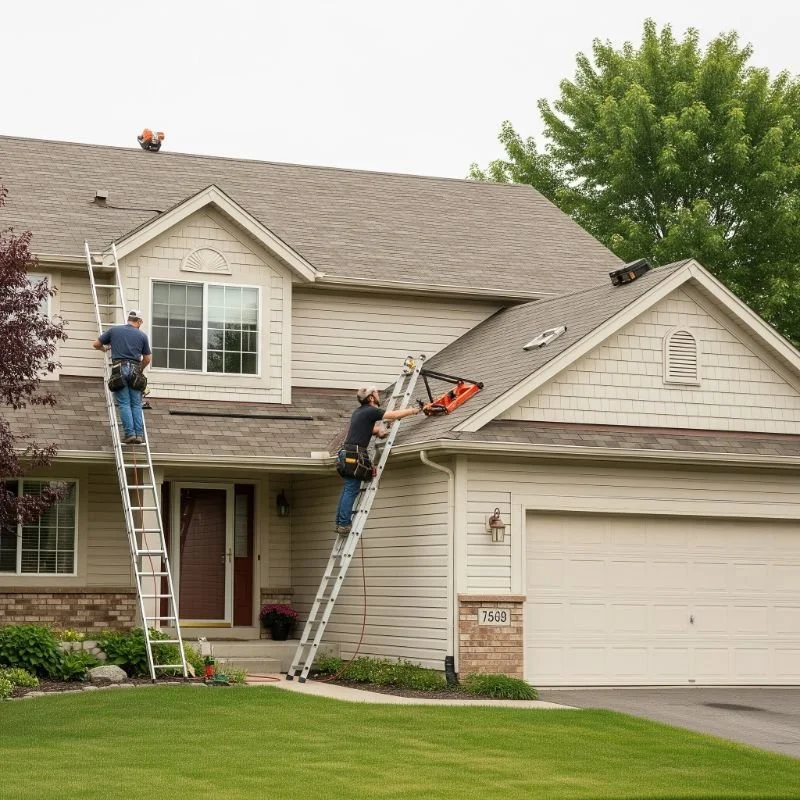
Examine the Roof Up Close: If it’s safe to do so, use a ladder to get a closer look at your roof. Check for damaged or missing shingles and inspect the flashing around chimneys and vents.
Inspect Gutters and Downspouts: Ensure that gutters and downspouts are clear of debris and are functioning properly. Check for granules, which can indicate shingle deterioration.
Look for Signs of Wear and Tear: Pay attention to any signs of aging, such as cracked caulk or rust spots on flashing, and moss or algae growth, which can indicate moisture retention.
When to Consider Professional Help
While some roof assessments can be done by homeowners, there are situations where professional help is necessary:
Complex Roof Designs: If your roof has a complex design with multiple levels or steep pitches, it may be safer and more effective to hire a professional for the inspection.
Extensive Damage: If you notice significant damage, such as large areas of missing shingles or a sagging roof deck, a professional assessment is crucial to determine the extent of the repairs needed.
Safety Concerns: If you’re uncomfortable with heights or unsure about the safety of accessing your roof, it’s best to leave the inspection to a professional.
Uncertain Findings: If you’re unsure about the condition of your roof or the severity of any issues you’ve identified, a professional roofer can provide a more accurate assessment and recommend appropriate solutions.
Regular Maintenance: Scheduling regular professional inspections can help catch potential problems early and extend the lifespan of your roof.
The Roof Restoration Process
Cleaning and Preparing the Roof
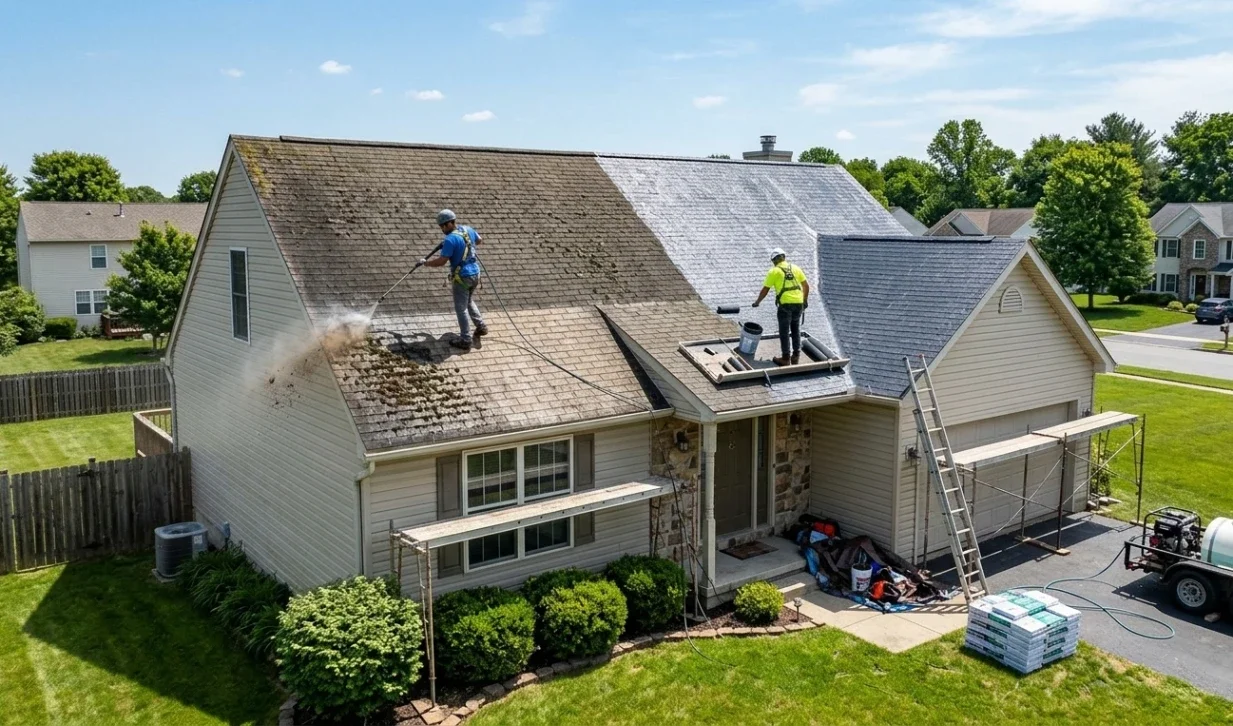
Cleaning and preparing the roof is the foundational step in the roof restoration process. This phase involves removing all debris, dirt, moss, lichen, and algae that have accumulated over time. A high-pressure water cleaner is typically used to ensure thorough cleaning, which helps in revealing the true condition of the roof. This step is crucial as it allows for a clear assessment of any underlying issues that need to be addressed. During this stage, gutters and downpipes are also cleaned to ensure proper drainage and prevent water damage.
Repairing Damages and Weak Spots
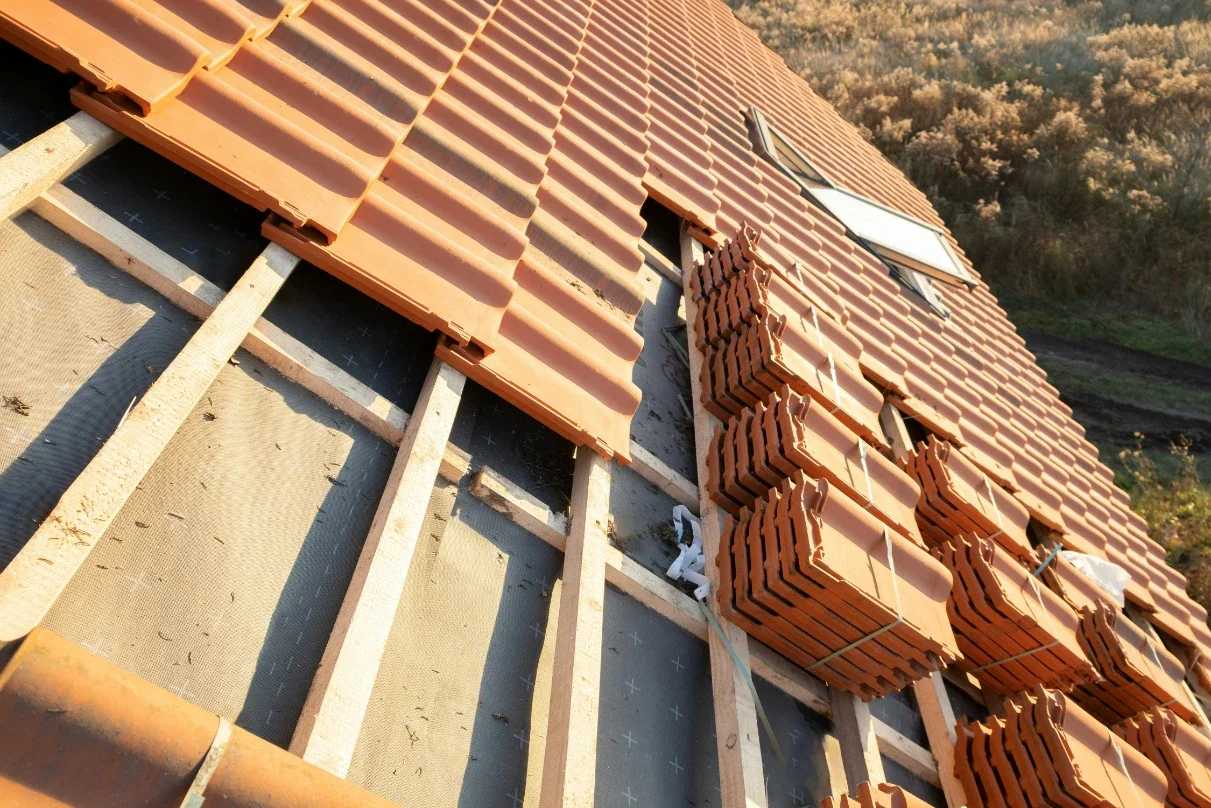
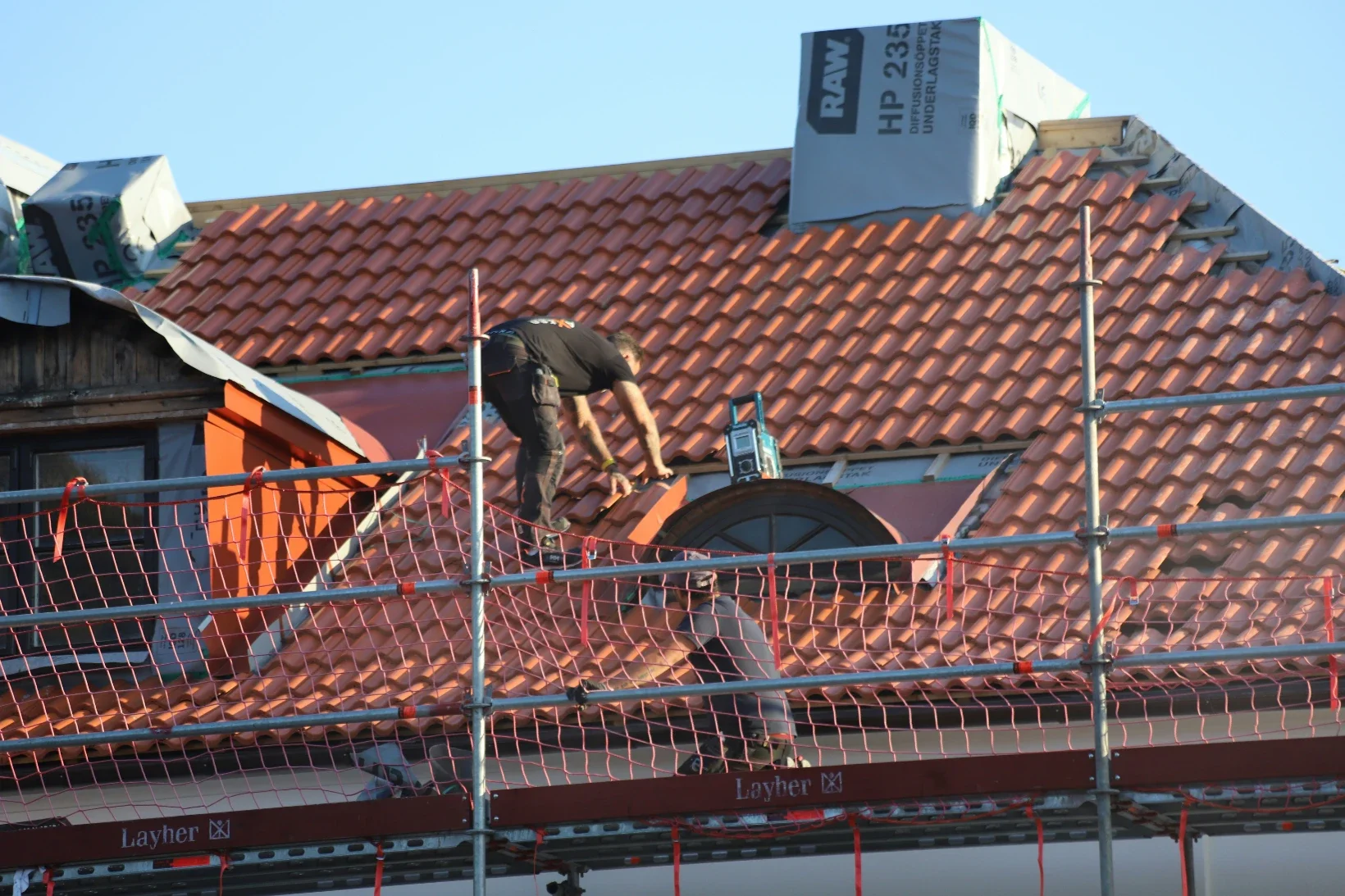
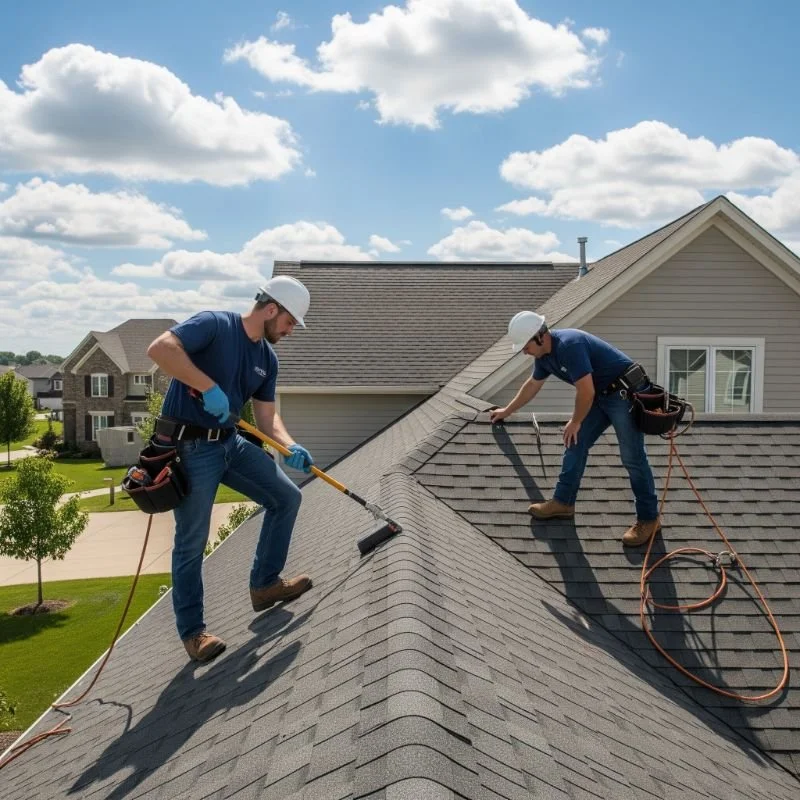
Once the roof is clean, the next step is to repair any damages and reinforce weak spots. This involves inspecting the roof for cracked or broken tiles, damaged flashing, and any other structural issues. Damaged tiles are replaced, and any loose tiles are re-secured to prevent future problems. Flashing, which is essential for preventing water ingress, is checked and repaired or replaced as necessary. This stage may also involve re-bedding and re-pointing ridge caps to ensure they are secure and watertight. Addressing these issues is vital to maintaining the roof's integrity and preventing leaks.
Applying Protective Coatings and Sealants
The final step in the roof restoration process is applying protective coatings and sealants. This involves using specialized roof coatings that provide a protective barrier against the elements, such as UV rays, rain, and wind. These coatings not only enhance the roof's appearance but also extend its lifespan by preventing further deterioration. Sealants are applied to ensure all joints and seams are watertight, providing an additional layer of protection against leaks. This stage may also include applying a reflective coating to improve energy efficiency by reducing heat absorption. The choice of coatings and sealants depends on the roof material and the specific needs of the home.
Choosing the Right Materials and Professionals
Selecting Quality Roofing Materials
When embarking on a roof restoration project, selecting the right materials is crucial to ensure durability, aesthetics, and functionality. The choice of materials will largely depend on your home's architectural style, climate, and personal preferences. Common roofing materials include asphalt shingles, metal, clay tiles, slate, and wood shakes. Each material has its own set of advantages and disadvantages:
Asphalt Shingles: Known for their affordability and ease of installation, asphalt shingles are a popular choice. They come in a variety of colors and styles, offering versatility in design. However, they may not last as long as other materials in extreme weather conditions.
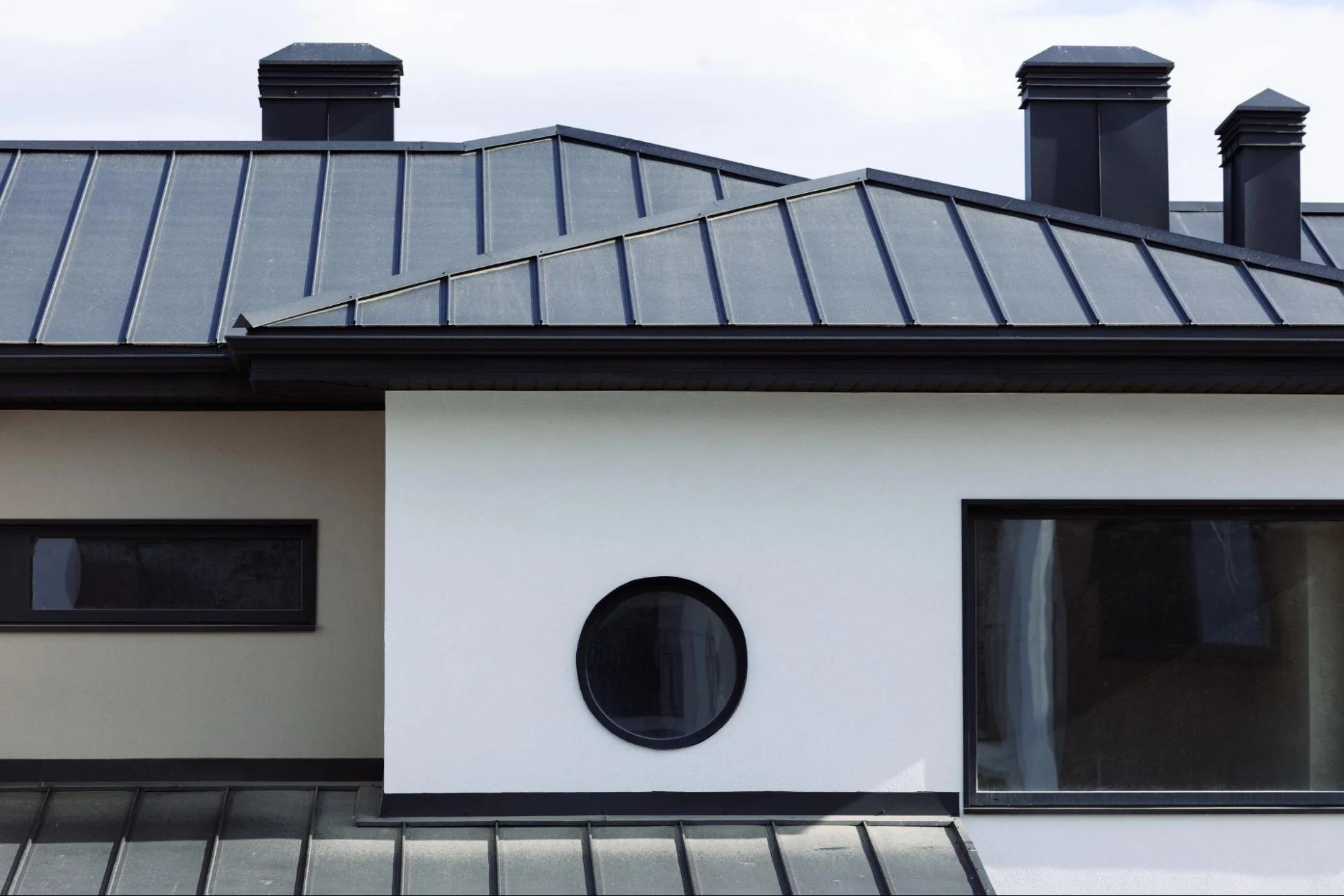
Metal Roofing: Metal roofs are durable, energy-efficient, and can last up to 50 years or more. They are resistant to harsh weather and fire, making them a great option for areas prone to extreme conditions. Metal roofing is available in various styles, including panels and shingles, to suit different aesthetic preferences.
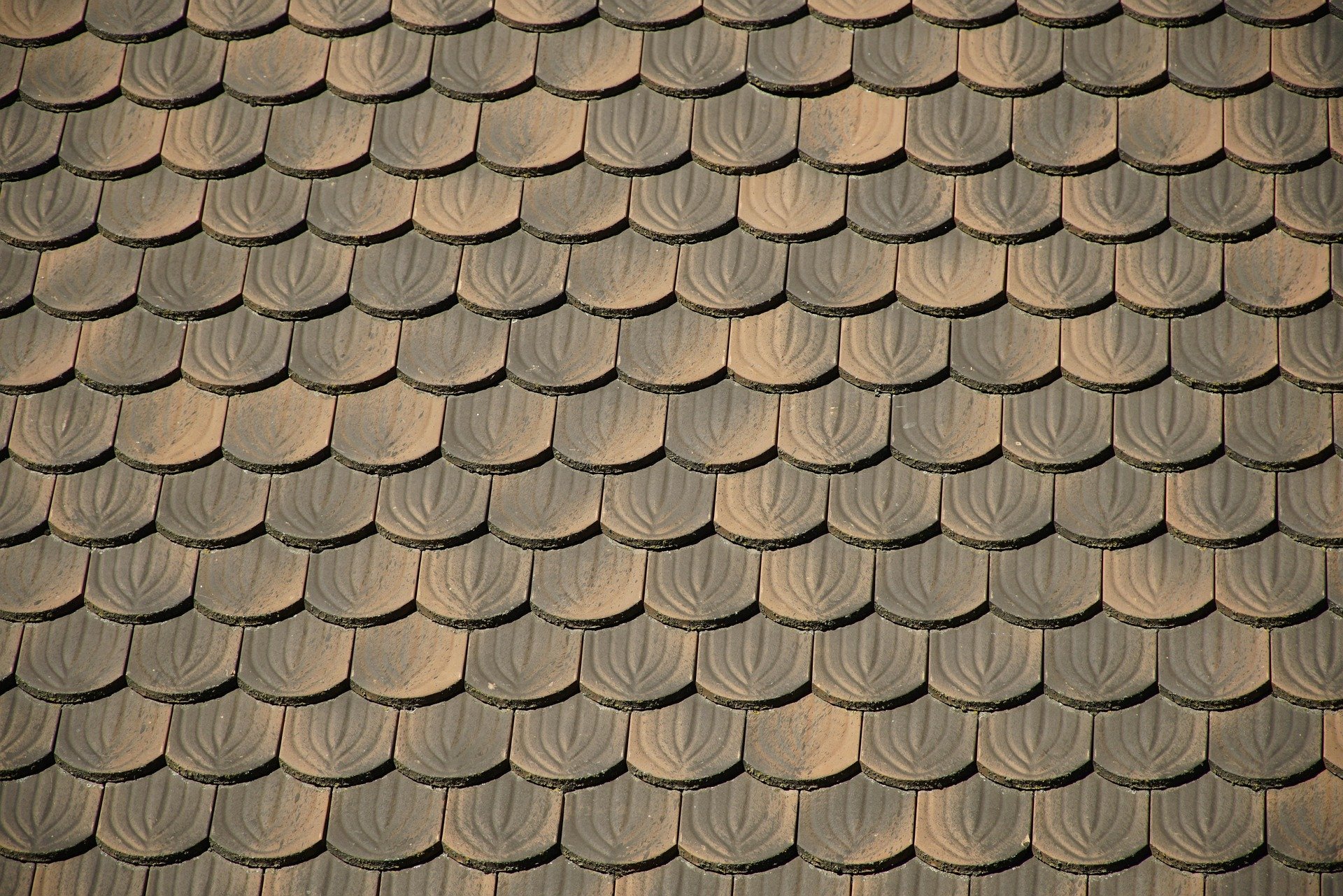
Clay and Concrete Tiles: These materials are known for their longevity and classic appearance. They are ideal for homes with a Mediterranean or Spanish architectural style. While they are more expensive and heavier than other options, their durability and resistance to fire and insects make them a worthwhile investment.
Slate: Slate roofing offers a sophisticated and timeless look. It is incredibly durable and can last over a century. However, slate is one of the most expensive roofing materials and requires professional installation due to its weight and fragility.
Wood Shakes: Wood shakes provide a natural and rustic appearance. They are environmentally friendly and offer good insulation. However, they require regular maintenance and are not as fire-resistant as other materials.
Hiring Qualified Roofing Contractors
Choosing the right professionals to handle your roof restoration is as important as selecting the materials. A qualified roofing contractor will ensure that the job is done correctly and safely. Here are some key considerations when hiring a roofing contractor:
Experience and Reputation: Look for contractors with a proven track record in roof restoration. Check online reviews, ask for references, and consult with previous clients to gauge their satisfaction with the contractor's work.
Licensing and Insurance: Ensure that the contractor is licensed to operate in your area and carries adequate insurance. This protects you from liability in case of accidents or damage during the project.
Certifications and Training: Some roofing manufacturers offer certifications to contractors who have undergone specific training. Hiring a certified contractor can provide additional assurance of their expertise and knowledge of the latest roofing techniques and materials.
Detailed Estimates and Contracts: Obtain detailed written estimates from multiple contractors to compare pricing and services. Ensure that the contract includes all aspects of the project, such as materials, labor, timelines, and warranties.
Evaluating Costs and Budget Considerations
Roof restoration can be a significant investment, so it's essential to evaluate costs and budget considerations carefully. Here are some factors to keep in mind:
Material Costs: The cost of roofing materials can vary widely based on the type and quality you choose. While it may be tempting to opt for cheaper materials, investing in high-quality options can save you money in the long run by reducing maintenance and replacement costs.
Labor Costs: Labor costs will depend on the complexity of the project and the contractor's expertise. It's important to balance cost with quality to ensure that the work is done correctly and efficiently.
Additional Expenses: Consider potential additional expenses, such as permits, disposal of old roofing materials, and any necessary repairs to the underlying structure. These costs can add up, so it's important to factor them into your budget.
Financing Options: If the cost of roof restoration exceeds your budget, explore financing options. Some contractors offer payment plans or financing through third-party lenders. Additionally, check if your homeowner's insurance covers any part of the restoration, especially if the damage was caused by a covered peril.
By carefully selecting materials and professionals, and evaluating costs, you can ensure a successful roof restoration that enhances your home's value and longevity.
Stay up to date with our latest ideas!