Linen, cotton and wool need different storage than synthetics. Ten closet ideas for hanging, folding, airing and protecting natural fabrics so they last for years.
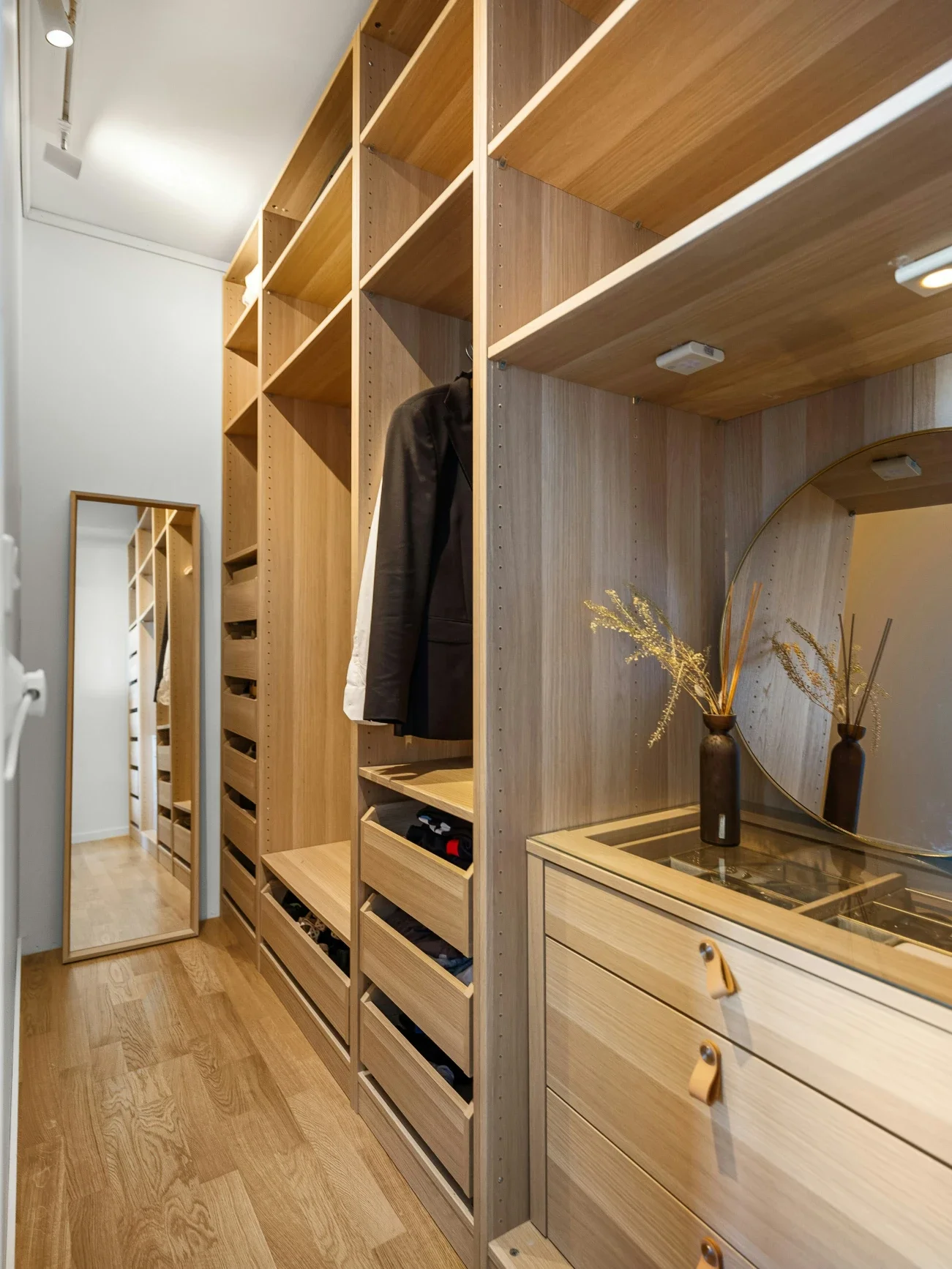
Most closet makeovers start with the hardware: new rails, matching hangers, a few drawer dividers. But the clothes themselves should shape the plan. A wardrobe built around linen, cotton and wool behaves very differently from one full of polyester. Natural fibers breathe, absorb moisture and crease in their own way, and they reward a closet that gives them air, space and the right kind of support.
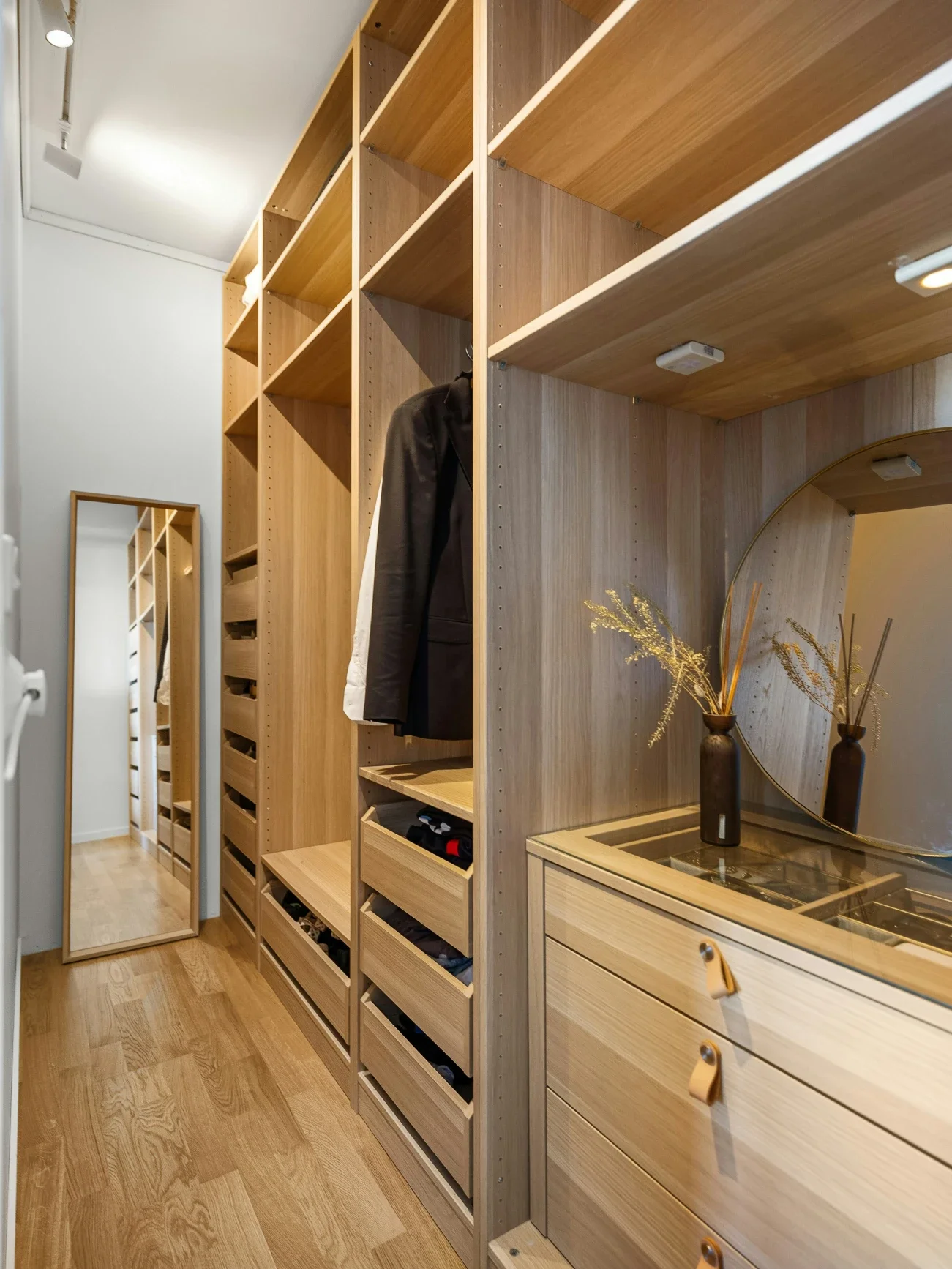
The good news is that storing natural fabrics well is mostly about small, inexpensive choices. Below are ten ideas, grouped into hanging space, shelves and drawers, and long-term care, so you can adapt your closet to the clothes you actually wear.
Why Natural Fabrics Need a Different Kind of Closet
Linen and cotton are plant fibers that pull moisture from the air. Pack them tightly in a closed, humid space and they can develop musty smells, yellowing or even mildew spots. Wool is more resilient against odor but attracts moths. Synthetics, by contrast, shrug off most of these problems, which is why standard closet systems rarely account for them.
A natural-fabric closet therefore has three goals: let air circulate, support each garment in the shape it prefers, and protect fibers during the months they are not in use.
Hanging Space: Give Breathable Fabrics Room
1. Swap Wire Hangers for Wide Wooden Ones
Thin wire hangers leave sharp shoulder dents in soft woven fabrics. Wooden hangers with a wide, curved profile spread the weight across the shoulders and absorb a little humidity themselves. Unfinished or lightly oiled wood looks calm and works with almost any bedroom palette.
2. Leave a Finger's Width Between Garments
Crowding is the main reason linen comes out of a closet more wrinkled than it went in. If you can slide a finger between each hanger, air can move and creases from the wash have a chance to relax on their own. If the rail is full, it is a sign to edit rather than squeeze.
3. Hang Dresses Full Length
Long, lightweight pieces should hang without folding at the hem. Install at least one section of rail high enough that maxi and midi linen dresses can drop freely without touching the closet floor or a shoe rack below. Gravity does gentle work here: a slightly damp linen dress hung full length will smooth out noticeably overnight, often making the iron unnecessary.
4. Group by Fabric Weight
Instead of sorting only by color, try zoning the rail by weight: airy shirts and dresses at one end, mid-weight trousers and skirts in the middle, heavier jackets at the other end. Heavier items stop crushing lighter ones, and you can see at a glance which part of your wardrobe suits today's weather.
Shelves and Drawers: Fold With Care
5. Fold Knits, Never Hang Them
Wool and cotton sweaters stretch at the shoulders when they hang for months. Fold them loosely and store them on open shelves in stacks of no more than three or four, so the bottom piece is not flattened. Shelf dividers keep stacks upright without needing to be tightly packed.
6. Choose Breathable Baskets Over Plastic Bins
Sealed plastic boxes trap moisture, which natural fibers dislike. Woven seagrass, rattan or cotton-canvas baskets let air through and look far warmer on an open shelf. Label them by category (scarves, tees, sleepwear) so the closet stays tidy without constant refolding.
7. Keep Drawers Clean and Lined
Dust and fibers collect in drawers faster than most people expect, even when they stay shut. Line them with plain cotton fabric or acid-free paper and wipe them out each season. If you have ever wondered where the grime comes from, this guide on why drawer organisers get dirty even when closed explains the causes and fixes.
Air, Light and Long-Term Protection
8. Remove Plastic Covers and Let the Closet Breathe
Dry-cleaning bags are designed for transport, not storage. Take garments out as soon as they come home, and use cotton garment bags for anything that needs dust protection. If your closet has solid doors, leave them open for an hour on dry days or add a small louvered panel to keep air moving.
9. Use Natural Moth Deterrents
Cedar blocks, hangers and rings release an aroma that moths avoid, while lavender sachets add a softer scent to drawers. Refresh cedar with a light sanding every few months. Most importantly, never store wool or linen that has been worn but not washed, as body oils attract insects and can set into stains.
10. Rotate Seasonally and Store Off-Season Pieces Smartly
Moving last season's clothes out of the main closet instantly gives everything else breathing room. Clean each piece first, fold it loosely and store it in breathable bags or boxes. Ottomans, bed-frame drawers and lidded benches are useful here, and storage furniture that doesn't look like storage can keep off-season clothes close without cluttering the bedroom.
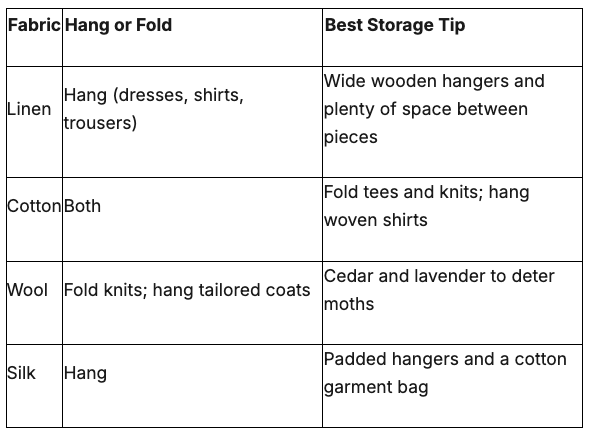
Quick Fabric Storage Guide
Final Closet Tips
Edit before you organize. Fewer, better pieces need less space and stay in better shape.
Mind the humidity. A small dehumidifier or moisture absorber helps in basements and coastal homes.
Keep the palette calm. Wooden hangers, woven baskets and neutral linings make the closet feel like part of the room.
Schedule a seasonal check. Twice a year, air everything out, wipe shelves and look for signs of moths.
A closet that works with natural fabrics rather than against them keeps clothes fresher, smoother and wearable for many more seasons. If you are ready to start, this plan to organize your closet in one weekend and keep it that way is a practical place to begin.
Stay up to date with our latest ideas!