The Best Furniture for a Home Office is not Sold in Furniture Stores
Discover why the best home office furniture may come from unexpected sources, with practical ideas for creating a functional, comfortable, and stylish workspace.

Office seating built for commercial use is tested to 300,000 tilt cycles and 120,000 swivel rotations under a 270 lb load. Residential seating is tested to nothing comparable.
Commercial dealers sell single pieces to individuals. Most people never check, because they assume there is a minimum order.
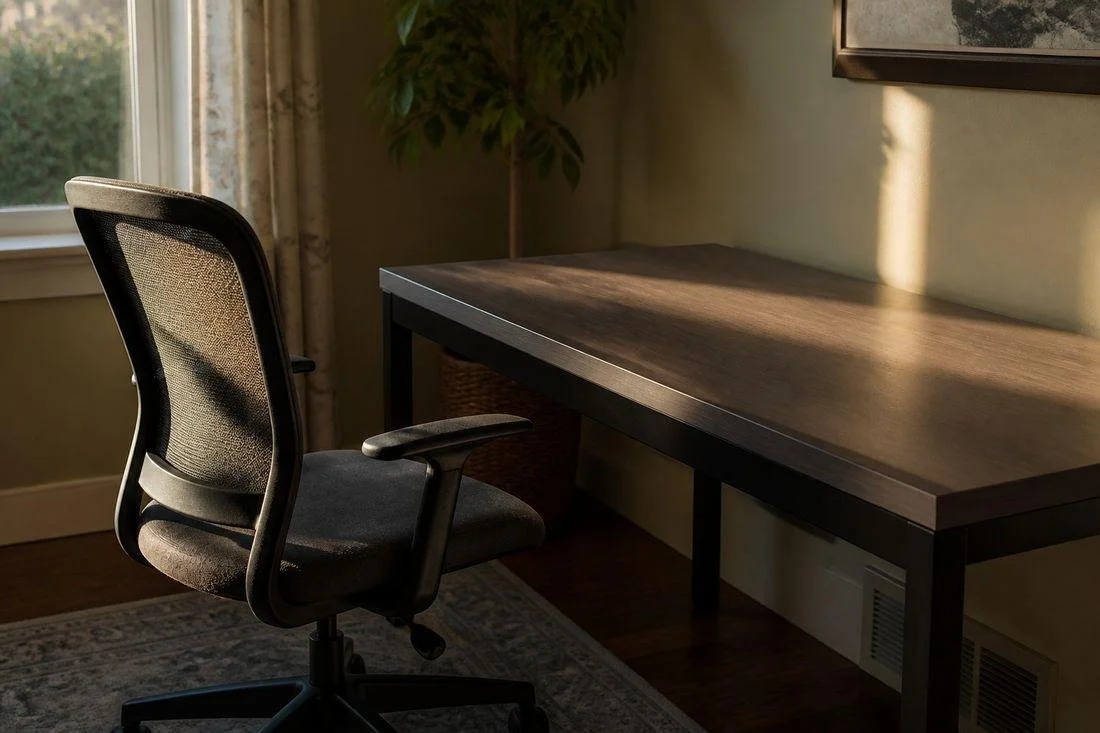
The payoff is concentrated in two pieces: the chair and the desk. Everything else in the room is better bought residential.
The threshold is roughly four hours a day. Below that, a nice residential desk and a decent chair are the right answer.
Short version: the furniture that lasts in a home office was designed for an office nobody lives in, and it is uglier for exactly that reason.
Start with the chair, and buy it from a commercial dealer
If you change one thing, change the seating, and buy it somewhere that sells to businesses.
Commercial furniture dealers sell single units to individuals. This is the part almost nobody checks, because the websites look like they are built for procurement departments and the assumption is that you need a purchase order and a minimum quantity. Retailers such as Office Furniture 2go list the same product lines that go into corporate fit-outs, in quantities of one, with the specification sheets published rather than buried.
That matters more than the price difference, because the specification is the thing you are actually buying.
What the testing proves, and what it does not
Contract-grade is not a marketing phrase. It points at a published standard.
Office seating sold into commercial environments is generally tested against ANSI/BIFMA X5.1, one of the furniture performance standards maintained by the Business and Institutional Furniture Manufacturers Association. The figures explain what the money buys:
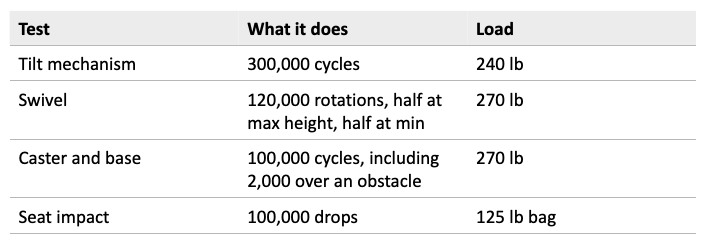
Residential seating is not tested against anything equivalent, and it does not need to be. A dining chair used twice a day will outlive its owner. A chair used 2,000 hours a year is a different engineering problem.
What the standard does not tell you is whether the chair suits your body. It is a durability floor, not a comfort rating. Two chairs can both pass and one of them can still be wrong for you.
Where the money actually goes
The instinct is to spread a budget evenly across the room. In a home office that is the wrong shape.
Buy commercial: the chair first, by a wide margin. The desk second, and especially if it is height adjustable, because the lifting column is the component that fails. Filing and storage third, where the drawer slides do the work.
Buy residential: shelving, lighting, rugs, window treatments, anything hung on a wall. These are chosen on appearance and no durability argument beats that. A bookcase holding books is under almost no stress.
The split is uneven on purpose. Two pieces absorb nearly all the wear in the room, and the rest of it is decoration doing decoration's job.
The trade-off nobody mentions
Commercial furniture is worse at one thing, and it is the thing you will notice first.
It is visually neutral, sometimes to the point of blandness. It was designed to vanish into a floor plate alongside ninety identical pieces, not to be the object you look at when you walk in. Finishes run to grays, laminates and dark woods. Proportions follow workplace standards rather than what suits a 10 by 12 room.
Drop a full commercial desk system into a small home office and it reads as institutional almost immediately. If the room is visible from the rest of the house, that may decide it for you, and that is a legitimate reason to go the other way. The approach in this piece on building a home office around one statement piece is the honest counterweight: one considered object, residential everything else.
You can also split the difference. A commercial chair paired with a residential desk is a common landing point, because the chair is the piece under load and the desk is the piece on show.
Five specifics worth checking before you buy
Most of what separates a good chair from a bad one is measurable.
Seat pan depth. It should support most of the thigh with no contact between the front edge and the back of your knee. Too deep is worse than too shallow.
A rounded front edge. Often called a waterfall edge. A square edge presses into the underside of the thigh all day.
Height-adjustable lumbar support. Not a fixed curve in the backrest, which every chair claims. It has to move.
A five-legged base. Four-legged office chairs tip.
Casters matched to your floor. Hard casters will mark a hardwood floor within a season. Soft casters cost a few dollars more.
The last one catches almost everyone, and it is the cheapest mistake on the list to avoid.
Buying used is the underrated option
There is a second-hand market in this category that barely exists for residential furniture, and it exists precisely because the products were built to survive.
Offices close, downsize and refit constantly, and the furniture that comes out is often four or five years into a fifteen-year life. Dealers who handle it will usually replace casters and gas lifts before resale. A chair that cost $900 new turns up at $250 having used a fifth of its tested cycles.
The catch is that you buy what is in the warehouse that week. You cannot specify a finish, and you cannot order two matching ones in six months. For a single home office, that is rarely a real constraint.
When to ignore all of this
None of this pays for itself in a room used two hours a day. A good residential desk and a comfortable chair will be fine, and the money is better spent on lighting.
The arithmetic changes somewhere around four hours a day, most days. Above that line, the chair stops being a piece of furniture and becomes equipment, and it makes sense to buy it from the people who sell equipment.
Stay up to date with our latest ideas!