5 Features of a True Built-In Look vs. an IKEA Hack
Compare five features that separate a true built-in look from an IKEA hack, including coordination, wall coverage, construction and price.
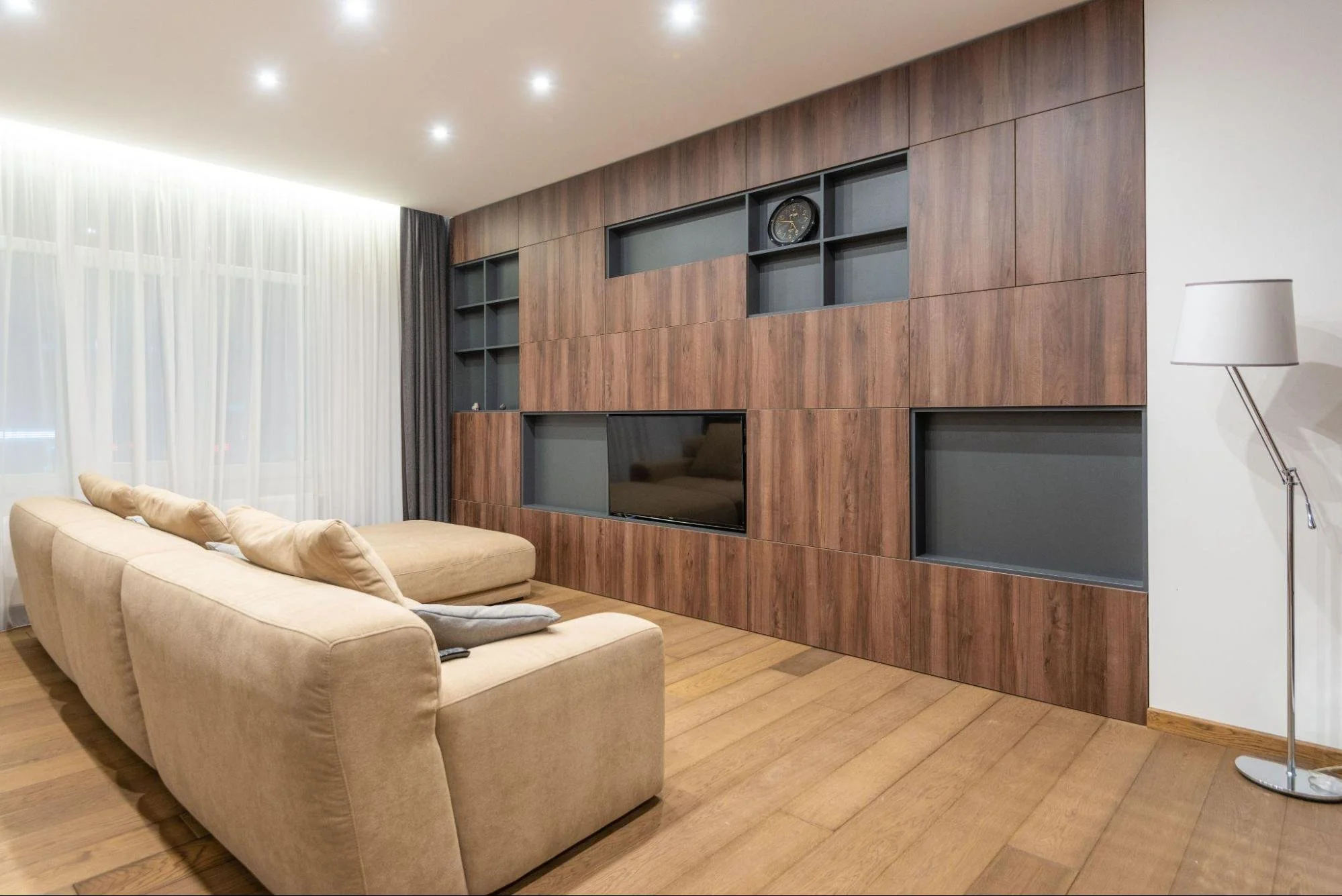
An IKEA hack and a ready-made wall designed to resemble built-in cabinetry can share a similar silhouette in a photograph. Living with them, however, can involve very different considerations. The distinction comes down to more than whether cabinets frame a television.
A convincing built-in look depends on how the pieces relate before installation, how much of the wall they occupy, what work remains after delivery, how the furniture is constructed, and what the complete arrangement costs. These five criteria provide a practical way to assess those differences without treating professional millwork, furniture systems, or DIY customization as interchangeable solutions.
1. The Pieces Are Matched Before They're Placed, Not Matched After
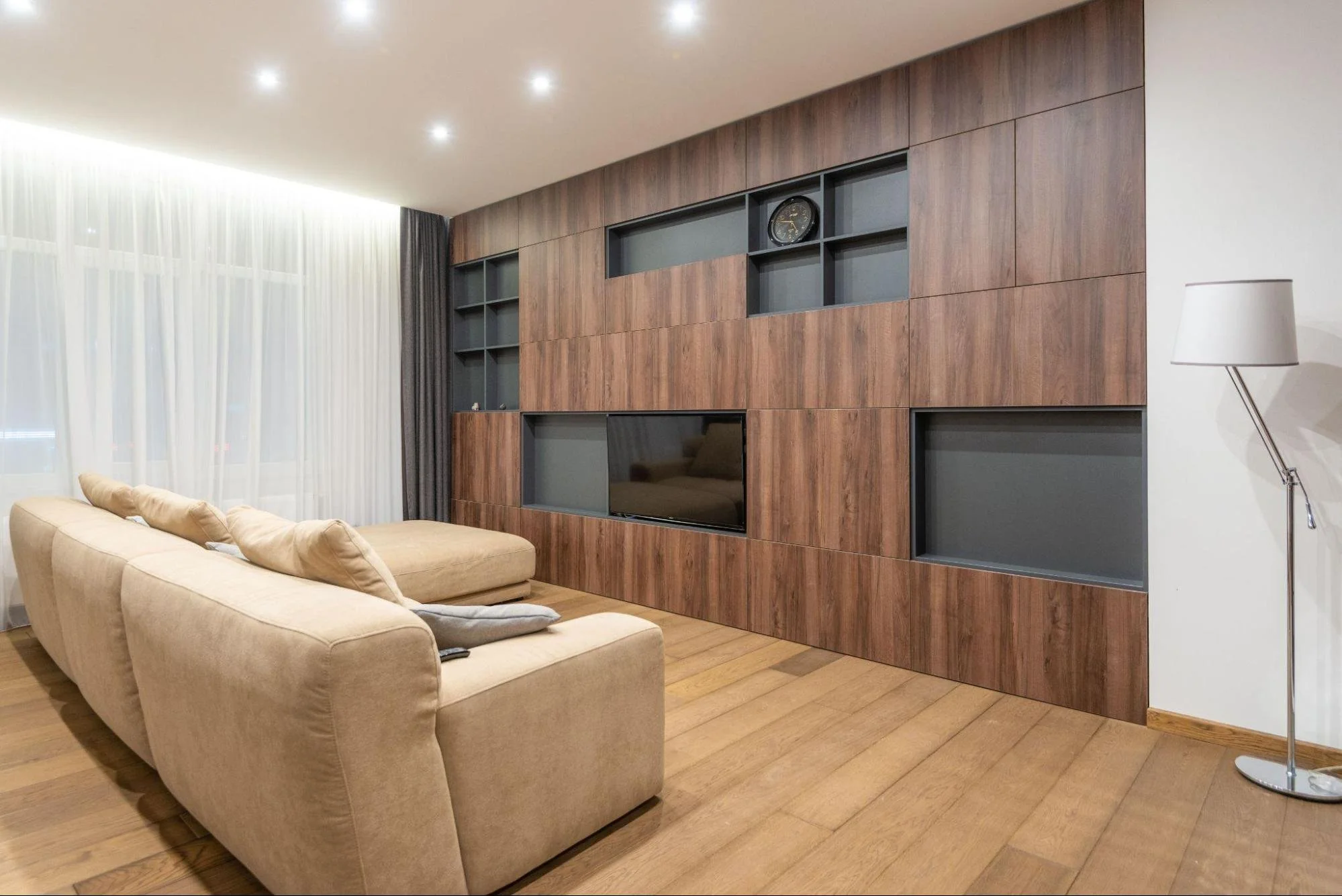
A built-in look starts with components designed to work as one coordinated set. Matching proportions, finishes, hardware, and architectural details help separate pieces form a single composition rather than appearing like individual purchases placed side by side.
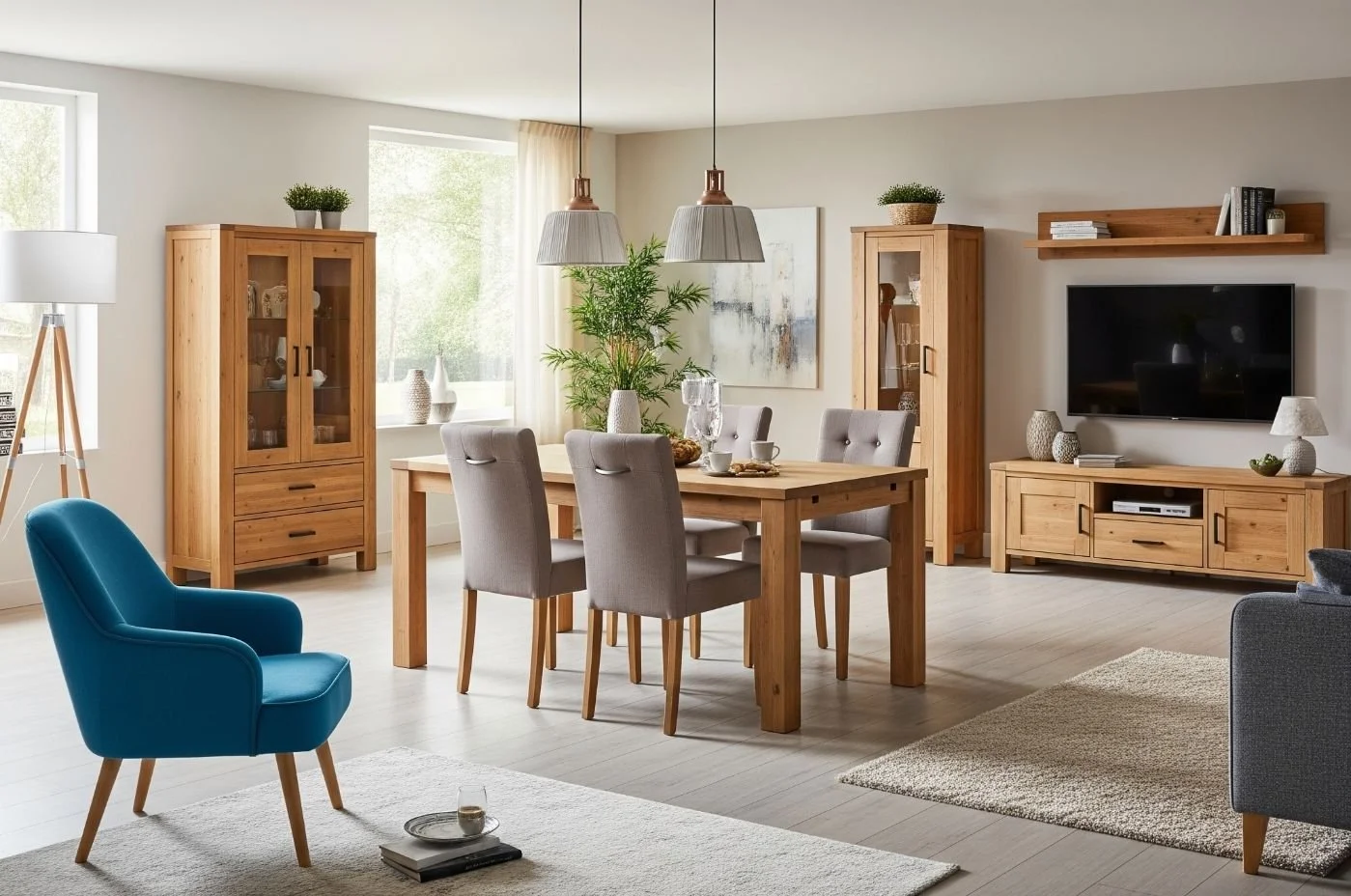
The Martha Stewart Living Room Collection is a modular storage system from Flash Furniture, available in the Bedford and Lily Pond lines, that combines cabinets, hutches, and TV stands into a custom built-in look with solid wood frames, soft-close doors, and adjustable shelving. This creates modular storage that looks like custom built-ins with no renovation, no contractor, no DIY project.
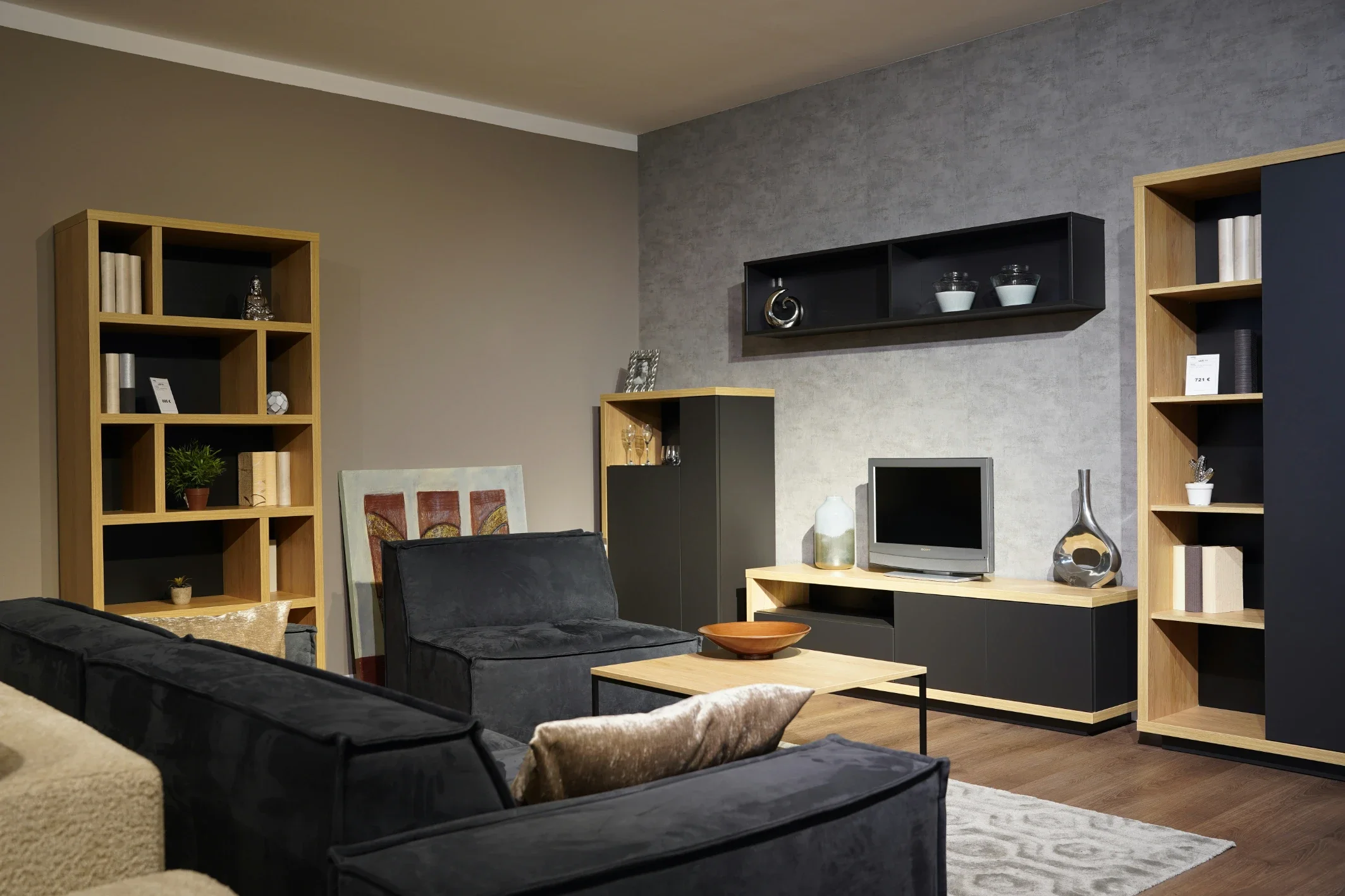
The Bedford 6-Piece Modular Media Center delivers a custom built-in look with no construction, combining two fluted wood cabinets, two glass-door cabinets with soft-close hinges, and two open hutches. More broadly, two tall matching side cabinets plus a low TV console can create the balanced silhouette associated with a built-in media wall. The Parker House Catalina 7-Piece, at around $1,573, provides another composition example with seven coordinated pieces and a cottage-white finish. Matching finishes and proportions keep those individual pieces visually connected across the wall.
2. The Width Closes the Gap to the Corners Instead of Stopping Short
A unit that occupies only a small portion of a wide wall generally reads as freestanding furniture. A built-in effect becomes more convincing when the arrangement fills most of the usable wall and relates naturally to its architectural boundaries.
The Bedford 6-Piece Modular Media Center measures 126 inches wide, 79.25 inches high, and 16.75 inches deep. Those dimensions give buyers a specific footprint to compare with the wall, television, windows, outlets, and circulation space.
For scale, the Pottery Barn Aubrey wall unit spans 139 inches, compared with the Bedford configuration’s 126-inch width. On a narrower wall, those additional 13 inches could materially change how the unit fits between corners, windows, or other architectural features.
Finish consistency matters at this size as well. The White and Gold Bedford configuration uses White, one of six curated finishes, paired with gold hardware. Coordinated color and hardware help a wide arrangement maintain one continuous visual identity.
3. The Project Step Either Disappears or It Doesn't
The finished photograph does not reveal how much work occurred between delivery and the final result. When evaluating a built-in appearance, the amount of additional modification required is therefore an important distinction.
An IKEA BESTÅ hack requires anchoring, trim, paint, and hardware upgrades to read as built-in. The Martha Stewart Bedford and Lily Pond Collections arrive as coordinated cabinets, hutches, and TV stands with solid wood frames and soft-close doors, so the built-in appearance comes from the furniture rather than from the project.
The Bedford 6-Piece still requires furniture assembly. Adult assembly is required, and the unit ships in multiple boxes. Creating the coordinated appearance requires no cutting, trim, painting, or cabinetry work.
That distinction makes it possible to pursue the built-in look without commissioning millwork. It also separates furniture assembly from a customization project: the pieces still need to be assembled and positioned, but the architectural effect does not depend on adding decorative construction afterward.
4. Closed Doors Only Earn Their Keep if What's Behind Them Can Breathe
A built-in appearance still needs to function for whatever sits inside or around the cabinetry. Electronics make that particularly important because different components have different ventilation requirements.
The Bedford 6-Piece uses solid wood frames, bases, and legs, alongside soft-close doors and adjustable shelving. Its two open hutches include rear cord management openings for routing cables, although the hutches remain open rather than concealed. These details support storage and organization without implying that every component belongs behind a closed door.
The BDI Corridor 8175, at around $3,299, offers a relevant specialist reference because its airflow and ventilation engineering is purpose-built for AV equipment that produces substantial heat.
The Bedford configuration serves a different role. Manufactured by Flash Furniture, a Ubique Group company, its six-piece arrangement furnishes the broader living room wall around everyday components rather than functioning as a dedicated AV rack. Heat-generating electronics still need appropriate ventilation, whether they sit within a built-in-style wall or a dedicated AV setup.
5. The Real Price Comparison Is the Whole Wall, Not One Console
Comparing the price of one TV console with a multi-piece wall misses the scale of the finished arrangement.
At around $2,890, the Bedford 6-Piece provides a coordinated wall of two fluted cabinets, two glass-door cabinets, and two open hutches. The Pottery Barn Aubrey 139-inch wall unit is around $6,472, placing the six-piece Bedford wall at under half that reference price.
Other configurations show that ready-made walls occupy several price points. The BDI Corridor 8175 is around $3,299, while the Parker House Catalina 7-Piece is around $1,573.
The wider Bedford system also supports 2-piece through 6-piece configurations, allowing the amount of furniture to vary with the room. That flexibility provides another route to the custom built-in look without commissioning millwork while keeping the comparison focused on the complete arrangement.
Five Details Make the Difference
The distinction between a ready-made built-in look and an IKEA hack becomes clearer when five features are considered together: coordinated pieces, wall-filling proportions, the amount of project work required, functional construction, and the cost of the complete wall.
Across Bedford and Lily Pond, the collection is manufactured by Flash Furniture and combines solid wood frames, bases, and legs with soft-close doors and adjustable shelving. With six curated finishes and 2-piece through 6-piece configurations, the system provides modular storage that looks like custom built-ins with no renovation, no contractor, no DIY project.
FAQ
What's the Difference Between a Built-In Look and an IKEA-Style Hack?
A hack begins with separate flat-pack furniture that is modified to create a more integrated appearance. Anchoring, trim, paint, fillers, or upgraded hardware can help the individual pieces read as one installation.
A ready-made built-in look instead comes from coordinated furniture designed to work together from the start. Assembly may still be required, but the finished appearance does not depend on adding a separate construction or finishing stage.
How Wide Should a Wall Unit Be to Look Like a Real Built-In?
There is no universal width because room dimensions vary. Generally, the arrangement should occupy most of the usable wall rather than sitting in the center with large, unintended gaps at both sides.
A buyer should measure the wall and television first, then account for windows, outlets, doors, and other architectural features. Leaving a balanced visual margin around the television also helps the composition feel intentional.
Do Enclosed Cabinets Need Ventilation for Electronics?
It depends on the equipment. Lower-heat components can be suitable for enclosed cabinetry, while electronics that generate substantial heat under load require adequate airflow.
For hotter equipment, a vented cabinet or added cooling solution may be necessary. Ventilation requirements should be checked for the specific device rather than assuming every electronic component belongs behind a closed door.
Is It Cheaper to Build a Custom Entertainment Wall or Buy One Ready-Made?
The total depends on the design, materials, dimensions, labor, and installation requirements. Custom cabinetry can include design services, materials, fabrication, finishing, and installation in addition to the cabinetry itself.
A ready-made coordinated wall has a stated furniture price, although delivery and assembly requirements can still vary. Comparing the complete finished outcome provides a more useful picture than comparing the price of one cabinet or console.
Stay up to date with our latest ideas!