Steel, fiberglass or wood front door? Compare prices, insulation values, dent resistance, warranties and resale returns, plus decorating tips for each door material.
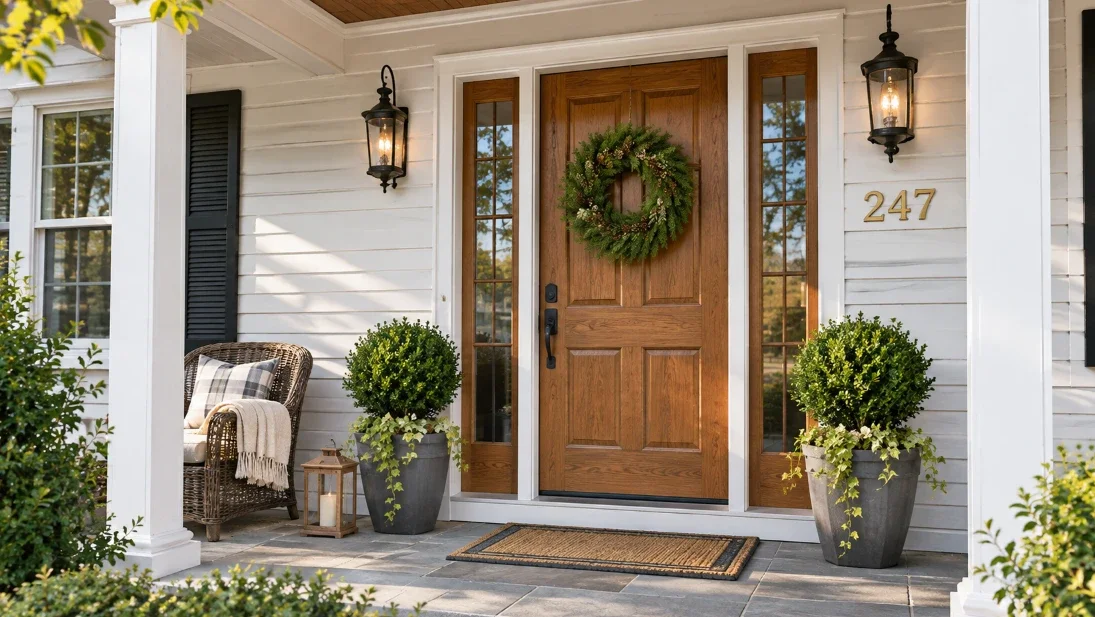
Your front door gets more attention than any other part of the house. It holds the wreath in December, the pumpkins line up beside it in October, and every guest stands in front of it for those few seconds before you open up. So when the old door starts sticking, fading or letting cold air slip past the weatherstripping, picking its replacement feels like a bigger decision than the price tag suggests. Most of that decision comes down to one question: steel, fiberglass or wood?
The good news is that a new entry door ranks among the best-paying home projects in the country. In the 2025 Cost vs. Value report, a steel entry door replacement averaged $2,435 and added an estimated $5,270 to resale value, a 216 percent return. In the Middle Atlantic region, the same project averaged $2,684, so if you are collecting bids for front door replacement NJ or anywhere else in the region, expect quotes a little above the national figure.
Start With How Your Entry Gets Used
Before you fall for a showroom finish, step outside and look at your doorway with fresh eyes. Three things matter more than style at this stage.
Exposure comes first. A door tucked under a deep porch roof lives an easy life, while one that faces west with no overhang takes direct afternoon sun and wind-driven rain for years. Then think about traffic: kids with scooters, a dog that jumps at the glass, grocery bags banging the bottom panel. Finally, be honest about how long you plan to stay, because some materials pay you back over two decades and others make sense for a five-year horizon.
While you are out there, check the frame. Press a screwdriver into the bottom of the jambs and the sill. If the wood feels soft, or you can see daylight around the edges with the door closed, you will want a prehung unit that comes with a new frame, threshold and weatherstripping. Swapping only the slab costs less, but it only makes sense when the existing frame is square and solid.
Keep those answers in mind as you read about each material below.
Steel Doors – Budget-Friendly and Strong
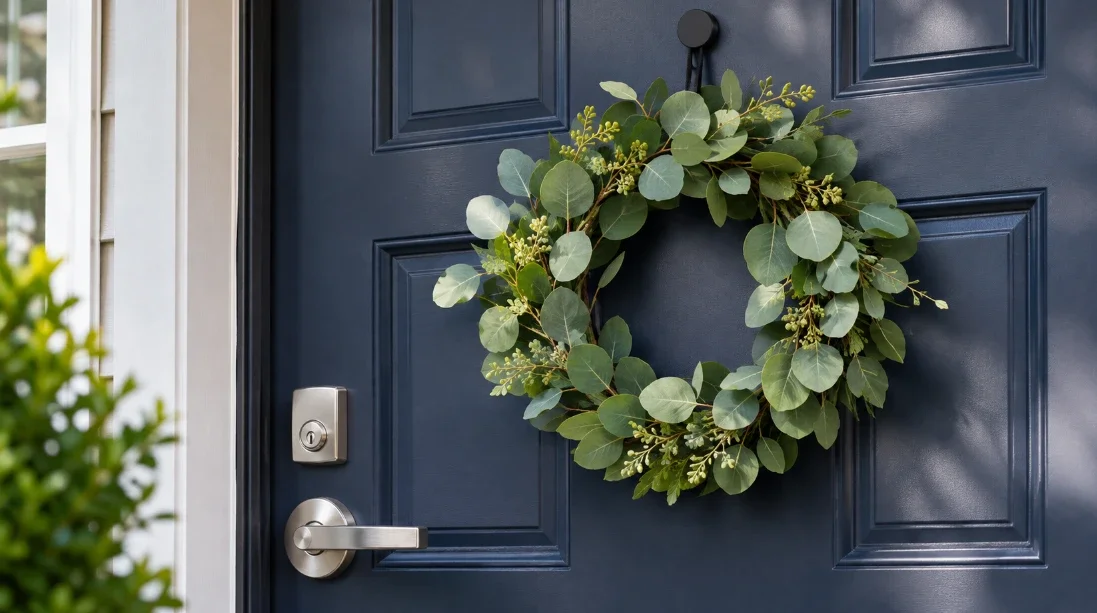
Steel doors usually cost the least of the three and still deliver strong security and weather resistance. Most have a foam core inside a steel skin, and that combination insulates well. Steel also stays dimensionally stable, so it will not crack or warp as seasons change.
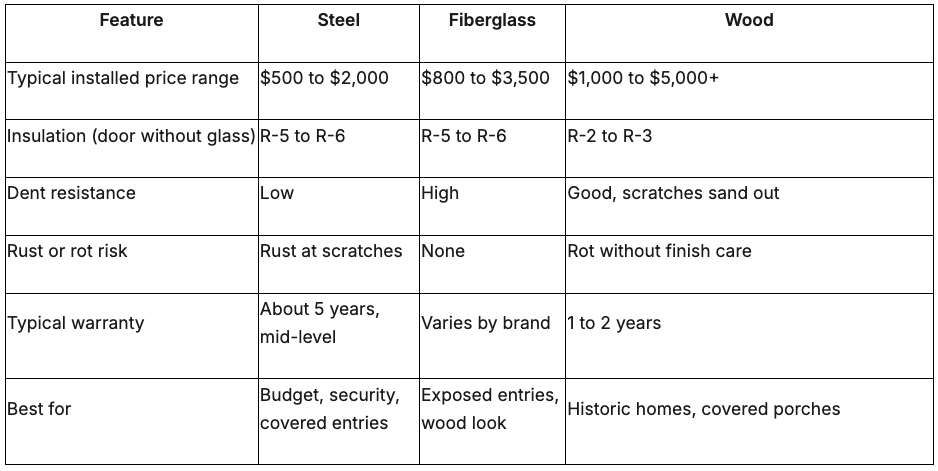
The downside shows up on busy entries. Dents are hard to fix on steel, and scratches can rust if you do not touch them up with paint promptly. Small dings can be pulled and filled with an auto-body repair kit, which works well enough, though you will probably notice the patch every time you walk up the steps. On the warranty side, a mid-level steel door typically carries five years of coverage.
Here is a fun bonus for decorators. Magnets stick to steel, so a magnetic wreath hanger or magnetic hooks hold seasonal decor without a single hole in the door.
Fiberglass Doors – The Wood Look Without the Upkeep
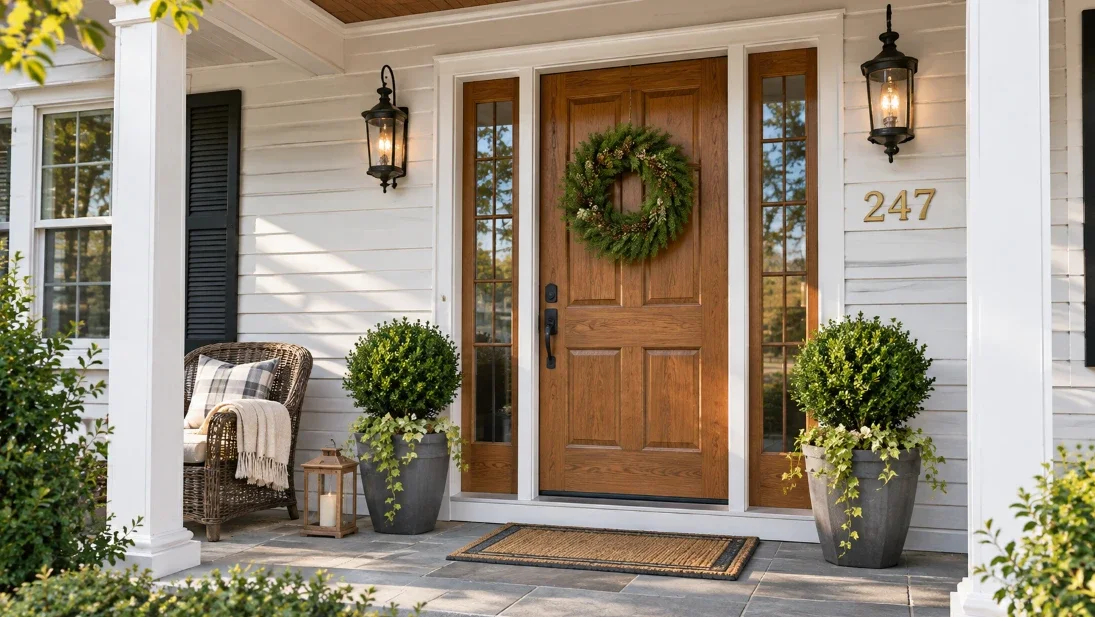
Fiberglass has become the favorite of homeowners who want the warmth of wood grain with almost no maintenance. These doors come in smooth finishes or embossed wood-grain textures that can look remarkably like the real thing, and they can be painted or stained. Fiberglass resists dents, will not rust and does not rot, which makes it a strong pick for exposed entries and coastal homes.
Pricing sits between steel and wood for standard models. High-end fiberglass systems climb quickly once you add sidelights and a transom. The Cost vs. Value report tracks an upscale fiberglass “grand entrance” with decorative glass, and that project averaged $11,754 with about 85 percent of the cost recouped at resale. It is a much bigger job than a single slab swap, so compare it with steel carefully.
What I love about fiberglass for decorating is the stain option. A medium oak or walnut stain on an embossed grain door gives you that classic cottage look, and it stays looking fresh with an occasional wipe-down.
Wood Doors – Warmth That Needs Attention
Nothing quite matches the depth of real wood, which is why fiberglass and steel manufacturers spend so much effort imitating it. Solid wood doors also hold up surprisingly well to everyday knocks. They generally resist dents, and scratches can be sanded out instead of patched.
The trade-off is maintenance. A wood door cared for properly can last a lifetime, while a neglected one may last only a few years. Because longevity depends so heavily on upkeep, most manufacturers offer only one- to two-year warranties on wood doors. Expect to refinish an exposed wood door on a regular schedule, and plan for a porch roof or storm door if your entry faces strong sun.
Wood shines on historic homes, craftsman bungalows and anywhere the door sits under good cover. If you love the look and enjoy a weekend project, it can be the most rewarding choice of the three.
Side-by-Side Comparison
Here is a quick snapshot to help you weigh the three materials:
Energy Efficiency and Comfort
If your entry hall feels chilly in winter, the door material makes a measurable difference. According to the U.S. Department of Energy, windowless steel and fiberglass doors typically rate around R-5 to R-6, while windowless wood doors land around R-2 to R-3. That means a foam-core door can insulate about twice as well as solid wood of the same size, sometimes more.
Keep in mind that those numbers apply to doors without glass. A big decorative glass panel lets in beautiful light and also lowers the insulating value, so double- or triple-pane glass is worth the upgrade on any door with a large window. Weatherstripping and a properly adjusted threshold matter as much as the slab itself, so ask your installer how they seal the bottom of the door.
Decorating Each Door Material
Every material handles seasonal decor a little differently, and knowing the quirks saves you from damaged finishes. A few practical tips that work well:
Steel: use magnetic wreath hangers and hooks, and skip anything with an abrasive back that could scratch the paint.
Fiberglass: over-the-door hangers and removable adhesive hooks work well; test adhesives on a hidden spot first.
Wood: avoid nails and tacks, since every hole lets moisture into the finish.
Any material: add a felt pad behind heavy wreaths so they do not rub the paint each time the door swings.
Glass panels: use suction-cup hooks for lightweight garlands or window clings.
These small habits keep the door looking new through years of holidays.
Color, Glass and Hardware Choices
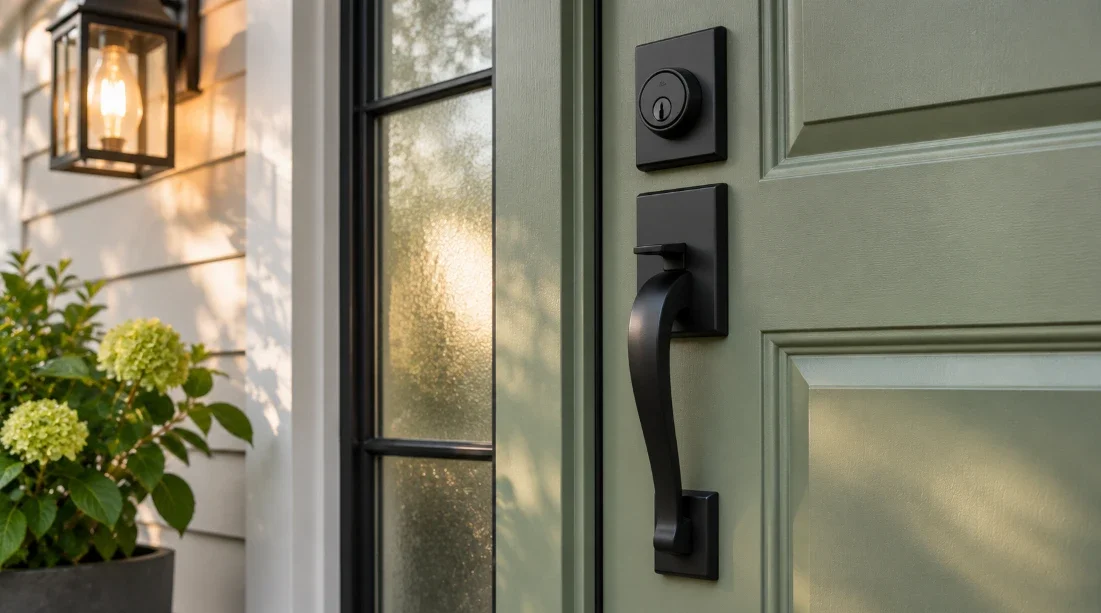
Once the material is settled, the fun part begins. Paint color sets the tone for the entire facade, so test a swatch on a sample board and look at it in morning light and late afternoon before committing. Fiberglass and wood both accept paint or stain. Steel takes paint beautifully, and some steel doors now come with factory wood-grain finishes.
Glass is the next decision. Sidelights and transoms brighten a dark foyer, while privacy glass with frosted or textured patterns lets light in without giving passersby a view of your living room. For hardware, look for deadbolts certified to ANSI/BHMA Grade 1 or Grade 2, and match the finish to your house numbers, mailbox and porch light so everything reads as one design.
Matching the Door to Your Home’s Style
Architecture should guide the final pick. A colonial looks right with a six-panel door, often in a classic deep color with a brass or black knocker. Craftsman homes call for a door with a top row of small glass panes and a stained finish, so fiberglass with oak grain or real wood is a natural fit. Modern and mid-century houses pair well with flush or vertically grooved slabs in bold colors, and steel handles those clean surfaces at a lower cost.
If you are torn between two options, take photos of your house from the sidewalk and ask the door supplier for renderings with each style dropped in. Seeing the actual door against your siding, trim and porch usually settles the debate in a minute, and it saves you from living with a color or panel pattern that looked better in the brochure than on your house.
Stay up to date with our latest ideas!