A well-coordinated bedroom starts with furniture that works together. Discover how to pair your bed, nightstands, and dresser through wood tones, proportions, and finishing touches that suit your style.

A bed you love and a useful dresser can still feel disconnected in the same room. These master bedroom decor ideas connect your main furniture through wood tones, shapes, and softer materials, with practical checks to make sure the arrangement works for everyday use.
Start With the Piece You Want to Keep
Before choosing a new finish or browsing bedroom sets, decide what already belongs in the room. It might be your bed, a dresser you have owned for years, or a pair of nightstands that work well for both sleepers.
Use that piece as a reference. Notice its strongest features: pale wood, a broad upholstered headboard, rounded corners, or dark metal handles. Choose one or two details you would enjoy seeing elsewhere. A curved headboard might relate to rounded bedside tables, while warm drawer pulls could connect with a bedside lamp.
The bed often provides the starting point because of its size, but it does not have to determine every choice. If a favorite dresser has more character, let the bed and nightstands provide a quieter background around it.
Decide What Should Match
Matching furniture can create a calm, consistent foundation. Mixed pieces can bring variety and make room for furniture you already own. Either approach works better when the individual pieces suit the space.
Use a Coordinated Collection as a Starting Point
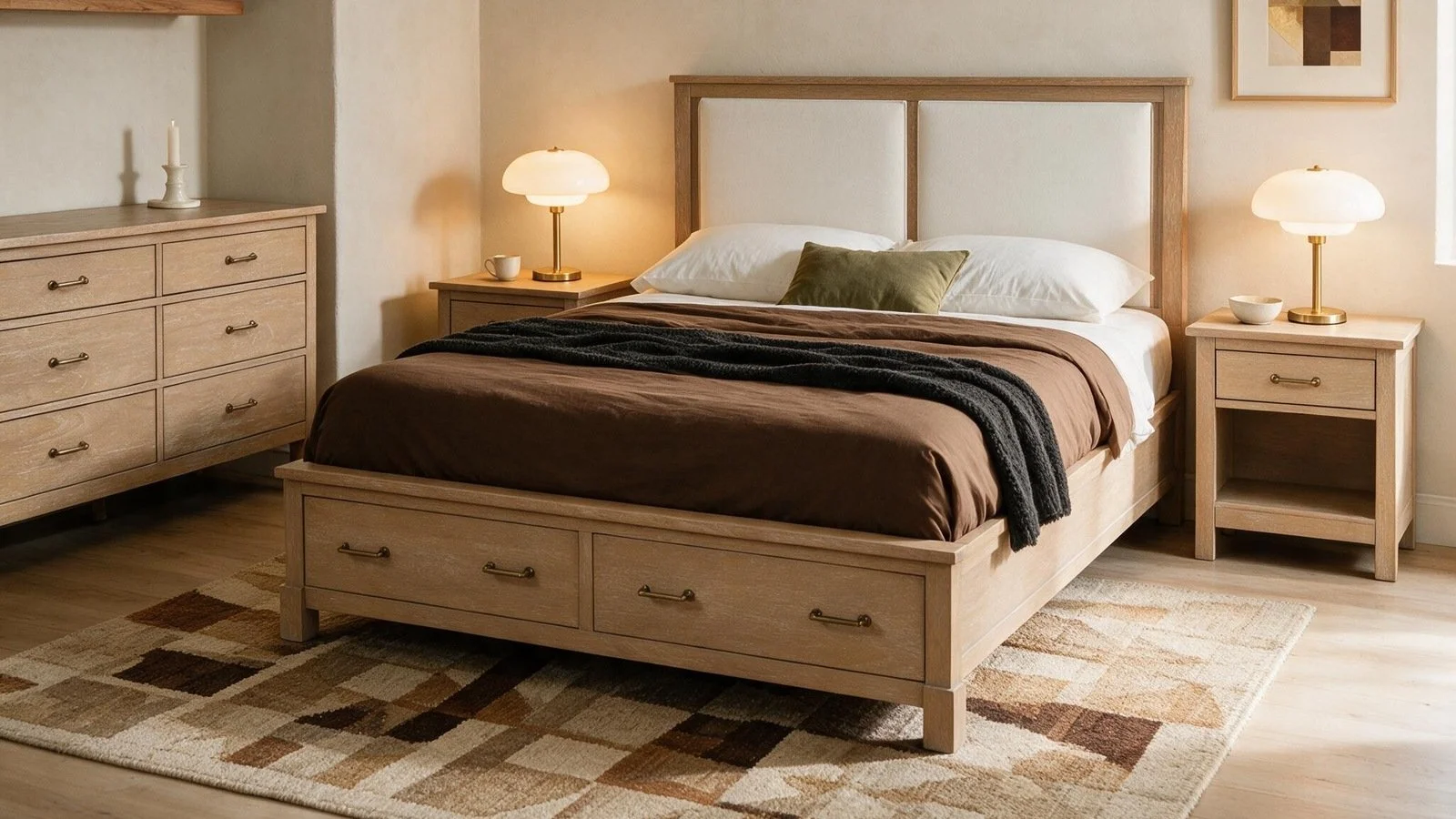
A shared finish and similar drawer details make it easier to connect the bed, nightstands, and dresser. For example, the HUSH range within COLAMY bedroom furniture carries a light wood finish across these pieces, with an upholstered headboard adding a softer material to the bed.
With the larger furniture coordinated, you have room to vary the smaller details. Try textured bedding, a patterned rug, or artwork with a color you enjoy. There is no need to introduce a different wood finish simply to make the room feel personal.
Match the Nightstands and Vary the Dresser
Matching nightstands give the bed a balanced frame, while a different dresser introduces another finish or silhouette. This can be a useful approach when you are replacing only part of the room.
Look for a connection beyond identical color. A dresser and nightstands might share slim legs, softly rounded edges, or warm metal hardware. If the dresser has a strong decorative front, simpler nightstands can keep the bed area from becoming busy.
Keep Different Pieces Connected
If you are wondering how to mix and match bedroom furniture, begin with a detail you can repeat. Mismatched bedroom furniture feels more deliberate when a dark dresser relates to a dark lamp base, or a pale wood nightstand picks up a tone in the bed frame.
Keep the connections easy to notice. Every piece does not need a separate accessory to explain why it belongs.

Bring Wood, Upholstery, and Hardware Together
When considering how to mix and match wood furniture in a bedroom, include the floor in the comparison. It occupies more visible space than most individual furniture pieces and can change how a new finish looks.
Similar warm or cool undertones offer one way to combine woods. A noticeable light-and-dark contrast can also work. Compare finishes in your own room during daylight and under the lamps you use at night; separate product photos are a limited guide to how two finishes will look together.
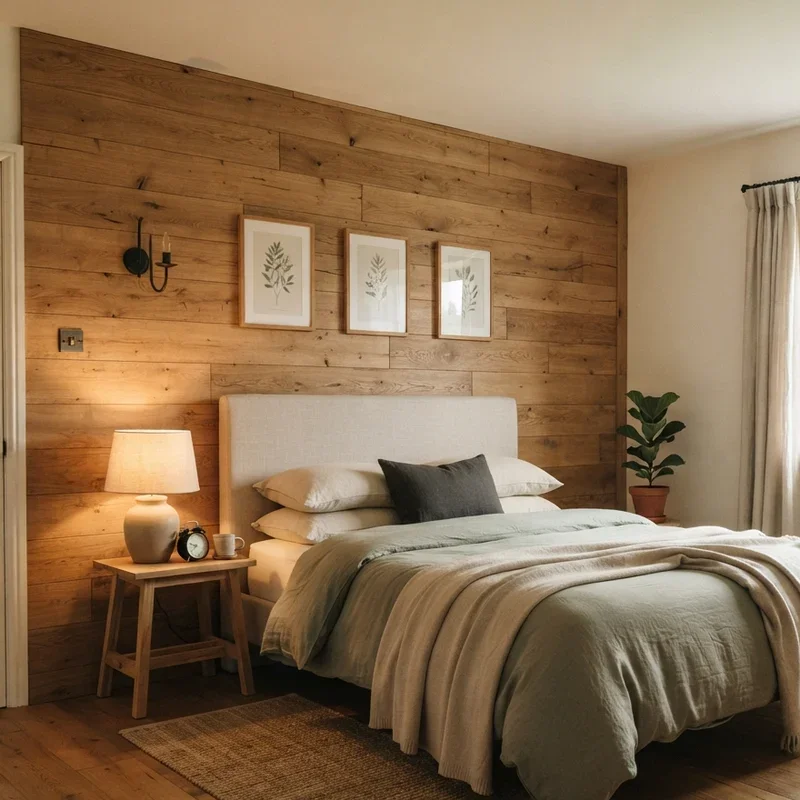
Natural wood bedroom furniture gives you visible grain and texture to work with. Upholstery, bedding, and curtains introduce different surfaces alongside it. With a wood bed and wood cabinets, a quilted coverlet or loosely woven throw can add variety without another furniture purchase.
Hardware provides a smaller connection. Bronze-tone drawer pulls might relate to a warm metal lamp, while black handles could connect with a picture frame. Similar finishes can feel cohesive without every metal detail being identical.

Choose Nightstands Around the Bed You Actually Use
Nightstands need to make sense beside the finished bed, including the mattress. Measure the mattress-top height, then compare it with the bedside surface. From your normal sleeping position, imagine reaching for water, glasses, or a lamp switch. A surface near mattress level is a useful starting point, but your reach and the table’s position matter too.
Width and visual weight also affect the pairing. A broad headboard may look unbalanced beside very delicate tables. A substantial cabinet can feel crowded beside a narrow bed if it leaves little room to move. Mark the proposed dimensions on the floor before ordering.
Matching tables are convenient when both sides have similar space and storage needs. Different nightstands can work when the room is uneven, provided each person has a useful surface and the overall arrangement feels balanced. A round side table is another option if its height, tabletop area, and storage suit the person using it.
For master bedroom nightstand decor ideas, arrange the essentials first. Leave space for the lamp, phone, and water glass before adding a vase or framed photograph. A drawer can hold small items; an open shelf can keep a book or basket nearby. If you choose a nightstand with a charging station, check the route to the wall outlet and whether cables will interfere with a drawer.

Fit the Dresser to the Wall and Your Storage Routine
A double dresser creates a long horizontal surface for a mirror, artwork, or a lamp. A tall dresser concentrates storage vertically and may suit a shorter wall. Compare the actual width and depth of each option rather than choosing by drawer count alone.
Think about what will go inside. Folded sweaters, smaller accessories, and spare bedding have different storage needs. Check usable drawer dimensions and how you would divide those items before deciding which configuration works best.
Plan for Open Drawers, Too
Bedroom furniture arrangement ideas often focus on how furniture looks when everything is closed. Take the extra step of checking the space you need while using it.
Mark the dresser footprint with painter’s tape, then mark the drawer’s full extension using the manufacturer’s dimensions. Leave room to stand, bend, and retrieve clothes. If your bed has footboard storage drawers, check their opening area as well, especially when the dresser will sit opposite them.
Test the nearby door and wardrobe access with those areas marked. This reveals whether a furniture arrangement that looks comfortable on paper will also support the morning routine.
Give the Top a Purpose
A bedroom dresser with mirror can create a convenient place to get ready. Check what the mirror will reflect and whether its position works for the person using it. If you already have a full-length mirror, artwork above the dresser may be more useful than a second mirror.
For master bedroom dresser decor ideas, start with one larger element, such as artwork or a lamp, then add a small tray for everyday items. Leave some surface available. A dresser top should still have room for a watch, a folded shirt, or something you are putting away.

Bedroom Decor Ideas for Eight Popular Styles
Use these styles as starting points, adapting the furniture proportions, colors, and accessories to your room.
Organic Modern
Pair a softly upholstered bed with wood nightstands and a dresser in a natural-looking finish. Cream bedding, earthy accents, and woven textures add warmth while keeping the arrangement simple.
Mid-Century Modern
Choose furniture with clean profiles, raised legs, and warm wood tones. Connect the bed, nightstands, and dresser through similar lines, then introduce olive green, rust, or mustard through bedding or artwork.
Transitional
Combine an upholstered bed with wood cabinets that have restrained traditional details. Matching nightstands can frame the bed, while a dresser with complementary hardware brings the room together without requiring identical pieces.
Coastal
Use light wood or painted furniture with white bedding and soft blue or green accents. Linen curtains and woven accessories create a relaxed feel without relying on nautical decorations.
Modern Farmhouse
Combine a wood or upholstered bed with simple cabinets featuring visible grain and understated metal pulls. Warm whites, checked textiles, and a few darker accents balance the furniture’s rustic character.
Scandinavian
Choose practical furniture with simple shapes and light finishes. Coordinate the bed and storage pieces with pale bedding, useful bedside lighting, and a few soft textiles, keeping everyday surfaces easy to use.
Japandi
Look for understated furniture, natural textures, and a quiet color palette. A low-profile bed can work with simple nightstands and a dresser in related wood tones; leave space around decorative objects so their shapes remain visible.
Traditional or Updated Traditional
Frame the bed with matching nightstands and lamps, then choose a dresser with classic proportions or decorative hardware. For a lighter interpretation, balance detailed furniture with plain bedding and simpler artwork.
Finish With a Room You Can Settle Into
Once the furniture is in place, spend a normal evening and morning using it. Notice whether the bedside surface is easy to reach, the lamp leaves room for your book, and the drawers open comfortably.
Make small adjustments before adding more decoration. Moving a nightstand slightly, reducing the objects on the dresser, or changing a lampshade may resolve what initially looked like a furniture mismatch. Leave the pieces you enjoy visible and give the things you use every day a convenient place.
FAQs
What is the best order to decorate a bedroom?
Start with the furniture you plan to keep and measure the available space. Choose any remaining large pieces, then coordinate the rug, curtains, and bedding around them. Check paint samples alongside your chosen finishes before committing to a wall color. Add lamps, artwork, and smaller accessories once the main arrangement is settled, so their size and placement suit the furniture.
How can I make my master bedroom feel cozy?
Add softness where you will notice it: bedding you enjoy using, curtains that soften the windows, and a rug beside the bed if the floor feels cold underfoot. Bedside lamps can provide a gentler evening atmosphere than a bright ceiling fixture. Keep a favorite book or throw within reach, while leaving enough clear space to move around comfortably.
How can I make my master bedroom look more expensive?
Focus on proportion and finishing details. Curtains that fit the windows, bedding that suits the mattress, and artwork sized to the furniture can make the room feel carefully considered. Give everyday items a place inside drawers or on a small tray, and arrange charging cables neatly. A few well-chosen accessories can provide more visual impact than filling every available surface.
How can I make a small master bedroom look good?
Choose furniture around the space you actually have. Compare bed-frame dimensions as well as mattress size, and check that drawers and doors can open comfortably. A tall dresser may suit a shorter wall, while bedside lighting mounted on the wall can free tabletop space. Keep bedding and curtains visually connected, and leave useful surfaces clear so the room feels considered rather than crowded.
What is the 60/30/10 rule for bedrooms?
The 60/30/10 rule is an optional way to balance a room’s colors: roughly 60 percent in a main color, 30 percent in a supporting color, and 10 percent in an accent. A bedroom might combine warm white walls and bedding, natural wood furniture and beige curtains, and small green accents. Treat the proportions as a loose guide; you do not need to measure every surface or replace furniture to follow it.
Stay up to date with our latest ideas!