Discover how thermal cameras are transforming home maintenance by detecting hidden leaks, insulation gaps, and electrical issues before they worsen.
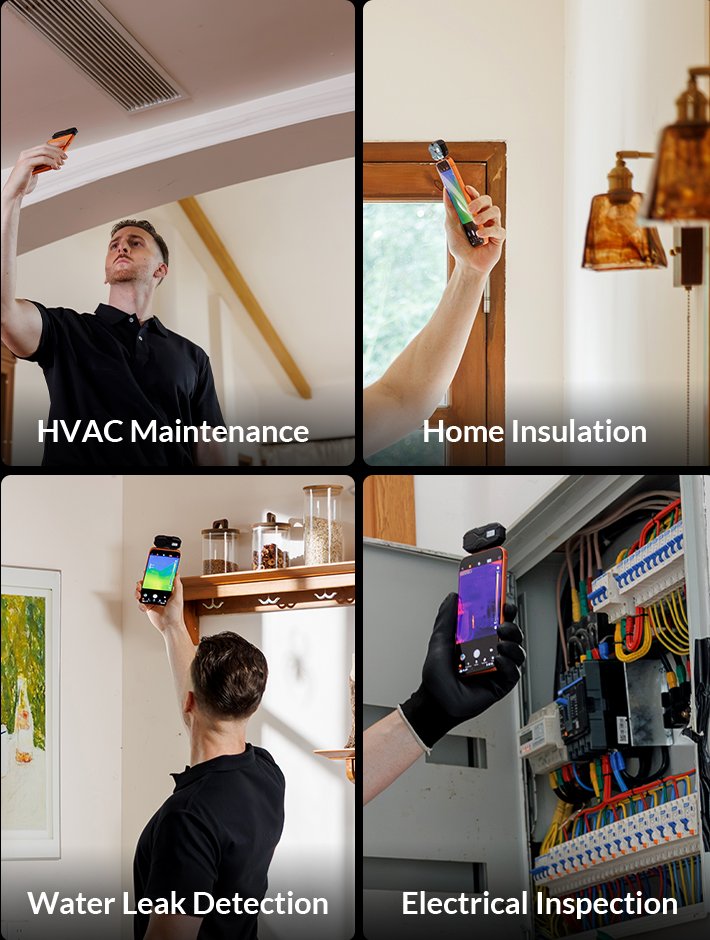
Thermal Imaging Makes the Invisible Visible — Helping Homeowners Detect Hidden Problems Before They Become Costly Repairs.
Maintaining a home is not always as simple as fixing what you can see. A damp patch on a ceiling, an unusually cold bedroom, or a rising energy bill may be signs of problems hidden behind walls, beneath floors, or inside building systems. In many cases, these issues develop long before obvious damage appears.
Traditional home maintenance often relies on visual checks, basic temperature readings, and professional inspections. While these methods remain important, they do not always provide enough information to locate the source of a problem quickly.
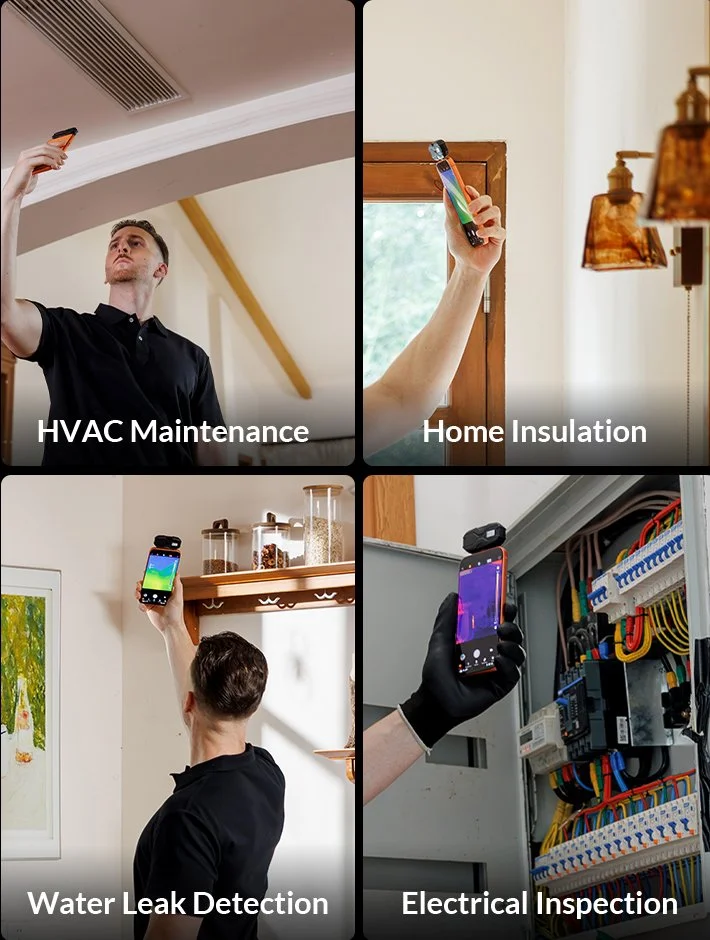
This is where thermal camera is making a difference. By displaying temperature variations across surfaces, a thermal imaging camera helps homeowners see patterns that are difficult to notice with the naked eye. From checking insulation and locating potential moisture problems to identifying unusual heat around electrical equipment, thermal imaging is becoming a useful tool for more informed home maintenance.
With compact smartphone-connected devices now available, this technology is also becoming more accessible to homeowners and DIY enthusiasts.
1. Understanding How Thermal Imaging Works
Thermal imaging cameras detect infrared radiation emitted by objects and convert it into a visual image showing temperature distribution. Instead of displaying only what a conventional camera sees, a thermal image uses different colors to represent warmer and cooler areas.
For example, a wall that appears completely normal under visible light may show an unexpected cold area in a thermal image. This temperature difference could be associated with missing insulation, air infiltration, moisture, or another building condition that deserves further investigation.
It is important to understand that thermal cameras do not see through walls. They measure surface temperatures. The patterns they display provide clues about what may be happening behind or around a surface.
The usefulness of a thermal inspection depends on several factors, including the camera's resolution, NETD, measurement accuracy, environmental conditions, and the user's ability to interpret the results.
For homeowners, the main advantage is straightforward: thermal imaging makes temperature patterns visible, helping narrow down where to investigate instead of relying entirely on guesswork.
2. Finding Potential Water Leaks Before Visible Damage Appears
Water leaks are among the most frustrating home maintenance problems. A small leak inside a wall, beneath a floor, or around a pipe connection may continue for weeks before creating a visible stain or causing structural damage.
Thermal imaging can help identify areas that may be affected by hidden moisture. Water can change the temperature of surrounding building materials through evaporation, heat transfer, and differences in thermal conductivity. These effects may create unusual temperature patterns on nearby surfaces.
Homeowners can use a thermal camera to scan areas around sinks, bathrooms, ceilings, plumbing routes, and exterior walls. If an unusual cold or warm pattern appears, it can help identify where additional inspection may be needed.
However, a thermal image alone cannot confirm that a leak exists. Similar patterns may be caused by insulation differences, air movement, or other environmental conditions. A moisture meter or professional plumbing inspection may be necessary to verify the source.
The real benefit is that thermal imaging can help narrow the search area. Instead of randomly opening sections of drywall, homeowners and technicians can use the temperature patterns as a starting point for a more targeted investigation.
3. Identifying Heat Loss and Poor Home Insulation
Heating and cooling costs are a major concern for many households. Poor insulation, damaged window seals, and gaps in building materials can allow conditioned air to escape, making indoor temperatures harder to maintain.
A thermal imaging camera can help reveal temperature differences around windows, doors, ceilings, exterior walls, and attic spaces.
For example, during cold weather, an unusually cold section of an interior wall may indicate an insulation gap or possible air infiltration. A window frame showing a different temperature pattern from the surrounding wall may suggest a failed seal or another area worth checking.
Homeowners can use thermal imaging to:
Compare temperatures around windows and door frames.
Check for uneven insulation across walls and ceilings.
Identify potential heat loss around attic access points.
Inspect areas where heating or cooling performance seems inconsistent.
Find locations that may benefit from weatherstripping or insulation improvements.
For more reliable results, inspections should be performed when there is a meaningful temperature difference between indoor and outdoor environments. A stable indoor temperature and consistent inspection conditions also make thermal patterns easier to interpret.
Thermal imaging does not calculate energy loss by itself, but it can help homeowners prioritize areas for further inspection and improvement.
4. Checking Air Leaks and HVAC Performance
An HVAC system can appear to be working normally while certain rooms remain uncomfortable. Uneven heating, weak cooling, and inconsistent airflow may be related to ductwork, insulation, blocked vents, or other system issues.
Thermal imaging provides a practical way to compare temperature patterns across different parts of an HVAC system and the surrounding building.
Homeowners can scan air vents, accessible ductwork, heating pipes, radiators, and nearby wall surfaces. Differences between supply vents may help identify uneven temperature distribution, while unusual patterns around ducts could indicate areas requiring closer examination.
It can also help locate potential air leakage around doors, windows, and building joints. When outdoor air enters through a gap, it may create a cooler or warmer surface pattern depending on the surrounding conditions.
For a basic home inspection, a useful approach is to:
Set the HVAC system to a consistent operating mode.
Allow the system to run long enough for temperatures to stabilize.
Scan multiple vents and compare their temperature patterns.
Check accessible duct connections and surrounding surfaces.
Record unusual findings for further investigation.
Thermal imaging is a screening tool, not a replacement for HVAC testing. It cannot independently confirm refrigerant levels, airflow volume, or the precise cause of poor system performance. A qualified technician should investigate persistent problems.
5. Spotting Potential Electrical Problems
Electrical safety is another area where thermal imaging can support preventive maintenance.
Electrical connections, breakers, outlets, and other components may generate unusual heat when operating conditions are abnormal. Loose connections, excessive loads, and failing components can sometimes produce temperature differences that are visible in a thermal image.
A thermal camera allows users to compare accessible electrical equipment and identify areas that appear noticeably warmer than similar components under comparable operating conditions.
For example, if one breaker appears significantly hotter than neighboring breakers, it may be worth arranging an inspection by a licensed electrician.
This type of screening can be useful for homeowners, property managers, and maintenance professionals who want to identify potential warning signs before a problem becomes more serious.
However, electrical inspections require caution. Homeowners should never remove electrical panel covers, touch exposed wiring, or work on energized equipment just to obtain a thermal image. Detailed electrical inspections should always be handled by qualified professionals using appropriate safety procedures.
Thermal imaging can help identify an area of concern, but it cannot confirm whether a component is safe or determine the exact electrical fault.
6. Choosing the Right Thermal Camera for Home Inspection
As thermal camera becomes more accessible, homeowners have more options than traditional standalone inspection equipment. Phone-connected thermal cameras offer a compact alternative for people who want to perform occasional home checks without carrying a larger device.
Before choosing a thermal imaging camera, there are several factors worth considering.
Thermal Resolution
Resolution determines how many individual temperature measurement points the sensor captures. Higher native resolution generally provides more detail, making it easier to distinguish smaller thermal patterns, particularly when inspecting complex areas.
Thermal Sensitivity (NETD)
NETD describes how well a camera can distinguish small temperature differences. A lower NETD value generally indicates better sensitivity to subtle thermal variations. This can be helpful when comparing surfaces with relatively small temperature differences.
Temperature Measurement Accuracy
Sensitivity and accuracy are not the same. NETD describes the ability to distinguish temperature differences in an image, while measurement accuracy describes how close a temperature reading is to the actual object temperature. Both matter, depending on the inspection task.
Image Enhancement and Software
Image enhancement can make thermal patterns easier to view and interpret. Features such as temperature measurement tools, adjustable image ranges, scene presets, and image recording can also make routine inspections more convenient.
Device Compatibility and Portability
For smartphone-connected cameras, check whether the device supports your phone's operating system, connector, and required application. A compact module is particularly useful for quick inspections around the house.
Two examples in this category are the AccuMEMS SK02 and SK01. Both are phone-connected thermal cameras designed to make thermal inspection more accessible.
The SK01 features a 192×144 native thermal sensor with 384x288 UIRA-IR image enhancement and 40mK NETD. It also provides measurement tools and scene presets for tasks such as moisture detection, home insulation, and floor heating inspection.
For users who want more detailed thermal images, the SK02 offers a 256×192 native thermal sensor with AI algorithm to produce a 512 × 384 enhanced image. With less than 20mK NETD to help reveal subtle temperature patterns. Additional scene options support moisture detection, home insulation, electrical inspection, and other maintenance applications. It does not need the hybrid view that combines the cameras lens and a thermal lens. It is so sensitive that just the temperature differences alone are enough to make it look like a normal camera image.
SK plug-in series connect to compatible smartphones, allowing users to view thermal images through mobile phones, both IOS and Android systems. They offer a practical way to bring thermal inspection capabilities into everyday home maintenance.
7. Make Thermal Imaging Part of a Smarter Home Maintenance Routine
Thermal imaging is most useful when it becomes part of a regular inspection routine rather than something used only after a problem appears.
Homeowners can periodically scan areas that are more likely to develop maintenance issues, including:
Windows and exterior doors before and during colder seasons.
Attics and ceilings when investigating uneven indoor temperatures.
Bathrooms, kitchens, and plumbing areas when moisture is suspected.
HVAC vents and accessible ductwork when heating or cooling becomes inconsistent.
Accessible electrical equipment as part of a professionally managed inspection.
It is also helpful to save thermal images and compare them over time. A temperature pattern that changes between inspections may indicate that an area deserves closer attention.
For better results, inspect surfaces under reasonably stable conditions, avoid scanning reflective materials without considering their effect on readings, and compare similar materials whenever possible.
Most importantly, treat thermal images as evidence for further investigation, not as a final diagnosis. Combining thermal imaging with visual checks, moisture meters, and professional assessments provides a more reliable approach to home maintenance.
Conclusion
Home maintenance is becoming less dependent on guesswork as accessible inspection technologies make hidden conditions easier to investigate. Thermal imaging is a good example of this shift.
From locating potential moisture problems and identifying insulation gaps to checking HVAC performance and spotting unusual electrical heat patterns, thermal cameras give homeowners another way to understand what is happening around their properties.
Powered by the Gen 6 Core, our sixth-generation core chip, the SK Plug-in Series connects seamlessly to compatible iOS and Android smartphones, allowing users to view thermal images directly on their phones. Combining advanced thermal camera with smartphone convenience, it makes thermal inspection more accessible and practical for everyday home maintenance.
The goal is not to replace professional inspections or turn every homeowner into a technician. It is to make potential problems easier to spot, help people ask better questions, and address maintenance concerns before they develop into more expensive repairs.
Stay up to date with our latest ideas!