Find out how air purifiers help reduce airborne pet dander, improve indoor air quality, and create a more comfortable environment for allergy sufferers.
Yes, a bit. Less than the box suggests.
A purifier pulls air through a filter and catches the particles that are floating around. That’s the whole job. It won’t stop the dog shedding, it won’t clean the sofa, and it won’t fix a house where the pet sleeps on every soft surface.
Hair isn’t the problem
People blame fur. The allergy triggers are proteins: Fel d 1 is a major cat allergen, and Can f 1 is one of the dog allergens. Allergenic material can be in dander, saliva and urine. Fur carries some of it around.
So a sofa with no hair on it can still be loaded. Sit down and see. I mean it: nobody can judge allergen levels by looking at a cushion, which is why “it looks clean” is a poor test for anything in this article.
“Hypoallergenic” breeds are a similar trap. Every cat and dog makes these proteins. Also, if you’re sneezing, the dog may not be the only reason, since dust mites and pollen do the same thing. Get tested before you spend money.
What to look for in an air purifier
Look at particle filtration, including HEPA options, and the machine's clean air delivery rate. A UV light or an ionizer isn't evidence that a unit will help with pet allergies. Those features don't replace the filtration figures.
Next, the room. For a worked example, take a bedroom measuring 10 feet by 12 feet: 120 square feet. Write down the ceiling height too. Is there a door, and will it normally be shut? Keep those notes beside the product information.
CADR means clean air delivery rate. The coverage number needs its air-change frequency beside it. The Vital Pet Pro lists 229 square feet at 4.8 air changes an hour, or 1,100 square feet at one. Both numbers belong to the same machine. Leaving out the frequency makes the larger figure look much more useful than it is.
For an air purifier for homes with pets, don't overlook the pre-filter. Pet hair can build up there and restrict airflow. If cleaning it is a hassle, you’ll stop doing it. The Levoit Vital Pet Pro has a scraper that moves hair into a tray, which is a sensible idea. You still empty the tray. Levoit says the scraper's default is one cycle a day. That isn't a promise about when your tray will need emptying. You'll have to check it. The company also calls for manual pre-filter cleaning about once a month as needed; the main filter has its own replacement schedule.
Read the conditions behind lab capture percentages. A defined test isn't the same as your living room with the door open and a dog running through it.
Where to put the air purifier
Pick the room, then check the place you have in mind. Put a box roughly where the purifier would stand. Close the curtains. Open the cabinet doors. Can you still walk past, reach the controls, and take out the filter?
Look up the model's clearances before deciding it fits. A gap behind a bookcase can have enough floor space and still leave an opening blocked. The cord needs a sensible route too. If it crosses the way to the bathroom, find another position.
For an air purifier for bedroom use, check noise at the speed you’ll really run overnight, not the quietest setting on the spec sheet. Fine at noon, maddening at 2 a.m.
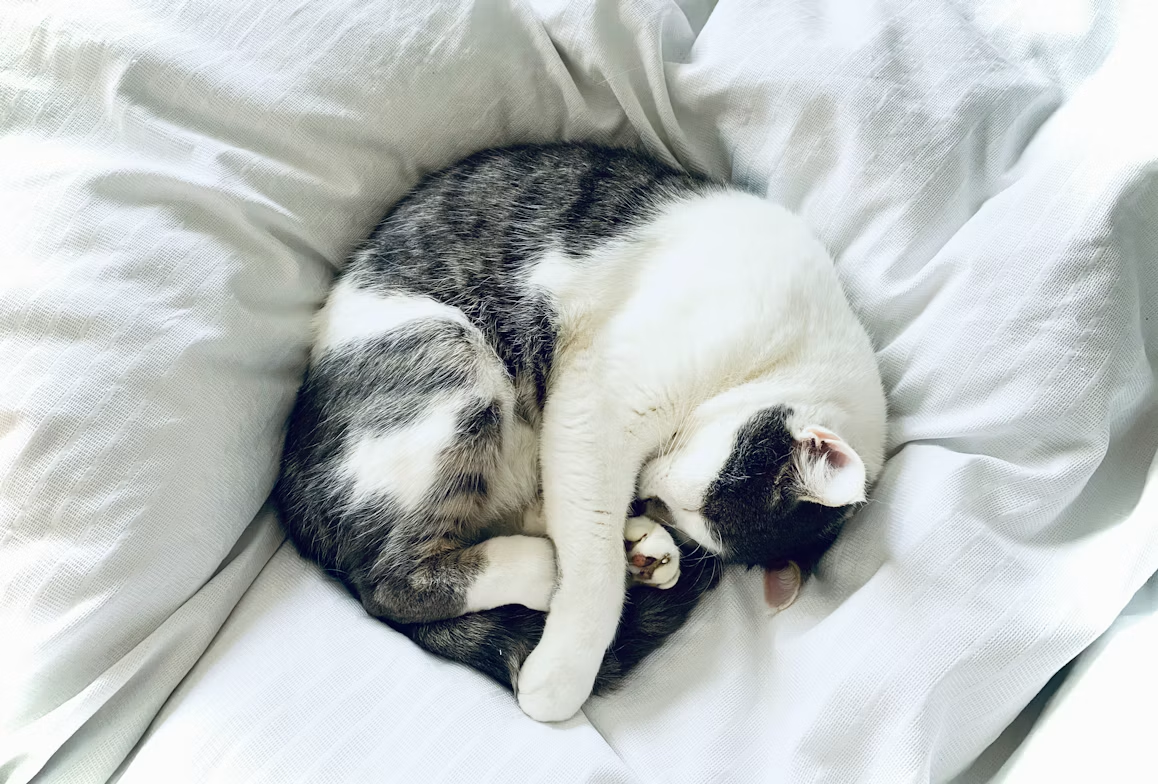
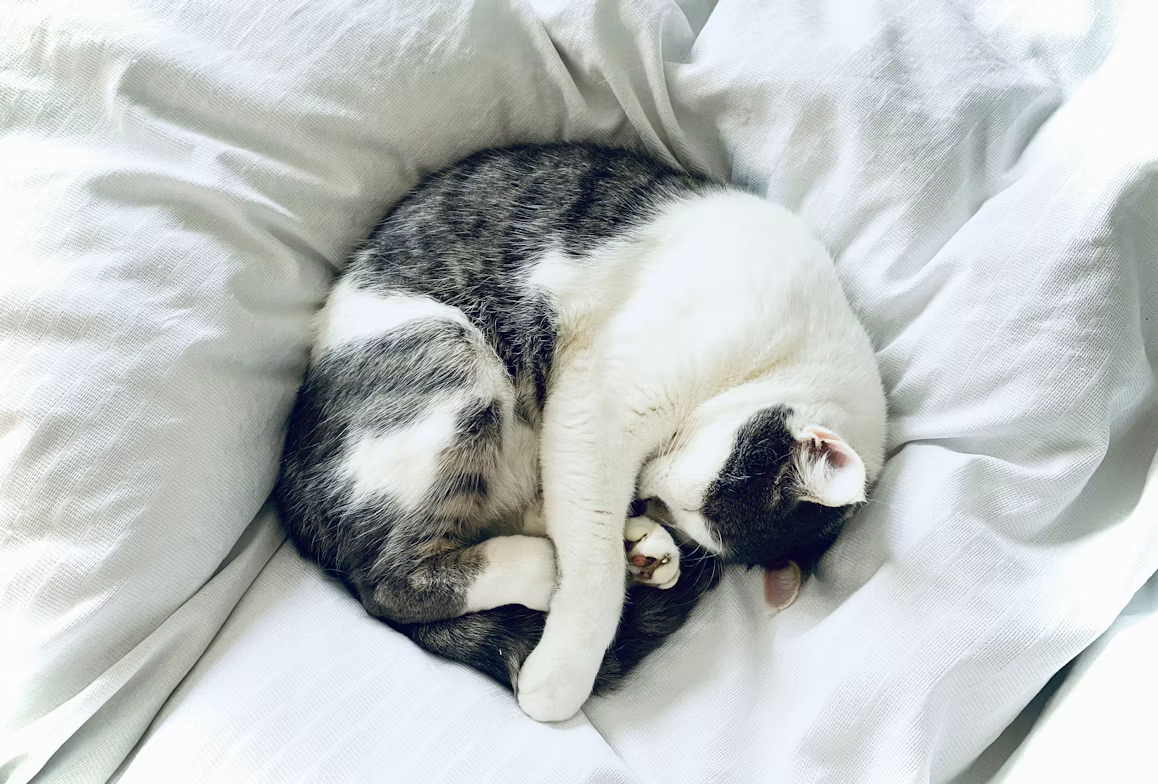
If the cat sleeps on the bed, fix that first. A purifier isn’t going to beat a cat on the pillow.
What air purifier won’t do
It doesn’t touch allergen that has already settled. That means rugs, bedding, upholstery, and the dog’s blanket. So the vacuum stays. Use one with a sealed HEPA filter if you can, and check the bin before you put it away, and maintain it as the manufacturer directs. On hard floors, damp-wipe instead of sweeping.
Don’t plan a whole-house cleaning schedule. You won’t keep it up. Pick the three places the pet really uses and do those.
Brushing removes loose hair; it doesn’t reduce what the animal produces. Bathing more often may irritate the animal's skin, so ask your vet before changing the routine. If one person in the house is allergic, someone else should do the brushing and handle the pet bedding.
And don’t rate the purifier by smell. A fresher-smelling room is nice, and activated carbon does help with odor, but odor isn’t allergen. Same for the fur you can or can’t see.
If you’re having symptoms
See an allergist. Seriously, before you buy. A purifier handles one exposure and leaves the others alone, and it shouldn’t be the reason you put off an appointment. Keep short notes meanwhile: when you started running it, whether the pet still goes in the bedroom, whether you changed how you wash bedding. They give the doctor context. They don’t prove anything. For example, you could note the date you started using the machine, its usual setting, and the date you washed the covers. Those entries record what changed. They don't tell you how much allergen was removed.
Worth buying?
If you’ve got a spot for it, can stand the noise at your normal speed, and will change the filters when they’re due, yes. If not, save the money.
Stay up to date with our latest ideas!