How to Move a Piano
Learn how to move a piano safely with practical planning tips, proper equipment, and handling techniques to protect the instrument, your home, and everyone involved.
A piano is one of the few things in a house that can hurt you, your floors, and itself in the same afternoon. Between the weight, the awkward shape, and doorways that were never built with a 400-pound instrument in mind, a piano move goes wrong more easily than almost any other move in the house. The good news is that most of what goes wrong is predictable: a missed measurement, one helper short, a stair turn nobody planned for. Catch those ahead of time and there's not much left to go wrong.
This guide covers how to move a piano safely, whether it's an upright going up one flight of stairs or a grand piano headed across town.
Decide if this is a DIY job first
Before gathering equipment, be honest about what kind of move this actually is. An upright with a clear path, no stairs, and a short carry to the truck is a realistic project for four or five people who follow the steps below carefully. A grand piano, a staircase, a long carry, or an instrument that would be genuinely painful to lose changes that calculation. The risk isn't a scratch on the finish; it's a piano coming off a dolly on the third stair.
Cost is part of that decision, so it makes sense to price out both options before committing to either. A moving company that quotes a flat number for "a piano" without asking whether it's an upright or a grand, how many stairs are involved, or how far the truck has to park from the door is guessing, not estimating. Move and Care, for instance, treats the piano's type, weight, and stair count as details to confirm before the estimate is final, not something worked out after the crew already has it on a dolly. Whichever mover gets the job, make sure those questions get answered up front, while there's still time to fix a bad plan.
How many people a piano move actually takes
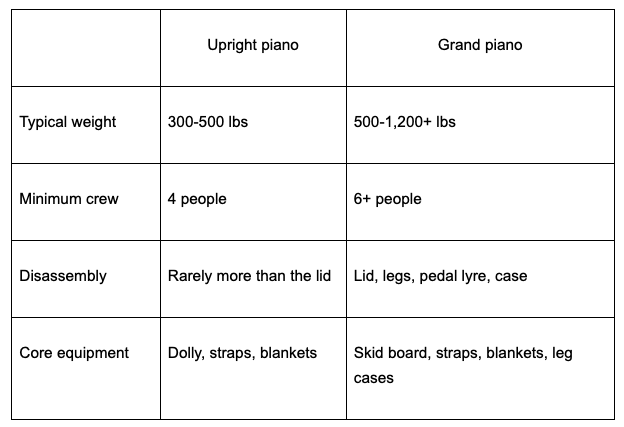
An upright piano needs at least four able-bodied adults: two to guide it onto the dolly, and two more for stairs, tight turns, or the truck ramp. A grand piano needs six or more, since it comes apart into a case, a lid, three legs, and a pedal assembly that all need separate hands. Trying to do either job two people short is how pianos end up dropped, not how anyone saves time.
Measure the path before touching the piano
Measure the piano at its widest point, usually the depth from front to back rather than the width, and check it against every doorway, hallway, and stair turn it has to pass through. Note ceiling height near stairwells and landings too, since a piano tilted onto a dolly takes up more vertical space than it does sitting flat. Do this before moving day. Finding out a doorway is an inch too narrow with the piano already in the hallway is a much worse problem than finding out on paper a week earlier.
The right equipment
A piano dolly or skid board rated for the piano's actual weight, not a general furniture dolly
At least four heavy-duty moving straps
Several thick, quilted moving blankets
A loading ramp for stairs or the truck, if the route has either
Tools to remove the lid, legs, and pedal lyre on a grand piano, plus something to keep the hardware sorted
Upright vs. grand: not the same move
Moving an upright piano, step by step
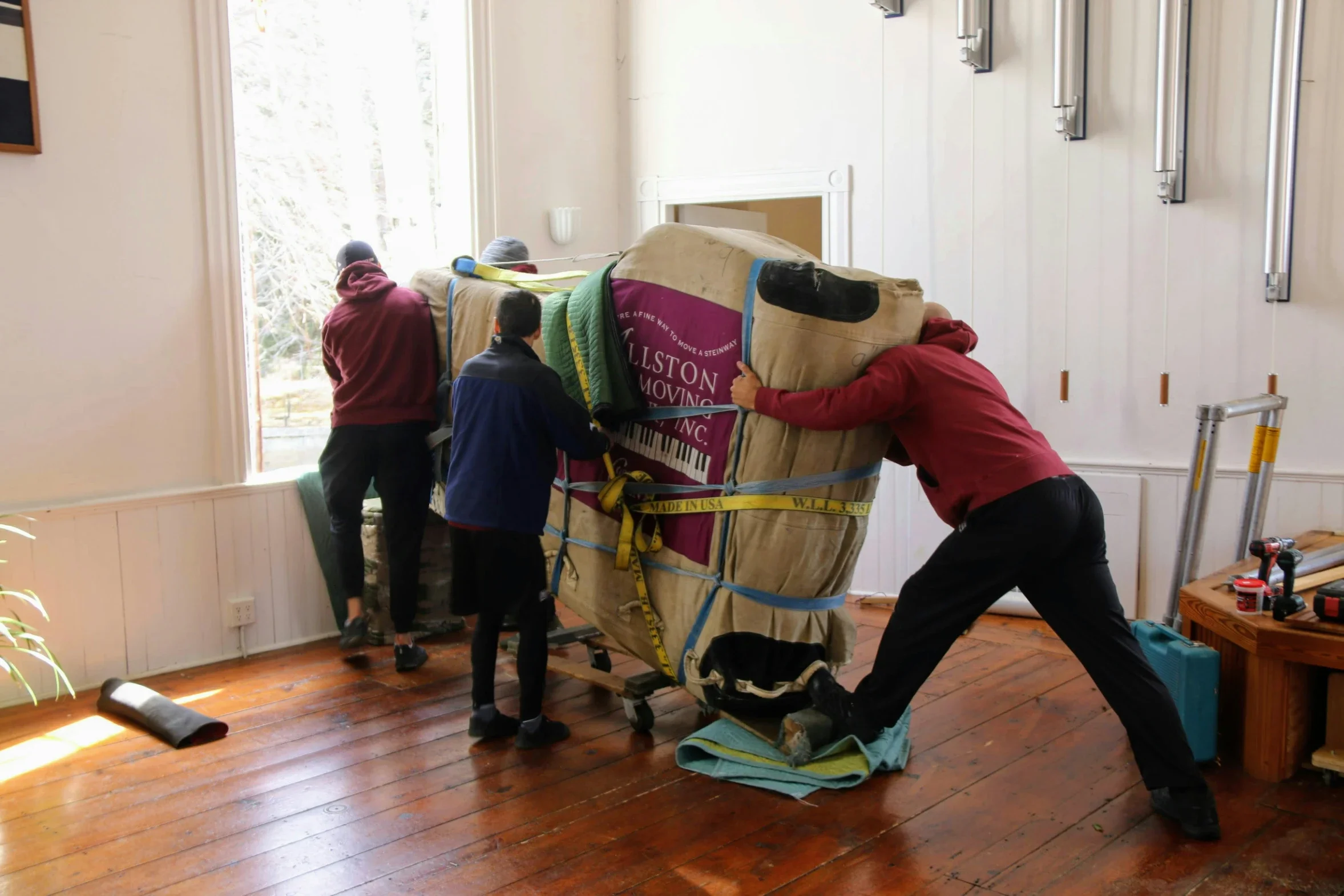
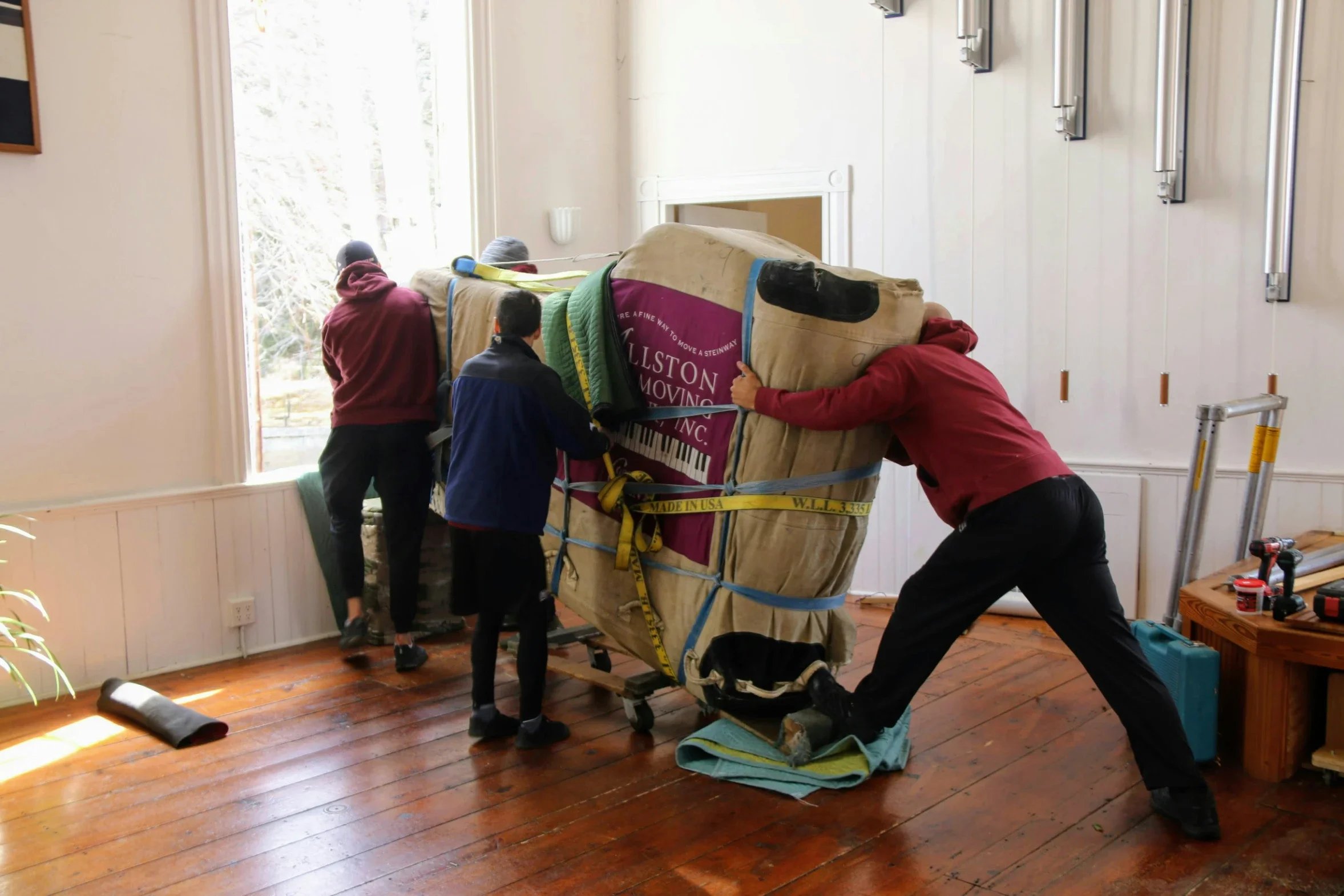
Close and tape the keyboard lid shut, then wrap the whole piano in moving blankets, securing them with tape or stretch wrap rather than taping directly onto the finish. With at least two people supporting the weight, tilt the piano back onto the dolly (never lift from the keyboard end alone) and strap it down before moving it an inch. Move slowly, with one person guiding each end and a third watching the path ahead. On stairs, use a stair-climbing dolly or lower the piano with straps and a spotter below. Don't let gravity help.
Moving a grand piano, step by step
Remove the lid, music desk, and legs first, labeling the hardware as it comes off. Wrap the case and each leg separately, then lift, don't slide, the piano onto the skid board with enough people to support every corner at once. Strap it to the board before any movement starts, then move the board on furniture dollies along the path already measured. Legs and lid go back on only once the piano is sitting in its final spot, never partway through the move.
Stairs, doorways, and tight turns
An elevator booking isn't the same as an elevator that's actually free when the crew shows up, and a building's delivery-hours rule matters a lot more if nobody hears about it until the truck is double-parked outside. The same goes for a landing that turns out to be a few inches narrower than the hallway leading to it. Better to find that out on paper than with the piano already tilted on the stairs. For any turn tighter than the piano's diagonal measurement, tilt rather than force it, and keep someone spotting from the direction the piano is heading, not just where it's coming from.
After the move: give it time before tuning
A piano that sounds off right after a move usually isn't reacting to the move itself. It's reacting to a new room's temperature and humidity. Most technicians recommend waiting two to three weeks before the first post-move tuning, giving the wood and strings time to settle, per the Piano Technicians Guild's care guidance. Tune any earlier and there's a good chance of paying for a second tuning a few weeks later.
If hiring movers for any part of this, checking a company's registration through FMCSA's consumer checklist or its complaint history on the Better Business Bureau's site takes a few minutes, and it's easier to do while still comparing movers than after one is already booked. Because a piano is both heavy and delicate, some moves are simply too risky to handle alone—especially in a dense city where narrow staircases, tight doorways, and shared elevators complicate everything. In these cases, working with professional Interior Design Moving Services NYC ensures your piano is transported safely while keeping the rest of your furnished space intact and undamaged.
A piano move goes well for the same reason most heavy-object moves do: the planning happens before the piano is lifted, not while it's happening. Measure the path, get the right number of hands on deck, and settle upfront how the piano is coming apart and going back together. The rest is just careful, steady work.
Stay up to date with our latest ideas!