See how five lime finishes compare on brick and stone: coats, primers, distressing, coverage, touch-ups and upkeep for interior and exterior walls.
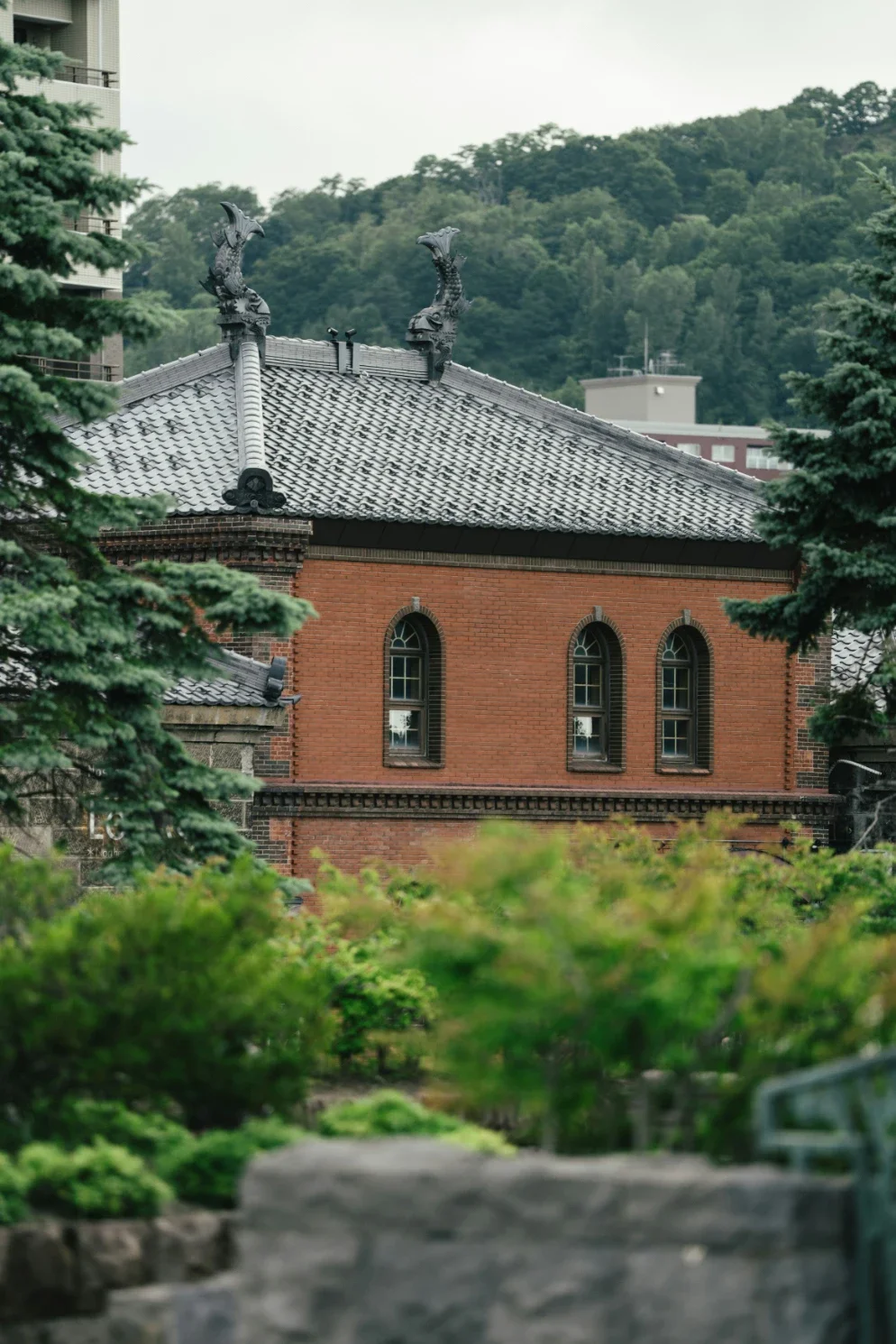
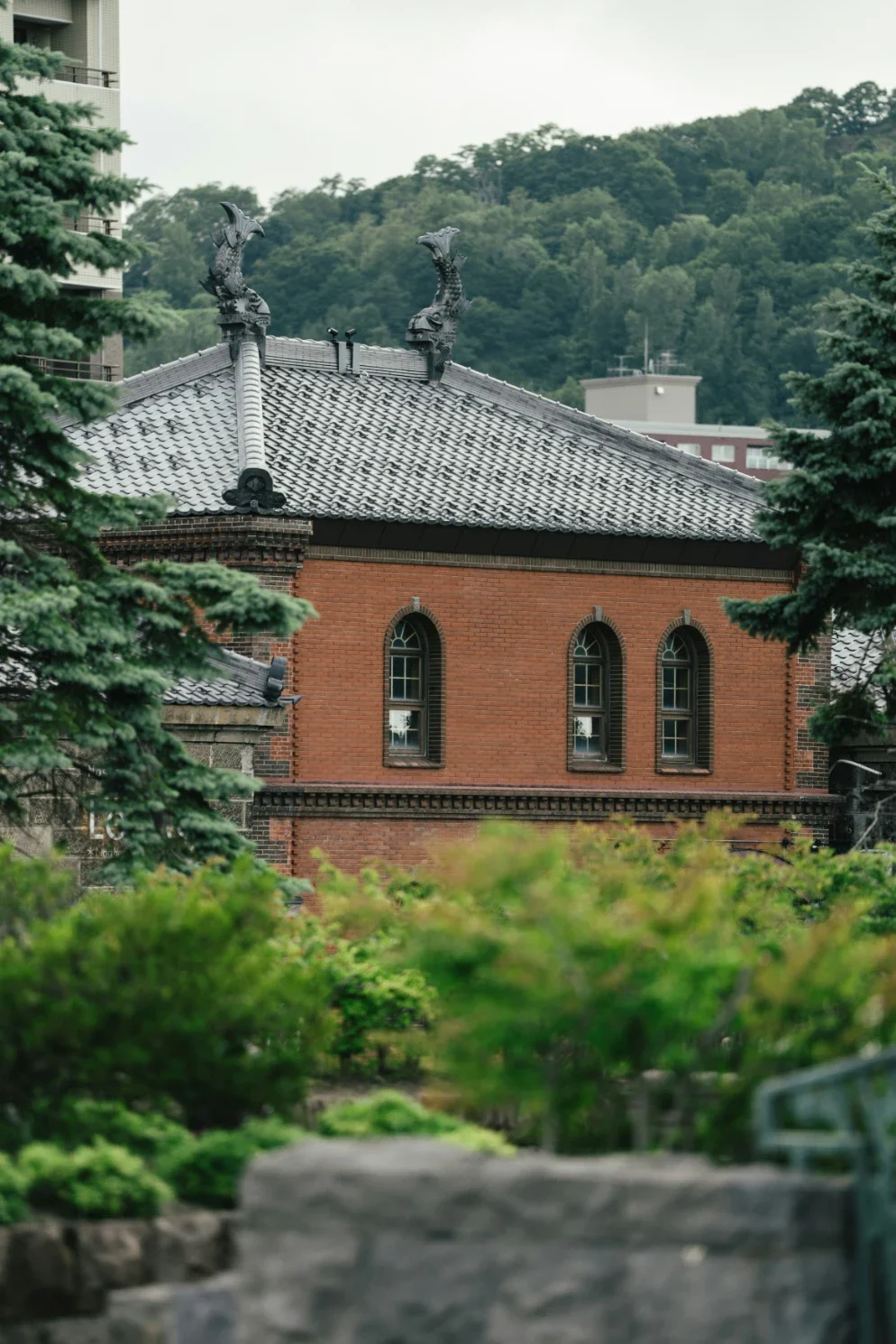
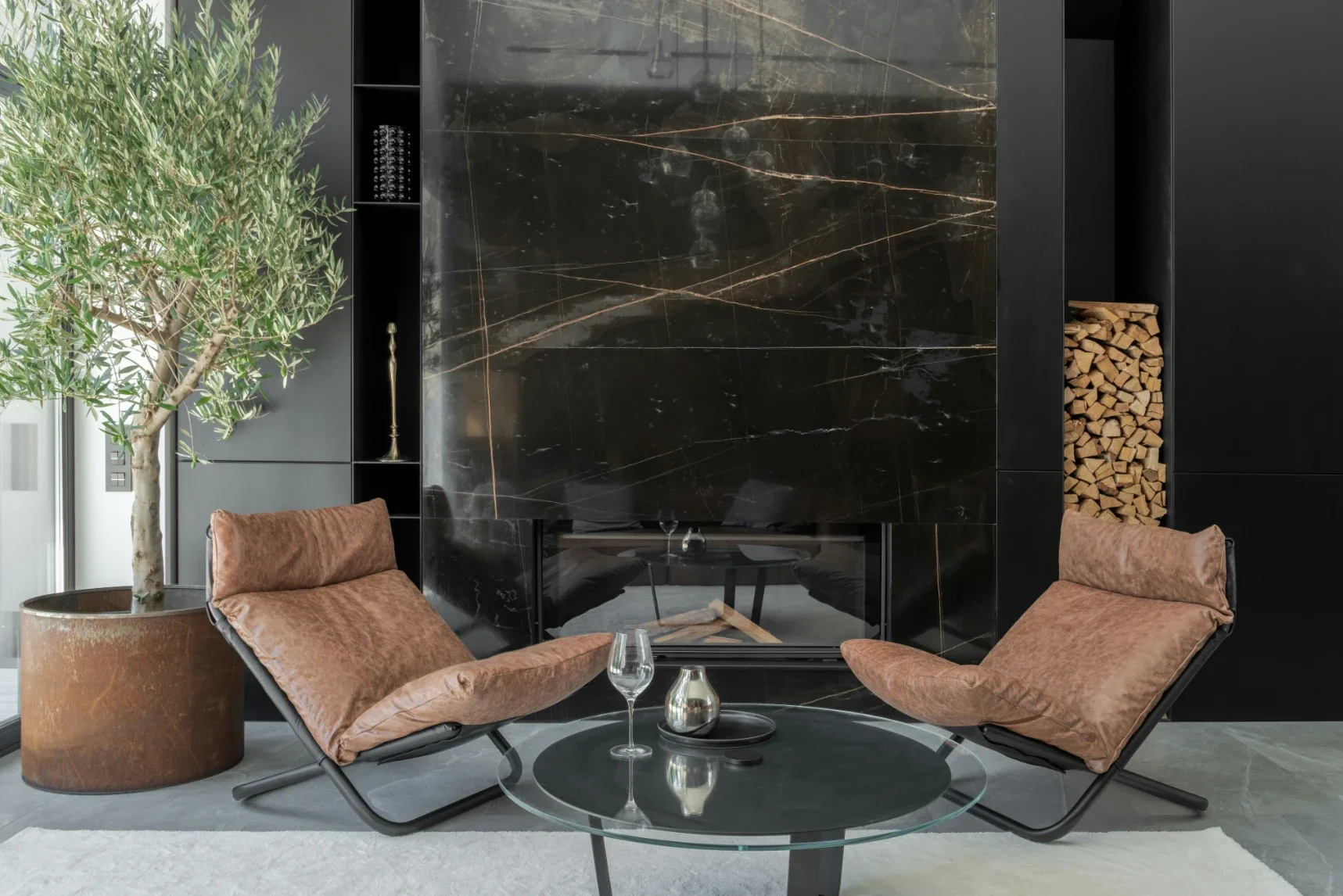
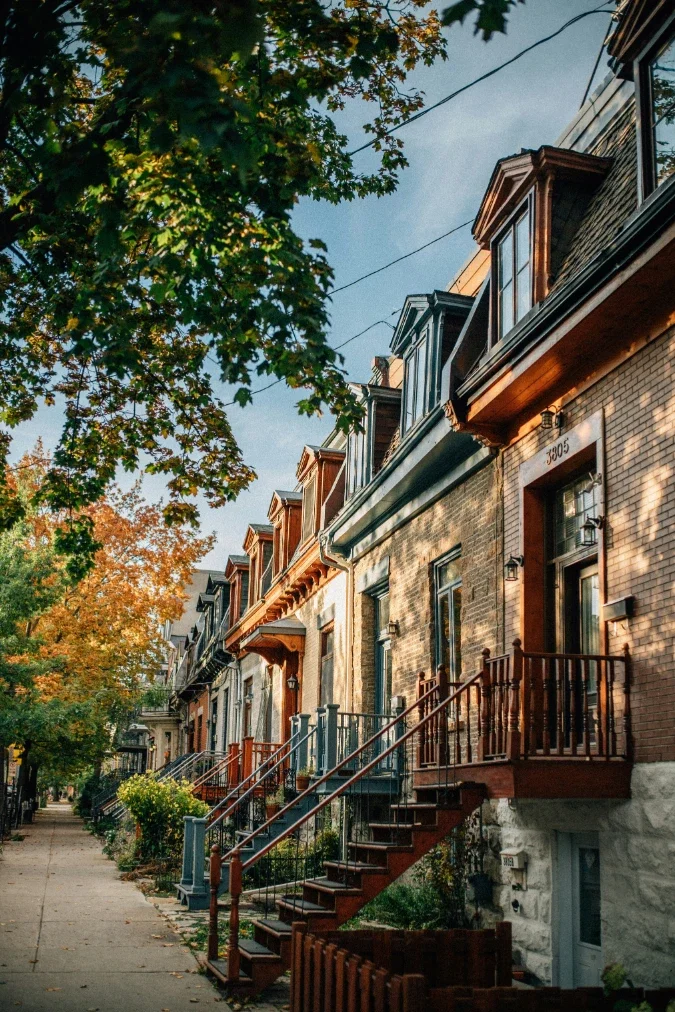
Few finishes change a house as quickly as limewash. A dated red-brick exterior can turn soft white with the brick still peeking through, and a heavy fireplace surround can become the warm centerpiece of a room.
But limewash brands are not interchangeable. They differ in coat count, primer needs, how easily you can distress or correct the finish and how far each bucket goes. This guide compares five brands for interior and exterior brick and stone on the points that matter once the brush is in your hand.
Key Takeaways
Limewash suits raw, absorbent brick and stone because it bonds with the masonry instead of forming a film on top.
Coat counts range from one coat with no primer to two-coat systems with their own undercoat.
Some brands give you a short correction window, from two days up to one week.
Drywall and previously painted walls need the manufacturer's specified primer, and touched surfaces need a protective topcoat.
Always judge a dry sample before committing, since lime looks darker wet.
Why Brick and Stone Suit Limewash
Limewash is a mineral, water-based finish made from slaked or hydrated lime that is thinned with water and brushed on. The Brick Industry Association (BIA) explains that lime is already a component of masonry mortar, so limewash is compatible with brick and does not change the wall's vapor permeability. It dries to a naturally nonuniform matte finish, with opacity set by dilution and the number of coats.
Acrylic latex works differently. It forms a film on the surface, is typically classed as vapor semi-permeable and softens the natural texture of brickwork.
Limewash, by contrast, weathers gradually outdoors and often streaks into an old-world patina. The BIA notes it can last five to 10 years or more depending on exposure and coats.
How We Compared the Brands
Each brand is assessed on the same five points:
Best for: The project type the product is most clearly designed around.
Prep on raw brick and stone: Whether a primer or undercoat is needed before application.
Coats and coverage: The manufacturer's stated coat count and coverage.
Look: The finish it produces and how much brick or stone can show through.
Upkeep and corrections: How touch-ups, cleaning and early corrections are handled.
All details come from each manufacturer's own product pages and technical documents.
Quick Comparison
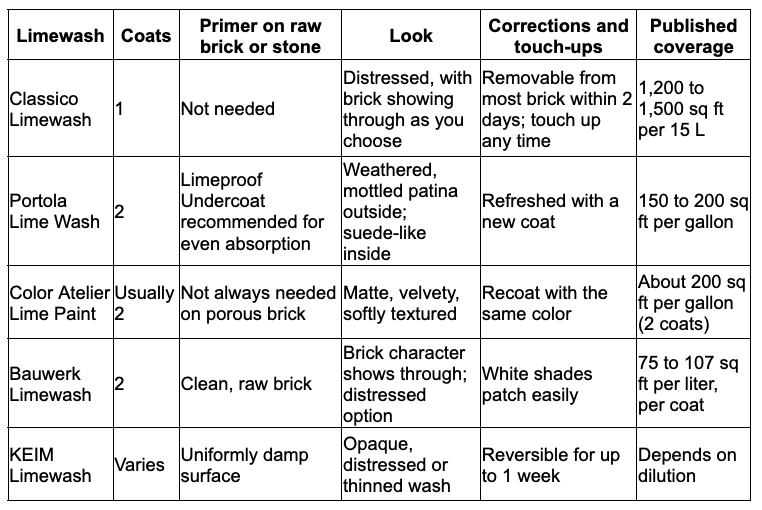
The 5 Limewash Brands Compared
1. Romabio's Classico Limewash
Romabio's Classico Limewash is an authentic slaked-lime limewash paint for brick and stone, handcrafted in Italy with Dolomite lime. It is formulated to be distressed while fresh, giving an aged look that lets the masonry's character show.
Best for: Old-world brick and stone exteriors, fireplace surrounds and DIY projects on one-story homes.
Prep on raw brick and stone: No primer. Clean the surface and dampen it with water before applying.
Coats and coverage: One coat, diluted 50 to 100 percent with water. A 15-liter bucket covers 1,200 to 1,500 square feet.
Look: Seven pre-tinted whites and neutrals. Distress with a damp cloth or brush to reveal as much brick as you like.
Upkeep and corrections: Removable from most brick within two days, with easy touch-ups. No warranty, as it is formulated to weather.
2. Portola Lime Wash
Portola's Lime Wash is a brush-applied, lime-based finish that dries to a weathered patina with subtle movement and natural color variation. It is positioned for historic restorations, interior and exterior masonry and interior drywall.
Best for: Layered, cloudy color on masonry and interior walls.
Prep on raw brick and stone: Limeproof Undercoat is recommended for consistent appearance and even absorption.
Coats and coverage: Two coats. One gallon covers about 150 to 200 square feet.
Look: A mottled patina outdoors that softens and fades over time, with a suede-like finish indoors.
Upkeep and corrections: The unsealed finish is non-wipeable, so Matte Wall Sealer is needed where wiping is required. Avoid application below 55°F or in direct sun.
3. Color Atelier Lime Paint
Color Atelier's lime paint arrives ready-mixed and pre-tinted for interior and exterior use. Each color can be ordered in lighter, standard or darker strengths, which helps when layering two shades.
Best for: Projects that combine exterior brick with interior walls in one color scheme.
Prep on raw brick and stone: Not always needed, as it can go directly onto porous brick, cement and stucco. Previously painted surfaces need its Mineral Primer.
Coats and coverage: Usually two coats, ideally 12 hours or more apart. One gallon covers about 200 square feet in two coats.
Look: A matte, velvety, softly textured finish with tonal movement from layering.
Upkeep and corrections: Touch up by recoating with the same color, ideally from the original container. Sealers are recommended in high-traffic or high-moisture areas.
4. Bauwerk Limewash
Bauwerk publishes surface-by-surface guides, including a dedicated guide for limewashing brick. On brick, it lets some of the masonry's character show through for depth rather than a flat, uniform surface.
Best for: Raw brick walls and fireplaces, plus render and block.
Prep on raw brick and stone: Brick should be free of dirt, mold and moss. Previously painted brick needs extra preparation steps.
Coats and coverage: Two coats for full coverage. On raw brick, expect about 75 to 107 square feet per liter, per coat.
Look: A softly varied finish, with a separate tutorial for a distressed limewash look on brick.
Upkeep and corrections: Its white shades patch easily for spot touch-ups. Sample on a spare brick, as testing on the wall can leave a visible patch.
5. KEIM Limewash
KEIM's limewash is a classic, old-world finish with hydrated lime as the binder and natural mineral pigments. It is sold as a concentrate and thinned before use, which allows several different looks from one product.
Best for: Historic restoration of lime plasters and stucco, as well as brick and stone.
Prep on raw brick and stone: Dampen exterior masonry until uniformly damp, not soaked. New drywall must first be primed with a mineral-based paint.
Coats and coverage: Coverage depends on dilution and technique. Apply by brush, roller or airless sprayer.
Look: An opaque finish, a distressed antique look or a thinned wash, depending on application.
Upkeep and corrections: Reversible for up to one week. Exterior applications must be routinely reapplied as the lime binder weathers.
Which Limewash Fits Your Project?
Distressed brick or stone exterior with as little work as possible: Classico, with its one-coat, no-primer process and wash-back finish.
Brick fireplace surround: Classico or Bauwerk for exposed-brick character. Plan a protective topcoat if the area gets touched.
Interior drywall or previously painted walls: Portola or Color Atelier, each used with its own undercoat or primer.
Mixed indoor and outdoor color scheme: Color Atelier, thanks to its pre-tinted range in multiple strengths.
Historic plaster, stucco or conservation work: KEIM, with its thinned-concentrate approach and early reversibility.
On an exterior, a refreshed brick facade also pairs well with simple landscaping updates that boost curb appeal.
Before You Start
Test absorbency. Sprinkle water on the brick. If it soaks in, the surface is absorbent; if it beads, it may be sealed. Glazed brick is unsuitable because the lime cannot bond to its hard surface.
Fix underlying problems. The BIA advises repairing cracked brick, deteriorated mortar and water penetration first. Efflorescence, the white salt deposit on masonry, signals excess moisture that needs addressing.
Mind the weather. Classico, for example, should be applied between 50°F and 88°F, ideally in the shade or cooler hours, to prevent flash drying.
Stir often. Pigment settles, so keep stirring through the job for even color.
Judge a dry sample. Lime looks darker wet than dry, so let tests dry fully before deciding.
Check older homes for lead. In homes built before 1978, use lead-safe practices before sanding or scraping existing paint, as the EPA advises.
Final Thoughts
Choosing a limewash for brick and stone starts with your surface and the look you want. For a distressed, exposed-brick finish, a one-coat, no-primer product with a wash-back window keeps the job simple.
For drywall or painted walls, a two-coat system with its own undercoat makes more sense. Conservation projects suit a thinned lime system with early reversibility. Whichever brand you choose, test on a matching surface, let it dry and follow the manufacturer's preparation steps closely.
FAQ
Do I need a primer to limewash brick?
On raw, absorbent brick, often not. Classico needs no primer, and Color Atelier can go directly onto porous brick, while Portola recommends its Limeproof Undercoat for more even absorption. Previously painted brick always needs the manufacturer's specified system, and Classico is made for unpainted masonry only.
Can I change my mind after limewashing?
Some products give you a short window. Classico can be removed from most brick within two days, and KEIM describes its limewash as reversible for up to one week. After that, plan on recoating rather than removing.
Is limewash safe on an interior fireplace?
A brick surround is a popular project, but the firebox is not. The BIA advises against treating functioning fireboxes, and Classico's manufacturer doesn't recommend it inside the firebox because of charring and soot. For hearths you sit on, it calls for a Mineral Shield topcoat to repel liquids and prevent chalking.
Will limewash turn red brick pink?
Not with a true opaque limewash. Classico's manufacturer explains that the finish covers fully where it isn't distressed, and the color you choose is the color that shows. Brick only shows where you wash the finish back or where it weathers over time.
Stay up to date with our latest ideas!