How to Choose a Commercial Roof Care Program in the Bay Area
Learn how to choose a commercial roof care program in the Bay Area, with tips on inspections, maintenance, repairs, warranties, costs, and long-term protection.

A flat roof over a small retail building, an HOA clubhouse, or a mixed-use property rarely fails all at once. Problems often start small: a clogged drain, a lifted seam, or a cracked pipe boot that goes unnoticed until water reaches a ceiling tile.
In the Bay Area, maintenance should account for the seasonal shift from dry weather to winter rain. Debris can collect between storms, and problems that stayed hidden through summer may become apparent once the roof is wet.
A roof care program provides scheduled inspections, clear documentation, and a plan for addressing small problems before they spread. The right program should match your roof's condition, your warranty requirements, and the building's needs.
What a Solid Program Includes, at a Glance
Use these items to compare proposals. Some belong in routine service; others may be useful additions depending on the roof's condition.
Seasonal inspections, often twice a year, with timing that meets the roof's maintenance and warranty requirements.
Post-storm checks, with clear terms for requesting and paying for them.
Photo reports that a non-roofer can understand.
A condition rating and estimated remaining life, with the limits of that estimate explained.
A roof plan showing problems, plus moisture mapping when further investigation is warranted.
Prioritized repairs, with a clear distinction between included work and extra charges.
Drain, scupper, and gutter clearing, with the scope stated in writing.
Maintenance records for warranty and insurance discussions.
Response-time commitments, if offered at the selected service level.
Budget planning notes for larger repairs or eventual replacement.
If a proposal omits an item, ask whether it is unnecessary for your roof, available separately, or outside the provider's scope.
Know Your Roof and Your Warranty
Comparing providers is easier once you know what is on your building. Common commercial roof types include:
Single-ply membranes (TPO, PVC, EPDM): sheets joined at the seams using methods suited to the material. Inspectors should check seams, flashings, and seals around pipes and equipment.
Modified bitumen and built-up roofing (BUR): layered asphalt systems. Common concerns include blisters, surface cracking, and worn protective surfacing.
Spray polyurethane foam (SPF): foam covered by a protective coating. The coating needs inspection for cuts, bird damage, and wear, along with periodic renewal.
Next, locate the warranty. Maintenance, inspection, and recordkeeping requirements vary by manufacturer and warranty type. Some warranties also specify who may perform repairs and which materials are acceptable. Ask the provider to build those requirements into the service agreement rather than relying on a generic schedule.
Before requesting proposals:
Find the warranty certificate and highlight its inspection and recordkeeping requirements.
Start a log with service dates, findings, and the names of those who performed the work.
Gather photos and invoices from past repairs.
Find or sketch a roof plan showing drains, rooftop units, skylights, and pipes or other roof openings.
When to Schedule Service in the Bay Area
A practical starting schedule is a pre-rain visit in September or October, a follow-up after the wet season, and additional checks after severe storms. Adjust that schedule to the roof's condition and warranty terms.
A single fall visit may not be enough for a building near trees. Drains cleared in early October can collect more leaves before the next storm. Ask whether seasonal debris removal requires an extra visit.
Drainage deserves attention during every inspection. The provider should check drains, gutters, and scuppers, the outlets that let water pass through roof-edge walls. The report should also note standing water and any need for further investigation.
Post-storm checks can be narrower than full inspections, but they should be performed by trained personnel when access is safe. Ask the provider to check drainage, visible storm damage, and flashings around equipment. If a leak or damage is found, a more detailed inspection may be needed. Confirm whether these visits are included or billed separately.
What Inspection Methods and Deliverables to Ask For
Two programs can both promise inspections and deliver different levels of detail. Ask how the provider examines the roof and what you receive afterward.
Methods
Visual inspection with photos. This is the baseline. Photos should be dated and tied to locations on the roof plan so findings can be tracked across visits.
Non-destructive moisture scanning. Infrared cameras or moisture meters can help identify areas of suspected moisture without opening the roof. Suitability and accuracy depend on the roof assembly, equipment, and testing conditions.
Core samples. Small openings can help confirm roof layers or investigate suspected moisture. Ask why sampling is needed, who authorizes it, and how each opening will be repaired.
Deliverables
A condition rating for the roof and key areas, with an explanation of the rating scale.
A remaining-life estimate expressed as a range, with assumptions and uncertainties noted.
A marked roof plan showing defects and, when scanning is performed, suspected moisture.
A repair list organized by urgency, supported by photos and a one- to three-year maintenance plan.
Dura-Foam, for example, describes its Bay Area RoofCare program around condition scoring, remaining-life estimates, and a maintenance plan for each roof. That format can help owners connect inspection findings to repair priorities. Ask any provider for a sample report and confirm which elements are included in your proposal.
Comparing Service Tiers
Providers may offer several service levels. The table below illustrates how scope can differ; it is not a standard that every company follows.
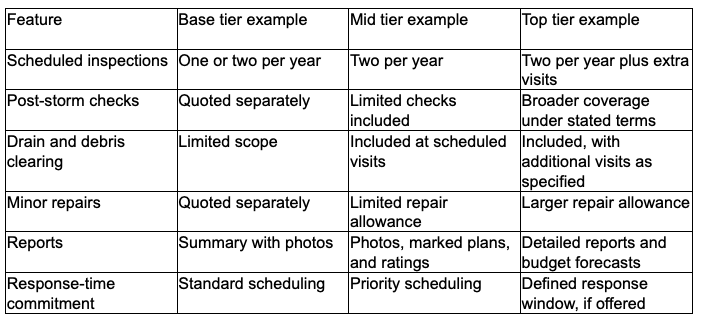
Included repairs have limits, so ask for the allowance in hours, dollars, or specific tasks. For emergency service, distinguish a promised callback from arrival on site or completion of a repair. Ask how severe weather affects those commitments.
Match the service level to the roof, not the package name. A newer roof with few openings may suit a basic plan if it meets warranty requirements. An older roof over a busy building, with many rooftop units and recurring leaks, may need more frequent attention.
Portfolio-Level Planning for Property Owners and HOAs
If you manage several buildings, the challenge shifts from fixing one roof to deciding which needs attention first. That calls for reports you can compare directly.
Ask for consistent ratings across properties, a consolidated summary, and a budget forecast showing likely repair and replacement windows. Without a common scale, a “fair” rating on one report and a “moderate” rating on another tell you little. For multi-property reporting, a commercial roofcare program in bay area may offer comparable condition scores, moisture maps, and remaining-life estimates across buildings; confirm the scope and reporting credentials before relying on the comparison.
Dura-Foam's described approach of per-roof condition scoring and written maintenance plans provides a useful basis for organizing those decisions. When comparing commercial roof care programs in the Bay Area, ask providers to show how their reports would work across your full property list.
If a proposal includes reports stamped by a licensed professional engineer, confirm what engineering work the report covers and whether that service is included in the fee. Moisture mapping and engineering review should have a defined purpose, not simply add more pages.
HOA boards benefit from consistent records because members rotate. A clear report format helps next year's board understand previous findings, completed repairs, and upcoming expenses.
Documentation for Warranties and Insurance
Manufacturers may ask for maintenance records when reviewing a warranty claim. Insurers may also request inspection and repair histories after a loss. Good records support those discussions, though they do not establish coverage by themselves.
Keep one roof file per building, digital or physical, containing:
The warranty certificate and manufacturer's maintenance requirements
A roof plan with drains, equipment, skylights, and roof openings marked
An inspection log with dates, inspectors, scope, and findings
Dated photos organized by visit
Repair invoices and descriptions of completed work
Moisture scan results and condition ratings, when available
Contact details for the installer and current service provider
Ask for reports in a format you can download, store, and forward. A PDF with photos and a marked-up plan will be more useful later than a text message saying the roof looked fine.
Drainage, Safety, and Local Responsibilities
Roof care is not only about the membrane. The drainage system must move water away without creating problems elsewhere on the property.
Local requirements vary across Bay Area cities. Ask the provider to flag blocked outlets, damaged drainage components, and questionable discharge routes. Any proposed drainage changes should be checked against the requirements for your address rather than redirected onto neighboring property or sidewalks.
San Francisco owners considering flood-protection upgrades can also check the current terms of SFPUC's Floodwater Management Grant program. Confirm availability, eligibility, and approval requirements before counting on funding.
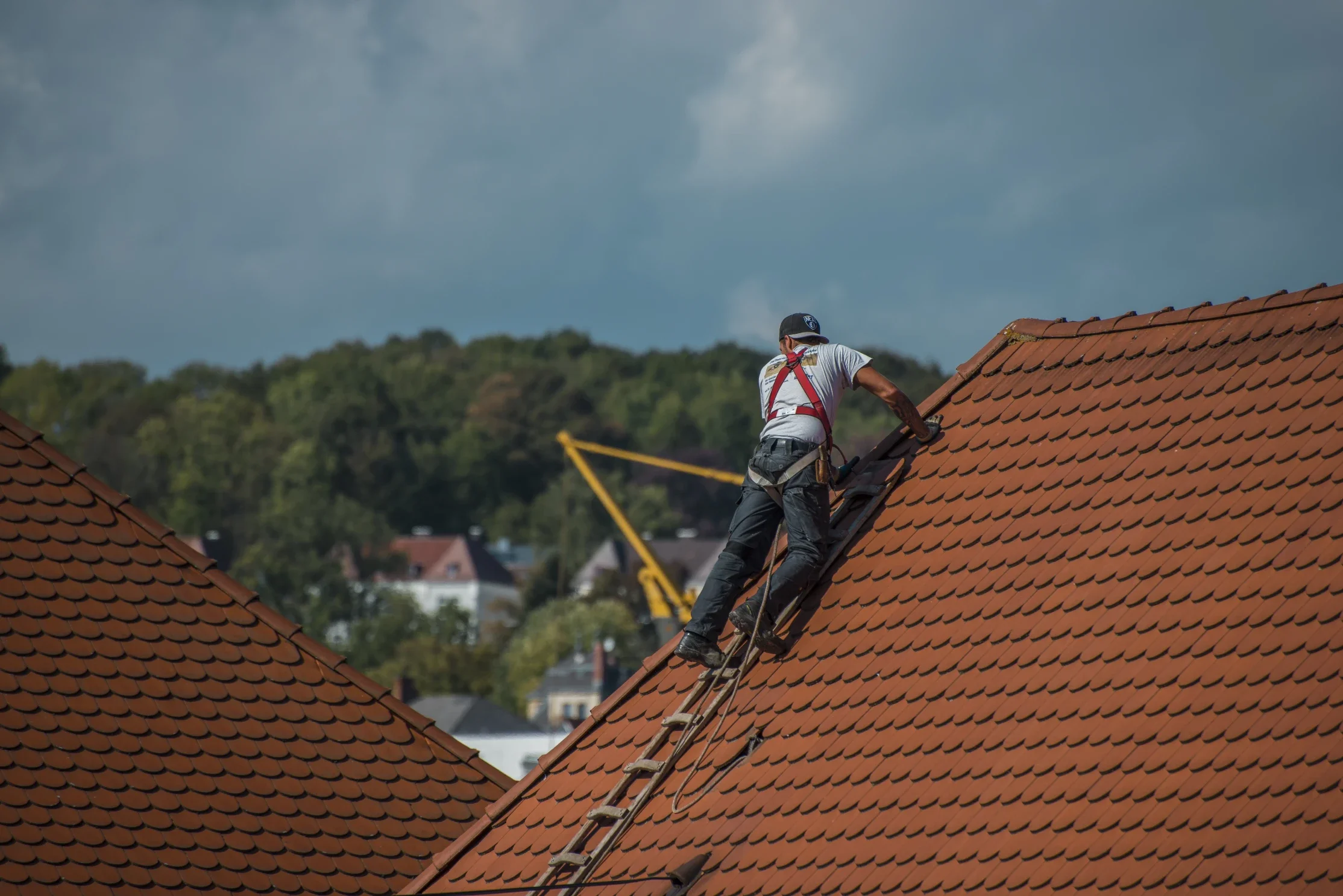
Leave roof inspections to trained professionals. Fall exposure, skylights, slippery surfaces, and electrical equipment can make even a short visit hazardous. Ask about the crew's access plan, fall protection, insurance, and methods for protecting the roof surface. Walkway pads can reduce membrane wear, but they do not replace fall protection or safe access procedures.
Budgeting and What Affects Cost
Maintenance prices vary with both the roof and the service scope. The main cost factors include:
Roof size and shape
Number of rooftop units, skylights, and roof openings
Access by ladder, hatch, or lift
Roof type, age, and condition
Included repairs and cleaning tasks
Reporting detail and any moisture testing
Ask each bidder to price the same scope. Confirm whether the quoted amount covers one visit or a full year, and identify separate charges for storm checks, testing, and repairs. A lower base fee may not mean a lower annual cost if essential work is excluded.
Title 24 and Larger Projects
Maintenance sometimes leads to larger work, such as renewing a coating, adding a roof covering over the existing system, or replacing the roof. These projects may trigger California energy-code requirements, including cool-roof standards.
The applicable rules depend on the project scope, building, roof slope, climate zone, and code edition. Before approving larger work, ask the contractor to confirm permit requirements and applicable Title 24 provisions with the local building department.
For permits filed on or after January 1, 2026, the 2025 Energy Code applies; where the cool-roof rule is triggered, the threshold is more than 50% of the roof area or 2,000 square feet, whichever is less.
Where cool-roof requirements apply, ask for the specified product's Cool Roof Rating Council (CRRC) rating information and compliance documentation. Solar reflectance describes how much sunlight the surface reflects; thermal emittance describes how readily it releases heat. Keep the relevant product records in the roof file.
Hiring Checklist and Proposal Questions
Put the same questions to each bidder so the proposals are easier to compare:
How many inspections are included, and in which months?
What will we receive after each visit: photos, marked plans, ratings, and repair priorities?
Which repairs are included, and what are the limits?
Are post-storm checks included, and what triggers them?
What response time will you commit to in writing, and what does “response” mean?
How will your records meet our warranty's documentation requirements?
Who performs the work: your crews or subcontractors?
What licensing, insurance, and safety procedures apply to the work?
Can you provide references for similar buildings nearby?
Can you share a redacted sample report from a comparable roof?
The sample report is especially useful. It shows whether the provider explains findings clearly, identifies repair locations, and delivers the information promised in the proposal.
When Maintenance Isn't Enough
A useful program should also identify when routine repairs are no longer enough. Findings that warrant a broader assessment include:
Confirmed widespread wet insulation rather than isolated areas
Flashing failures at many locations
Persistent moisture or deterioration in the roof deck
Leaks or repairs recurring in the same places
These findings do not automatically mean the entire roof needs replacement. They do justify an assessment by a licensed roofing contractor and, where structural concerns exist, an appropriate professional engineer. Inspection records and test results can help define the repair or replacement scope and its urgency. See signs maintenance is no longer enough for a related explanation before deciding whether repeated patching still makes sense.
Choose a Plan You Can Use
A practical roof care program combines seasonal inspections, clear drainage, timely repairs, and accessible records. The schedule and service level should reflect the roof's actual condition and warranty requirements.
Providers package these services differently. Dura-Foam emphasizes per-roof condition scoring and a written maintenance plan, an approach that can help owners turn findings into a work schedule. Compare any proposal against your building's needs, including repair allowances, report quality, and emergency-service terms.
Before the rainy season, gather the warranty and repair history, request sample reports, and compare written scopes. The goal is a clear plan for what will be inspected, what will be fixed, and what you need to budget for next.
Stay up to date with our latest ideas!