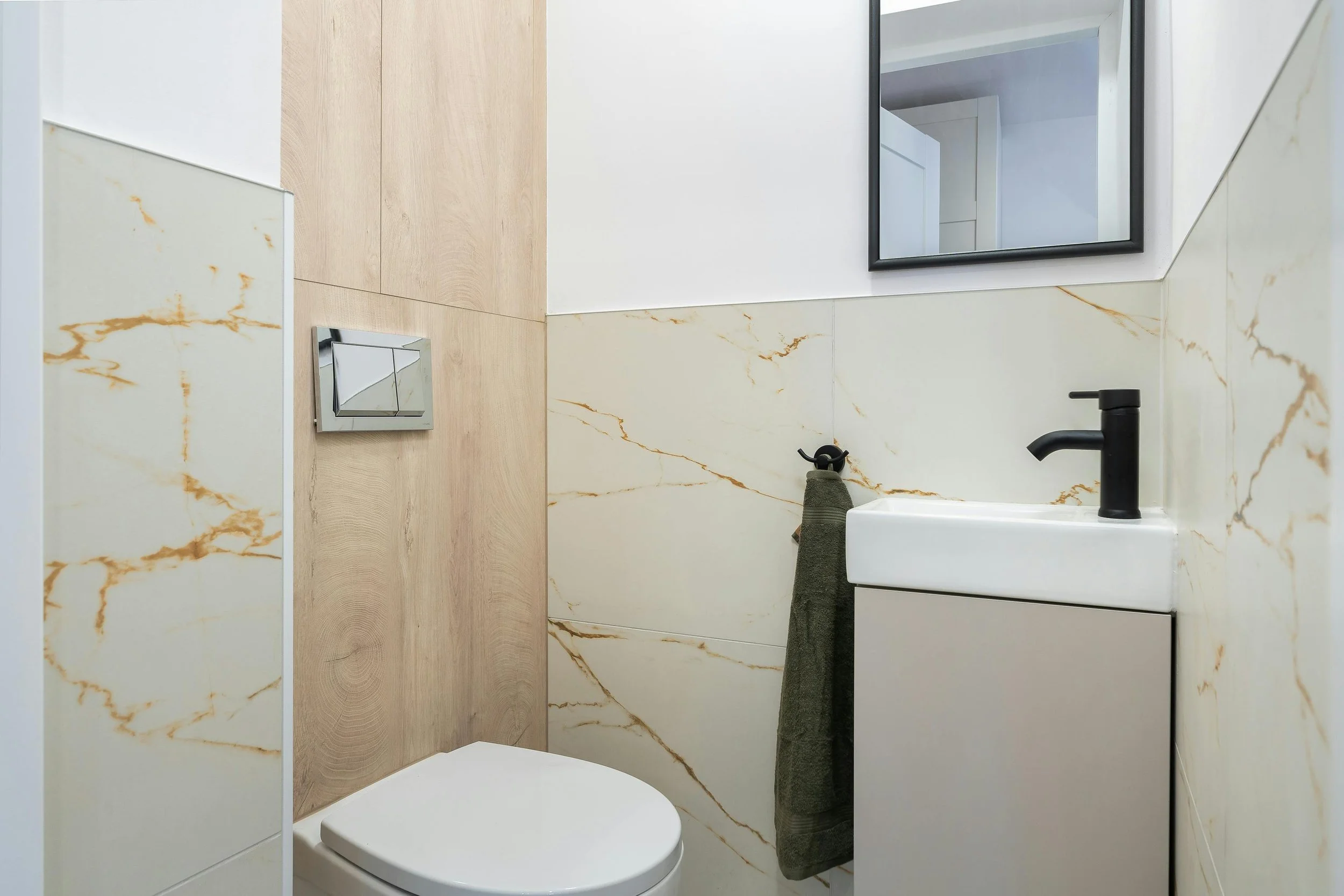
The Small Bathroom Details That Make Future Repairs Easier
Discover the small bathroom details that make future repairs easier, helping you save time, reduce costs, and simplify maintenance without sacrificing style.

When a bathroom has just been remodeled, the tile, glass, sink, and lighting usually get the most attention.
Those details shape how the room looks. Far fewer people think to record which valve was installed behind the wall, which parts are inside the toilet tank, or what type of clear strip runs along the shower door.
At first, that does not seem like a problem. Everything is new, and no one is thinking about repairs that may be needed several years from now.
But bathrooms are used every day. Faucets are turned on and off, toilets are flushed, and shower doors are opened and closed. Over time, the first things to wear out are often not the tile or glass, but the small parts that rarely get much attention.
These parts are usually inexpensive, yet finding the right replacement can be difficult. A well-designed bathroom should not only look good when the work is finished. Years later, the homeowner should still be able to identify a worn part and find one that fits.
The First Problems Are Often Hidden Inside the Fixtures
When people think about bathroom damage, they may picture broken glass, a cracked sink, or loose tile.
Most of the time, though, the first problem comes from a small part that has been working every day.
A faucet may look unchanged on the outside while the cartridge inside slowly wears down and starts to drip. The toilet itself may still be in good condition, while a fill valve or flush part inside the tank has stopped working properly.
The main fixture can look completely fine. The only thing that needs replacing may be a small, low-cost part with no clear model number.
By then, the original packaging is usually gone. The installer may no longer be available, and the homeowner may not even know what the part is called.
Normal wear is not the hard part. The difficulty comes years later, when no one remembers exactly what was installed.
Taking the Old Part Out Does Not Mean the New One Will Fit
Many small bathroom parts do not have a clear brand name or model number. Even after one has been removed, finding an exact replacement may still take some work.
A shower door seal is a good example.
Some seals fit along the bottom of the glass to help keep water inside the shower. Others run along the side of the door and cover the gap beside the glass. Some sit where two doors meet and may contain magnetic strips.
From the front, they can all look like simple clear strips. Two seals may even look almost identical when they are lying on a counter.
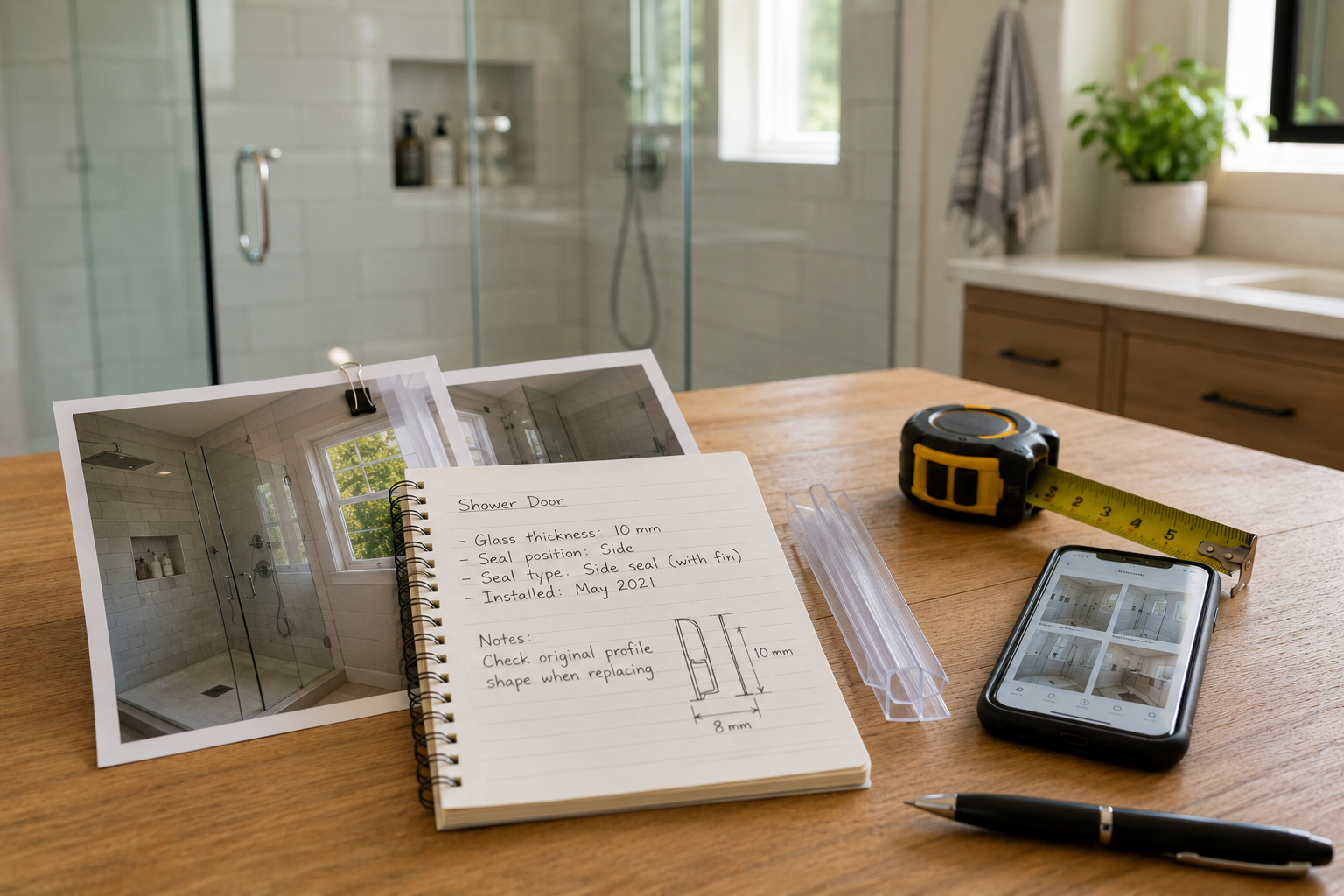
A homeowner can start by checking whether the old seal was fitted along the bottom, the side, or the closing edge, then measure the glass thickness. The harder part is often deciding whether the end profile and flexible fin will suit the existing door.
Once the old strip has been identified as a side seal, it makes sense to start with shower door side seal replacement products, then compare how the door opens and the shape of the old seal’s end profile. That is more direct than searching through every type of clear shower seal.
Length is only one part of the choice. A different glass thickness, profile, or fitting direction can keep a seal from working properly, even when it looks similar.
Some common replacement parts can be found at a hardware store. Shower door seals are less straightforward because manufacturers do not always use the same profile shapes. The type usually needs to be identified before you can find the right replacement.
SIMBA Seals UK uses details such as glass thickness, fitting position, door layout, and the old seal’s end profile to help identify a suitable replacement. Even when the original product number is no longer available, photos of the old seal and where it fits can make it much easier to narrow down the options.
Faucet cartridges and concealed toilet tank parts can cause similar problems. Two parts may look alike but still have different connections, dimensions, or fitting directions. Once the old part is off, the next challenge is making sure the replacement will actually fit.
A Few Records Can Make Future Repairs Much Easier
When a replacement part is difficult to find years later, the problem is not always that the part no longer exists. Often, there simply was not enough information saved when the bathroom was installed.
After a remodel, people usually take photos of the clean sink, bright mirror, and finished shower. The photos that may be more useful later are the ones taken before the walls were closed.
They can show which valve body was used for a concealed shower, where the pipes run, or which model of concealed toilet tank was installed. Once those details are covered by tile or cabinetry, they can be hard to confirm again.
Small parts are worth recording too. A photo can show where a part was fitted and what its end profile looked like. Basic measurements, such as the thickness of the shower glass, can also be saved.
The records do not need to be complicated. A digital folder can hold model numbers, order details, manuals, and photos taken during the work.
Hidden parts should also remain accessible. A concealed shower panel should allow access to the cartridge behind it, while a built-in toilet tank should be serviceable through the flush plate or an access panel.
There is nothing wrong with hiding the working parts of a bathroom. The important part is making sure someone can still reach them and figure out what they are years later.
Good Bathroom Design Makes Future Repairs Easier
A bathroom will not stay exactly as it looked on the day it was completed.
Parts that are used often will slowly wear down. That does not mean the design has failed. It is simply part of everyday use.
When something stops working, the homeowner needs a clear place to begin.
If a part can still be reached, its model and measurements have been saved, and there are photos showing where it was installed, a routine replacement is less likely to turn into a larger job.
When all that information disappears as soon as the remodel is finished, a low-cost part can take hours to identify. In some cases, a cabinet or wall may have to be opened even though it is still in good condition.
A bathroom is not truly finished just because the last tile is in place or the glass and lighting look right.
Years later, when a small part reaches the end of its normal life, the next person using the bathroom should still be able to identify it, find it, and replace it without unnecessary work.
Replacing a worn part should feel like routine maintenance, not the start of another remodeling project.
Stay up to date with our latest ideas!