What Are the Different Types of Door Handle?
Explore the different types of door handles, including popular styles, materials, functions, and tips for choosing the right option for your home.

Door handles are easy to overlook, yet they have a significant influence on how a room looks, feels and functions. The right handle should be comfortable to use, suitable for the door’s construction and in keeping with the surrounding interior. A decorative handle may enhance a period property, while a robust lever handle could be the better choice for a busy office or family home.
With so many designs available, choosing between them can be confusing. The key is to understand how each type works, where it is most suitable and what practical details to consider before buying.
Lever Handles: The Everyday All-Rounder
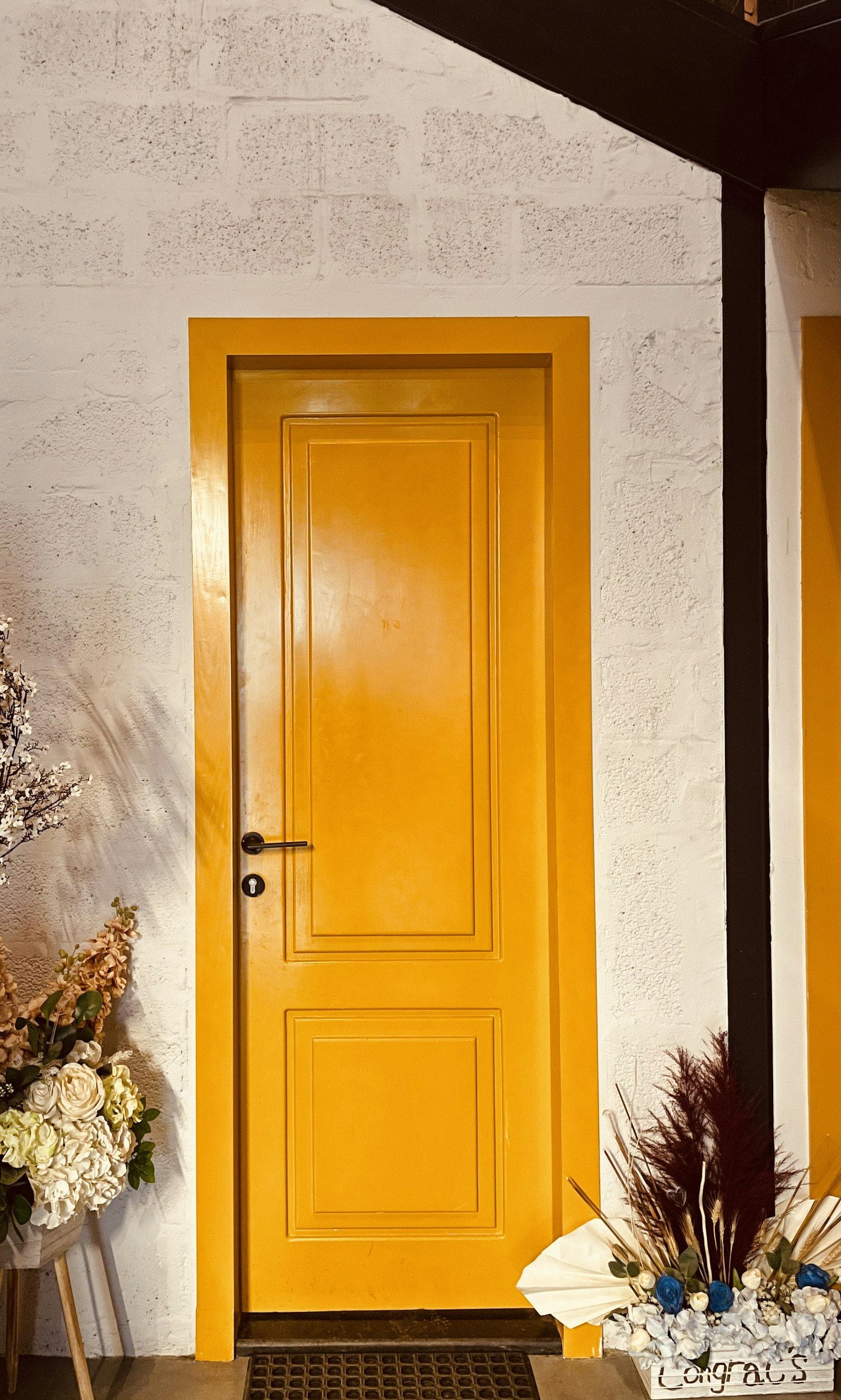
Lever handles are among the most common choices for internal doors. They operate by pressing the lever down, which turns a spindle and retracts the latch inside the door. This simple mechanism makes them easy to use, particularly for children, older people and anyone with limited hand mobility.
Lever on Rose
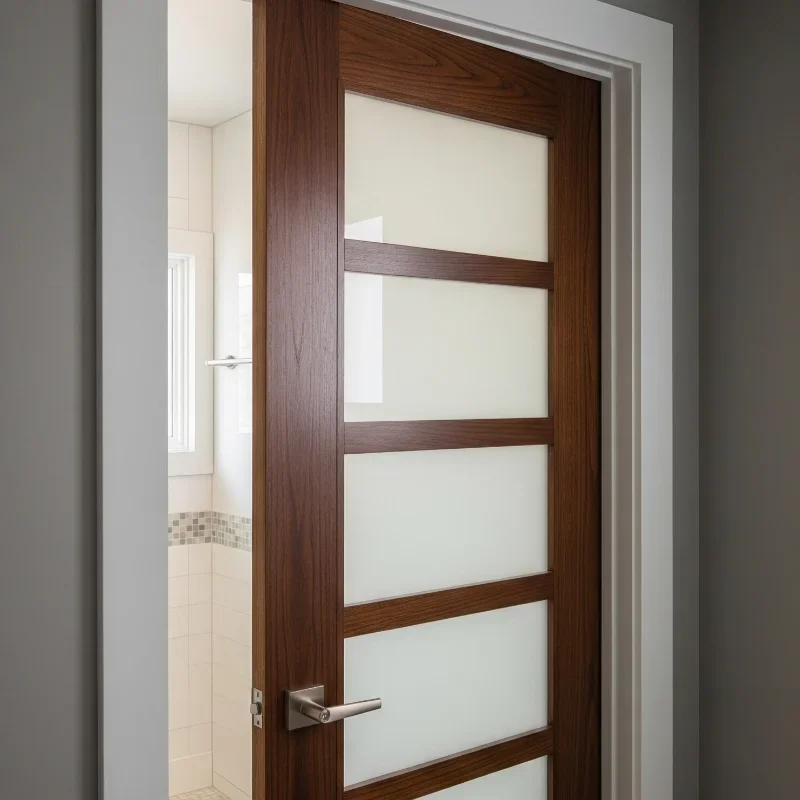
A lever on rose handle is mounted on a small circular or square backplate, known as a rose. Its clean, relatively compact appearance suits modern and transitional interiors. Because the rose takes up less space than a larger backplate, this style works particularly well on contemporary doors where a minimal finish is desired.
Lever-on-rose handles are available in a wide range of materials and finishes, including brass, chrome, nickel, black and bronze. Some include concealed fixings beneath a separate cover, creating a neat, uninterrupted appearance.
Lever on Backplate
Lever-on-backplate handles are fitted to a longer backplate. This gives them a more traditional look and provides room for additional features, such as a built-in keyhole, bathroom lock or thumbturn.
They are often chosen for Victorian, Edwardian or cottage-style properties, although simpler versions can work well in modern homes too. A backplate can also help conceal existing marks or holes in an older door, making it a practical option during renovation work.
Door Knobs: Traditional and Tactile
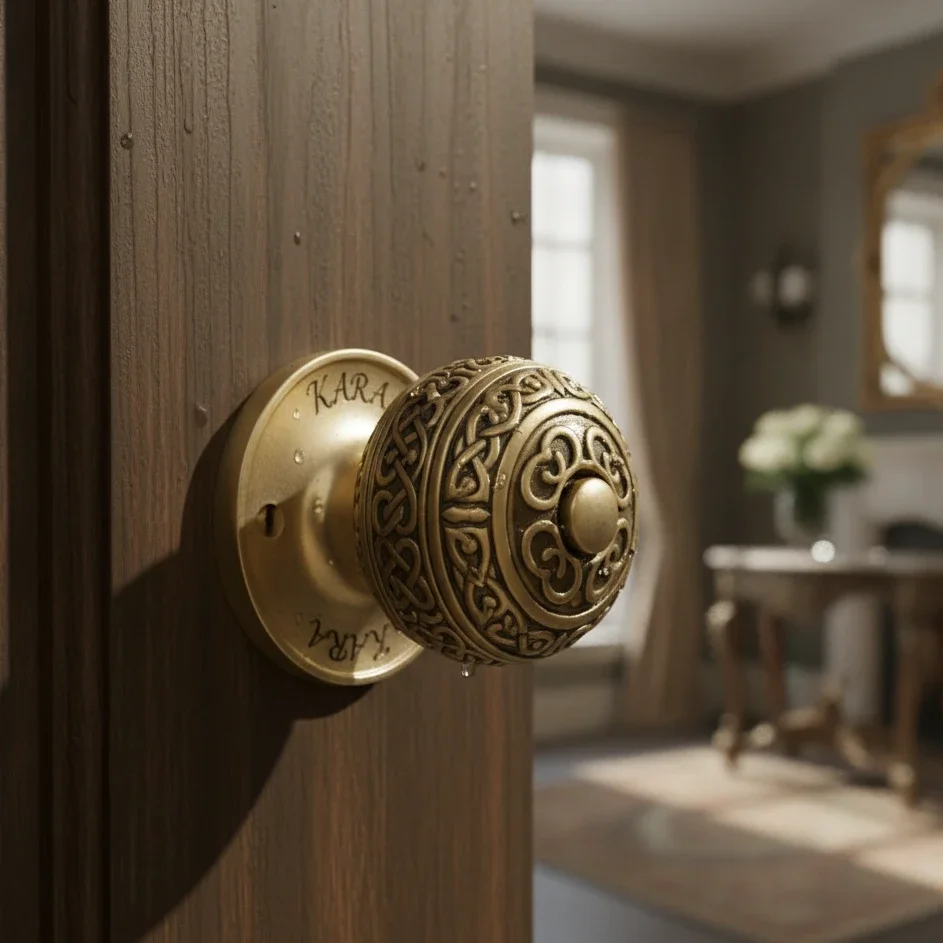
Door knobs remain a popular alternative to lever handles, particularly in period-style interiors. They are available in timber, porcelain, glass, ceramic, brass and other materials, allowing them to become a strong decorative feature rather than merely a functional fitting.
A knob is turned to operate the latch, which means it requires a little more grip and wrist movement than a lever. That may not be ideal for every user, especially in homes designed around accessibility. However, in bedrooms, studies and reception rooms, a carefully chosen knob can provide an elegant and authentic finish.
It is also important to distinguish between fixed and turning knobs. A turning knob operates a latch, while a fixed knob is used as a pull and is normally paired with a separate locking or latching mechanism. Using the wrong type can result in a door that looks right but does not function as expected.
Pull Handles for Sliding and Heavy Doors
Pull handles are designed to be grasped and pulled rather than turned. They are commonly used on sliding doors, entrance doors, cupboards and larger feature doors. Their straightforward shape makes them especially useful where a strong, easy-to-understand grip is needed.
On sliding doors, long vertical or horizontal pulls can make operation more comfortable and provide a visual focal point. For a large front door, a substantial pull handle can create a confident architectural look, although it will usually need to be used with a separate latch or lock.
The scale of the handle matters. A small pull may look lost on a tall door, while an oversized fitting can dominate a narrow one. Ideally, the handle should relate to the door’s height, width and surrounding hardware.
D-Pulls and Bow Handles
D-pulls, sometimes called bow handles, are straightforward U-shaped fittings attached at two points. They do not operate a latch by themselves, so they are generally combined with a catch, bolt or lock.
These handles are widely used on cupboards, utility doors, gates and sliding doors. Their sturdy construction makes them a sensible choice for applications where the fitting will be pulled repeatedly. They also offer considerable freedom in terms of placement, as they are not tied to the internal position of a latch mechanism.
For projects where several elements need to work together, it is useful to compare the types of door hardware available, rather than choosing handles in isolation. Matching the finish and proportions of pulls, hinges, escutcheons, locks and bolts can make the entire installation appear more deliberate and cohesive.
Privacy and Bathroom Handles
Bathrooms, cloakrooms and bedrooms often require privacy hardware. This may take the form of a thumbturn and release on a backplate or rose, allowing the door to be locked from the inside and released from the outside in an emergency.
Privacy handles should be selected with safety in mind. A bathroom lock should include an emergency release feature, and the door should not be capable of trapping someone without a straightforward means of access. In homes with young children or vulnerable occupants, this practical detail is more important than the appearance of the fitting.
For internal rooms that do not need to be locked, a standard latch is usually sufficient. Adding unnecessary locking mechanisms can increase cost and complexity without providing a meaningful benefit.
Choosing the Right Handle for Your Door
The handle’s appearance is only one part of the decision. Before ordering, consider the following factors:
Door thickness: Handles and spindle lengths must be compatible with the door.
Lock or latch type: The handle needs to work with the existing mechanism or the new one being installed.
Frequency of use: High-traffic doors need durable construction and reliable fixings.
Accessibility: Levers are generally easier to operate than knobs.
Interior style: Choose a design that complements the door, hinges, furniture and lighting.
Finish and maintenance: Unlacquered brass develops a natural patina, while plated finishes tend to retain a more consistent appearance.
It is also worth checking whether the handle is supplied as a complete set. Some products include roses, screws and spindles, while others require these components to be purchased separately. Confirming this early can prevent delays during installation.
A Handle Should Balance Form and Function
There is no single best type of door handle. The right choice depends on the door’s location, how often it is used, who will operate it and the character of the surrounding space.
Lever handles are versatile and accessible, knobs bring traditional charm, pull handles suit larger or sliding doors, and privacy fittings provide essential security in specific rooms. Once the practical requirements are clear, selecting a finish and style becomes much easier.
A well-chosen handle should feel natural in the hand, operate smoothly and look as though it belongs on the door. When those details are considered together, even a small piece of hardware can make a noticeable difference to the quality of an interior.
Stay up to date with our latest ideas!