The Italian Garden Room: Why Mediterranean Outdoor Furniture Has Become the Heart of the Modern Home
How Italian outdoor furniture - powder-coated aluminium, woven rope, marine teak - is reshaping the way contemporary homes use their gardens and terraces.

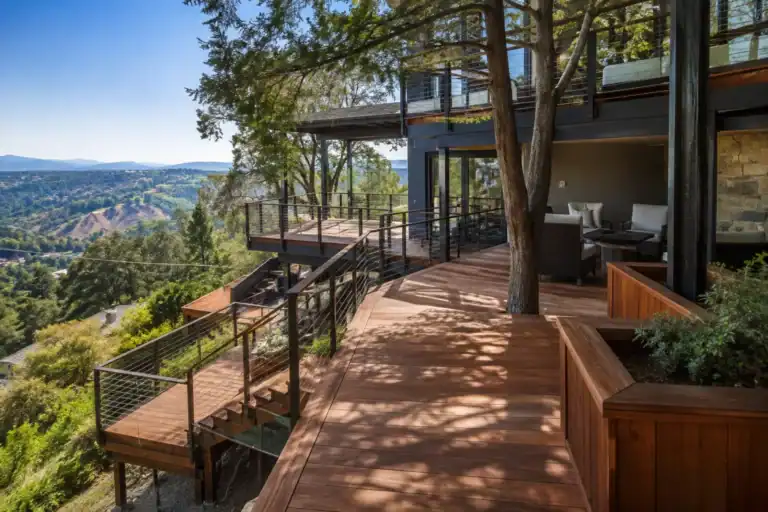
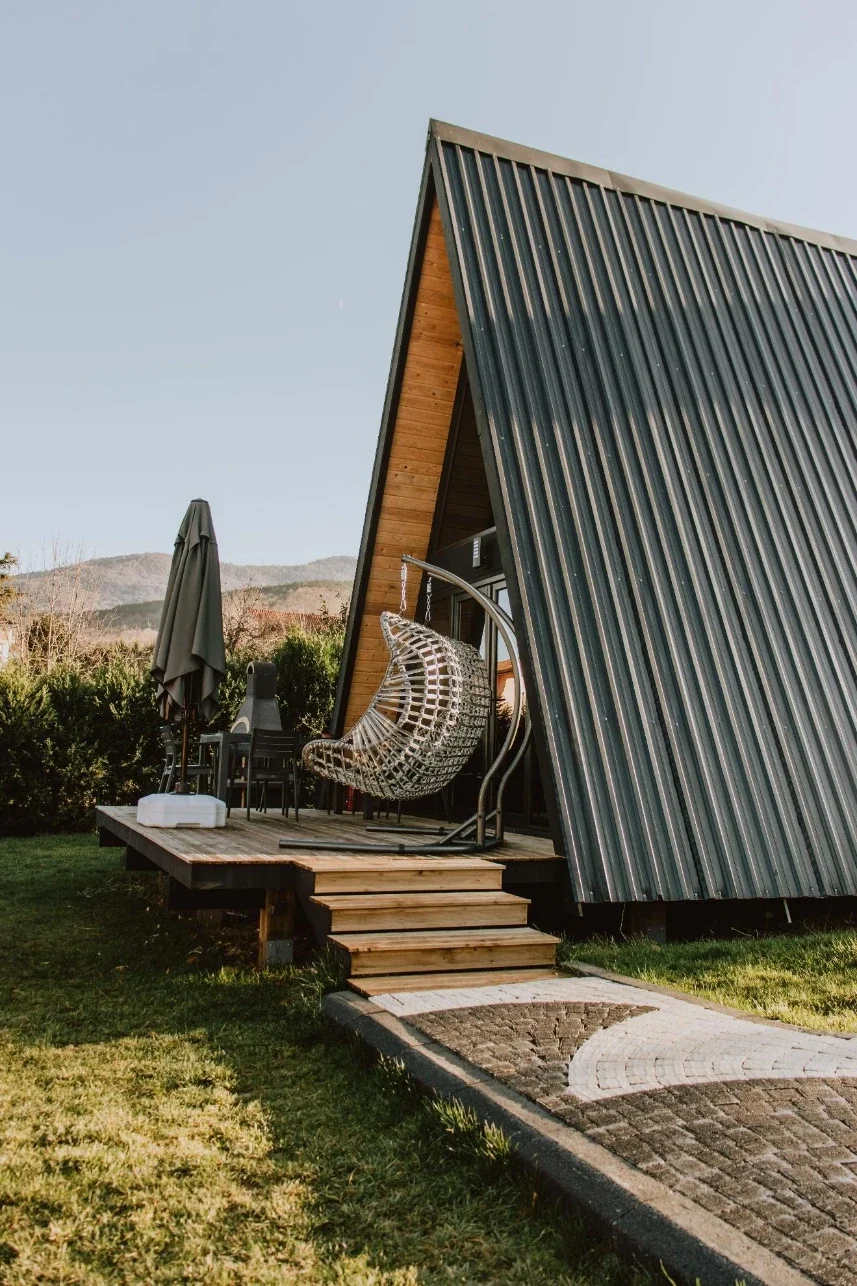
For a long time, the terrace was where a home stopped being serious. The rooms inside were furnished with the care of a curated wardrobe - layered textiles, considered lighting, pieces chosen over years. The garden, by contrast, was furnished from a catalogue, in a single afternoon, with whatever weatherproof set survived the previous season. That hierarchy has quietly inverted. In the houses being designed and decorated today — from coastal villas in Goa to hillside homes in the Hollywood Hills, from courtyard apartments in Milan to weekend retreats in the Mediterranean — the outdoor room is no longer the place where good taste ends. It is increasingly the place where it begins.
The thread running through almost every one of these spaces is Italian. Not Italian in the broad, postcard sense, but Italian in a very specific design lineage: the modern outdoor furniture canon that emerged from Lombardy, Veneto, and Friuli over the last four decades, and that has now become the default vocabulary of serious outdoor design worldwide.
How Italy ended up owning the outdoor room
The Italian dominance of contemporary outdoor furniture is not an accident. It is the product of a particular industrial geography. The Triveneto region, in Italy's north-east, has been a furniture-making heartland for more than a century, with generations of family workshops specialising in woodwork, metalwork, and upholstery. When the global appetite for serious outdoor furniture began to grow in the 1990s and 2000s, those same workshops were positioned to apply old craft to new materials — marine-grade teak, powder-coated aluminium, woven synthetic rope, performance textiles — without losing the proportions and the detailing that the Italian tradition is known for.
The result is a category of furniture that looks at home in an interior magazine and survives twenty seasons of salt air, monsoon humidity, or desert sun. It is the rare segment of the furniture market in which the most beautiful pieces are also, by some distance, the most technically engineered.
The material vocabulary
Italian outdoor design speaks a particular material language, and decorators who work with it regularly tend to recognise it instinctively.
Powder-coated aluminium is the structural workhorse. It is light enough to move, strong enough to hold a clean profile across long spans, and finished in a palette that ranges from sand and dove to deep graphite and oxide green. The colour is fired into the metal rather than painted over it, which is why a well-specified aluminium frame still reads as new after a decade outdoors.
Marine teak remains the warm counterpoint — the material that softens an otherwise architectural composition. Italian outdoor furniture houses tend to source teak from plantations with verified chain of custody, and to detail their joinery so that the wood weathers to a silver patina rather than splitting or cupping.
Woven synthetic rope — the open, almost basketweave seat backs that have become visual shorthand for contemporary outdoor design — is an Italian innovation in everything but raw material. It is UV-stable, washable, and structurally extraordinary; a well-woven rope chair holds its tension for years without sagging.
Performance textiles are the final layer. The best Italian houses upholster outdoor pieces in solution-dyed acrylics and technical blends that read as linen or bouclé from a metre away and absorb a thunderstorm without staining. The hand-feel has caught up to the chemistry; the era of plasticky, vinyl-adjacent outdoor upholstery is firmly over.
The contemporary Italian canon
A handful of houses define this category. Bonacina, with its woven and bent steel pieces, carries the lineage of mid-century Italian craft into outdoor work. Roda, founded in the 1950s, produces some of the cleanest teak modular systems in the world. Gervasoni has built a reputation for outdoor upholstery that holds its line. Tucci engineers umbrella systems that approach the precision of architectural hardware.
And then there is ethimo, which has become, over the last decade, the reference point for what contemporary Italian outdoor furniture can look like. The pieces are powder-coated aluminium and teak in proportions that feel sculptural rather than utilitarian, and the catalogue runs deep enough — modular sofas, dining systems, loungers, daybeds, parasol structures — that a single house can be furnished coherently end-to-end. For decorators working on a serious outdoor scheme, it is one of the most reliable sources of pieces that hold their own against the architecture.
None of these houses are inexpensive. They are also not, in any meaningful sense, decorative purchases. They are the part of the room that has to perform — structurally, materially, and aesthetically — for twenty years in conditions that would destroy most interior furniture in a single season.
Designing around Italian outdoor pieces
The decorators producing the most considered outdoor rooms tend to start with the furniture rather than ending with it. This is a reversal of how the room used to be approached. The old order was: build the patio, lay the stone, hang the lighting, then choose the furniture from whatever the client could be talked into. The new order is: choose the anchor pieces — the dining table, the modular sofa system, the daybed — and then design the floor finish, the planting scheme, the lighting, and the shade structure around them.
There is a practical reason for this. Italian outdoor furniture has long lead times — eight to twelve weeks is normal, sixteen to twenty for upholstered or custom pieces — and committing to the specification early means the room can be detailed around the actual footprint, the actual seat heights, the actual colours. It also means the lighting can be planned around where people will actually sit, rather than imposed from a ceiling plan.
There is also an aesthetic reason. A well-designed Italian outdoor piece has a particular presence, and the room reads best when the architecture and the planting defer to it rather than competing with it. The most beautiful contemporary terraces tend to be quieter than their interiors precisely because the furniture is doing more of the visual work.
The shift in how people are using their gardens
Underneath all of this is a change in how the modern home is being used. The outdoor room is no longer a place for a single occasion — the summer dinner, the children's birthday — but a daily room. Breakfast, work, reading, an afternoon nap, dinner, conversation: all of these are happening outside, in homes where the climate allows it and increasingly in homes where it doesn't, with the help of radiant heating, retractable shading, and ceiling-rated fans.
Furniture that has to support that volume of daily use needs to be built to a different standard than the old wrought-iron set that lived under a tarpaulin for ten months of the year. It needs to be comfortable enough for a three-hour conversation, sturdy enough for a child to climb on, beautiful enough to read well in photographs, and durable enough to take a thunderstorm without ceremony. The Italian outdoor canon, at its best, meets all four of those requirements at once.
The investment question
Clients sometimes ask whether the investment in serious Italian outdoor furniture is worth it, particularly in climates where the room is usable for only part of the year. The honest answer is that the calculation is the same as for any well-made furniture: the cost per year of use, amortised across the lifespan, is competitive with the disposable alternative replaced every three or four seasons. The difference is that the well-made piece does not become embarrassing in year five. It becomes the patinated, lived-with version of itself — which, in the outdoor context, is often when it looks its best.
There is also a resale logic. Homes that present a fully realised outdoor room — with the furniture, the lighting, the planting, and the architecture in conversation with each other — show better and photograph better than homes where the terrace reads as an unfinished idea. In any market that values outdoor living, that finish has a measurable effect on how the house is received.
A room that has finally been taken seriously
For most of the last century, the outdoor room was the part of the house where good design went to relax. That era is ending. The terrace, the garden, the courtyard, and the loggia are now being designed and decorated with the same attention as the rooms inside — and the Italian outdoor furniture canon, more than any other single influence, is what has made that possible.
The line between inside and outside is being treated as a design opportunity rather than an architectural inconvenience. The furniture that lives on the other side of that line, for the first time in a long time, is worthy of the rooms it opens onto.
Stay up to date with our latest ideas!