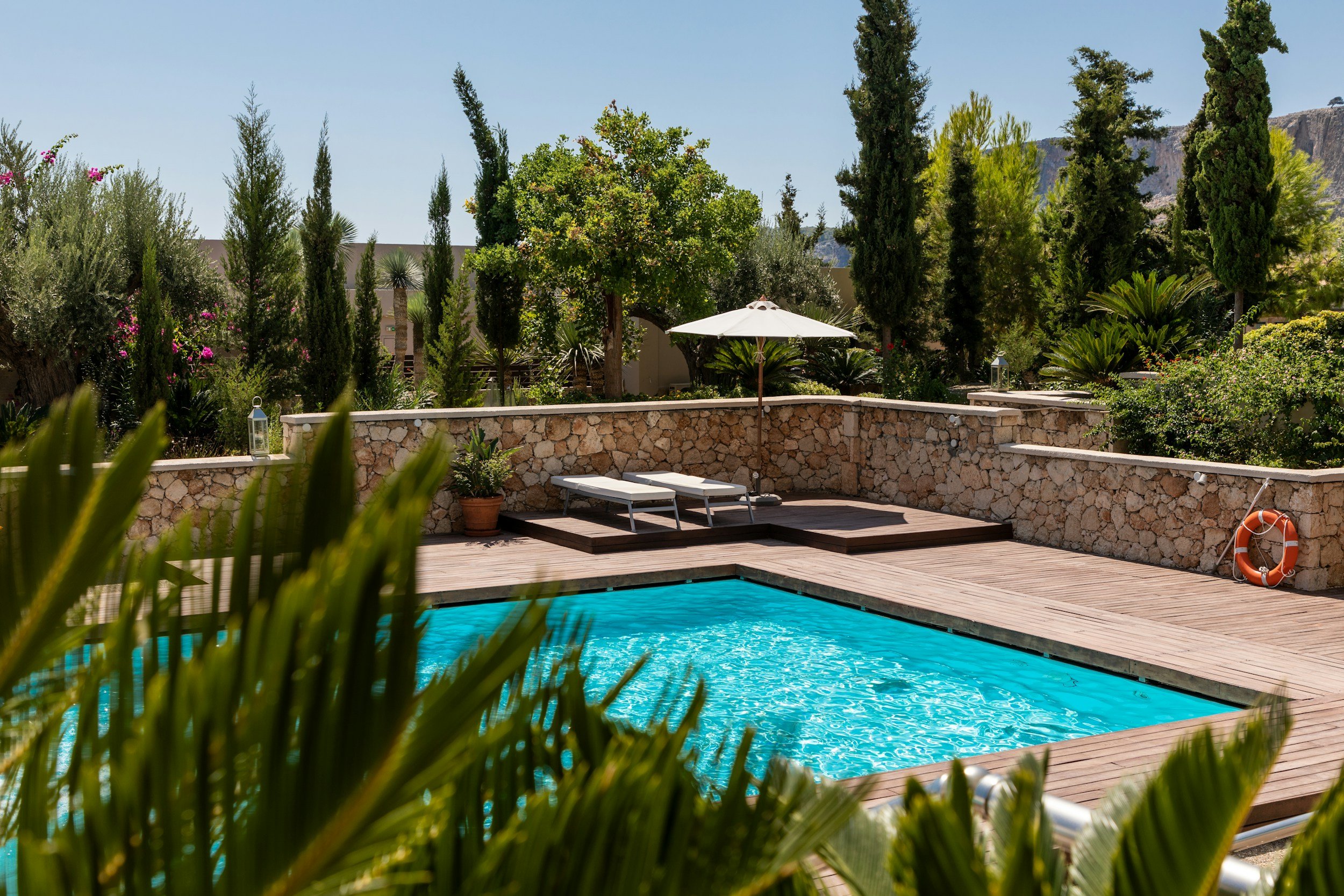
How to Design the Perfect Backyard Pool & Spa Combo in South Florida
Design the perfect backyard pool and spa combo in South Florida with ideas that balance comfort, style, functionality, and year round outdoor enjoyment.

If you live in South Florida, your backyard isn't just outdoor space — it's a lifestyle statement. The warm climate, year-round sunshine, and culture of outdoor entertaining make a pool and spa combo one of the most rewarding investments a homeowner can make. Working with an experienced pool builder Miami homeowners trust is the first step toward turning that vision into a finished backyard. But getting the design right takes more than picking a shape and a color. Here's what you actually need to think through before breaking ground.
Start With How You'll Use the Space
Before anything else, ask yourself how your family will use the pool on a daily basis. Do you want a lap pool for fitness? A shallow lounging area for kids? A spa where you can unwind after work? Or all three?
A pool and spa combo — where a jacuzzi or hot tub is built into the same structure as the pool — is the most popular choice for South Florida homeowners who want maximum utility from their backyard. The spa can be plumbed to share the pool's filtration system, which reduces equipment costs, or built as a standalone unit with its own heater for independent temperature control.
The layout decision you make early determines everything downstream: the footprint, the equipment, the cost, and how livable the space actually feels.
Size and Shape: What Works for South Florida Backyards
Most South Florida properties don't have sprawling backyards, especially in Miami-Dade and Broward County. The most common pool size for residential builds in this area is the 12x24 rectangle — compact enough to fit most yards, large enough for real swimming.
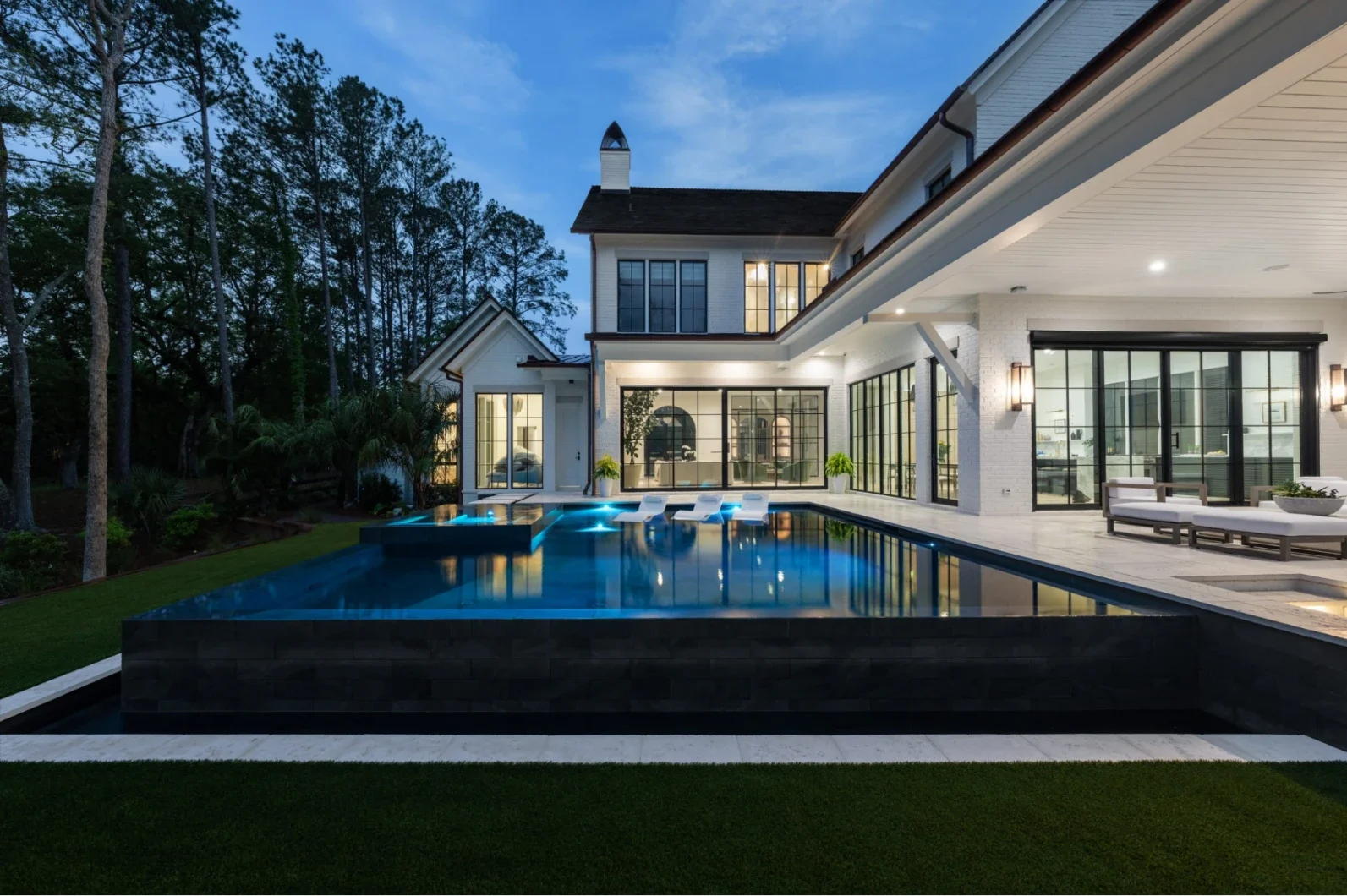
For a pool-spa combo, a popular configuration is an L-shaped design where the spa sits at one end or along the side, slightly elevated so water cascades into the pool. This creates a visual focal point, adds the sound of moving water, and makes the spa feel intentional rather than like an afterthought.
Zero-entry pools (also called beach-entry pools) are gaining traction in South Florida for families with young children or elderly family members — the gradual slope into the water eliminates the need for steps and creates a resort-like experience.
Materials and Finish: What Holds Up in the Florida Climate
South Florida's heat, UV intensity, and occasional saltwater air are harder on pool surfaces than most homeowners realize. Here's what holds up best:
Pebble and quartz finishes outlast plain plaster by years and come in a wide range of colors. The deep blue tones popular in South Florida — navy, cobalt, Caribbean blue — come from these aggregate finishes, not paint or dye.
For coping (the edge material around the pool), travertine is the dominant choice in Florida. It stays cooler underfoot than concrete or brick, drains well, and ages gracefully in the humidity.
For decking, pavers are almost universally preferred over poured concrete in this region. They allow for expansion and contraction in the heat, they're easier to repair if something shifts, and the design options are far more flexible.
The Spa: Spillover or Separate?
There are two main spa configurations for a combo build:
A spillover spa sits elevated above the pool, with water continuously flowing over the edge into the main pool. It creates a beautiful water feature effect and keeps the spa water circulating — which is important for water quality. The trade-off is that the pool and spa are always at the same temperature unless you have a dedicated heater for each.
A separate spillover-with-valve system lets you run the spa at a higher temperature independently while the pool stays cooler. This is the preferred setup for couples or families where some members want to soak at 100°F while others want to swim in 80°F water.
For South Florida, most homeowners run their pool at 82-86°F and their spa at 100-104°F. A gas heater is the fastest way to heat a spa; a heat pump is more efficient for the pool.
Permits and Timelines in Miami-Dade and Broward
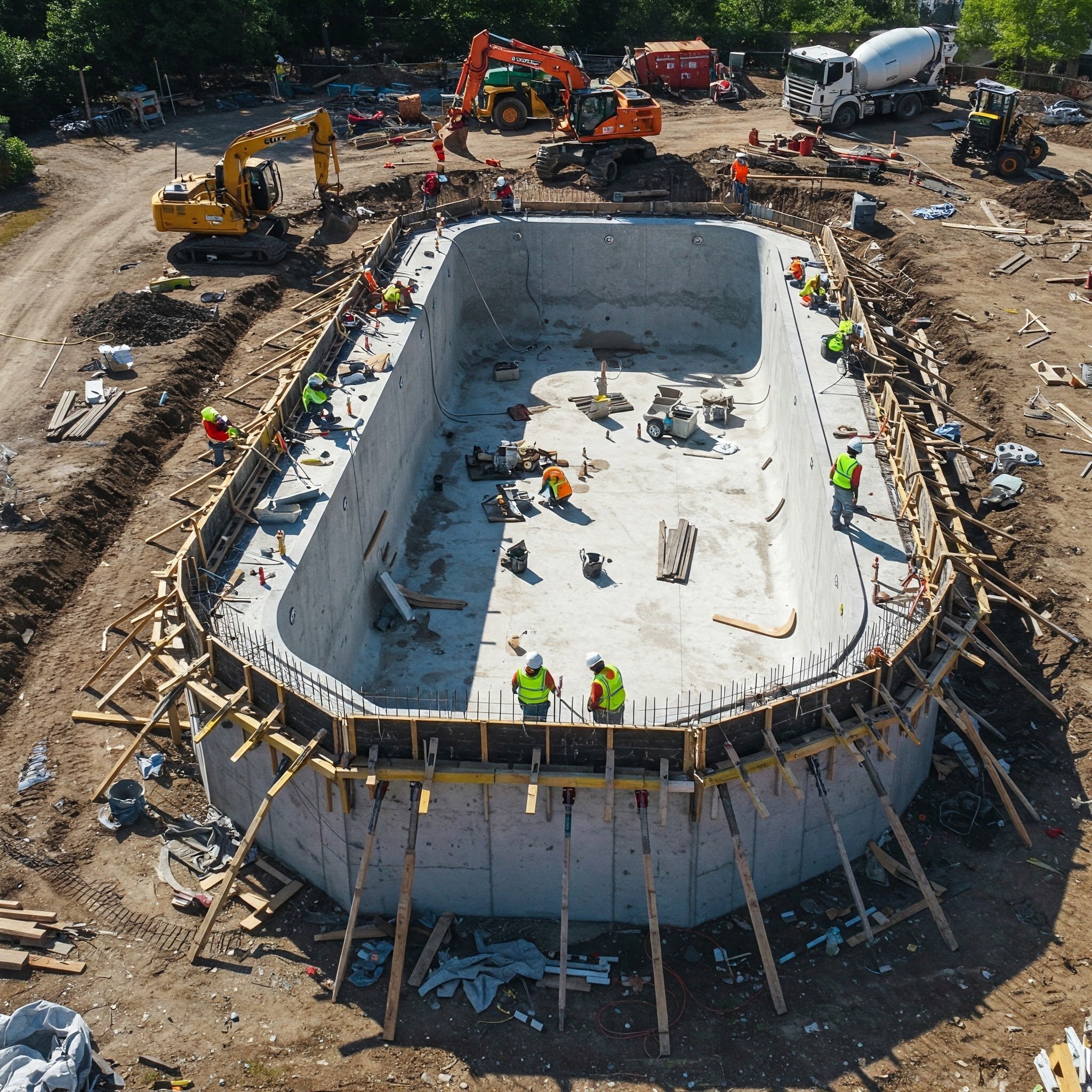
This is where a lot of homeowners get surprised. In Miami-Dade County, pool permits require structural drawings, soil tests, and a series of inspections. The permitting process alone can take 6-12 weeks before a shovel hits the ground. Total construction time for a pool-spa combo, from permit approval to final inspection, typically runs 10-16 weeks.
Working with a licensed contractor who knows the local permitting offices — and has existing relationships with inspectors — makes a real difference in timeline. Unlicensed work is common in South Florida and creates serious problems at resale.
What to Budget
A concrete pool-spa combo in the Miami area typically ranges from $65,000 to $120,000 depending on size, finishes, features, and site conditions. Fiberglass installations run lower — $45,000 to $75,000 — but offer less flexibility in shape and size. Adding a full outdoor patio, lighting, and landscaping can add another $15,000-$30,000 to the project.
Pool financing is widely available through specialty lenders, and many South Florida pool contractors offer financing packages directly.
Choosing the Right Builder
Get at least three bids, verify the contractor's CPC license with the Florida DBPR, and ask for references from completed projects in your neighborhood — not just photos. A reputable builder will walk you through the full design process, handle permitting on your behalf, and give you a realistic timeline upfront.
The backyard you've been imagining is achievable. It just takes the right plan and the right team.
Stay up to date with our latest ideas!