Luxury Home Sauna Design: Creating Your Personal Wellness Retreat
Discover luxury home sauna design ideas to create a personal wellness retreat with elegant layouts, premium materials, and relaxing spa inspired features.
A few years ago, a home sauna signaled either a serious athlete or a serious renovation budget. That line has blurred. As wellness moves out of the gym membership and into the floor plan, more homeowners are carving out a small, deliberate space to sweat, decompress, and reset without leaving the house. Done well, a sauna stops being a fixture and becomes a room you actually look forward to using.
Why the Home Sauna Became a Design Priority
The pull toward at-home wellness isn't only about convenience. There's a growing body of research behind it. A long-running Finnish study published in JAMA Internal Medicine followed more than 2,000 men for two decades and found that frequent sauna use was associated with meaningfully lower rates of fatal cardiovascular events and all-cause mortality. Findings like that have moved the sauna out of the "nice to have" column and into something people are willing to design around.
There's also the quieter appeal. A sauna creates a moment to pause. No screens, no multitasking, just heat and a few minutes to yourself, which is exactly the kind of ritual that's hard to build into a busy home any other way. That combination of measurable benefits and genuine calm is why the category keeps growing even as other renovation trends come and go.
Deciding Between Wet and Dry Heat
Before any of the fun design decisions, there's a practical fork in the road: what kind of heat do you actually want? The two dominant options behave very differently, and each shapes the build around it.
A traditional dry sauna runs hot and low-humidity, usually heated by an electric or wood-burning stove topped with rocks you can pour a little water over. A steam room, by contrast, stays cooler but saturates the air with moisture, which means a fully sealed, tiled enclosure rather than a wood-lined cabin. Many homeowners start by choosing between a steam room and sauna before committing to materials, since the answer dictates everything downstream, from ventilation to waterproofing.
The good news is that both deliver real benefits. A broad review in Mayo Clinic Proceedings linked regular sauna bathing to lower blood pressure, better vascular function, and reduced stress markers. So the choice comes down less to which is "healthier" and more to which experience you'll actually reach for at the end of a long day.
Getting the Materials and Layout Right
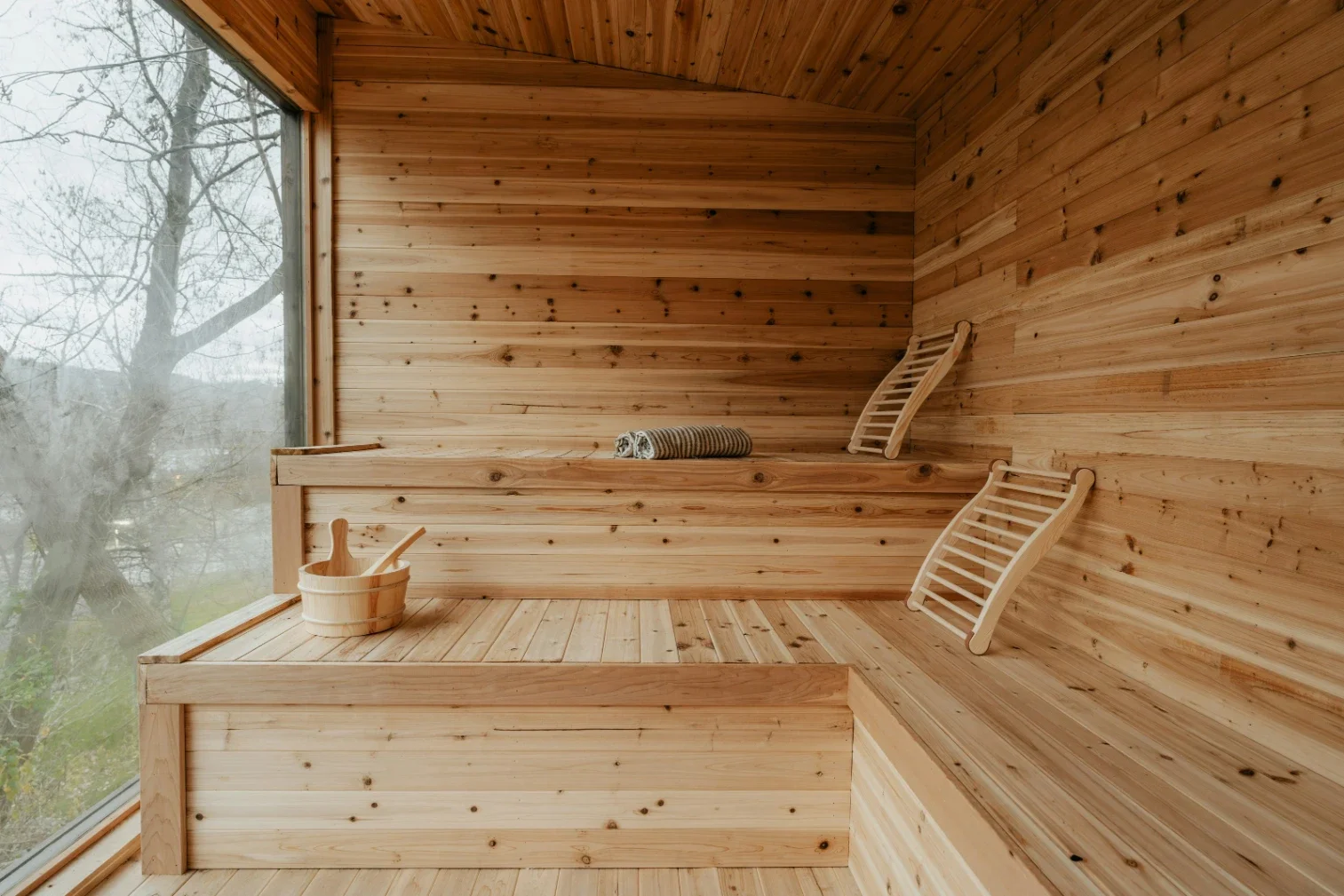
Once the heat source is settled, the cabin itself is where luxury is won or lost. Wood is the star, and the species matters more than most people expect. Western red cedar remains the classic for its aroma, moisture resistance, and the way it ages. Hemlock and Nordic spruce offer a paler, more contemporary look, while aspen is a smart pick for anyone sensitive to strong scents.
A handful of choices carry most of the weight:
Bench depth and height. Upper benches should be deep enough to lie down on, with enough headroom to sit upright comfortably in the heat.
Ventilation. An intake near the heater and an outlet on the opposite wall keep the air breathable, and the wood dry between sessions.
Non-toxic finishes. Skip standard sealants inside the hot zone; they can off-gas. Bare, properly cured wood is the norm for a reason.
Sightlines. A glass front makes a small sauna feel open rather than boxed in and lets the space read as part of the room instead of a closet.
The same instincts that make a calm, uncluttered wellness room work apply here: restraint, natural texture, and nothing competing for attention.
Heat, Light, and the Details That Set the Mood
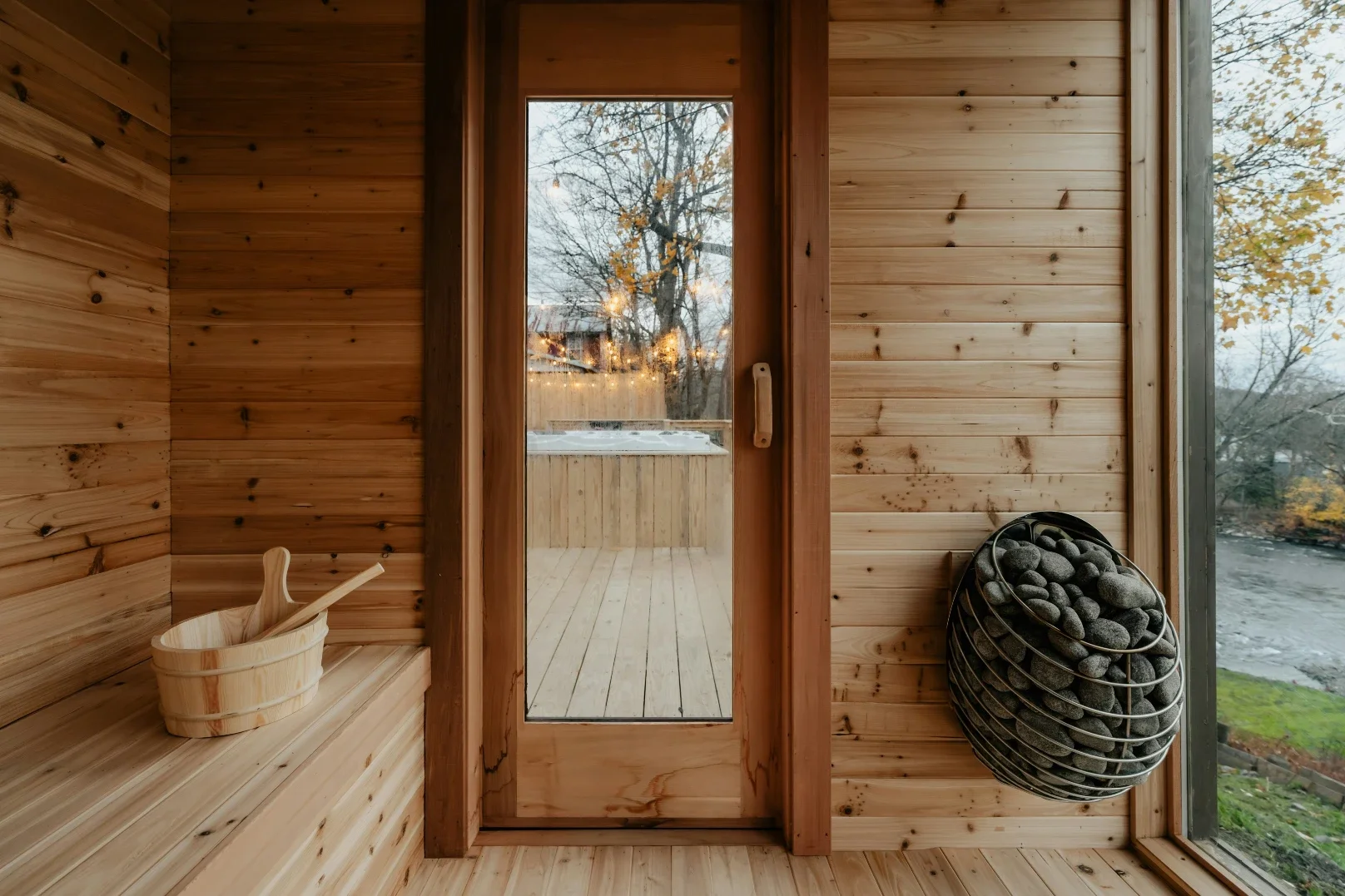
The heater is the engine, so it's worth sizing to the cabin's volume rather than guessing. An undersized unit struggles to hold temperature; an oversized one bakes the room unevenly. For most residential builds, a well-matched electric heater is the simplest path, though wood-burning stoves still win on atmosphere wherever a flue is feasible.
Lighting does the emotional work. Warm, dimmable, indirect light tucked under a bench or behind a backrest turns a functional box into somewhere you want to linger. Skip anything bright or clinical - a single low-glare fixture usually beats a grid of downlights.
Small sensory touches finish the space: a wooden bucket and ladle, a backrest that isn't scalding to lean against, and maybe a niche for a eucalyptus branch. None of it is expensive, and all of it signals that the room was designed rather than installed.
Making It Feel Like a Retreat, Not a Utility
The difference between a sauna that gets used twice and one that becomes a daily habit is almost always the atmosphere. This is where the "retreat" part earns its name and where borrowing a few cues from hospitality pays off. The same moves that make a home feel like a luxury hotel - soft lighting, a considered material palette, and a clear separation from the busier parts of the house - translate directly to a wellness space.
It helps that the payoff is genuine. Later research extended the early Finnish findings to women as well as men, linking frequent sauna sessions to lower cardiovascular mortality across the board. A space that's both restorative and quietly beautiful is one you'll keep coming back to, which is the entire point.
Placement matters too. Tucking the sauna near a shower or a cool-down zone makes the ritual flow, and a bench or robe hook just outside turns the transition into part of the experience rather than an afterthought.
The Bottom Line
A luxury home sauna isn't really about square footage or budget. It's about intention, the right kind of heat, honest materials, and lighting that invites you to slow down. Get those three right, and even a compact cabin can hold its own as the most restorative room in the house, a private retreat that quietly improves how you feel one session at a time.
Stay up to date with our latest ideas!