How Professional Cleaners Keep a Decorated Home Looking New: A Room-by-Room Maintenance Routine
Discover a room-by-room cleaning routine professional cleaners use to keep decorated homes looking fresh, polished, organized, and well maintained.
After more than ten years running a home-cleaning company, I have walked into thousands of beautifully decorated homes, and I can usually tell within a minute which ones will still look this good in five years. It has surprisingly little to do with how much was spent. It comes down to whether each finish is being cleaned in a way that suits it, and whether the small jobs happen often enough that the big ones never become necessary.
Most of the damage our teams see is not neglect. It is enthusiasm with the wrong product: a limescale spray on a marble vanity, a magic eraser on matte paint, a glass cleaner on a brass tap. Here are the finishes that need different care, the products that quietly ruin them, and the weekly and monthly routine we actually follow.
Start by Knowing What You Are Cleaning
The most useful thing you can do is find out what your surfaces are made of. Is the wall paint matte or washable? Is the benchtop sealed marble, honed limestone, or an engineered quartz that only looks like stone? Is the tapware lacquered brass or the unlacquered kind meant to develop a patina? Is the sofa a performance fabric or natural linen? Your decorator, builder or the product labels will tell you, and it is worth keeping a note in your phone. Then, before any new product touches a surface, test it somewhere hidden and let it dry before you judge the result.
Walls and Matte Paint
Flat and matte paints, limewash and mineral finishes absorb light beautifully. The trade-off is that they scuff easily and, if you scrub them, they burnish: the rubbed patch turns slightly shiny and is more visible than the original mark. So the rule is dry first, then damp, and dab rather than rub. Lift dust with a dry microfibre cloth from the top of the wall down. For a scuff, use a barely damp cloth with a single drop of dish soap in warm water, press and lift, and stop as soon as the mark fades. Magic erasers are micro-abrasives and should stay away from matte finishes entirely. Ask your painter for a small labelled jar of each colour; a touch-up with a fine brush is often a better answer than cleaning.
Open Shelving and Display Pieces
Open shelves are the first thing that ages a room, because dust settles on every horizontal edge and every object at once. In a kitchen it is worse: airborne cooking oil binds with dust into a film that will not lift with a dry cloth. Living-room shelves need a weekly pass with microfibre, working top to bottom. Kitchen shelves need warm water with a little dish soap, then a dry cloth. Never spray product directly onto a shelf full of objects; mist the cloth instead so nothing drips onto books, ceramics or the wall behind. Once a month, take everything down, wipe the shelf and the base of each object, and rotate pieces so the same items are not fading in the same patch of sun.
Brass, Bronze and Other Living Finishes
Brass is the finish people damage most, usually within the first year. Lacquered brass has a clear coating that keeps it bright; clean it with warm soapy water and a soft cloth, and never use polish, vinegar, lemon or anything abrasive, because they attack the lacquer and leave blotches that cannot be fixed without stripping. Unlacquered brass is designed to darken, and that softening is the look you paid for. Wipe it with a dry soft cloth, use warm soapy water for fingerprints, and only reach for polish if you want the whole fitting bright again. Above all, dry brass after every clean: water left on a tap becomes spots, and spots left long enough become marks in the metal. Bathroom limescale removers are formulated for chrome and glass, not for living finishes.
Natural Stone: Benchtops, Splashbacks and Floors
Marble, limestone and travertine are calcium-based, which means acid dissolves them. Vinegar, lemon, wine, tomato and a large share of supermarket bathroom sprays leave a dull spot called an etch. An etch is not a stain sitting on the surface; it is the surface itself being eaten away, and cleaning will not bring the polish back. Use a pH-neutral stone cleaner or a drop of dish soap in warm water, a soft cloth, and dry the stone afterwards. Wipe spills the moment you see them, especially oil, red wine and citrus. Test the sealer every few months by leaving a few drops of water on the bench: if it beads, you are fine; if it darkens the stone within a minute or two, it is time to reseal. On stone floors the enemy is grit, which acts like sandpaper under foot traffic, so a dry dust mop several times a week matters more than any wet clean.
Upholstery, Rugs and Soft Furnishings
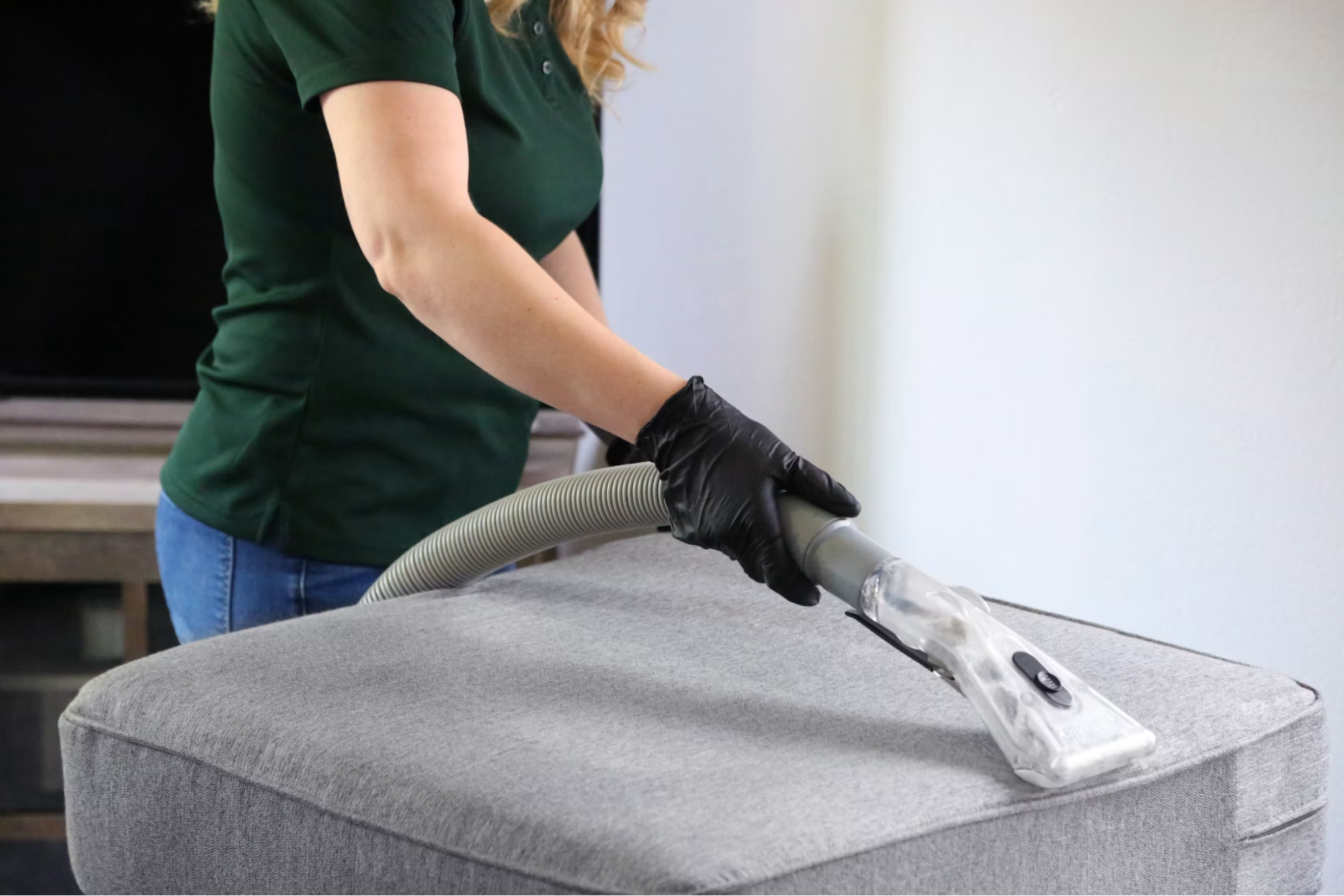
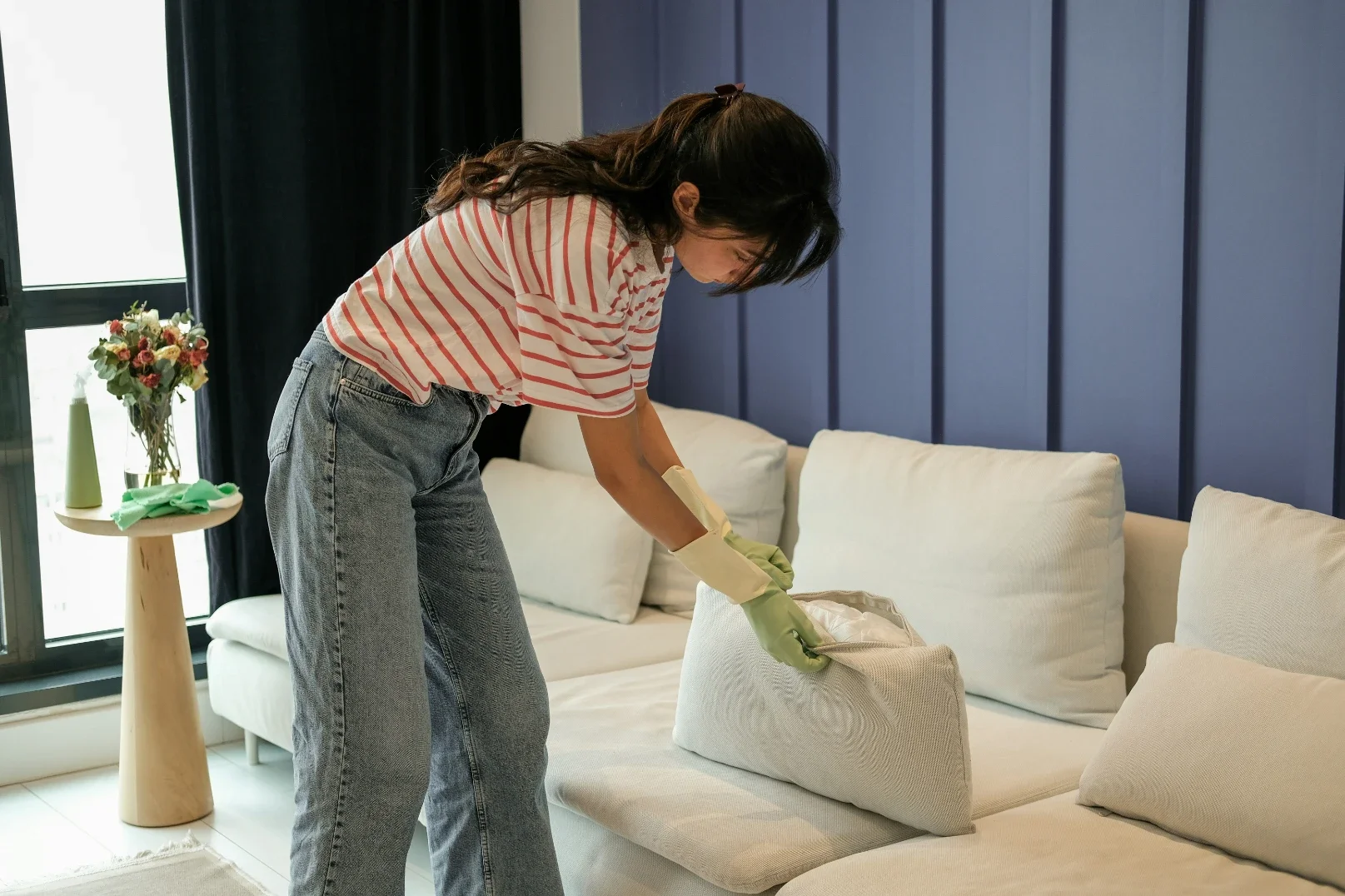
Every sofa carries a care code on the label: W means water-based cleaners, S means solvent only, WS means either, and X means vacuum only. Read it before anything touches the fabric. Weekly, vacuum with the upholstery attachment, including under the cushions where crumbs and grit wear the fabric from the inside, and flip the cushions so they wear evenly. Blot spills with a clean white cloth and never rub, which spreads the mark and roughens the fibres; for the usual culprits there is a step-by-step guide to removing couch stains on our site. Linen and velvet fade in direct sun, so adjust blinds through summer. Rugs should be vacuumed on both sides monthly and rotated 180 degrees every few months.
The Weekly Routine
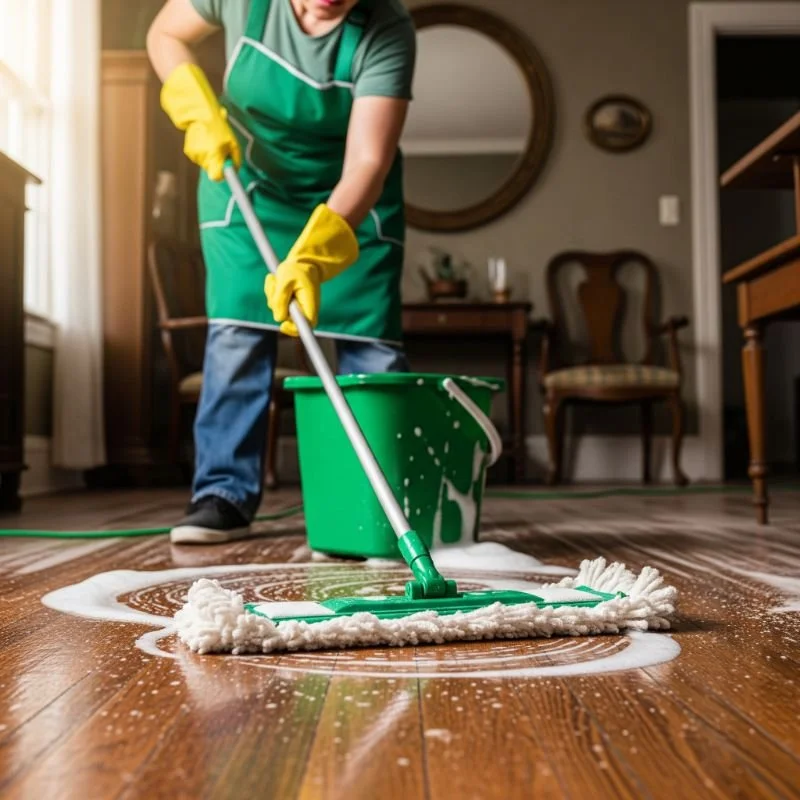
Our teams work through a home in the same order every time: top to bottom, and dry before wet, so nothing you dislodge lands on something already clean. Dust the shelves, ledges and frames with dry microfibre. Wipe the kitchen benches with whatever suits the material, and dry any stone. Wipe and dry the brass. Clean the bathroom with a neutral cleaner, keeping acids away from stone and metal, and dry the fittings. Vacuum the upholstery, then the floors, and finish with a damp mop and a pH-neutral cleaner. In a typical two-bedroom home that is about ninety minutes, and the point is consistency rather than intensity: a light weekly pass stops grime from ever bonding to a surface, which is the moment it starts needing harsh products.
The Monthly Routine
Once a month, add the deeper jobs. Empty and wipe the open shelves. Walk each room looking for scuffs and treat them while they are fresh. Do the water-drop test on the stone. Rotate the cushions and flip the rugs. Wipe skirting boards, door frames, light fittings and the tops of tall furniture. In the kitchen, wash the range-hood filter, because grease that is not caught there ends up on your shelves and walls. None of these jobs takes long on its own, and doing them monthly keeps them from becoming a full-day project.
What to Keep in the Cupboard
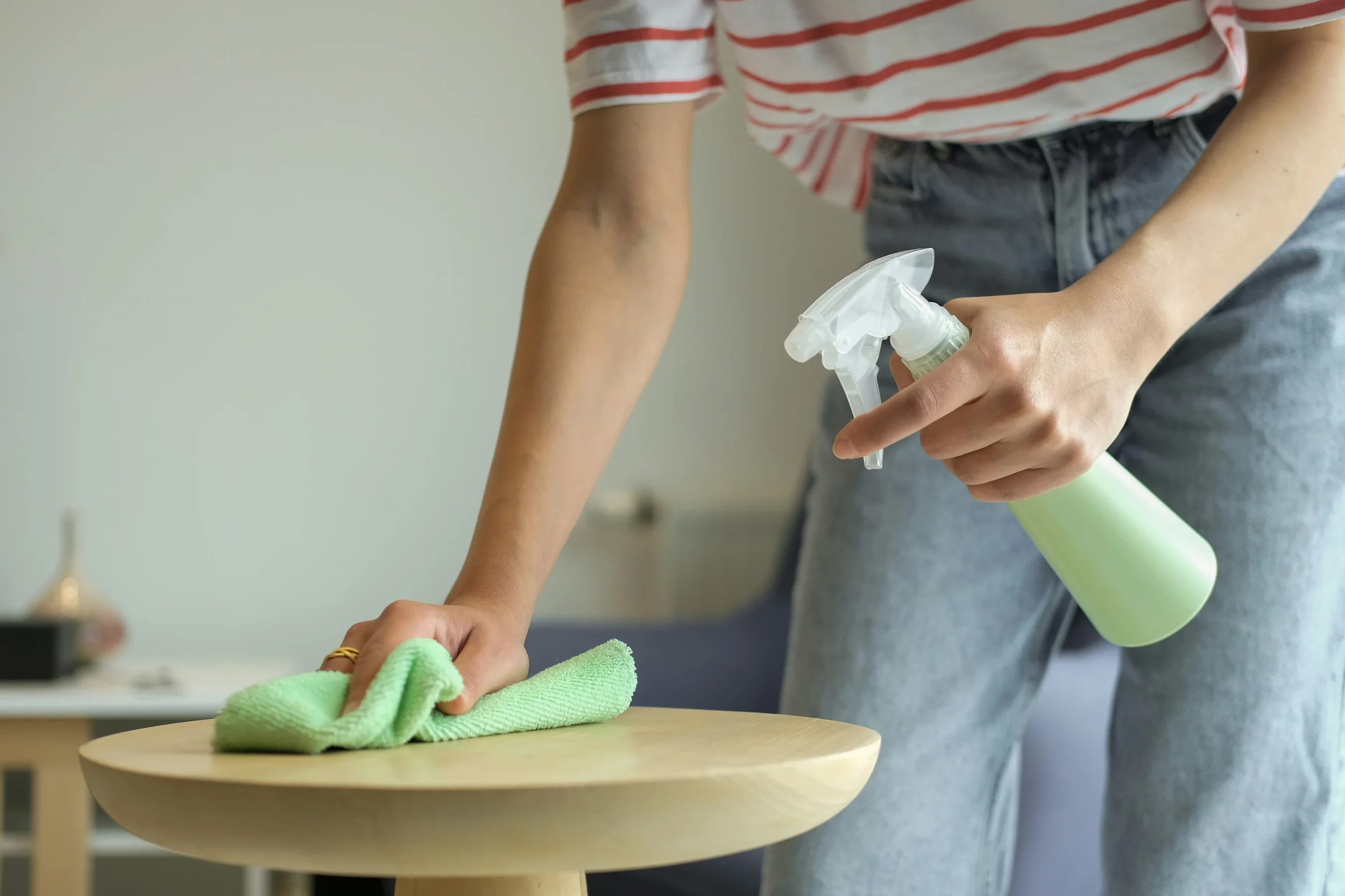
You need fewer products than you think, but they need to be the right ones: a large stack of microfibre cloths, a pH-neutral all-purpose cleaner, a dedicated stone cleaner if you have marble or limestone, plain dish soap, a soft-bristle brush for grout, a spray bottle of plain water for misting cloths, and white vinegar for glass and chrome only, stored well away from anything you might grab for the stone or the brass.
The Habit That Matters Most
If I had to reduce a decade of cleaning other people's homes to one instruction, it would be this: dry every surface after you clean it, and wipe spills as they happen. In the homes that still look new years after the decorator has left, the owners rarely do a big clean. They do a small one, constantly. It is also why the families who book regular house cleaning with us tend to keep their finishes in better shape than the ones who call for a rescue: the routine, not the rescue, is what protects the investment.
Stay up to date with our latest ideas!