How to Build a Coffee Station That Actually Fits the Room
Learn how to build a coffee station that fits your room, with smart tips for choosing the right location, storage, layout, appliances, and décor.

Most coffee stations fail for the same reason: they get designed as a display and used as a workspace. Then the grinder ends up on the counter, the filters end up in a drawer across the kitchen, and within a month the whole thing has quietly become a place where mail piles up.
A station that lasts starts from how you actually move in the morning, not from a photo you saved. Here is how to work backwards from that.
Pick the spot by the outlet, not the sightline
Everyone starts by choosing the prettiest corner. Start instead with where there is a plug and about thirty inches of clear counter. If the only outlet is behind the toaster, that is your answer, and no amount of styling will fix a station you have to unplug something to use.
Once you have the plug, check the swing. Can you open the cupboard above without hitting the kettle. Can you reach the sink in a step or two, because you will be rinsing something every single day. A station eighteen inches from the sink beats a gorgeous one across the room.
Give it a tray so it has an edge
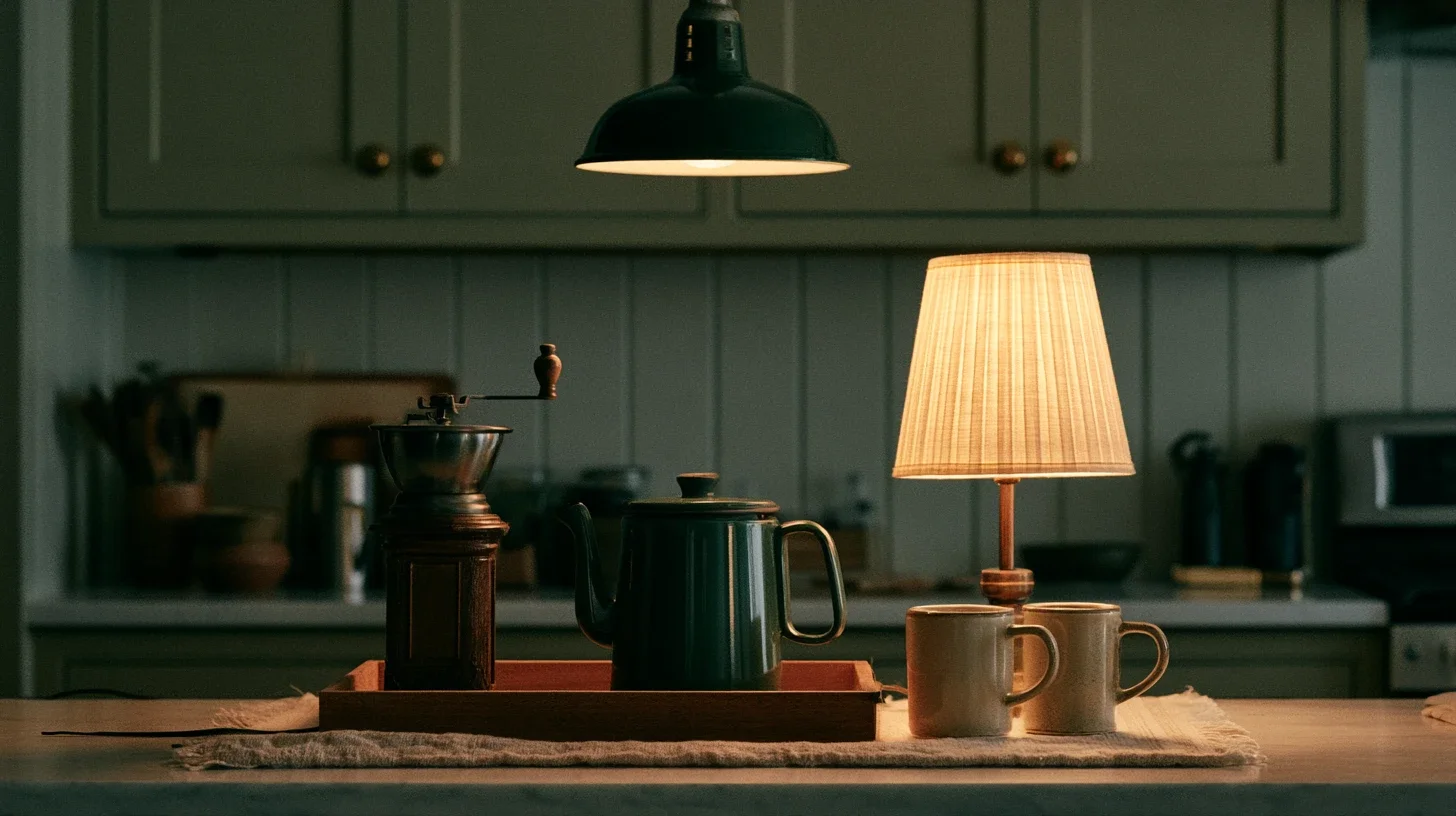
The single cheapest thing that makes a coffee setup read as designed rather than accumulated is a tray. It draws a border. Everything inside the border belongs, everything outside is clutter, and your eye stops reading the counter as one long mess.
Wood warms up a cool kitchen. Painted metal works in a room that already has a lot of grain going on. Size it so there is a little breathing room around the objects, because a tray packed edge to edge looks like a shelf that fell over.
Store the ugly things at the same height as your hand
Beans, filters, and a scale are not decorative and they should not be on show. They should be one reach away. A single drawer or a closed box directly under the station is enough, and it is the difference between a routine that survives and one that dies because the filters live in the pantry.
If you are using a shelf instead of a drawer, put a lidded container at eye level and leave it at that. Two containers become four, and four becomes the reason the shelf looks busy.
Keep the beans coming without thinking about it
The part nobody plans for is resupply. A station looks intentional right up until the morning you find an empty bag and a jar of something stale from the spring. Whole beans hold their flavor for a few weeks after roasting and then fall off fast, so the honest answer is to buy smaller amounts more often rather than one big bag that outlives its own roast date.
A coffee subscription service handles this without asking you to remember anything, which is really the point. A fresh bag arrives on a schedule, the old one is gone before it goes flat, and the shelf stays full for the same reason a well run kitchen stays stocked, because somebody decided once instead of every week.
Light it like a piece of furniture
Overhead kitchen light is unflattering at six in the morning and it is the reason a lot of stations feel clinical. A small lamp, a puck light under the cabinet, or even a candle changes the whole mood of the corner for under thirty dollars.
This matters more than the finish of your grinder. You are trying to build a spot you want to stand in before the day starts, and light does more of that work than any object you put on the tray.
Let it look used
The last piece is permission. A coffee station with a ring on the wood and a bag folded over at the top looks like someone lives there. The versions online that look untouched usually are untouched, and they photograph better than they function.
Build it around the outlet, give it an edge, hide the ugly parts within reach, keep the beans arriving on their own, and light it properly. Everything after that is preference.
Stay up to date with our latest ideas!