Landscaping Choices That Can Increase the Risk of Termites Near Your Home
Learn which landscaping choices can increase termite risks near your home and how to manage moisture, mulch, plants, and soil to discourage infestations.

Landscaping can make a home more attractive, improve curb appeal, and create comfortable outdoor spaces. However, some landscaping choices can unintentionally provide termites with the moisture, shelter, and access they need to establish activity close to a structure. The problem is not that gardens, mulch, trees, or decorative borders automatically cause termite infestations. Rather, certain materials and maintenance practices can remove the natural barriers that separate soil-dwelling termites from a home's vulnerable areas.
A well-designed landscape can still be beautiful while reducing these risks. The key is to think about what is placed against the house, how water moves through the property, and whether organic materials are allowed to remain damp or concealed for long periods. Understanding these factors helps homeowners identify potential problems before termite activity becomes established.
Mulch Against Exterior Walls Creates a Hidden Pathway
Mulch is widely used around flower beds because it suppresses weeds, protects soil, and gives landscaping a finished appearance. Yet placing thick layers directly against exterior walls can create conditions that deserve attention. Wood-based mulch contains organic material that can retain moisture, and when it remains in contact with the foundation or siding, it may provide termites with a concealed route toward the structure.
Mulch itself is not necessarily a food source that will cause termites to invade a home, but damp organic material can make the surrounding environment more favorable. It can also hide mud tubes or other signs of termite movement, making an early infestation harder to notice. For homeowners researching 4 ways that homes attract termites, excessive moisture and landscaping materials that remain in direct contact with the structure are important conditions to consider.
A practical approach is to maintain a visible separation between mulch and exterior walls, particularly around areas where the foundation needs to remain accessible for inspection. Using a thinner layer and keeping it below siding, weep holes, vents, and other structural components can also improve visibility. Decorative stone or other inorganic ground cover may be appropriate in certain locations, although drainage should remain the primary consideration.
Wood Borders and Firewood Can Increase Exposure
Wooden landscape edging can create a neat boundary between lawns, planting beds, and walkways. Untreated wood, however, can eventually become vulnerable to decay and termite activity when it remains in contact with damp soil. As wood deteriorates, it can become part of the broader environment that supports termite presence around a property.
The same principle applies to firewood. Stacking logs directly beside the house, garage, porch, or foundation creates a concentrated source of cellulose close to the building. Firewood may also provide sheltered spaces where insects can remain undisturbed. Keeping it elevated and well away from the home reduces the chance that termite activity in the wood will go unnoticed.
These are two more considerations when evaluating four ways that homes attract termites: accessible wood and conditions that allow insects to remain hidden near the structure. Homeowners do not need to eliminate every wooden feature from their landscape. Instead, they should choose durable, termite-resistant materials where practical and position unavoidable wood products thoughtfully.
For decorative borders, options such as stone, brick, concrete edging, or suitable composite materials can provide attractive alternatives. Firewood should be stored on a raised rack in a location separated from the house, with enough airflow to help keep the stack dry. Moving old timber, tree stumps, fallen branches, and other unnecessary wood away from the foundation can further reduce potential shelter.
Persistent Moisture Around the Foundation Matters
Water management is one of the most important aspects of termite-conscious landscaping. Termites require moisture to survive, and consistently damp conditions around a foundation can make an area more suitable for their activity. Poor grading, clogged gutters, leaking outdoor faucets, malfunctioning irrigation systems, and downspouts that discharge too close to the foundation can all contribute to unnecessary moisture.
Garden beds can make drainage problems more complicated when they are built too high against the house or watered frequently. Plants themselves are not inherently problematic, but dense vegetation can conceal the foundation and make it more difficult to identify mud tubes, damaged wood, or other warning signs.
Homeowners can reduce moisture-related risks by checking that soil slopes away from the structure where appropriate and ensuring downspouts direct water away from the foundation. Irrigation should be adjusted so that sprinklers do not repeatedly soak exterior walls. Leaking pipes and faucets should be repaired promptly.
A landscape that dries appropriately between watering periods is generally easier to inspect and maintain. In addition, keeping the foundation visible rather than burying it beneath soil, plants, or decorative materials gives homeowners a better opportunity to detect changes early.
Designing an Attractive Landscape With Termites in Mind
Reducing termite risk does not mean creating a bare yard. Thoughtful placement and material selection can preserve visual appeal while improving the home's defenses. The most useful improvements are often straightforward:
Keep mulch and soil from concealing exterior walls or structural components.
Use stone, brick, or other suitable alternatives where wood edging would remain in damp soil.
Store firewood elevated and away from the house rather than against exterior walls.
Maintain gutters, downspouts, grading, and irrigation systems so water does not accumulate near the foundation.
Trim dense vegetation enough to preserve visibility around the structure.
Inspect landscape timbers, tree stumps, fallen branches, and other wood materials regularly for deterioration or signs of insect activity.
Plant selection can also contribute to better visibility. Shrubs and ornamental plants should be positioned so mature growth does not completely obscure the foundation, vents, utility penetrations, or other areas that need periodic inspection. A few inches of accessible space can make it much easier to spot changes that would otherwise remain hidden behind vegetation.
Routine Inspections Help Catch Problems Early
Even a carefully planned landscape cannot guarantee that termites will never approach a home. Subterranean termites can travel through soil and may exploit cracks, construction gaps, or other concealed routes. Consequently, landscaping improvements work best as part of broader property maintenance rather than as a standalone solution.
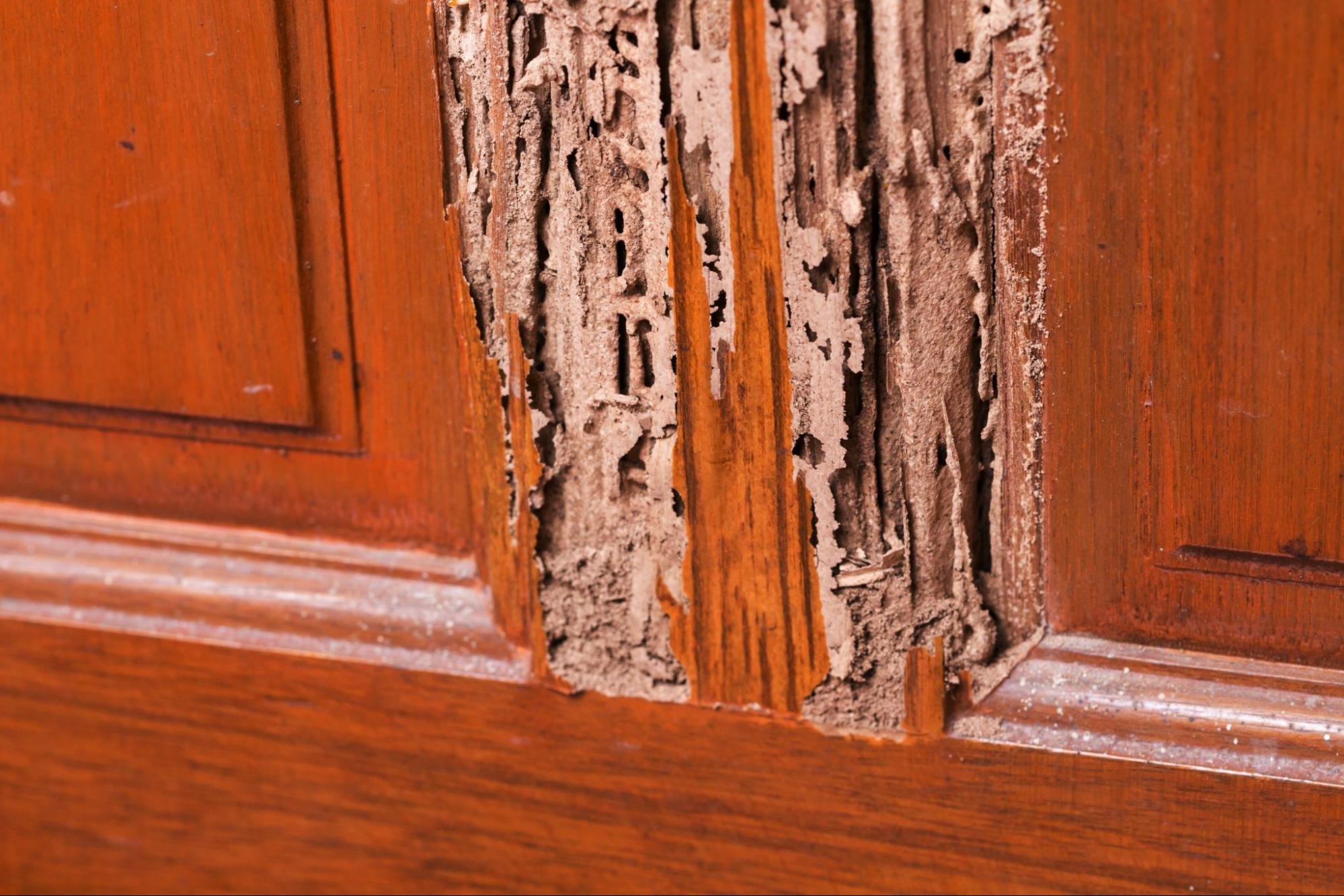
Homeowners should periodically walk around the property and examine areas where soil meets the structure, especially after periods of heavy rain or prolonged moisture. Look for mud tubes, damaged or hollow-sounding wood, discarded wings, or unexplained changes in wooden landscape features. Particular attention should be given to older wood borders, areas beneath porches, and locations where drainage problems have occurred.
Professional inspections can also be useful when there are visible signs of termite activity or when a property has conditions that make monitoring difficult. An inspection can help distinguish termite evidence from ordinary wood decay and identify structural areas that may warrant closer attention.
End Note
A beautiful landscape and termite-conscious property maintenance can coexist. The goal is not to remove mulch, plants, wood, and decorative features altogether, but to use them strategically. Keeping organic materials away from vulnerable structural areas, choosing appropriate border materials, storing firewood correctly, and controlling moisture can make the landscape less inviting to termites while preserving its appearance.
Most importantly, homeowners should maintain clear inspection areas around the foundation and treat landscaping as part of the home's overall maintenance system. Small adjustments to spacing, drainage, material selection, and routine observation can reduce opportunities for termite activity and make potential problems easier to identify before they become more serious.
Stay up to date with our latest ideas!