Why Paying Attention to Your Bathroom Drain Matters
Learn why paying attention to your bathroom drain matters, from preventing clogs and odors to spotting plumbing issues and keeping your bathroom clean and functional.
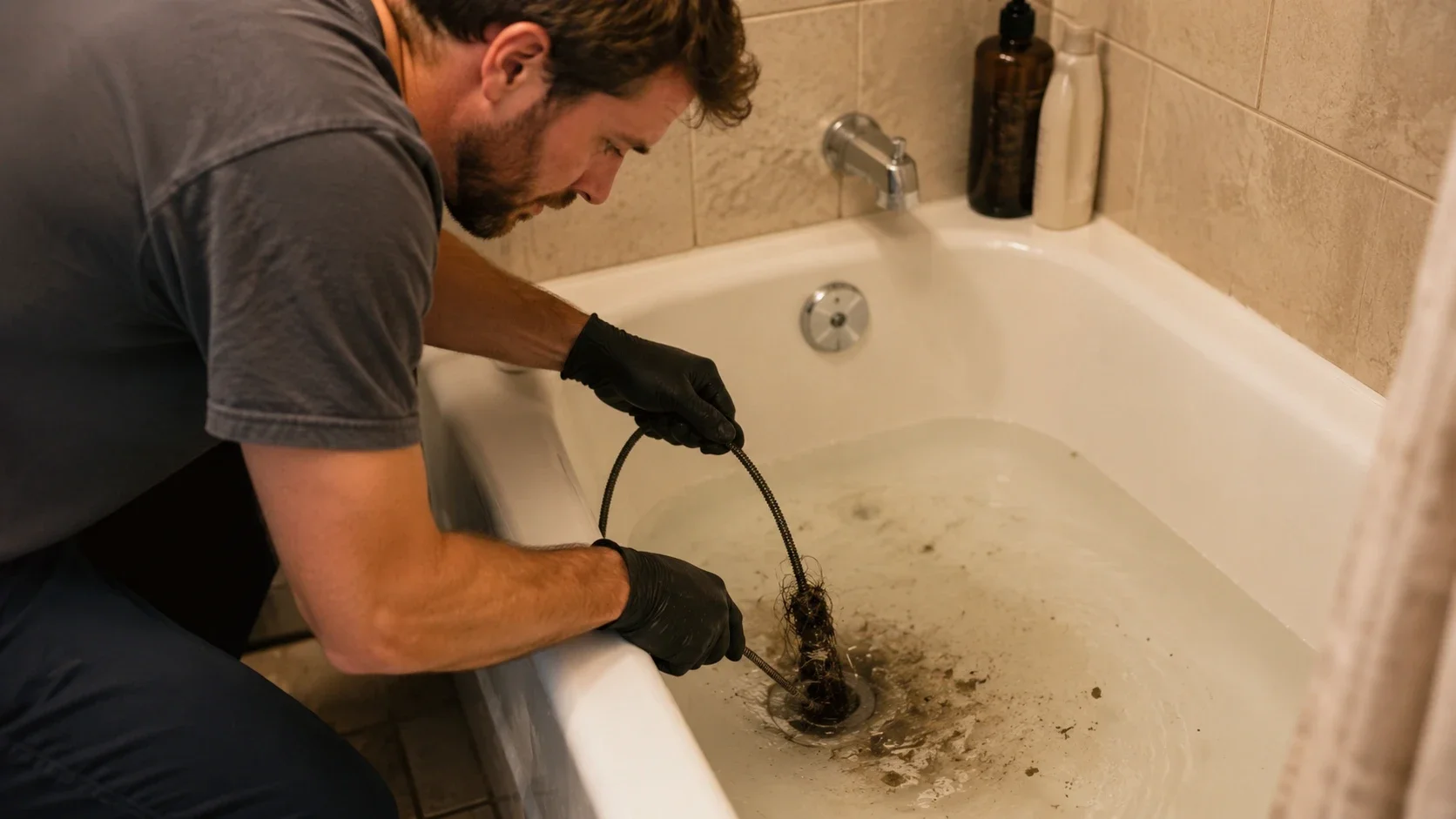
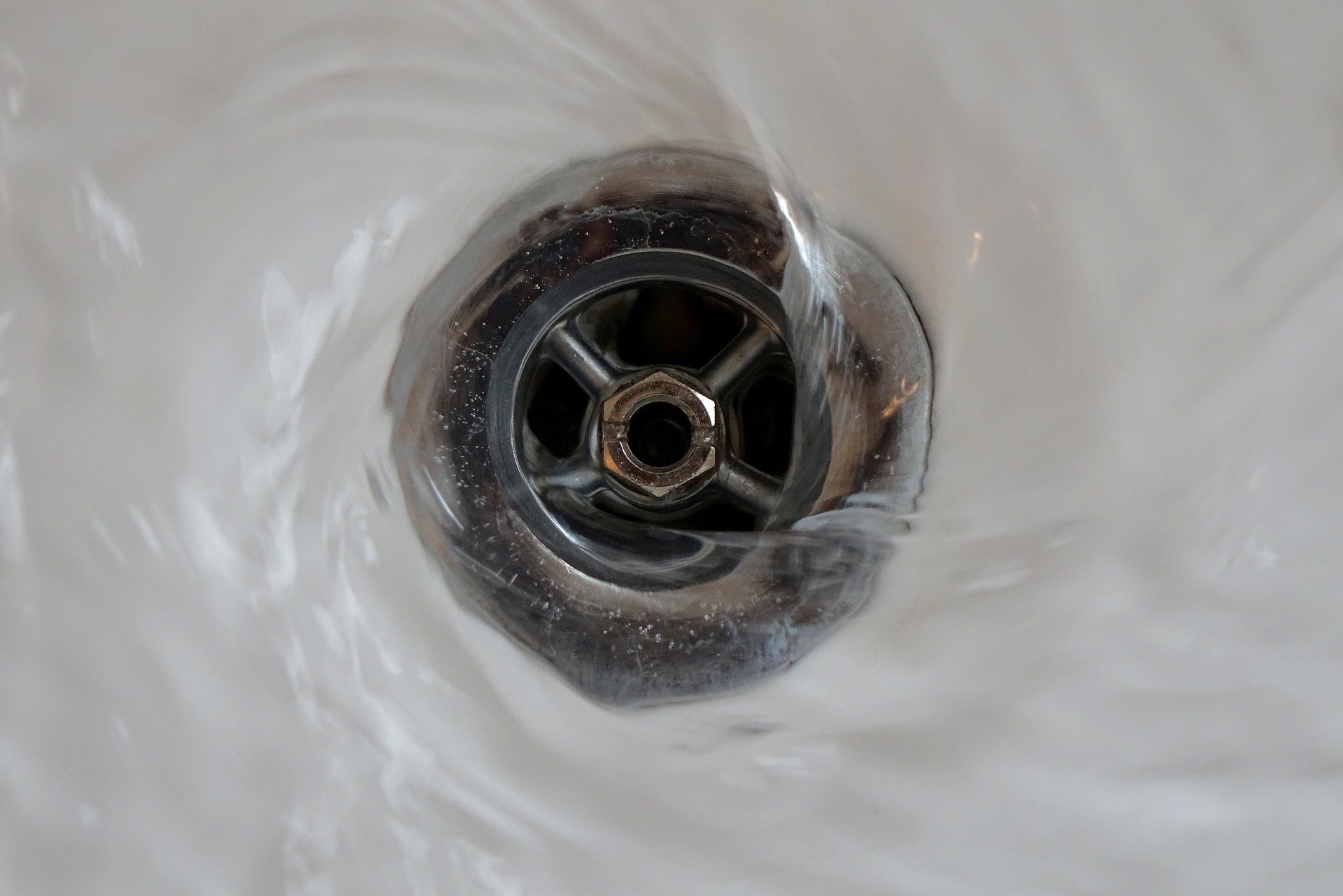
A slow bathroom drain is easy to overlook. The water still goes down, just a little more slowly, and it may not seem like anything serious. Most people think the same way: I'll deal with it when the situation gets worse. But there is one important detail — these problems usually do not develop overnight. Hair, soap residue, toothpaste, and everything else that goes down the drain gradually builds up inside the pipe, leaving less and less room for water to flow.
Sometimes, it is worth paying closer attention to how water drains from the sink, bathtub, or shower. This can help you spot a problem while it is still developing instead of waiting until the drain stops working completely. A couple of simple habits can actually make a difference: remove visible hair from the drain and avoid washing things down that clearly will not dissolve. Small things like these can help keep pipes cleaner.
The problem is that a partial clog can be deceptive. It rarely stays small for long. The more debris builds up, the slower the water drains, and eventually it may start backing up or affecting other plumbing fixtures. Sometimes a simple bathroom clog can lead to an overflow, while in other cases it may point to a problem deeper in the drainage system. For homeowners in Chicago, noticing these signs early can make it easier to deal with a small issue before it turns into a serious plumbing emergency.
5 Common Reasons Bathroom Drains Get Clogged
A bathroom drain rarely becomes clogged overnight. In most cases, the problem develops gradually as different materials and particles begin to build up inside the pipe. Some stick to the pipe walls, while others catch on existing buildup, slowly leaving less room for water to flow.
1. Hair
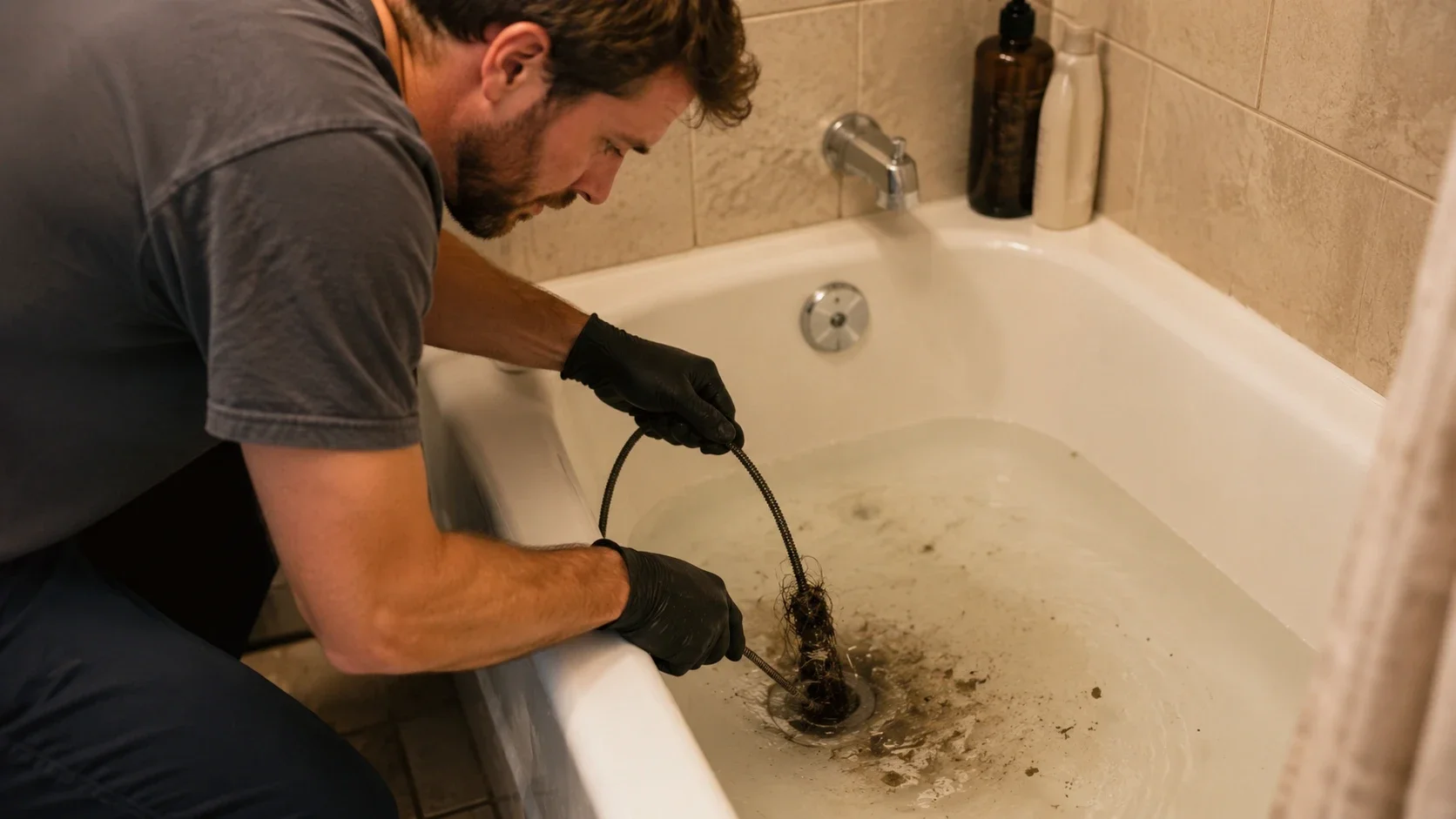
Hair is one of the most common causes of clogs in bathtubs and showers. An average person can shed between 50 and 100 hairs a day, and a significant amount of it can eventually end up in the drain.
The problem is that hair does not simply disappear once it enters the pipe. It can catch on parts of the drain or existing buildup and gradually form a kind of net that traps other debris. That is why a drain may work normally for weeks and then suddenly start draining much more slowly.
2. Soap Scum
Soap residue can make an existing clog worse. Traditional soap can react with minerals in the water and gradually form a hard residue inside the plumbing system.
3. Mineral Buildup from Hard Water
Water contains different minerals, including calcium and magnesium. Over time, these minerals can remain on the inside of the pipes and gradually form a hard buildup.
This buildup does not always cause a clog right away. However, it can make the inside of the pipe less smooth and slowly reduce the space available for water to flow. As a result, hair, soap residue, and other debris can get trapped more easily.
Over time, this can cause water to drain more slowly, while regular drain cleaning may only provide a temporary solution.
4. Personal Care Products and Everyday Debris
A bathroom drain handles more than just water. Toothpaste, shaving products, skin particles, dirt, cosmetic residue, and other small materials can regularly enter the plumbing system.
On their own, these materials rarely cause a serious clog. The problem comes from gradual buildup. When they mix with hair and soap residue already inside the pipe, they can make an existing blockage worse and cause the drain to become progressively slower.
5. Old or Damaged Pipes
Sometimes the clog itself is only part of the problem. Older pipes can develop rough surfaces inside due to corrosion and mineral buildup. Debris is less likely to stick to a smooth pipe, while rough or damaged surfaces create more places where hair and other materials can get trapped.
That is why the same drain may keep clogging again and again. Removing the visible blockage can temporarily restore normal drainage, but if buildup or damage remains inside the pipe, the problem may return.
How to Tell When a Bathroom Clog Has Become an Emergency
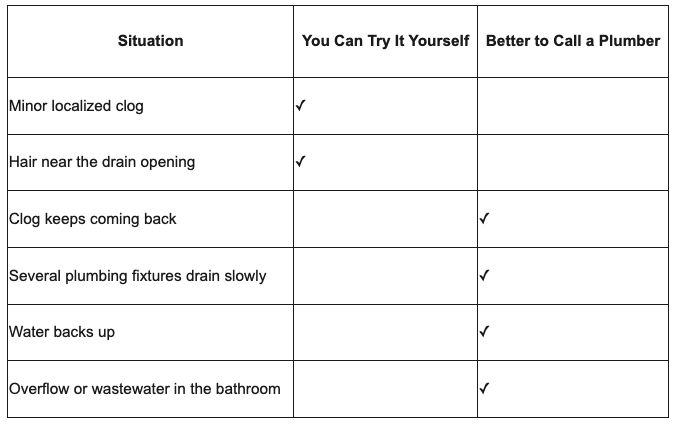
Not every clogged bathroom drain needs a plumber right away. The important thing is to recognize how the situation is changing. If the problem is limited to a slow drain, you may be able to deal with it yourself. But once water starts backing up, several fixtures are affected, or there is a risk of overflow, the situation requires a different approach. The table below shows when a simple DIY fix may be reasonable and when it is better to call a professional.Not every bathroom clog requires an emergency plumber. Water draining slowly does not automatically mean there is an urgent problem. However, certain warning signs can indicate that the issue has moved beyond a simple clog and could lead to more serious damage.
The Water Stops Draining Completely
If water stops draining altogether and continues to collect in the bathtub or shower, the situation needs attention. It becomes more concerning if the water level rises when you use another plumbing fixture nearby.
Water Starts Coming Back Up
One of the more serious warning signs is when using the sink, washing machine, or another plumbing fixture causes water to appear in the bathtub or shower. This may mean the blockage is deeper in the plumbing system and is not limited to one drain.
Multiple Fixtures Are Affected
If the bathtub, sink, and toilet all start draining slowly around the same time, the problem may be connected to a larger section of the drainage system. In this situation, clearing just one drain may not solve the actual problem.
Water Starts Overflowing onto the Floor
Once water begins spilling out of a bathtub, shower, or sink, there is a real risk of damage to flooring, walls, and other parts of the home. In an apartment or multi-story building, water can also affect the space below. At this point, it is important to stop using the affected fixtures and prevent additional water from entering the system.
You Notice a Strong Sewer Smell
A persistent sewer smell in the bathroom can point to a problem somewhere in the drainage or sewer system. If the smell appears together with slow drainage, gurgling sounds, or water backing up, the issue should not be ignored.
The Situation Gets Worse Quickly
Sometimes a drain is only slightly slow in the morning and nearly stops working by the evening. Rapid changes like this are worth taking seriously, especially if you have already tried cleaning the drain and the improvement lasted only a short time.
A simple clog becomes an emergency when it creates a real risk of overflow, flooding, wastewater backing up, or a more serious problem elsewhere in the plumbing system.
What You Can Try Yourself — and When It Is Better to Call a Plumber
Not every clog requires immediate professional help. If the problem is limited to one drain, the water is still draining slowly, and there are no signs of backup or overflow, you can start with simple mechanical cleaning.
The first thing to check is the visible part of the drain. Hair and other debris often get trapped directly below the drain cover or in the upper section of the pipe. You can carefully remove it by hand or use a plastic drain cleaning tool. If the clog is close to the surface, this method can often be more effective than chemical products because it physically removes the material instead of only partially dissolving it.
A plunger can also help if the clog is located relatively close to the fixture. The pressure created by the plunger may loosen or move accumulated debris and restore normal water flow. However, this method does not work in every situation. If the blockage is deeper in the pipe or located in a larger section of the drainage system, a plunger is unlikely to solve the problem completely.
Chemical drain cleaners should also be used with caution. Their effectiveness depends on what is causing the blockage, and when a drain is severely clogged, the chemical may simply remain inside the pipe without reaching or removing the entire obstruction. Using several products in a row or mixing different chemicals can also be dangerous. In addition, aggressive products may create further problems, especially in older pipes or pipes that are already damaged.
It is better to stop trying DIY methods if water starts backing up, several plumbing fixtures are affected at the same time, or the clog quickly returns after cleaning. These signs may indicate that the problem is located farther down the system rather than in the bathroom drain itself.
If water is already starting to overflow, there is a risk of flooding, or wastewater is backing up into the home, the situation requires a faster response. In these cases, it is more reasonable to contact an emergency plumber chicago than continue experimenting with temporary solutions.
It is especially important to take a problem seriously when it gets worse quickly in the evening or at night. If there is a risk of property damage, flooding, or wastewater backing up into the home, waiting until the next business day can make the situation worse. In this case, contacting a 24 hour plumber chicago may help address the problem before it leads to additional damage.
Why It Is Better Not to Ignore a Slow Drain
A bathroom clog does not usually become a serious problem overnight. In many cases, it starts with something minor: water draining a little more slowly, hair collecting near the drain, or a small amount of buildup inside the pipe. Paying attention to these early signs can make the problem easier to deal with before the drain stops working completely.
Regular cleaning and simple preventive habits can help reduce the chance of a clog, but it is also important to understand when the problem is no longer a minor one. Water backing up, multiple fixtures draining poorly, overflow, or wastewater returning into the home are signs that the situation may require more than a basic drain cleaning.
The key is not to panic when a drain becomes slow, but also not to ignore a problem that is clearly getting worse. Acting early can often prevent a small bathroom clog from turning into flooding, property damage, or a more serious plumbing emergency.
Stay up to date with our latest ideas!