Wait a Year Before You Touch the Garden
The garden you inherit with a house is a finished work by someone you will never meet. Here is why the first year should be spent watching it rather than changing it.
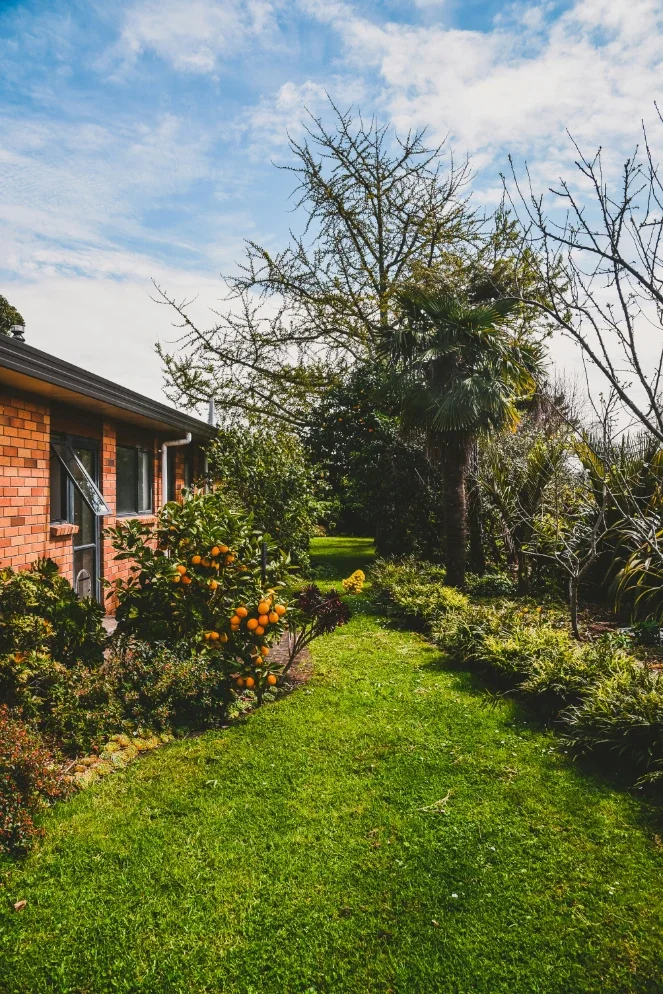
The urge arrives in the first week. You walk the property, decide that the shrubs along the fence are shapeless and the bed by the patio is a mess, and by the second weekend there is a pile of green waste at the curb and a satisfying amount of bare soil where something used to be.
Almost every experienced gardener has done this once and regretted it. What comes out in that first burst of enthusiasm frequently turns out to have been the best thing in the garden, dug up in February when it looked like nothing at all.
An established garden is a finished work by an author you will never meet, and it is the only part of a property that cannot be understood by looking at it once. A house reveals itself in an afternoon. A garden takes four seasons, and there is no shortcut.
What a Year Actually Shows You
The case for waiting is not sentimental. It is practical, and it rests on the fact that a garden in any given month is hiding most of itself.
Bulbs and ephemerals are invisible for most of the year. Snowdrops, crocus, daffodils, alliums, camassia, and dozens of woodland perennials spend eight to ten months underground with nothing on the surface to indicate they exist. A bed cleared in August may contain three thousand dollars of naturalized bulbs that nobody will ever see again.
Deciduous plants are unrecognizable out of leaf. A dormant hydrangea, viburnum, or Japanese maple looks like a bundle of sticks. Plenty of expensive, slow-growing specimens have been removed by new owners who assumed they were dead.
Light moves. The sun's path in June is dramatically different from December, and a bed that reads as full shade when you view the house in winter may bake for six hours a day in midsummer. Any planting decision made from a single season's observation is a guess.
Water reveals itself only when it rains hard. Where the property drains, where it puddles, where the downspouts actually discharge, and which corner stays soggy for three days are facts you can only learn by being there during a real storm.
Weeds and volunteers are hard to tell apart. Many of the most attractive things in a mature garden are self-seeders that a previous owner deliberately encouraged. Some of what looks like a treasured planting is a thug that has been quietly taking over for six years.
Do This Instead: Document
Waiting does not mean ignoring. The first year is for gathering evidence, and the method is simple enough to keep up with.
Choose three or four fixed vantage points, mark them, and photograph the garden from those same spots once a month. A year of those images is more useful than any amount of remembered impression, and the comparison across months will show you exactly what emerges, when, and where.
Keep a running list of what appears. When something you cannot identify comes up, photograph the leaf, the flower, and the whole plant, and identify it then rather than later. Note the date of first bloom and how long it lasts. Note what the pollinators visit and what nothing touches.
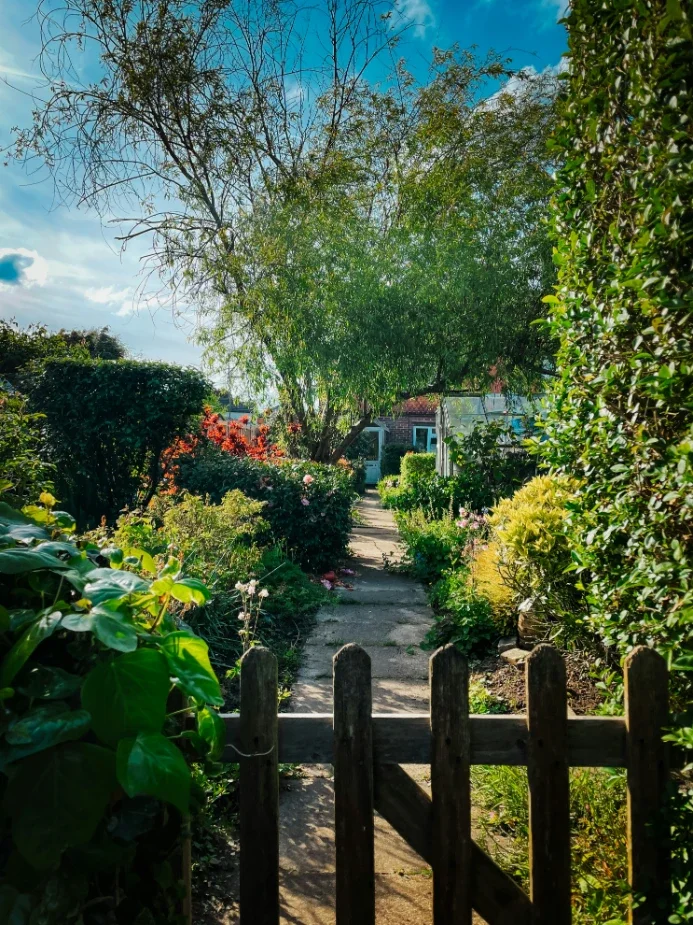
Look for evidence of intent. Plants arranged in threes and fives, repeated groupings, a deliberate sight line from a window, a path that curves for a reason. Someone made decisions here. You are allowed to disagree with all of them, but you should know what they were before you overrule them.
The Year-One Exceptions
A few things should not wait.
Genuinely invasive species. Bamboo, Japanese knotweed, English ivy on structures, and whatever is on your regional invasive list should come out as soon as you identify them. Every month of delay makes removal harder.
Hazards. Dead limbs over the house, a leaning tree, a rotten fence post, an unstable retaining wall. Call an arborist for anything structural involving a mature tree.
A soil test. Inexpensive, available through most agricultural extension services, and the single most useful thing you can learn about a property in year one. It tells you pH and nutrient levels and will explain a great deal about what is thriving and what is sulking.
An irrigation audit. If the property has a system, find the controller, run each zone, and watch what actually happens. Broken heads spraying the driveway and zones watering a bed that was removed years ago are extremely common.
Mulch and basic maintenance. Editing, weeding, deadheading, and mulching improve any garden immediately without removing anything irreversible.
Notice the pattern. Everything on that list either prevents damage or produces information. Nothing on it makes a permanent aesthetic decision.
Read the Bones Before the Decoration
While you are waiting, it helps to think about the garden in layers, because the layers differ enormously in how replaceable they are.
The bones are the hardscape and the mature woody plants: walls, paths, terraces, hedges, and any tree more than fifteen years old. These represent decades of growth and a great deal of money, and they are effectively irreplaceable on any timescale that matters to you personally. A mature hedge is not a plant. It is a wall that took twenty years to build.
The middle layer is shrubs and structural perennials, which take three to five years to establish and can be moved, divided, or replaced without disaster.
The top layer is annuals, containers, and seasonal planting, which costs little and can be changed every year without consequence.
Almost all first-year regret involves removing something from the bottom layer to solve a problem that belonged to the top. If a bed looks wrong, the answer is far more often an edit than a clearance.
Bringing Something With You
Most people arrive at a new house wanting to bring a piece of the old garden. This is worth doing, and it needs more planning than people expect.
The objects. Pots, planters, statuary, benches, fountains, and stone are the forgotten category on moving day. They are heavy, awkward, frequently fragile, and rarely mentioned when an estimate is prepared, which is exactly how they end up either broken or left behind. Glazed and terracotta pots crack easily and should be emptied, dried, and packed with the same care as ceramics. Large concrete or stone pieces need to be identified in advance so that the right equipment shows up. It is worth walking the garden with your estimator rather than only the house, and worth working with a licensed and insured company such as Safebound Moving & Storage that will put the garden items on the inventory rather than treating them as an afterthought on the day.
The plants. This is where people are most often caught out, because the rules are stricter than almost anyone expects.
Most interstate moving companies will not transport live plants at all. They are classified as non-allowable items, both because a dark, uncooled truck for several days kills most things and because carriers do not want liability under state agricultural law. Plan on plants traveling in your own vehicle.
The regulatory layer is real. The USDA regulates interstate plant movement under the Plant Protection Act, and individual states set their own import rules on top of that. States with major agricultural industries, including California, Arizona, and Florida, maintain strict entry requirements and inspection stations. Common conditions include that plants be grown indoors in sterile commercial potting mix, that they be free of pests, and in some cases that they arrive with a certificate of inspection. Citrus is heavily restricted in multiple states. Soil itself is treated as a regulated article, which is why bare-rooting, meaning removing all native soil and wrapping the roots in damp moss or paper, is often the practical route.
Check your destination state's requirements well before moving day rather than at a border inspection station. The National Plant Board maintains state-by-state regulation summaries, and your destination state's department of agriculture will confirm current rules.
The gentler alternative is to take cuttings, divisions, or seed rather than whole plants. A dozen labeled cuttings in a shoebox travel easily, satisfy most regulations, and carry the same continuity as the original.
Then, in Year Two
By the second spring you will know where the light falls, where the water goes, what comes up in April, which shrub was worth keeping, and what the previous owner was trying to achieve. You will also know what you actually want, which is different from what you assumed you wanted in the first week.
That is when the real work starts, and it will be far better work for the wait. Gardens are among the few things people buy that improve on their own while you do nothing but pay attention.
Stay up to date with our latest ideas!