Outdoor Living Space Ideas That Actually Work in a Four-Season Climate
Discover outdoor living space ideas that work year round in a four season climate, with designs that maximize comfort, durability, and functionality.

Most outdoor living advice is written for places that never really get cold. Pergolas over a pool, an open-air kitchen, a lounge area that looks perfect in June. Then winter shows up, and half the year that space sits empty.
If you live somewhere with real seasons, hot summers, cold winters, and a few wild swings in between, you need a different set of ideas. Not just what looks good in a photo, but what still gets used in October. And in February.
Here is the part most people miss. The problem usually is not the climate. It is the planning. A space designed around how you actually live outdoors will work most of the year. A space designed around a catalog photo will work for one season and then become storage for patio furniture.
This guide walks through outdoor living space ideas built for a four-season climate, the decisions that make or break them, and the mistakes that leave so many backyards unused.
Quick answer
The outdoor living spaces that get used year round in a cold-winter climate share five things: a covered structure for shade and rain, a heat source like a fireplace or fire pit, the right size for how you actually gather, smart lighting for after dark, and materials that survive freeze and thaw. Build for all four seasons from the start. Adding these later almost always costs more and works worse.
The real problem: most outdoor spaces sit empty
Here is a number that surprises people. According to the International Casual Furnishings Association's 2025 Outdoor Living Trend Report, 85 percent of US households have some kind of outdoor space, but only 23 percent of people use it as much as they want to. The other 77 percent are sitting on space they paid for and rarely touch.
When the same survey asked why, the answers were not really about money. The two biggest barriers were the upkeep of furnishings and, tellingly, uncertainty about what they actually want or need. People are not short on desire. They are short on a plan.
That tracks with what shows up when homeowners talk honestly about their regrets. In a popular thread on the r/landscaping forum where people shared the outdoor decisions they wish they could redo, the same complaints kept appearing among the answers. Patios built too small. Poor drainage. Bad placement. Spaces that looked fine on paper but did not work once real life moved in.
A four-season climate raises the stakes on all of it. A warm-weather backyard that goes unused for three months is a shame. A cold-climate backyard that goes unused for six months is half a wasted investment.
So before any ideas, the rule that matters most: decide how you want to live in the space before you decide what to build. The patio, the kitchen, the fire feature, those are answers. The question comes first.
Start with a covered structure
In a four-season climate, a roof is not a luxury. It is the single thing that decides how many months your space is usable.
An open patio works when the weather cooperates. A covered one works through afternoon thunderstorms, light snow, harsh midday sun, and the shoulder seasons when the weather cannot make up its mind. Cover is what stretches an outdoor room from a few good months to most of the year.
You have a few options, and they are not equal in a cold climate:
A roof extension off the house is the most seamless. It turns the patio into a true extension of your interior, and because it ties into the home's structure, it handles snow load and weather the way the rest of your roof does. This is usually the best choice if you want the space to feel like another room rather than a separate destination.
A freestanding pavilion gives you a solid roof away from the house. Good for anchoring a fire feature or dining area in the middle of the yard. It reads as its own outdoor room.
A pergola is the one to be careful with. An open-slat pergola gives you filtered shade and looks great, but it does nothing for rain or snow. If you want a pergola in a four-season climate, a louvered roof that closes is worth the extra cost. It opens for a sunny evening and seals up when the weather turns.
Whatever you choose, build it to handle real weather from the start. Retrofitting a structure to carry snow load or shed water properly is far more expensive than designing for it on day one.
Add a heat source, or lose half the year
This is the difference between a space that closes in October and one that stays open into winter.
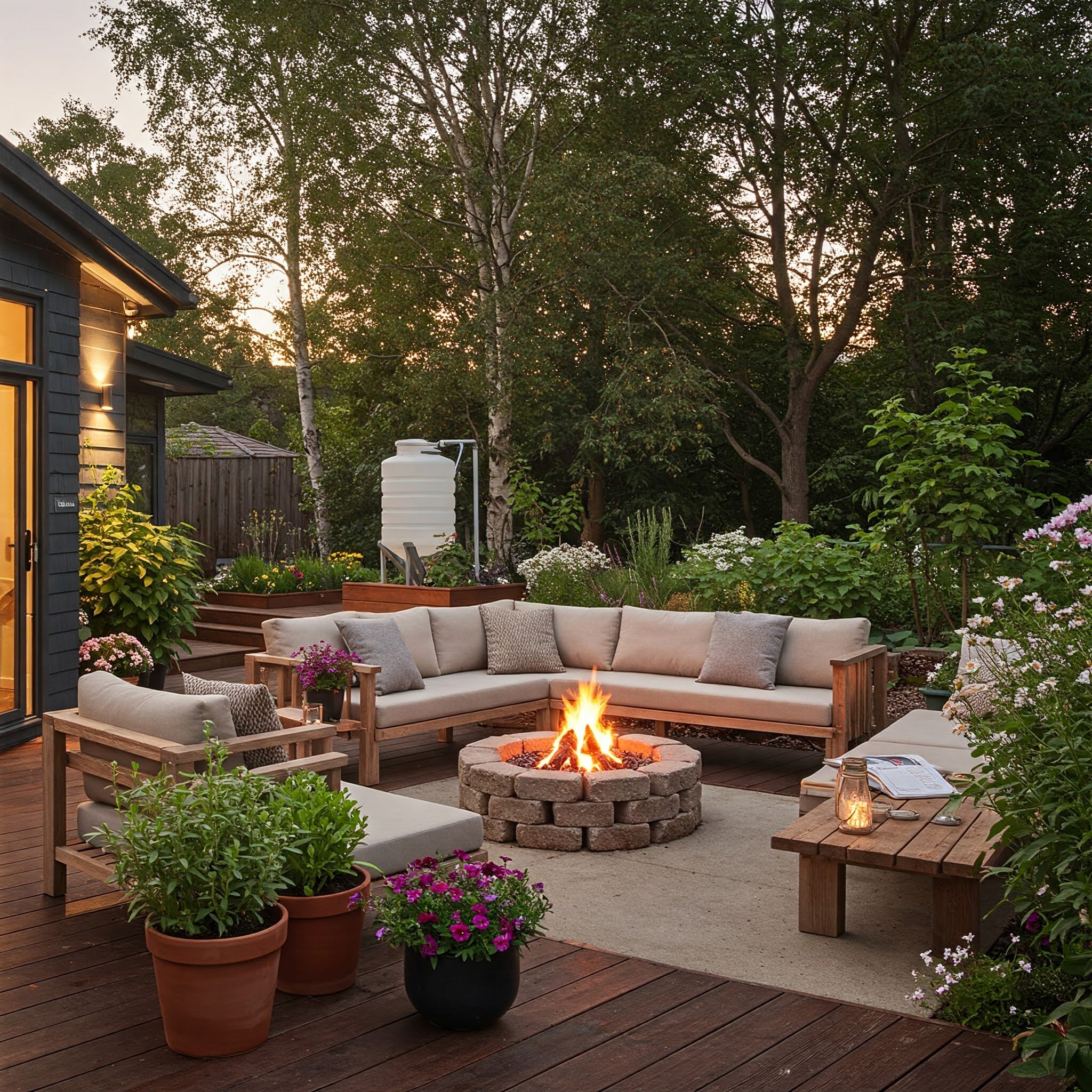
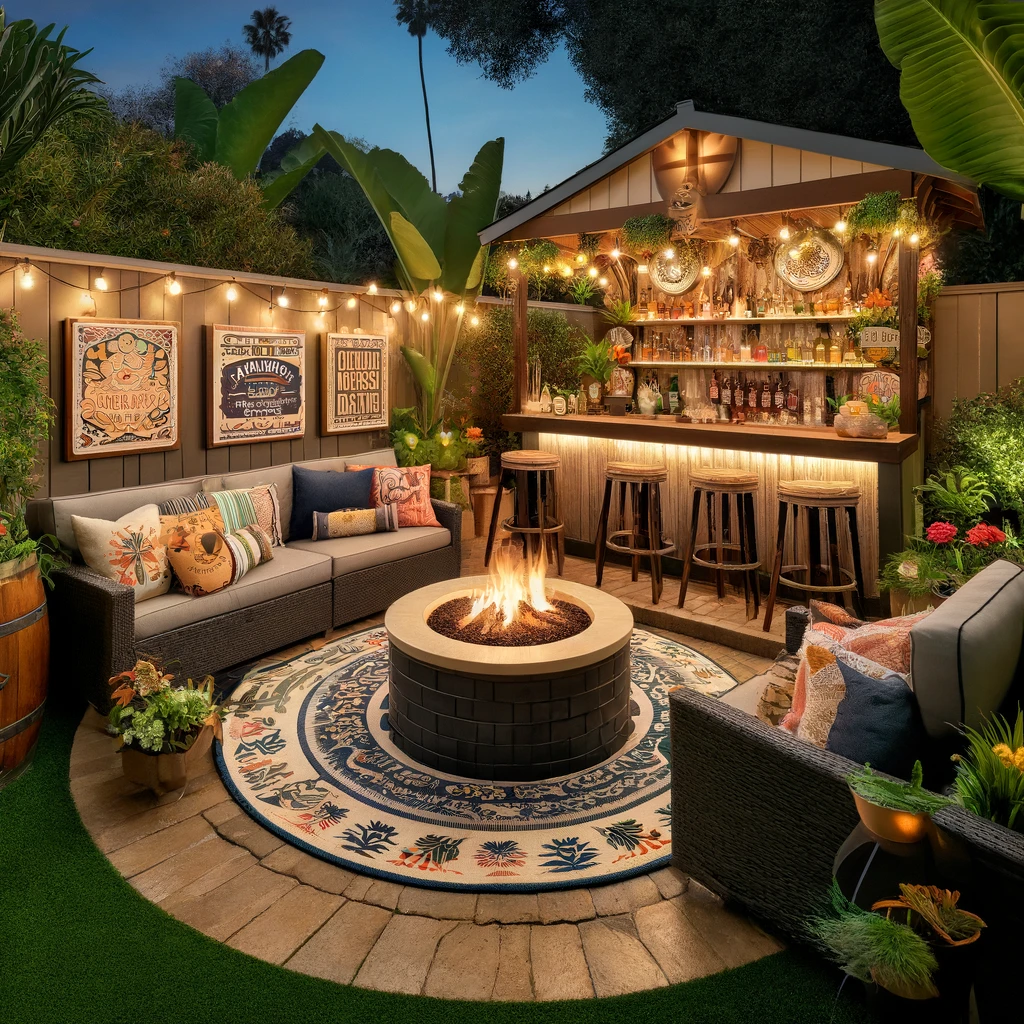
A fire feature does three things at once. It extends your usable season by weeks on each end. It creates a focal point that organizes the whole layout, the way an indoor fireplace anchors a living room. And it gives people a reason to stay outside long after they planned to head in.
The choice between a fireplace and a fire pit comes down to feel. A built-in outdoor fireplace gives you a vertical focal point and more shelter from wind, which matters in a cold climate. A fire pit is more social, people gather around it on all sides, and it suits a more open layout.
One detail people get wrong: placement. On forums and in builder interviews, the same complaint comes up, homeowners put the fire feature too far from the house, then realize how far that is from the kitchen, the fridge, and the bathroom on a cold night. Others place it too close to where kids play. Think about the walk, the wind direction, and who uses the space before you pour a foundation.
If you want the space genuinely usable in deep winter, pair the fire feature with overhead radiant heaters under your covered structure. Fire for ambiance, heaters for actual warmth. That combination is what keeps a four-season outdoor room open in months most people have written off.
Get the size right the first time
If there is one regret that shows up more than any other, it is this. People build their patio too small.
It happens for an understandable reason. Homeowners size the space to the furniture they already own, or to how it looks empty, instead of how it functions full. Then they add a table, a few chairs, a grill, and suddenly there is no room to walk behind someone who is seated.
Designers put it simply: an outdoor room should be scaled like an indoor one. If your living room comfortably seats six, your outdoor living area needs to do the same, which means more square footage than most people guess. A common fix is to measure your largest indoor room and use that as the floor, not the ceiling, for your outdoor footprint.
Build in zones while you are at it. A cooking zone, a dining zone, a lounge zone around the fire. In a four-season climate, keep the zones you most want in winter closest to the house and under cover. The summer-only zones can stretch further out.
Going too big has its own cost, an oversized space with a few small chairs feels empty and unfinished. The goal is a space scaled to how you actually gather, with room to move.
Plan the outdoor kitchen around heat, smoke, and winter
An outdoor kitchen is one of the most wanted features and one of the most commonly botched.
The mistakes are practical, not stylistic. People do not plan where the grill's heat and smoke go, then end up with smoke blowing at guests or, worse, heat damaging the siding of the house. Wind direction and clearance need to be decided before the grill location is set, not after.
Then there is the four-season problem. Anything with a water line, a sink, an ice maker, a fridge, has to be winterized in a cold climate or it will freeze and crack. The smarter approach is to keep the kitchen close to the house so utility runs are short and easy to drain, and to choose appliances and cabinetry rated for the outdoors. Premium powder-coated or stainless cabinetry holds up to freeze and thaw. Indoor-grade materials do not.
A covered outdoor kitchen also lasts longer, because the cabinets, counters, and appliances are not taking the full hit of rain, snow, and UV. In a four-season climate, cover pays for itself in the lifespan of what is underneath it.
Do not forget the lighting
A space with no lighting plan gets abandoned the moment the sun drops. In winter, when the sun sets early, that can mean your outdoor room goes dark at five in the afternoon.
The fix is layered light, the same principle that works indoors:
Ambient light overhead, soft and dimmable, to set the base level.
Task light where you cook and where people gather, so the space is actually functional after dark.
Accent light, low and warm, along paths and steps and around plantings, to make the space feel finished and to keep it safe to move through.
The mistake is relying on one harsh fixture, or worse, none at all. Get the ambient layer right first. After that, the space works at every hour, which matters most in the half of the year when it is dark by dinner.
Choose materials for freeze and thaw
In a four-season climate, materials are not just an aesthetic choice. They are a durability one.
The enemy is the freeze-thaw cycle. Water seeps into a surface, freezes, expands, and cracks it. Over a few winters, the wrong materials fall apart.
For decking, dense hardwoods and quality composite outperform softwoods in a climate with real winters. For patios and hardscape, choose pavers and stone rated for freeze-thaw, and make sure they are installed with proper drainage underneath. Poor drainage was one of the most common regrets homeowners named, and in a cold climate it is also what accelerates freeze-thaw damage.
For anything structural or for cabinetry, lean on materials engineered for the outdoors: powder-coated aluminum, marine-grade stainless, treated and rated lumber. The survey data backs this instinct up, 67 percent of homeowners say they prioritize practicality and durability over style. In a four-season climate, that is the right instinct. The most beautiful material that cannot survive your winters is the wrong material.
Bringing it together
The thread running through all of this is simple. The outdoor spaces that get used in a four-season climate are the ones designed for all four seasons from the beginning, not adapted later.
That means cover, heat, the right size, real lighting, and materials that survive the cold, decided together, as one plan, before the first foundation is poured. Add them piecemeal and you get a space that fights itself and a budget that balloons.
This is also why the planning stage matters more than any single feature. A space built around how you actually live, how many people you host, when you want to be outside, what you will use in January and not just July, is the one that earns its cost. For homeowners in places with genuine seasons, like much of the Midwest, that planning is the whole game. The right builder will start there, designing the kind of custom outdoor living spaces that hold up to a real climate and actually get used in every season, rather than handing you a photo and a price.
Get that right, and you are not building a backyard that works for three months. You are adding a room to your home that happens to be outside, and one you will use far more than the 23 percent of people who got the planning wrong.
Frequently asked questions
What makes an outdoor living space usable in winter?
Three things: a covered structure that handles snow and rain, a heat source like an outdoor fireplace or fire pit paired with overhead radiant heaters, and a layout that keeps the winter zones close to the house and under cover. Without those, a space built for summer will sit empty through the cold months.
How big should an outdoor living space be?
Bigger than most people first guess. Scale it like an indoor room. If your indoor living room comfortably holds your typical group, your outdoor space needs similar square footage once you account for a table, seating, a grill, and room to walk behind seated guests. Building it too small is the most common regret homeowners report.
Is a pergola enough for a four-season climate?
An open-slat pergola gives filtered shade but no protection from rain or snow, so on its own it does not extend your season much. If you want a pergola in a cold climate, choose a louvered roof that closes, or pair it with a solid roof structure for the parts of the space you want to use year round.
What is the most common outdoor living space mistake?
Building before planning how you will actually use the space. That single mistake leads to the others: patios sized too small, fire features placed too far from the house, kitchens that smoke out guests, and spaces with no lighting that go dark at sunset. Decide how you want to live in the space first, then build.
Do outdoor living spaces add value to a home?
A well-designed outdoor living space adds usable square footage and broad appeal, especially when it is built to be used most of the year rather than one season. The key is durability and design that fits the climate. A space that looks good but falls apart over a few winters, or one that only works three months a year, returns far less.
Stay up to date with our latest ideas!