How to Measure and Improve Deep Sleep at Home
Learn how to measure and improve deep sleep at home using sleep trackers, healthy bedtime habits, and practical changes to support better rest.
Deep sleep gets top billing in most sleep apps, yet no home device measures it the way a sleep lab does.
That matters if you want more of it, because chasing a nightly number can pull your attention away from the changes that actually help.
This guide covers what deep sleep does, how much is typical and which overnight metrics deserve your attention.
It also looks at how cool your bedroom should be and how far you can trust home measurement.
Key Takeaways
Deep sleep is stage 3 non-REM sleep, the stage you need to feel refreshed, and most of it happens in the first half of the night.
Its share of the night shrinks with age, so comparing your deep sleep with someone else's says very little.
Your total sleep time, a steady bedtime and your own HRV and resting heart rate trends tell you more than a single night's deep sleep figure.
Consumer trackers are good at detecting sleep but weaker at detecting wake time, and their accuracy drops on disrupted nights.
Keep the bedroom around 60 to 67°F (15 to 19°C), because heat cuts into deep sleep.
What Deep Sleep Actually Does
Sleep comes in two basic types, REM and non-REM, and non-REM is split into three stages. Deep sleep is stage 3. The National Institute of Neurological Disorders and Stroke describes it as the stage you need to feel refreshed, and it comes in longer stretches during the first half of the night.
In deep sleep your heartbeat and breathing fall to their lowest levels of the night. Brain waves slow down, muscles relax and you become hard to wake.
Deep sleep is also tied to your sleep drive. That pressure builds every hour you are awake, which is why you tend to sleep longer and more deeply after a short night.
Researchers link this stage to several jobs. Memory consolidation most likely depends on both non-REM and REM sleep. In a JAMA study of men, the amount of growth hormone released was linked to the amount of slow-wave sleep.
[Image placeholder: Illustration of one night's sleep cycles with deep sleep blocks concentrated early in the night] Alt text: Sleep stage chart across one night showing longer deep sleep periods in the first few cycles
How Much Deep Sleep Is Normal?
There is no single target. In healthy young adults, deep sleep usually makes up about 15 to 25% of the night, which works out to roughly 60 to 90 minutes of an 8-hour sleep.
That share tends to shrink with age. A large meta-analysis of sleep lab studies found the percentage of slow-wave sleep declines across adulthood, while the lighter stages take up more of the night.
So a single universal number is less useful than an age-matched range, and your own trend is more useful still. Big drops are still worth noticing. In a Framingham Heart Study analysis of adults over 60, greater loss of deep sleep over time was linked to a higher risk of later dementia.
Which Sleep Metrics Are Worth Tracking
The most useful numbers are the ones a home device measures well and the ones you can compare against yourself. A precise-looking figure is not the same as a reliable one.
Worth your attention
Total sleep time. Consumer devices are good at telling sleep from wakefulness in the broad sense, and most adults need 7 to 9 hours a night.
Bedtime and wake time consistency. A steady schedule supports your body clock, and it is simple to log.
Resting heart rate and HRV trends. Heart rate variability differs a lot from person to person and falls with age, so judge it against your own baseline over several weeks.
How you feel during the day. Persistent daytime tiredness is a better reason to act than any app score.
Mostly noise
Exact deep sleep minutes on a given night. Home devices estimate stages from body signals rather than brain waves, so treat a single figure as a rough guess.
One bad score. A single night is a small sample, and readings tend to be least reliable on the restless nights that worry you most.
Comparing HRV with friends or across devices. Different people, devices and measurement windows produce numbers that do not line up.
How Accurate Is Home Sleep Measurement?
A lab sleep study, called polysomnography, records brain waves, breathing, oxygen levels, eye and limb movements and heart rate through the night. Brain waves are what define the sleep stages. Home devices, whether worn or placed in the bed, estimate stages from body signals such as movement, heart rate and breathing.
That difference shows up in testing. In a study published in the journal Sleep, researchers compared seven consumer trackers with polysomnography in 34 healthy young adults. Every device picked up at least 93% of sleep, but correctly flagged wake time only 18 to 54% of the time.
Sleep stage results in that study were mixed, and accuracy dropped on nights with disrupted sleep. The devices tested included wearables as well as trackers placed beside or under the bed, so no format is exempt.
Wearable or bed-based?
The practical difference is comfort and consistency. A tracker only helps if it records most nights, and some people dislike sleeping in a watch or ring or forget to charge it.
If you would rather wear nothing at night, a bed-based option removes that friction. The Eight Sleep Pod is a mattress cover with built-in biometric sensors that reports sleep stages, HRV, resting heart rate and breathing rate with no wearable. It also cools or heats each side of the bed, from 55°F to 110°F.
As with any home device, its stage readings are most useful as trends across weeks. Pair them with how you actually feel, and you have a far better picture than any single morning score.
[Image placeholder: Person reviewing a weekly sleep trend chart on a phone while sitting on the edge of a bed] Alt text: Adult checking a multi-week chart of sleep duration and heart rate trends on a smartphone in a bedroom
The Ideal Bedroom Temperature for Deep Sleep
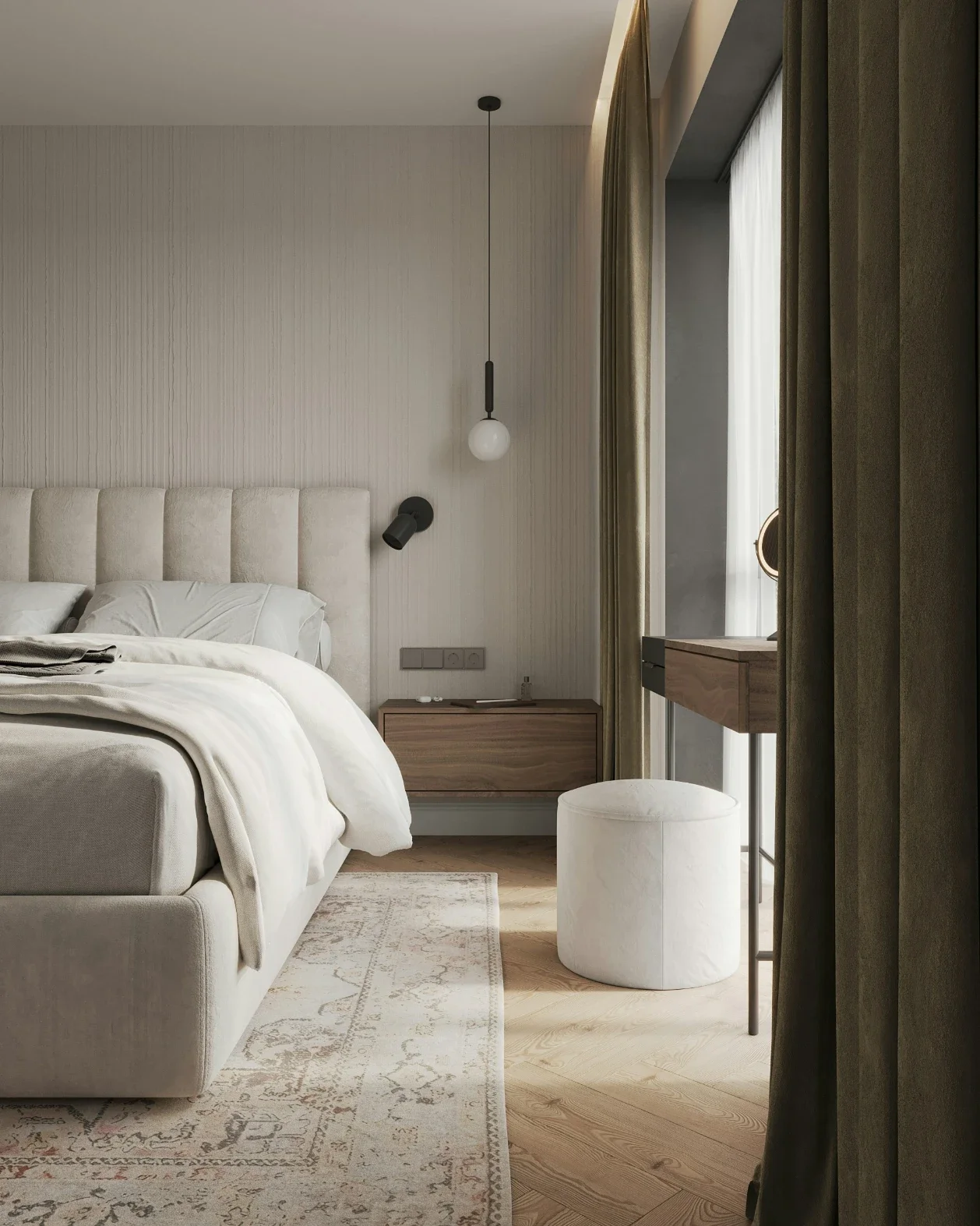
For most adults, Cleveland Clinic suggests a bedroom between 60 and 67°F (15 to 19°C). Treat that as a starting range and adjust within it until you stop waking too warm or too cold.
The reason is physiological. Your core body temperature is meant to drop to its lowest point during sleep, and a hot room works against that drop.
Research backs this up. A review in the Journal of Physiological Anthropology found that when people sleep with normal bedding and clothing, heat exposure increases wakefulness and reduces both slow-wave and REM sleep. Humid heat adds to that thermal load.
A few simple moves help:
Set the thermostat before bed rather than after you wake up hot.
Use a fan and lightweight bedding on warm nights.
Keep indoor humidity below 60%, ideally between 30 and 50%, which is the EPA's general guidance for homes.
Limit caffeine and sugary foods late in the day, since both can raise body temperature.
Daily Habits That Protect Deep Sleep
You cannot order up more deep sleep on demand, but you can stop working against it. These habits come from NINDS guidance and cost nothing to try.
Keep a fixed schedule. Go to bed and get up at the same time every day, weekends included.
Move during the day. Aim for at least 30 minutes of exercise on most days, finishing a few hours before bed.
Watch what you drink. Skip caffeine and nicotine late in the day and avoid alcohol before bed.
Dim the evening. Light exposure can make it harder to fall asleep or get back to sleep, so keep bright screens out of the bedroom and switch to softer layered lighting after dark.
Wind down on purpose. A warm bath, reading or another calm [bedtime routine](INTERNAL LINK: publisher blog post URL needed) signals that the day is over.
Get out of bed if you are wide awake. Read or listen to calm music elsewhere until you feel tired.
Change one habit at a time and give it a couple of weeks. That way your trend data can actually show what made a difference.
Conclusion
Deep sleep is worth caring about, but it is a poor thing to micromanage night by night. Focus on the levers you control: a cool room, a steady schedule and daytime habits that let your sleep drive build.
Then use your tracker for what it does well, which is showing trends in total sleep, resting heart rate and HRV over weeks. If you still wake unrefreshed or feel unusually tired during the day, see a doctor, since most sleep disorders can be treated effectively.
FAQ
How much deep sleep do I need each night?
There is no universal number. Healthy young adults typically spend about 15 to 25% of the night in deep sleep, and that share declines with age. Getting 7 to 9 hours of total sleep is the more practical goal for most adults.
Can a sleep tracker measure deep sleep accurately?
Not the way a lab can. Polysomnography reads brain waves, while home devices estimate stages from movement, heart rate and breathing. Use stage data for long-term trends rather than nightly verdicts.
What room temperature is best for deep sleep?
Most adults do well between 60 and 67°F (15 to 19°C). Heat in particular is linked to more wake time and less slow-wave sleep.
Should I worry if my HRV drops?
One low reading means little on its own. HRV varies widely between people and falls with age, so compare it with your own baseline over weeks and talk to a doctor if a change comes with symptoms.
Stay up to date with our latest ideas!