Learn what to do when a garage door panel is dented, including repair options, costs, replacement signs, and tips to restore its appearance and function.

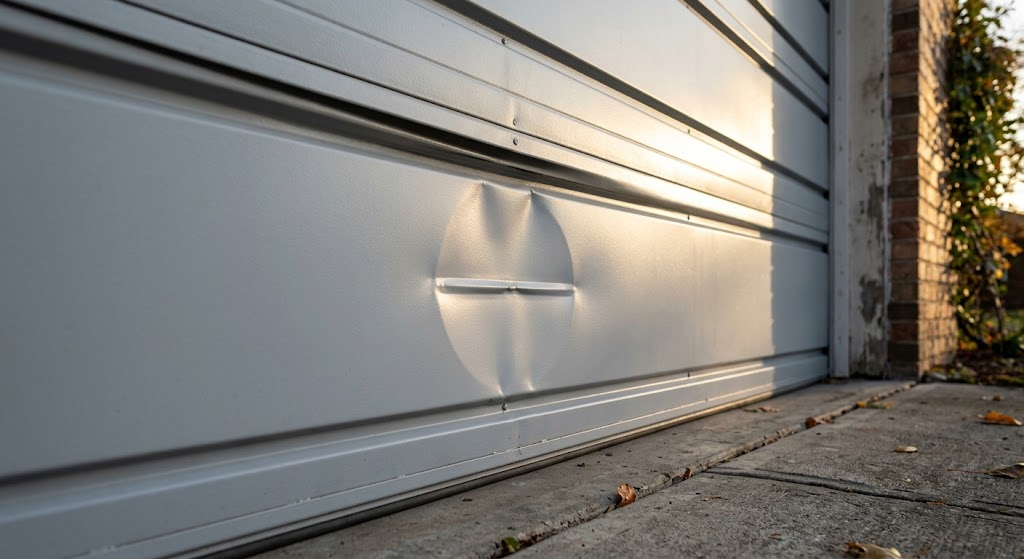
The bottom section of a garage door takes essentially all of the damage in a household. Reversing vehicles, bicycles falling over, basketballs, lawn equipment, and the occasional delivery cart. It is the section closest to the ground, and it is the one that gets hit.
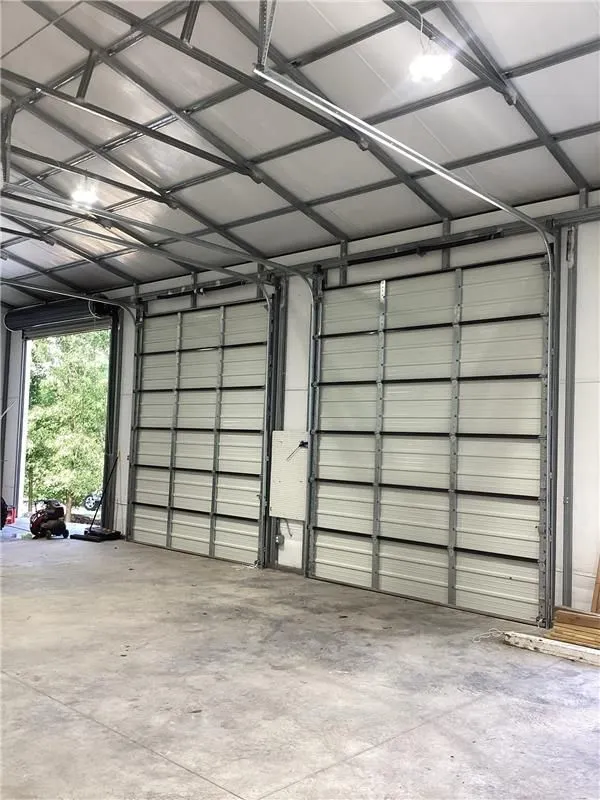
The good news, which a surprising number of homeowners do not know, is that sectional doors are exactly what the name says. They are built from individual horizontal sections joined by hinges, and a damaged section can usually be replaced on its own.
When a Panel Can Be Replaced
Single-section replacement works when the damage is confined and the rest of the door is sound. Typical candidates include a dented or creased bottom section from vehicle impact, a cracked panel from something falling against it, one section with localized rust perforation, or a single panel damaged in a storm.
The conditions are straightforward. The remaining sections need to be structurally sound and not bowed. The hinges and hardware need to be in serviceable condition. And a matching section needs to be available, which is the one that decides most cases.
The Matching Problem
This is where panel replacement succeeds or fails, and it is worth being realistic about it.
A replacement section needs to match the existing door in manufacturer, model, panel design, gauge, insulation type and dimensions. If the door is from a current manufacturer and a current model line, this is usually straightforward and the section arrives in a few days.
Where it gets harder is with older doors, discontinued models, or doors from manufacturers that no longer exist. In those cases a section may simply not be sourceable, and the choice narrows to living with the damage or replacing the door.
Color is the other complication. A new section arrives in the factory finish, and the existing sections have been fading in sunlight for a decade. Even a perfect color match from the manufacturer will look different in place. The usual solution is to repaint the whole door after fitting, which is a straightforward job and produces a genuinely uniform result.
It is also worth knowing the alternative arrangement: on some doors it is possible to move an undamaged upper section down to the damaged position and put the new section in the top, where any color difference is less visible from the street.
When It Is Not Worth It
Panel replacement stops making sense in a few situations.
When three or more sections are damaged. At that point the combined parts and labor approach the cost of a new door, and you finish with an old door wearing new panels.
When the door has bowed. A door that has flexed permanently across its width will not sit right with a new section fitted, because the problem is the assembly rather than the panel.
When the damage came with an impact hard enough to bend tracks, damage hinges, or throw the door off its tracks. The section is then the visible part of a larger problem.
And when the door is already near the end of life for other reasons, particularly if it is uninsulated and the household would benefit from an upgrade anyway.
What the Repair Involves
Section replacement is more involved than it looks from outside, which is why it is a technician job.
The spring tension has to be released in a controlled way before the door can be taken apart. The door is then partially disassembled, with the hinges between the damaged section and its neighbors removed and the lift cables detached if the bottom section is involved.
The damaged section comes out, the new one goes in, hinges are refitted, and on a bottom section the bottom brackets and cables are reattached. Then the whole assembly is re-squared, spring tension is restored, and the balance is checked by hand.
Crucially, the spring tension is often re-set at this point too. Insulated sections and uninsulated sections have different weights, and fitting a section of the wrong specification changes the balance of the door. A competent garage door panel replacement accounts for that rather than simply bolting the new panel in and walking away.
Reinforcement Worth Considering
If the bottom section has been damaged once, it will probably be damaged again, because whatever caused it is still part of the household routine.
A bottom section strut, a horizontal steel reinforcement bar fitted across the inside of the section, adds significant rigidity for very little money. It is standard on heavier doors and worth adding to a lighter one at the point of repair. It will not prevent damage from a serious impact, but it changes what a minor one does.
Before You Commit
Get the door assessed as a whole rather than getting a price on the panel alone. The question is not only whether the section can be replaced but whether the rest of the assembly justifies the spend.
Technicians at Century Garage Door Service and other established companies will check the springs, cables, rollers and tracks at the same visit, and that assessment is what tells you whether you are looking at a straightforward panel swap or the first repair in a series.
Stay up to date with our latest ideas!