Why Garage Door Springs Snap in Cold Weather: A Bellevue Safety Guide
Learn why garage door springs are more likely to snap in cold Bellevue winters and how to improve safety, prevent damage, and avoid sudden failures.
For the discerning homeowner, the garage door is more than just a convenience; it is a primary entry point that demands year-round reliability. Yet, in Bellevue's unique climate, the rapid fluctuation between damp days and freezing nights acts as a silent “stress multiplier” on this complex system. It isn't merely the cold that causes damage, but the physics of thermal contraction and lubricant viscosity that can turn minor wear into a major failure.
This guide explores the technical science behind these winter vulnerabilities, helping you identify the silent symptoms of a system stressed before they disrupt your home's security.
The Physics of the “Snap”: Thermal Contraction and Springs
Cold weather acts as a catalyst for spring failure because steel contracts and loses ductility as temperatures drop below 35°F. This thermal contraction increases resting tension while making the metal brittle, creating a dangerous combination for aged hardware. Consequently, a spring nearing the end of its lifecycle is often pushed past its breaking point during a freeze, resulting in a sudden snap.
Garage door springs are rated by “cycles” rather than years, with a standard 10,000-cycle component lasting roughly seven years in an active household. If your springs were installed around 2010–2015, they have likely entered the “danger zone” where metal fatigue has silently accumulated. In this state, the steel is structurally compromised, and a winter cold snap often serves as the final stressor that causes catastrophic fracture.
Warning signs of failure include a visible 2–3 inch gap in the coil, flaking rust, or uneven elongation – all visible without touching the mechanism. A loud “gunshot” sound followed by an impossibly heavy door confirms the spring has broken. Due to the extreme tension involved, DIY repair attempts carry severe injury risks. When facing this failure, it is safest to contact professional garage door repair services to ensure the mechanism is unwound and replaced according to industry standards, guaranteeing a safe, long-lasting repair.
Viscosity Drag: Why the Motor Hums But Won't Lift
Many winter garage door issues stem from the lubricant itself, which undergoes a physical change when temperatures drop. Standard lithium-based or petroleum greases, while effective in moderate weather, tend to thicken into a wax-like substance as the mercury falls. This increased viscosity transforms smooth lubricant into a “drag brake” on the opener's rail, creating significant friction against the drive system.
Modern openers are equipped with sensitive force-detection algorithms that often misinterpret this cold-weather drag. When the thickened grease creates resistance, the opener's computer cannot distinguish between the sticky lubricant and a physical object blocking the path. Consequently, the system triggers a “phantom obstruction” safety protocol, causing the door to reverse unexpectedly to prevent what it perceives as an impact.
Facing this frustration, homeowners should avoid the dangerous mistake of simply cranking up the motor's force settings, which can override critical safety mechanisms. Instead, the correct repair involves cleaning the rail with a dry cloth to remove the waxy buildup and applying a cold-rated synthetic lubricant. If the door moves freely when disconnected from the opener but struggles when automated, this cleaning process often resolves the issue without risking damage to the motor or gear train.
Differential Movement: Track Binding and Misalignment
Bellevue's common construction method involving wood-framed garages and steel track hardware creates a specific vulnerability during winter temperature fluctuations. Wood and steel expand and contract at significantly different rates, with wooden framing often swelling from moisture while steel tracks remain stable or contract. This differential movement between the mounting surface and the hardware can gradually throw the entire door system out of critical alignment.
As these materials shift in opposing directions, the vertical tracks may shift inward, narrowing the spacing at the header or mid-height. This phenomenon, known as the “pinch” effect, dramatically increases side-loading on the rollers, causing the door to shudder, jerk, or stick during travel. Even millimeter-scale deviations can create enough friction to trigger safety reversals or audible grinding sounds.
The most reliable indicator of this misalignment is often found on the rollers themselves, particularly if your system uses modern nylon components. Under chronic side loads, these rollers develop flat spots – areas where the tread has skidded rather than rolled – which create a rhythmic thumping noise during operation. Identifying these flat spots or seeing fresh metal filings near the tracks confirms that the system is binding and requires professional realignment.
The Water Barrier: Identifying Freeze-Thaw Damage
Bellevue's combination of heavy rainfall and freezing temperatures creates a persistent threat to your garage door's bottom seal. When pooled water freezes, the rubber gasket can bond to the concrete, causing it to tear or pull away when the door opens. Once this barrier is compromised, moisture easily wicks upward into the door panels, accelerating deterioration and bypassing the door's weatherproofing.
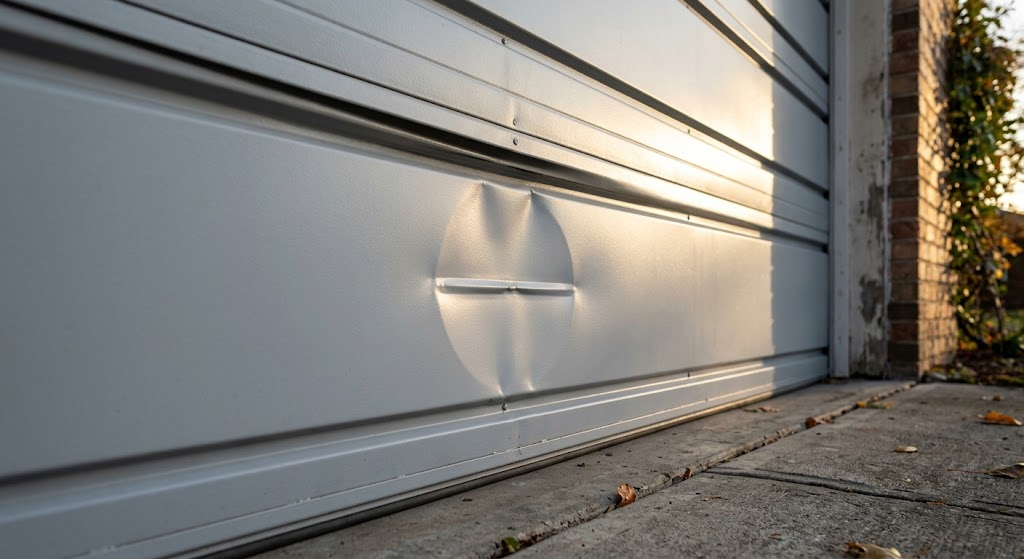
To identify potential structural damage, perform a close inspection of the door's lower section. For wooden doors, gently probe the bottom rail with a screwdriver; soft spots confirm that rot is spreading inside the timber. If you have a steel door, watch for bubbling paint or orange streaks along the bottom edge, which are clear indicators that rust is eating away the metal from the inside out.
Proactive Stewardship for Winter Safety
Winter in Bellevue serves as a stress test for your garage door, amplifying invisible issues like metal fatigue, thickened lubricant, and track misalignment. Understanding these physics-based challenges allows you to move from reactive repairs to proactive stewardship. As you prepare your property for the season, do not overlook the importance of a simple garage inspection. Checking for warning signs like coil gaps or compromised seals today can prevent a mid-winter emergency. If you spot any of these red flags, enlist Northwest Garage Doors immediately to restore your door's balance and integrity, securing your home against the elements for years to come.
Stay up to date with our latest ideas!