The Real Reason Your Kitchen Stays Dirty (And It's Not Your Fault)
Discover the hidden reasons your kitchen stays dirty, from poor layouts and clutter to hard-to-clean surfaces, ventilation issues, and everyday habits.

You wipe down the counters, load the dishwasher, and sweep the floor. By tomorrow morning, it looks like you never touched it. Crumbs are back on the counter, sticky spots appear on the stovetop, and the sink fills up again before breakfast is even over. You're not lazy or disorganized. The problem is that your kitchen cleaning routine is fighting against how your family actually lives, which is why it keeps failing. When you understand the real structural reasons kitchens get dirty faster than other rooms, you can redesign your approach to work with your household instead of against it, and when that stops working, home cleaning in portsmouth services can handle the deep work.
Key Takeaways
Kitchen spaces accumulate mess 3 to 4 times faster than other rooms because of concentrated daily activity and high-traffic patterns.
Most kitchen cleaning routines fail because they're designed for ideal conditions, not for how real families with kids, pets, and busy schedules actually cook and eat.
The kitchen's role as a central hub means mess from other rooms migrates there, making a localized cleaning strategy impossible.
Strategic placement of tools, surfaces, and containers can cut daily kitchen cleanup time by 40 to 50 percent without changing your actual behavior.
Some kitchen cleaning tasks are worth outsourcing; others need to happen daily to prevent cascading messes.
Why It Matters
Your kitchen is the most-used space in your home. It's where your family eats, where kids do homework, where packages get set down, where the dog gets fed, and where everything from the living room eventually migrates. Unlike a bedroom or guest bathroom, the kitchen doesn't have downtime. This constant activity means dirt, crumbs, and clutter accumulate faster there than anywhere else in your home. A living room can stay reasonably clean for a week between deep cleaning sessions. A kitchen cannot. It's not a matter of discipline or a cleaning schedule working harder. It's physics.
The real problem is that most kitchen cleaning advice assumes you're starting from a clean slate every time you clean. Wipe the counters, clean the stove, mop the floor. That works if you're cleaning once a month in a home where nothing happens between cleanings. For families who cook three times a day, have kids eating snacks, and use the kitchen as a command center, this approach creates a cycle of failure. You spend 45 minutes getting the kitchen pristine, then 12 hours later it looks untouched again, so you feel like you failed. You didn't. Your routine just doesn't account for how your home actually functions.
The Science Behind Why Kitchens Get Dirty Faster
Kitchens accumulate mess at a different rate than other rooms because of the specific activities that happen there. Cooking generates grease, splatters, and steam. Eating leaves crumbs and spills. Food storage creates moisture and occasional spills. Every member of the household touches the fridge, cabinet handles, and countertops multiple times daily, transferring dirt and bacteria. Add in pet food bowls, trash cans, and the fact that your kitchen is the pathway to almost every other room in your home, and you've got a space that is fundamentally designed to get dirty.
Surface type matters too. Tile, laminate, and granite show every spill, fingerprint, and crumb. A light-colored countertop that looks great in the showroom becomes a visual mess within hours of real-life use. Porous surfaces like grout trap bacteria and stains. Stainless steel shows fingerprints. Kitchen materials are often chosen for aesthetics or durability, not for their ability to hide mess, which means you're constantly aware of how dirty the kitchen is even when the actual dirt level is normal for a kitchen.
The real game-changer is understanding that kitchens require a different cleaning framework than other spaces. Instead of "get it clean and maintain it," the mindset needs to be "manage the continuous flow of mess." That changes everything about how you design your routine.
Why Your Current Routine Isn't Working
Most kitchen cleaning routines fail for three specific reasons.
You're Treating the Kitchen Like Other Rooms
Your bedroom doesn't need to be cleaned every single day. Your living room doesn't require constant attention. But your kitchen does. If you're using a once-weekly deep cleaning approach or a "clean as you go" strategy that relies on everyone in your family being diligent, you're setting yourself up to feel like you're failing. The kitchen requires daily attention to high-traffic surfaces and constant management of the transition between meals. This isn't a flaw in your effort; it's a structural mismatch between your routine and how the space functions.
Your Tools and Containers Are Inconveniently Placed
If your cleaning supplies are in a closet two rooms away, you're not going to use them for quick 2-minute touch-ups between meals. If your trash cans are in an awkward corner, crumbs get left on the counter instead. If your dishwasher is hard to unload, dishes stack up on the counter. If your dish towels are in a drawer that's far from where you cook, you don't grab one when you spill something. Instead, you wipe your hands on your pants or leave the spill for later. Small inconveniences compound throughout the day into a visibly messy kitchen by noon.
You're Trying to Prevent Mess Instead of Managing It
Kitchens get dirty because people cook, eat, and live in them. You cannot prevent this through willpower or better habits alone. Kids will leave crumbs on the counter even if you ask them not to. Cooking will splash grease on the stovetop even if you're careful. The solution isn't to cook less or eat less; it's to build a routine that accepts mess as inevitable and manages it systematically throughout the day instead of trying to stop it from happening.
The Framework That Actually Works
Redesigning your kitchen cleaning routine means breaking it into three tiers: immediate (during the meal or right after), daily (once daily, takes 10 to 15 minutes), and weekly (handles what immediate and daily can't touch).
Immediate Tasks (5 to 10 Minutes Per Meal Cycle)
Right after cooking, wipe splatters from the stovetop and any spills from the counters. Clear dishes into the dishwasher or sink immediately. Put perishables away. Empty the trash if it's full. This takes 5 to 10 minutes but prevents a pile-up that makes the kitchen look chaotic by evening. The key is doing this while you're still in the kitchen anyway, not adding it as a separate task later.
Daily Tasks (10 to 15 Minutes, Done Once)
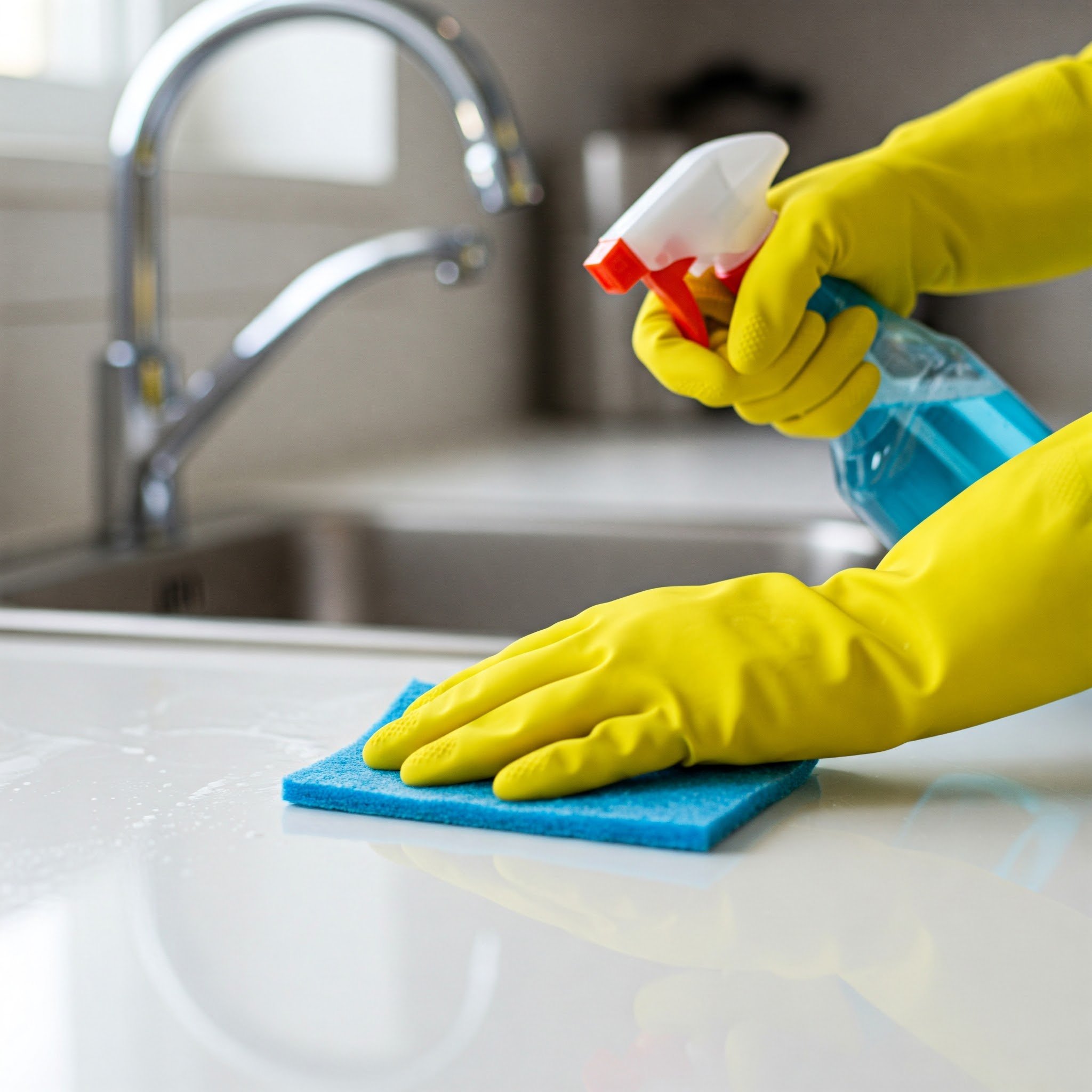
Pick one time of day (many families find evening works best, after dinner is cleaned up) when you spend 10 to 15 minutes on the kitchen. Wipe down all counters, clean the stovetop thoroughly, sweep high-traffic areas, and handle any accumulated spills or crumbs. Wipe cabinet handles if they look greasy. This one focused session prevents the slow accumulation that makes kitchens feel perpetually messy.
Weekly Tasks (30 to 45 Minutes, Once Weekly)
Clean inside the microwave, wipe the outside of appliances, clean cabinet fronts, mop the full floor, and handle any buildup on the stove or backsplash. Scrub the sink thoroughly. This is where you address what daily cleaning can't touch.
Real-World Example: The Martinez Family
The Martinez family of four includes two kids ages 8 and 11, a dog, and two full-time working parents. Their kitchen was perpetually messy despite mom spending almost an hour most evenings cleaning. The issue wasn't effort; it was structure. They had one trash can in a corner, cleaning supplies in a cabinet across the room, and a dishwasher on the far end of the counter from where they cooked.
They made three changes. First, they added a small compost bowl and paper towel dispenser right next to the stove where they actually cook. Second, they moved a basket with their most-used cleaning supplies to the island in the center of their kitchen. Third, they moved their trash cans to a more central location near both the dining area and the preparation zone.
They didn't change their habits or require more cleaning time. They just reduced the friction that made cleanup inconvenient. Within a week, their kitchen looked noticeably cleaner not because they were cleaning more, but because it was easier to clean during the day. They also established that immediate cleanup happens right after cooking and eating, and the evening daily deep-clean happens at 8 PM after the kids' homework is done. Before and after photos showed a kitchen that looked cleaned not by working harder, but by working smarter.
Practical Fixes You Can Implement This Week
You don't need to overhaul your entire routine. Small structural changes create big results.
Relocate one tool or container this week. Move your cleaning supplies to the kitchen, your trash to a more central spot, or your dish towels to the counter. Pick the one move that will save you the most steps during a typical day.
Establish an immediate cleanup rule for your household. Right after eating, dishes go into the dishwasher or sink, spills get wiped, and trash gets thrown away. This prevents the pile-up that makes kitchens feel out of control.
Block 10 to 15 minutes once daily for focused kitchen maintenance. Pick a time that works for your family. Morning before work, evening after dinner, or late night before bed. Consistency matters more than the exact time.
Identify which surfaces show dirt fastest in your kitchen. Those are your priority. If your light countertop shows crumbs, that's where you focus during daily cleaning. If your stainless steel shows fingerprints, that's what gets attention.
Stop trying to keep the kitchen pristine between cleanings. Accept that it will get messy throughout the day. Your job is managing that mess strategically, not preventing it entirely.
When to Call in Professional Help
Some kitchen cleaning tasks are worth your time to maintain daily. Others aren't. Deep grout cleaning, floor waxing, inside-the-fridge sanitizing, and detailed appliance cleaning happen rarely enough that they're worth outsourcing or grouping together. When you bring in professional cleaning support, you're buying back time that you can use for the immediate and daily tasks that only you understand your family's rhythm well enough to manage. For families in busy seasons or during life transitions, professional support isn't an indulgence. It's a practical way to maintain a functional kitchen without burning out on cleaning.
Actionable Takeaways
Map your kitchen workflow for one week. Where do you naturally go when cooking? Where do you set down packages or mail? Where do family members congregate? Position cleaning tools and trash accordingly.
Establish your three-tier routine (immediate, daily, weekly) and communicate it to everyone in your household so expectations are clear.
Test your immediate and daily routines for two weeks before evaluating whether they're working. Small habits take time to stick.
Track which surfaces or areas look dirty fastest. Those are the non-negotiables in your daily routine.
Schedule your weekly deep tasks on a specific day, and consider whether some of those tasks are worth trading for other uses of your time.
Conclusion
Your kitchen cleaning routine isn't failing because you're not trying hard enough. It's failing because most routines are designed for homes where kitchens are used occasionally, not for real families who cook, eat, and live there multiple times daily. When you shift from trying to prevent mess to strategically managing it, and when you position your tools and containers to make cleanup convenient instead of inconvenient, your kitchen stays visibly cleaner without requiring more effort. Start with one small structural change this week, and you'll notice the difference immediately.
FAQ
How often should I clean my kitchen if I cook three meals a day?
You should do immediate cleanup right after each meal (5 to 10 minutes) and a focused 10 to 15 minute daily deep clean once each day, typically in the evening after dinner is cleared. Weekly tasks handle deeper cleaning that daily routines can't reach. This three-tier approach works for families who use their kitchens heavily throughout the day.
Why does my kitchen look dirty even when I just cleaned it?
Kitchens in active households accumulate visible mess quickly because of dust, crumbs, and fingerprints that appear constantly throughout the day. If your countertops or appliances show every mark, this creates a visual sense of uncleanliness even when the actual dirt level is normal. Focus your daily maintenance on these high-visibility surfaces rather than trying to deep clean everything every time.
What's the difference between a daily kitchen clean and a weekly deep clean?
Daily cleaning addresses the accumulation that happens during normal use, kitchen surfaces get wiped, and the floor gets swept. Weekly deep cleaning tackles areas that daily maintenance can't reach easily, like inside the microwave, cabinet fronts, behind appliances, grout, and thorough floor scrubbing. Daily tasks keep the kitchen functional; weekly tasks maintain it at a higher standard.
Should I require my kids to help with kitchen cleaning?
Yes, but set realistic expectations based on age. Younger kids can help with immediate tasks like clearing their plates and putting trash in bins. Older kids can handle wiping counters or sweeping during the daily routine. Making cleanup a shared responsibility prevents one person from feeling solely responsible for maintaining the kitchen, though adults typically need to supervise and often finish tasks kids start.
How can I make my family stick to a new kitchen cleaning routine?
Involve your family in creating the routine rather than imposing one. Ask where they naturally congregate and what tools or containers would make cleanup easier for them. Make immediate cleanup (clearing dishes and wiping spills) non-negotiable because it takes just minutes and prevents the cascade of mess. Be flexible about the exact time of daily cleaning as long as it happens consistently. Routines stick when they fit real life instead of fighting against it.
Is it worth paying for professional kitchen cleaning if I'm already cleaning daily?
Professional cleaning is most valuable for deep tasks that happen less frequently, like grout cleaning, inside-appliance sanitizing, or floor stripping and waxing. Daily and immediate cleaning creates the ongoing baseline maintenance that only you understand well enough to manage based on your family's specific habits. Professional help fills the gap between what you can realistically handle and what your kitchen needs to stay healthy and functional long-term.
Stay up to date with our latest ideas!