The Elite Media Room Layout: Premium Leather Seating Configurations for Upscale Entertaining
Explore elite media room layouts with premium leather seating configurations designed to maximize comfort, style, and upscale entertaining at home.
An elite media room works best when seating is planned as a hospitality system: clear sightlines, generous recliner spacing, comfortable circulation, and furniture groupings that support both movie viewing and conversation.
Guests should not have to squeeze past extended footrests, crane around taller chairs, or balance a drink on the floor during a premium movie night. A well-planned layout uses measurable standards, such as 60 to 70 inches between reclining rows and 30 to 36 inches for comfortable aisles, to make the room feel composed rather than crowded. The goal is to help you choose the right mix of leather recliners, loveseats, sectionals, and lounge pieces for upscale entertaining without sacrificing screen comfort.
What Makes a Media Room Layout Feel Elite
It Supports Hosting, Not Just Watching
A basic theater room points every chair at the screen. An elite media room does more: it lets six to twelve guests arrive, circulate, sit, recline, talk before the feature, watch comfortably, and leave without disrupting the room. That means the furniture plan must account for sightlines, drink access, recliner clearance, aisle width, acoustic balance, and the natural path from the door to the best seats.
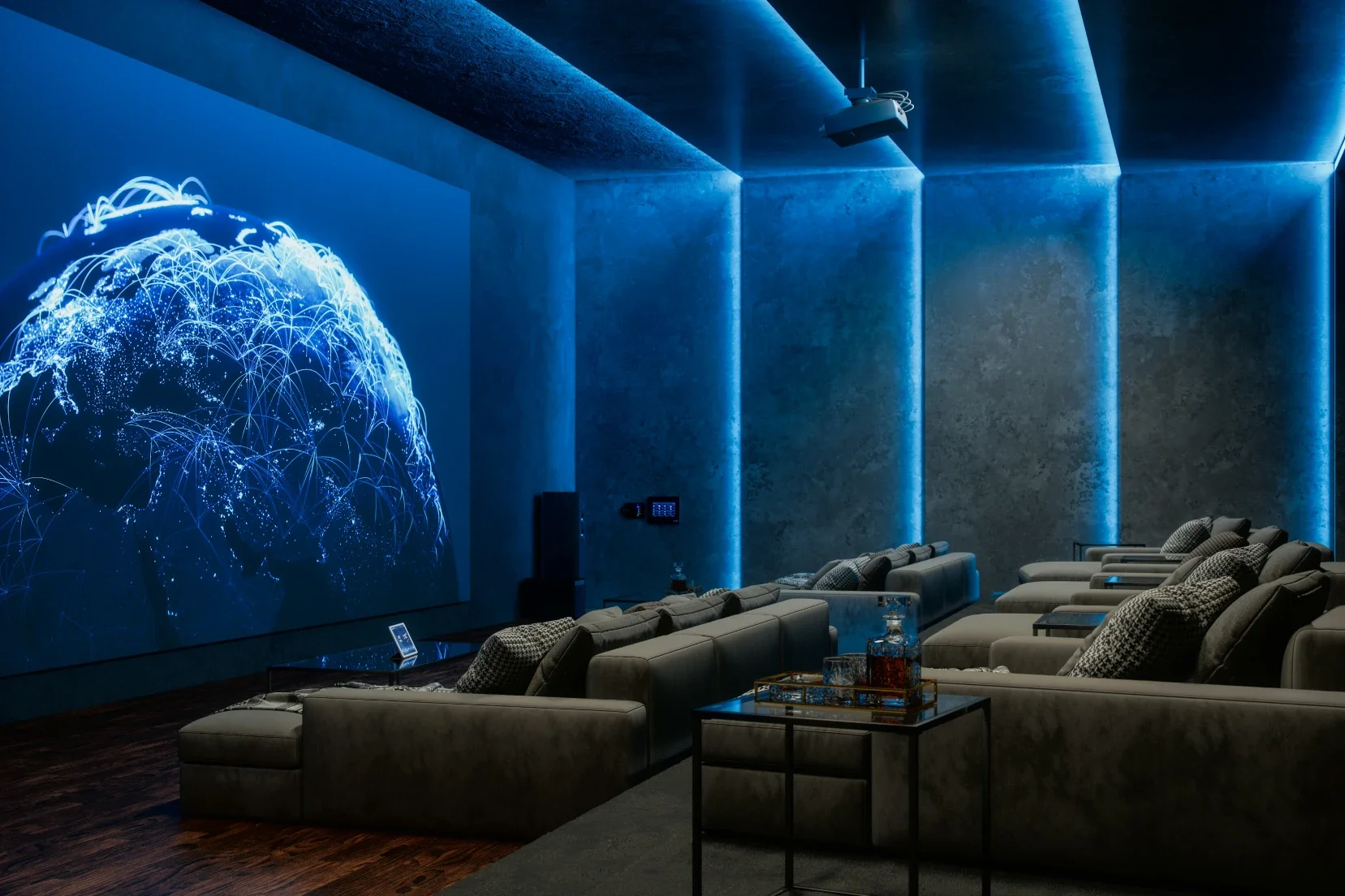
For upscale entertaining, the most successful layouts usually avoid one rigid furniture type across the entire room. A front row of premium leather recliners may serve serious viewing, while a rear sectional, curved loveseat, or pair of lounge chairs can make the room more social before and after the main event. The room should feel intentional from every seat, not as if extra furniture was added after the theater chairs were chosen.
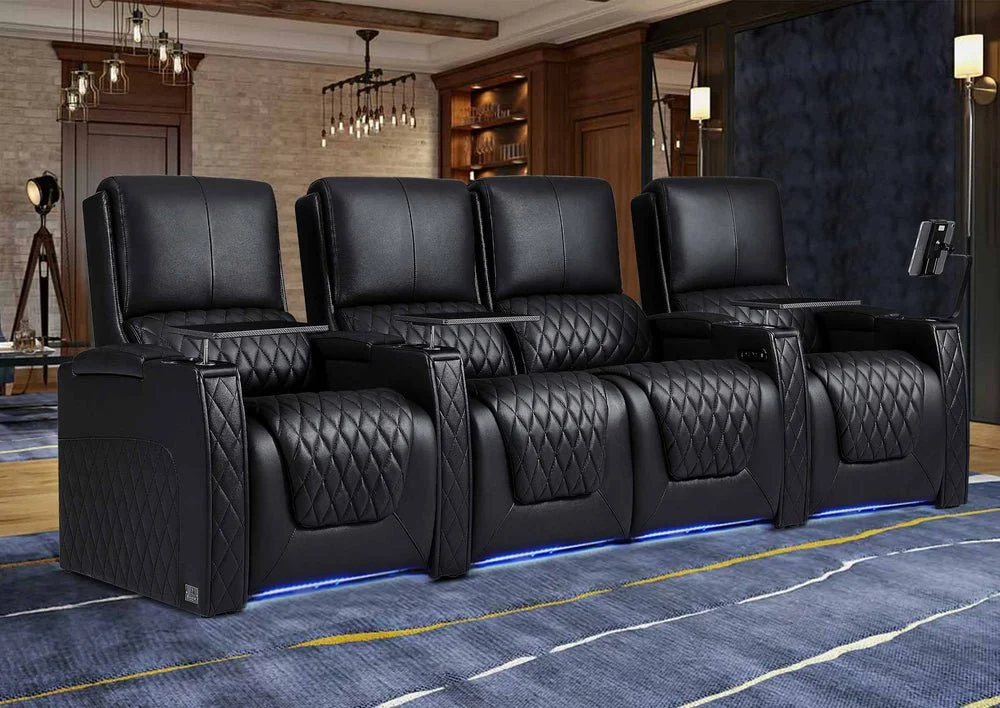
For upscale media-room planning, premium leather theater recliners can be a helpful reference point when balancing seating density, guest comfort, and a polished cinema look.
Start With the Fixed Conditions
Before choosing furniture, measure the room’s length, width, ceiling height, door swings, windows, vents, outlets, columns, soffits, built-ins, and speaker locations. Seatcraft’s home theater seating guidance emphasizes that accurate planning starts with a full room measurement, not just a wall-to-wall dimension. This matters because a beautiful leather recliner configuration can fail if a rear row blocks a vent, a side aisle narrows at a column, or a power outlet lands behind an inaccessible console.
A practical first pass is to draw a scaled floor plan and mark the “no-compromise” elements: screen wall, door path, speaker positions, HVAC vents, and any windows that require blackout treatment. Then test the furniture footprint with painter’s tape before ordering. In a premium room, this simple step often reveals whether the layout can support true entertaining or only looks good in a product rendering.
Choose the Configuration Around How You Entertain
Theater Rows for Film-First Rooms
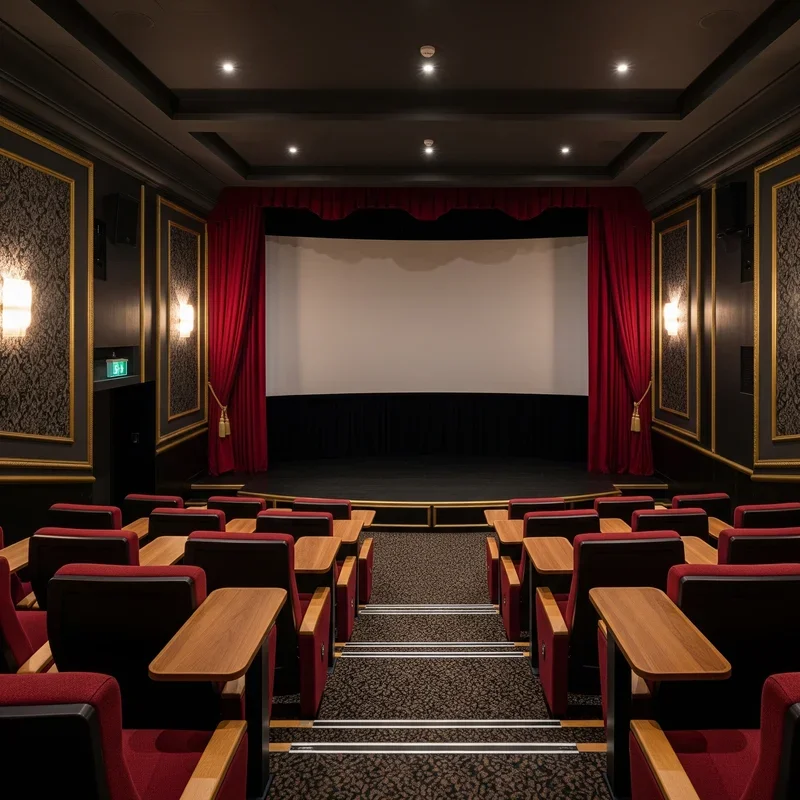
Straight rows of leather recliners are the right choice when the media room is mainly used for movies, sports, concerts, or gaming sessions where everyone faces forward. This format creates predictable sightlines and is easy to pair with risers, acoustic planning, and dedicated cupholders or storage consoles. It also gives the room a formal, private-cinema character.
The tradeoff is social flexibility. A strict row layout is less natural for conversation because guests sit shoulder to shoulder instead of facing each other. If the room often hosts cocktails, family gatherings, or casual conversation before the screen turns on, consider curved rows or a mixed layout rather than a purely straight arrangement.
Curved Recliners for Shared Viewing and Conversation
Curved leather recliner rows are especially useful in upscale entertaining rooms because they soften the “auditorium” feeling. The center seats still face the screen directly, while the outer seats angle slightly inward, making conversation easier before a film starts. This layout works well when the host wants the polish of theater seating without making the room feel too rigid.
Curved layouts need careful spacing because the outer chairs consume more side-to-side room than a straight row. If the room is narrow, a curved row can crowd aisles or push end seats too close to side speakers. The best use case is a medium-to-large media room where the screen wall is wide enough to support the arc without forcing guests into the side walls.
Sectional-and-Recliner Hybrids for Social Luxury
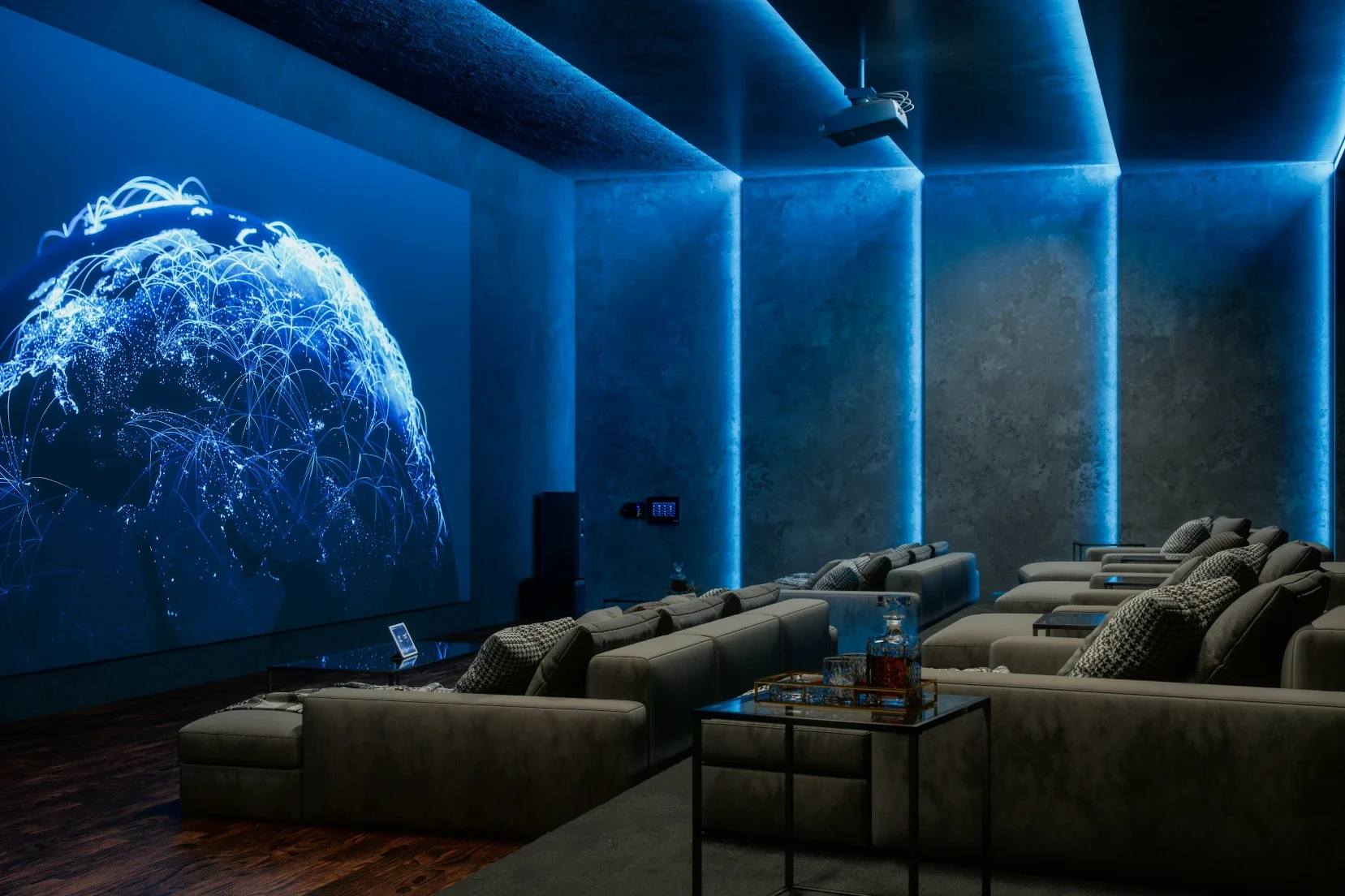
A hybrid layout is often the most versatile option for upscale homes. One common configuration is a front row of four premium recliners for focused viewing, with a rear leather sectional or chaise arrangement for lounging and conversation. Another strong option is a central reclining loveseat flanked by individual recliners, giving couples and solo guests equally comfortable choices.
This format is useful when the room serves multiple roles: Friday movie night, Sunday sports, game-day hosting, and relaxed conversation after dinner. It also prevents the space from feeling like a commercial cinema replica. The key is to keep every seat visually connected to the screen while still allowing at least one zone where guests can turn, talk, and set down drinks naturally.
Plan Seat Dimensions Before Buying Premium Furniture
Use Realistic Seat Widths, Depths, and Heights
Premium seating needs more space than many homeowners expect. Seatcraft notes that standard home theater seat width often ranges from 22 to 30 inches, with 24 to 26 inches as a comfortable starting point. Seat depth is commonly 21 to 24 inches, while cushion height is typically 18 to 20 inches from the floor.
Those numbers matter because upscale media rooms usually include wider arms, storage consoles, cupholders, USB charging, tray tables, or motorized controls. A row of four chairs may look compact in a showroom photo but can easily require 110 to 130 inches once arms and consoles are included. If the layout depends on guests squeezing between furniture and walls, the furniture is not premium in practice, even if the upholstery is excellent.
Account for Reclining Clearance
Reclining clearance is one of the most common planning mistakes in media rooms. Standard recliners may need 8 to 12 inches behind the backrest, while wall-hugger recliners often need only 2 to 6 inches. That difference can determine whether a room fits two rows comfortably or feels overstuffed.
Row spacing is even more important. For non-reclining seats, 32 to 36 inches may be workable. For reclining seats, plan closer to 60 to 70 inches between rows so footrests can extend and guests can still move through the room. In a luxury setting, the goal is not maximum seat count; it is graceful use. Eight seats with room to recline usually feel more upscale than ten seats that force guests to shuffle sideways.
Build in Aisles That Feel Intentional
A one-person aisle can be 18 to 24 inches wide, but premium entertaining benefits from 30 to 36 inches wherever possible. That wider range allows guests to pass with drinks, move around extended footrests, and access side tables or storage without interrupting seated guests. It also improves the room’s perception of quality because the furniture looks placed, not packed.
If the room has a side entry, leave the clearest aisle on the entry side and avoid placing the best seats directly in the traffic path. If the door opens at the rear, keep the first view into the room clean: centered screen, symmetrical seating if possible, and no immediate obstacle. A high-end layout should feel calm the moment guests enter.
Place Seats for Screen Comfort and Sightlines
Match Viewing Distance to Screen Size
Viewing distance should guide where the primary seats land. Seatcraft’s dimensional guidance gives a common recommendation of 1.5 to 2.5 times the screen’s diagonal size. For an 85-inch screen, that points to roughly 10 to 18 feet. For a 120-inch screen, the range is about 15 to 25 feet.
For upscale entertaining, the “best” distance depends on how the room is used. A film-first room can place the primary row closer for immersion. A social media room may benefit from a slightly more relaxed distance so guests can watch comfortably while eating, talking between scenes, or following sports without visual fatigue. The primary row should be chosen first, then secondary seating should be arranged around it.
Protect Every Guest’s View
Sightlines become more difficult when the room includes recliners, sectionals, ottomans, and risers. Taller backrests in the front row can block rear guests unless the rear row is elevated or spaced farther back. If you are adding a riser, the rear seats should clear the front row’s head height while still keeping guests comfortable under the ceiling.
A useful planning exercise is to mark the screen centerline, then sit or stand at each proposed seat position before buying furniture. Check whether the screen is centered, whether side speakers are too close, and whether a guest would need to turn their neck for a full movie. In an elite room, no seat should feel like a penalty seat.
Consider Angled Seating Carefully
Angled seating works well when it improves both viewing and conversation. For example, two leather swivel lounge chairs at the back corners can create a social zone without compromising the primary recliner rows. A curved loveseat can also bring guests slightly toward one another while maintaining screen orientation.
However, angled furniture should not push viewers beyond comfortable screen alignment. If a guest must watch at a sharp side angle for two hours, the furniture is serving the room’s appearance more than its function. Use angled pieces at the perimeter, not as the primary seats, unless the room is large enough to keep the screen comfortably visible from each position.
Add Tables, Storage, Lighting, and Material Quality Without Crowding the Room
Give Every Guest a Surface
Upscale entertaining requires more than seats. Guests need places for drinks, snacks, remotes, phones, reading glasses, and small plates. Built-in recliner cupholders help, but they are not a complete substitute for side tables, console arms, or a low table placed outside the main recline path.
The best furniture plans assign a surface to every seat. In a four-seat recliner row, storage arms or shared consoles can handle drinks and remotes. In a sectional zone, a narrow C-table, nesting tables, or a rear console table can provide surface area without blocking foot traffic. Avoid large coffee tables directly in front of reclining seats unless there is enough clearance for footrests and walking paths.
Choose Leather and Upholstery for Real Use
Premium leather is appropriate for elite media rooms because it signals quality, cleans more easily than many fabrics, and pairs well with controlled lighting. For entertaining, darker leathers such as charcoal, espresso, cognac, or deep navy tend to hide wear better than pale upholstery. Semi-aniline or protected leather can be a practical choice where guests regularly eat and drink.
Material choice should also consider temperature, acoustics, and tactile comfort. A room filled entirely with hard leather, glass, and polished stone can feel visually impressive but acoustically sharp. Balance leather seating with area rugs, upholstered wall panels, drapery, or acoustic treatments so conversation sounds warm and dialogue remains clear.
Integrate Lighting Around Movement
Lighting should support arrival, serving, viewing, and exit. Step lights or low-level aisle lighting help guests move around reclined furniture. Dimmable sconces or cove lighting can give the room a polished hospitality feel without washing out the screen. Task lighting near a bar, snack counter, or storage cabinet should be controlled separately from screen-time lighting.
Place controls where they match behavior. A wall keypad at the entry is useful, but premium recliner controls, side-table remotes, or a smart scene controller near the host seat can make the room easier to manage during entertaining. The strongest layouts think through the host’s movement: greet guests, dim lights, start content, serve drinks, and adjust volume without walking through the screen line.
Match Layouts to Room Types
Compact Premium Media Room
In a smaller upscale room, avoid forcing two rows unless the dimensions truly support reclining clearance and circulation. A better configuration may be one row of three or four wall-hugger leather recliners, paired with a slim rear console or two movable ottomans. Wall-hugger recliners needing only 2 to 6 inches of rear clearance can preserve valuable floor space.
For a compact room with an 85-inch screen, the primary seating range of roughly 10 to 18 feet gives flexibility. If the room is closer to the short end of that range, choose lower-profile seating and avoid oversized arms that make the room feel compressed. Comfort should come from fit, not bulk.
Large Dedicated Entertaining Room
A larger media room can support layered zones: a front theater row, a raised rear row, and a side lounge or bar-facing area. For reclining rows, plan 60 to 70 inches between rows and keep aisles closer to 30 to 36 inches for a luxury feel. If the screen is 120 inches, the 15 to 25-foot viewing range helps determine whether two rows, three rows, or one row plus a lounge zone makes more sense.
In this type of room, the best layout often places the most immersive seats in the center row rather than the first row. Front seats can be used for casual viewing or children, while the main host seats sit at the strongest balance of screen size, speaker imaging, and recliner comfort. This is a more refined approach than simply filling the room from front to back.
Multipurpose Lounge and Media Room
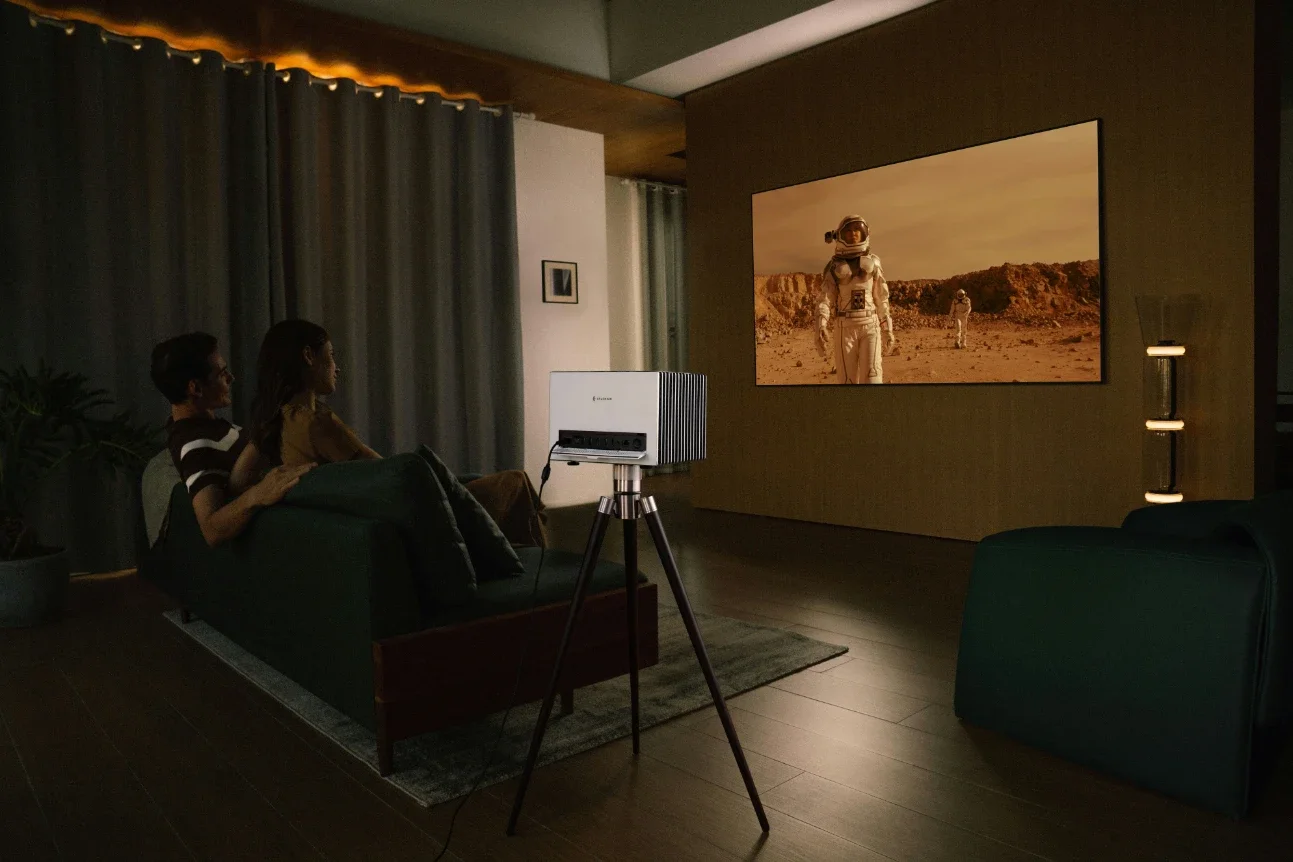
Some luxury homes do not want a dedicated cinema atmosphere. They want a media lounge that can handle movies, sports, cocktails, and conversation. In that case, use a sectional-and-chair plan: a low leather sectional facing the screen, two swivel chairs angled from the side, and a pair of premium recliners in the most direct viewing position.
The important rule is to preserve the screen as the room’s visual anchor while allowing the furniture to support conversation. Swivel chairs are especially useful because they can turn toward the screen during a movie and back toward the group afterward. This keeps the room elegant and flexible without compromising the viewing experience.
Practical Next Steps
To successfully execute your layout, you can utilize Weilianda’s professional blueprint to plan a home movie theater room. Start by measuring the room in detail, including ceiling height, door swings, vents, windows, outlets, speaker locations, and fixed architectural features. Then choose the primary use case: film-first theater, social media lounge, or hybrid entertaining room. That decision should guide whether you prioritize straight recliner rows, curved seating, sectionals, loveseats, or mixed zones.
Use these planning benchmarks before ordering furniture: allow 24 to 26 inches as a comfortable starting point for individual seat width, check total row width including arms and consoles, plan 8 to 12 inches behind standard recliners or 2 to 6 inches for wall-hugger recliners, keep reclining row spacing near 60 to 70 inches, and reserve 30 to 36 inches for comfortable aisles when the room allows it.
The most refined media rooms are not defined by the largest screen or the most seats. They feel elite because every guest has a clear view, a comfortable place to sit, a nearby surface, enough room to move, and a layout that shifts naturally from conversation to viewing. Plan the furniture as part of the entertaining experience, and the room will feel premium before the movie even starts.
Stay up to date with our latest ideas!