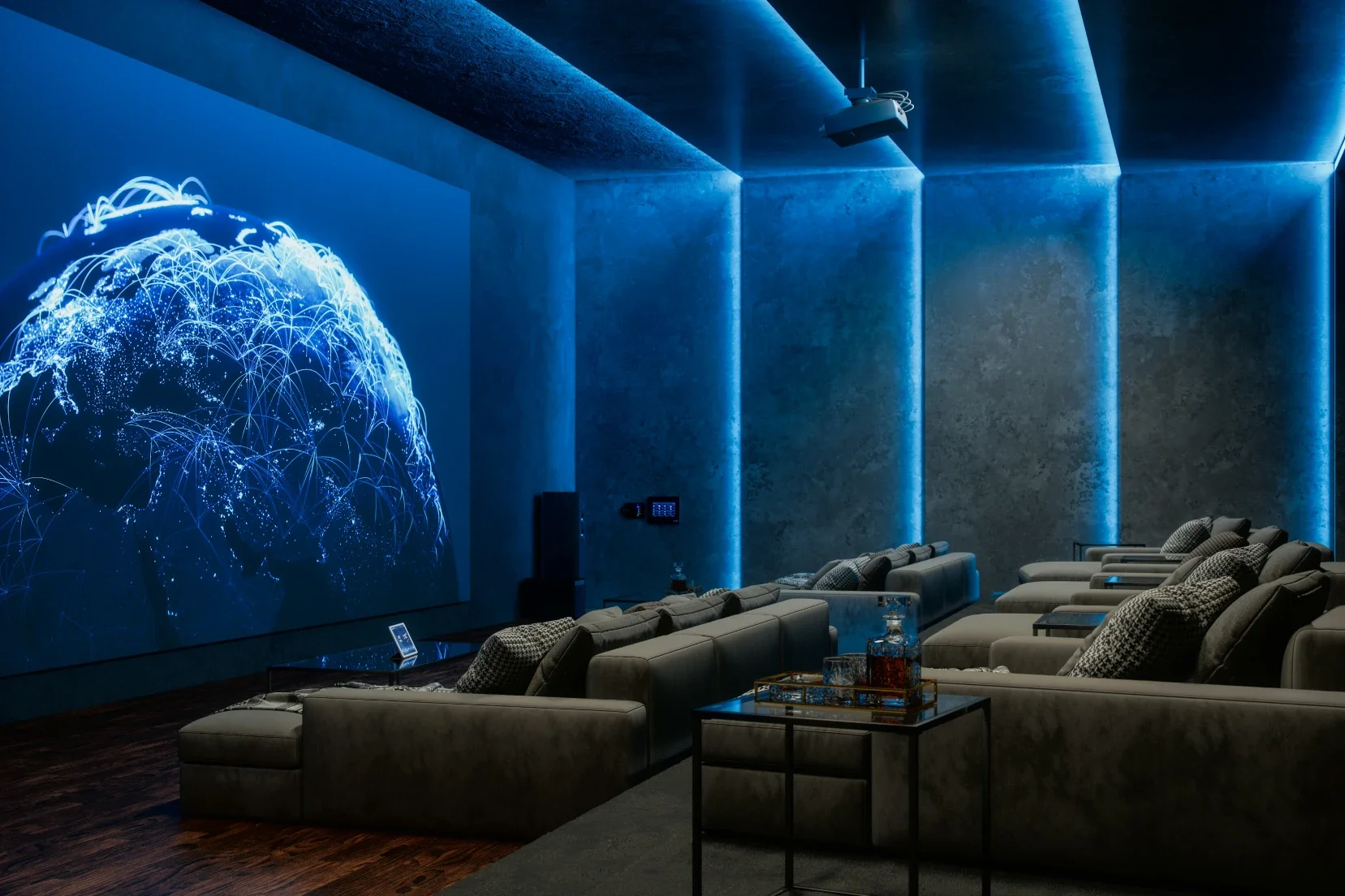
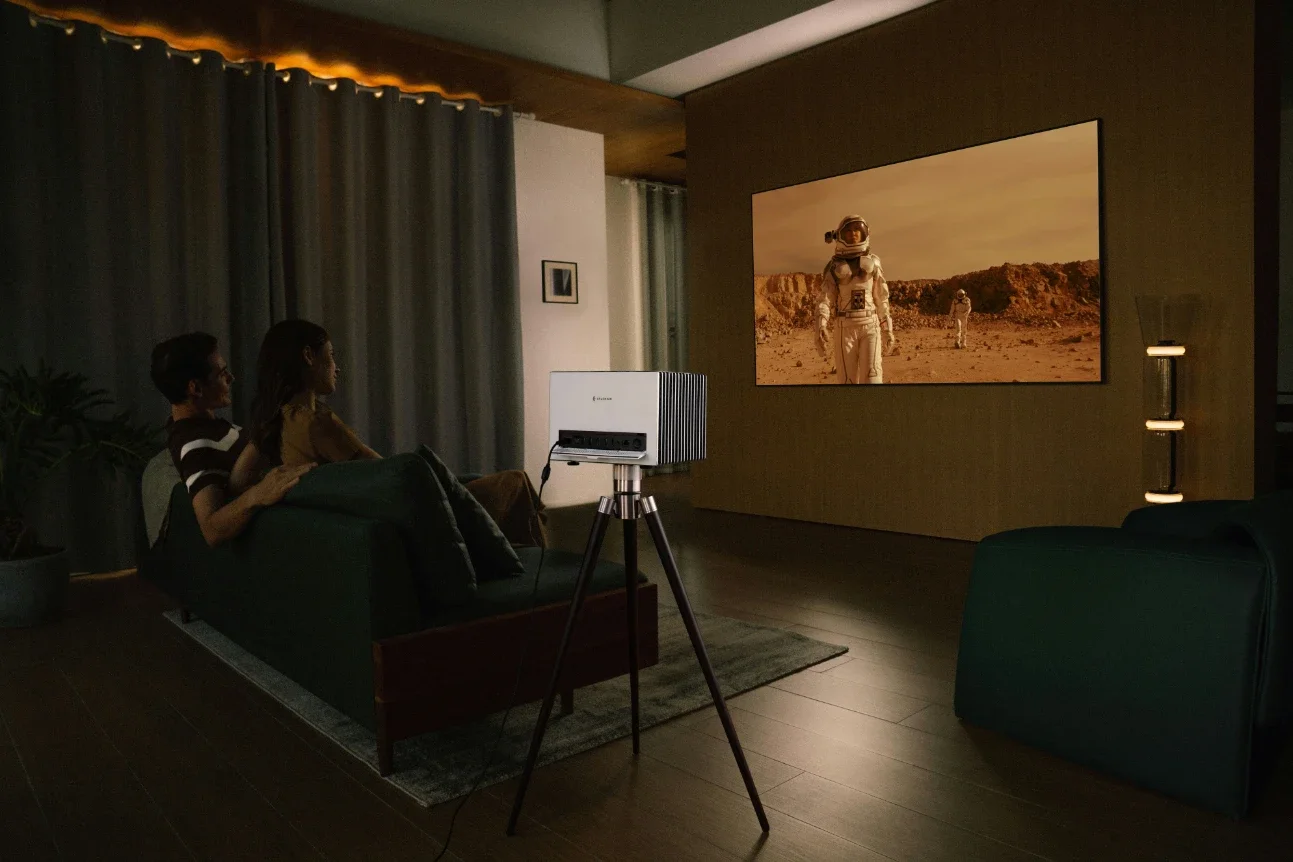
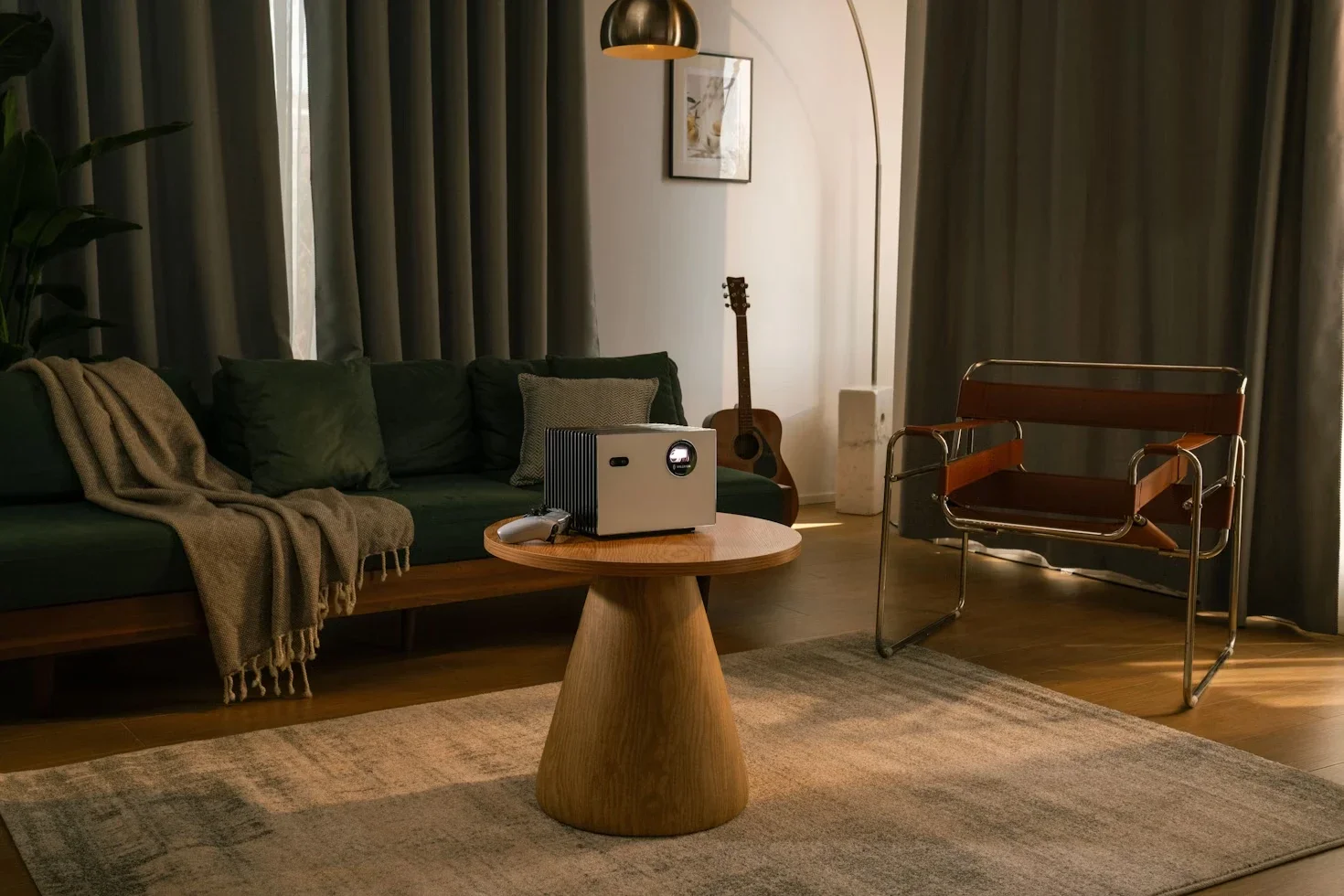
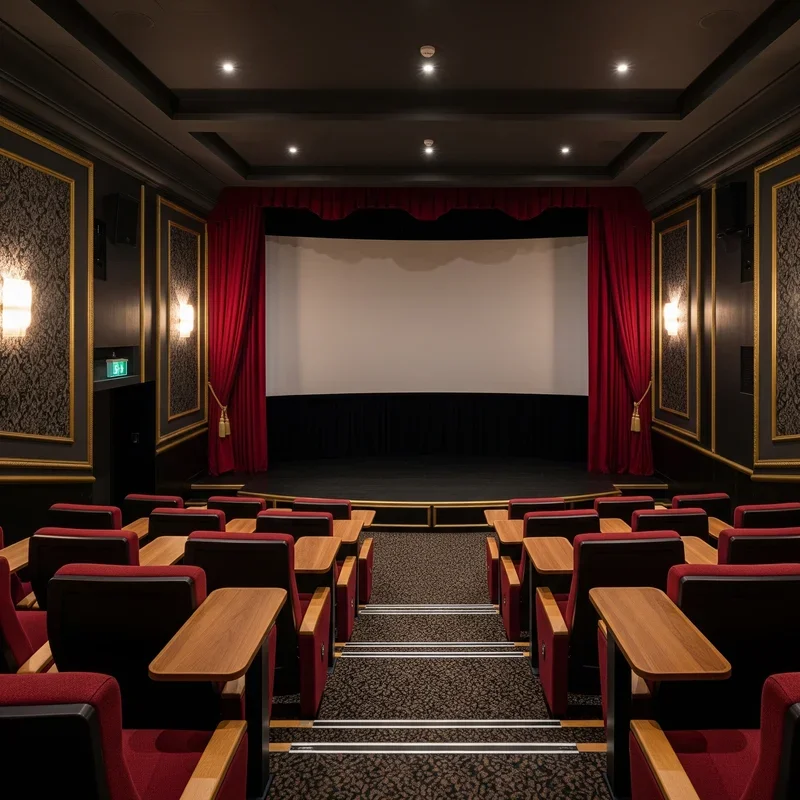
Learn how to turn your living room into a movie theater with smart audio, lighting, and layout choices that enhance immersion without overwhelming the space.

Whether you enjoy sports or like binge-watching series, you know how good lighting, comfortable seats, and high-quality TV can instantly enhance the mood. But is it possible to coordinate a fun entertainment system without making your living space dysfunctional?
The answer is “yes”. Let’s discuss the main attributes of a good home theater and establish how not to overdo it.
Picking a TV
A TV is the center stage of any home theater, as it’s responsible for showcasing the movie, show, or match you look forward to. First, you have to determine the screen size. The bigger doesn’t always mean the better — take a look at the dimensions of your room and figure out how much you’re willing to give up for a TV.
In some cases, big-screen TVs can enhance the aesthetic of your apartment. Aim for 50 inches wide, 4K resolution, and a refresh rate of at least 120 Hz. Consider the following options:
low blue ray;
flicker-free;
motion handling;
mini LED or QLED.
All big TVs on the market also encompass smart technology, which is great for playing games, streaming shows, and watching movies. A VPN on a Samsung TV or any other smart TV of your choice will let you in on an experience without geographic restrictions or online security risks.
Upgrading the Sound
Many big TVs are made particularly for enjoyable home entertainment, so they already produce high-quality sound. You can also use basic speakers to make the sound more prominent.
Yet, there’s one more upgrade available: a soundbar or a subwoofer. The two work a little differently. A subwoofer uses an audio impulse technology to produce better bass tones, while a soundbar leverages various audio channels and frequencies. They can also be combined.
Changing the Lighting Arrangement
Most living rooms have overhead lighting. It’s bright and can often produce glare, which in turn blocks viewers from seeing a part of the screen. Cinemaphiles will easily miss important but subtle details under overhead lighting.
While the room should be well-lit, it’s also essential to use ambient light. Overhead lights should be dimmed, if possible, or completely turned off. Use lamps and other lighting sources to make sure that your viewers can see their drinks and snacks. Candles can be a great idea if electrical sources are not readily available — but avoid them around anything flammable, especially the home theater gadgets. After all, you wouldn’t want to turn your binge session into a fire.
Improving the Seating Options
Your seating options will heavily depend on the rest of the setup and the usual audience. Do you watch TV alone most of the time? Then you don’t have to invest in a huge couch. A comfortable armchair is enough.
If there’s a huge crowd of friends expected at the viewing, a sofa would be a better idea. Then, no one has to give up their comfort. You can add chairs or even barstools for a more minimal set-up, or keep it down to chairs only, in case your apartment is small. Your guests will have more room and won’t be knocking over someone’s drink when standing up or sitting down.
Accumulating a Media Library
The list of streaming services is just as important as the quality of your TV or sound. Unfortunately, modern platforms come with limited options. So, the viewer’s best bet would be to have several subscriptions and apps for movies, series, games, and sports. If you want more access, invest in the best VPN service you can find: it will help you mitigate geoblocking and unlock more content online.
Time to Invite Friends Over!
Creating a home theater doesn’t require the most expensive equipment or an unlimited media library. Assess your living space, find a suitable TV size, analyze if you need an audio upgrade, work on the general room arrangement, and collect a couple of streaming options — all that will be worth it once you sit down and enjoy your favorite show to the fullest extent.
Stay up to date with our latest ideas!