Seasonal Lawn Care Myths That Are Quietly Killing Your Grass
Discover common seasonal lawn care myths that can damage your grass, with practical tips on watering, mowing, fertilizing, and keeping your lawn healthy year-round.
A healthy lawn rarely declines because of one dramatic mistake. More often, the damage comes from small habits repeated season after season. Watering because the calendar says it is time, mowing extra short before hot weather, applying fertilizer whenever the grass looks pale, or assuming brown turf is dead can all seem perfectly reasonable. Unfortunately, some of the most familiar lawn care advice can work against the biology of the grass itself.
Turfgrass responds to temperature, moisture, soil conditions, sunlight, and its natural growth cycle. That means effective lawn care should change throughout the year rather than follow the same routine every month. University extension guidance consistently emphasizes matching mowing, irrigation, fertilization, aeration, and other maintenance to grass type and growing conditions. Understanding the myths behind common seasonal practices can help homeowners build stronger roots, reduce unnecessary work, and keep their lawns healthier for the long term.
Myth: Cutting Grass Short Means You Can Mow Less Often
It is tempting to lower the mower blade and cut the lawn extremely short, especially when grass is growing quickly. The reasoning seems straightforward: shorter grass should take longer to become tall again. In reality, removing too much leaf tissue at once can stress the plant. Grass blades are essential for photosynthesis, so repeatedly scalping a lawn reduces its ability to produce the energy needed for healthy growth.
Mowing too low can also contribute to shallow rooting and reduce the lawn's ability to tolerate heat and drought. Colorado State University Extension notes that mowing below appropriate heights can reduce heat and drought tolerance while making turf more vulnerable to weed invasion. Instead of focusing on how long you can wait before mowing again, the better approach is to maintain an appropriate height for the grass species and avoid removing excessive growth in a single mowing.
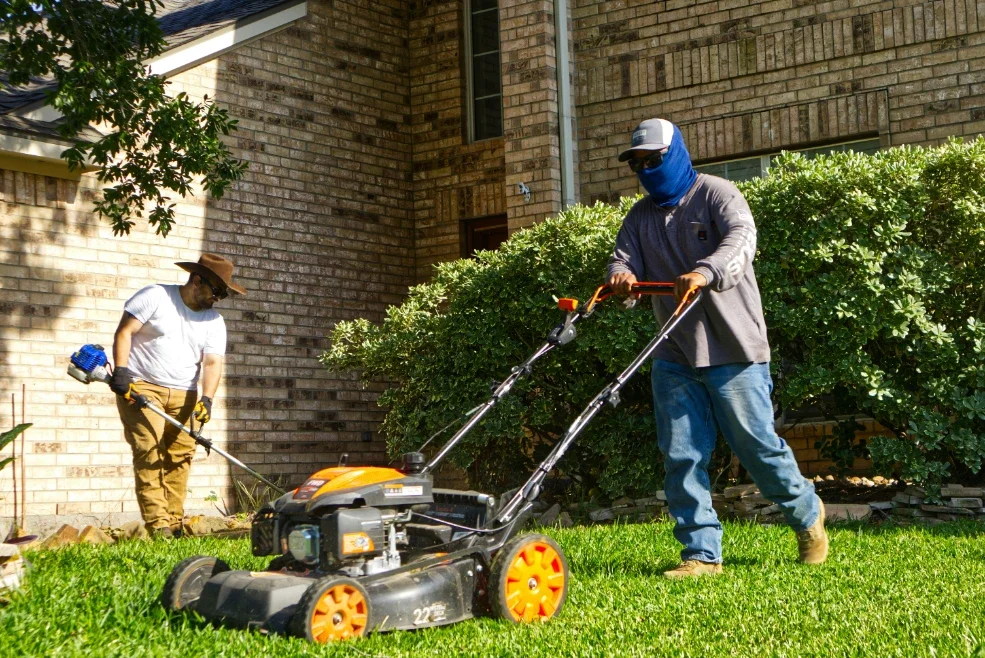
Seasonal conditions matter as well. During stressful summer weather, slightly taller grass can provide more leaf surface for photosynthesis and help protect the soil from rapid moisture loss. Sharp mower blades are equally important because dull blades tear rather than cleanly cut grass. A neat lawn is not necessarily the shortest lawn. Healthy mowing is about maintaining enough foliage to support the plant below the soil.
Myth: Your Lawn Needs Water Every Day in Summer
Hot weather makes daily watering seem sensible, but established turf generally benefits more from irrigation that encourages moisture to penetrate the root zone rather than frequent, shallow sprinkling. University of Maryland Extension specifically warns that lightly watering established lawns every day or several times per week can encourage shallow roots and create other lawn problems.
Water requirements also depend on soil, rainfall, grass species, temperature, wind, and sun exposure. Sandy soils can dry considerably faster than heavier soils, while shaded areas may retain moisture longer than open sections of the yard. A rigid watering schedule ignores these differences. Irrigation should supplement rainfall and respond to actual moisture stress rather than simply running because a timer has reached a particular day.
This is one reason professional lawn care is often more about observation than constant intervention. Resources such as Master Lawn can fit naturally into a broader approach that considers seasonal turf needs instead of relying on one-size-fits-all routines. The goal is not to give grass the maximum possible amount of water. It is to provide enough moisture to support healthy roots without creating consistently saturated conditions that encourage weeds, compaction, or disease.
Myth: More Fertilizer Always Produces Greener Grass
Fertilizer can be valuable, but it is not a cure for every lawn problem. Pale, thin, or slow-growing grass may be experiencing nutrient deficiency, but similar symptoms can result from drought, poor drainage, compacted soil, incorrect mowing, shade, disease, or unsuitable grass varieties. Adding fertilizer without understanding the underlying problem can therefore waste money while leaving the real cause untouched.
Overfertilization can be particularly counterproductive. Excessive nitrogen may stimulate rapid, lush top growth that requires additional mowing and water, while excessive fertilizer salts can damage turf. University of Maryland Extension notes that overapplied fertilizer can harm plant tissue and roots and may increase vulnerability to pest or disease problems. More product is not automatically better simply because a lawn temporarily appears greener.
Timing matters just as much as quantity. Cool-season and warm-season grasses have different growth cycles, which means their ideal fertilization periods differ. Purdue Extension, for example, recommends concentrating much of the nitrogen fertilization for established cool-season lawns from late summer into autumn rather than treating every season equally. Soil testing can further clarify whether particular nutrients are actually needed before they are applied.
Myth: Brown Grass Is Dead Grass
A brown lawn can certainly look alarming, particularly after several weeks of summer heat. However, discoloration does not automatically mean the grass is dead. Many turfgrasses can enter dormancy during periods of heat or insufficient moisture, reducing active growth as a survival response. Once favorable conditions return, dormant turf may begin growing and greening again.
Treating every brown patch as dead can lead homeowners to take unnecessary corrective measures. Heavy fertilization during drought stress, aggressive dethatching, or immediately replacing turf may add further stress instead of solving the problem. Extension guidance notes that dormant lawns can still recover when growing conditions improve, provided the crowns and roots remain alive.
The better response is to investigate before acting. Look at recent rainfall, irrigation coverage, soil moisture, traffic patterns, drainage, and whether discoloration is uniform or appears in distinctive patches. Brown areas associated with disease, chemical damage, insects, or dead roots require a different response from seasonal dormancy. Correct diagnosis prevents homeowners from turning a temporary problem into a permanent one.
Myth: Spring Is the Best Time for Every Major Lawn Project
Spring feels like the natural beginning of the gardening year, so many homeowners try to complete nearly every lawn project at once. Mowing, fertilizing, seeding, aerating, weed control, and dethatching may all appear on the spring checklist. The most effective timing depends heavily on the type of grass and the job being performed.
Cool-season grasses grow most actively during cooler parts of the year, while warm-season grasses thrive during warmer conditions. University of Maryland Extension emphasizes that seasonal lawn maintenance should be based on whether the dominant turf is cool-season or warm-season. A task that helps one lawn in early fall could be poorly timed for another grass type.
Aeration illustrates why timing and conditions matter. Compacted soil can restrict the movement of water, air, and nutrients, but aerating under unsuitable conditions may produce disappointing results. Soil moisture, grass growth, weather, and recovery potential should all be considered. Seasonal lawn care works best when homeowners stop viewing the calendar as a universal instruction manual and start treating it as a guide that must be interpreted according to their particular lawn.
Myth: Grass Clippings Always Create Thatch
Bagging every clipping can make a freshly mowed lawn look immaculate, but ordinary grass clippings are not the primary cause of thatch. Healthy clippings contain a high proportion of water and break down relatively quickly. University of Maryland Extension recommends mulching clippings back into the lawn because they return organic matter and nutrients to the soil and do not normally contribute to thatch accumulation.
Problems are more likely when mowing is delayed until the grass is extremely tall and thick clumps are left sitting on the surface. Those clumps can shade the turf beneath them and interfere with its appearance. The solution is not necessarily permanent bagging. More regular mowing or redistributing heavy clumps can prevent the issue while allowing smaller clippings to decompose naturally.
Leaving suitable clippings behind can also make lawn maintenance more efficient. Purdue Extension similarly advises allowing clippings to break down and return nutrients to the soil. Rather than treating every natural material on the lawn as waste, homeowners can use the grass's own growth cycle to support soil health and reduce unnecessary removal.
Myth: Fleas and Ticks Disappear Once Summer Ends
Many homeowners think of fleas and ticks as a midsummer problem that fades as soon as the weather cools. In reality, pest activity follows temperature and humidity more closely than the calendar. Ticks can remain active during mild stretches of fall and even winter, and fleas can persist in shaded, sheltered parts of the yard where moisture lingers. A few warm days after a cold snap may be enough to bring activity back.
Seasonal lawn habits play a larger role here than most people realize. Tall grass, overgrown edges, brush piles, and layers of fallen leaves create the cool, humid pockets where these pests shelter. The CDC recommends clearing tall grass, brush, and leaf litter around homes as part of reducing tick exposure in the yard. Mowing at a healthy height and clearing debris through autumn supports turf health while making the lawn a less inviting environment for pests.
Yard maintenance alone does not always solve the problem, particularly for households with pets, wooded property borders, or frequent wildlife visitors. In those cases, professional yard flea and tick control can focus on the areas where pests concentrate and time treatments around their life cycles and local conditions rather than relying on a single summer application. Treating pest prevention as part of an ongoing seasonal plan, instead of a one-time fix, helps protect both people and pets well beyond the hottest months.
Conclusion
Good seasonal lawn care is less about doing more and more about doing the right things at the right time. Cutting extremely short, watering automatically, overfertilizing, removing every clipping, assuming discoloration means death, or letting pest prevention lapse once temperatures drop can gradually weaken turf despite the homeowner's best intentions. Strong lawns develop when maintenance supports natural growth instead of constantly trying to force a perfect appearance.
The most useful habit is to observe the lawn before reaching for the mower, sprinkler, fertilizer spreader, or treatment product. Grass type, soil condition, weather, moisture, and season should guide each decision. Once those factors replace old lawn care myths, maintenance becomes more purposeful, problems become easier to diagnose, and the lawn has a much better opportunity to stay dense, resilient, and healthy throughout the changing seasons.
Stay up to date with our latest ideas!