4 Practical Storage Tips for Busy Workshops
Learn easy workshop organization tricks to save time. Zone your space. Protect tools. Sort repair parts. Discover how to design a safer workshop today.

Garages, sheds, and workspaces quickly become cluttered when tools, repair supplies, and machine components do not have dedicated storage.
The four best lazy tricks to organize any workshop include zoning your workspace, protecting high-value tools, sorting repair parts by project, and designing for safety.
These simple steps reduce daily friction and eliminate time spent searching for lost equipment.
Workspaces accumulate clutter fast when multiple machines, repair cycles, and tool types share the same space.
By applying these functional workspace design concepts, you can transform chaotic garages and equipment bays into highly efficient areas.
You can achieve this without requiring a full renovation or a massive budget.
1. Zone Your Workspace Like A Pro
Stop organizing by size; start organizing by purpose. Zoning divides your shop into activity areas, making tools effortless to find.
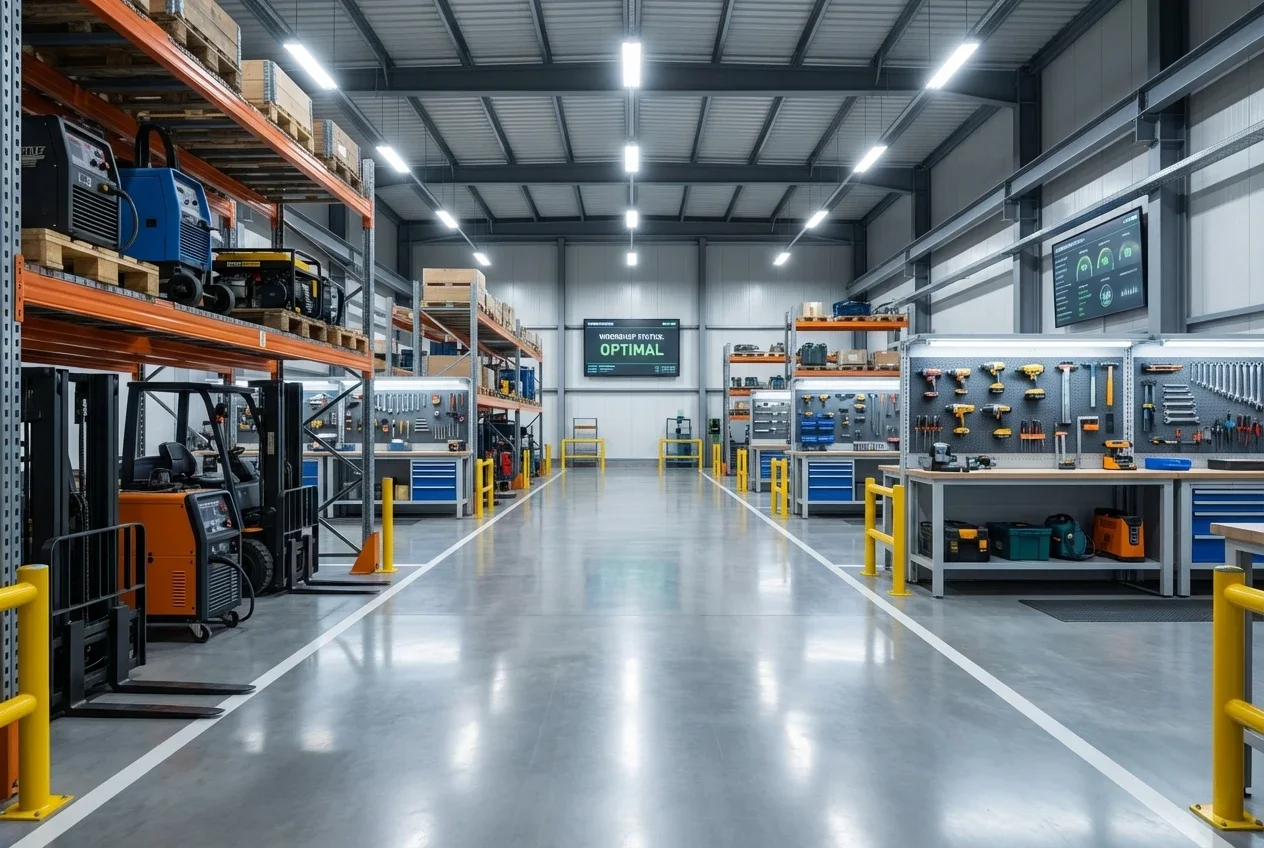
Utilize pegboards and magnetic strips to keep high-rotation tools at eye level. Keep your repair bench clear by using a dedicated surface for disassembly and a separate shelf for consumables like tape and lubricants.
A parts staging area is essential to prevent project creep. Here, hydraulic mechanics can pre-stage essential Case backhoe replacement parts from HW Part Store alongside your filter kits to ensure you’re set for repairs when needed.
For your precision tools, using rugged custom hard cases by Royal Case Company keeps sensitive gear protected from shop dust and impact while it waits in the staging zone.
2. Protect Your High-Value Tools
Not every tool in your shop carries the same risk level if it gets knocked off a shelf. A standard wrench can take a hit, but a digital torque gauge requires proper tool protection.
In any active workshop, dust accumulation, accidental impact, and moisture exposure silently damage high-value tools. Open shelving offers no real defense against any of these environmental threats.
Fine particulate from cutting metal or concrete easily settles into sensitive instrument housings. Vibration from machinery causes loose tools to shift, collide, and lose their careful calibration.
A study noted that equipment-related injuries accounted for 25% of all construction industry emergency visits over 8 years.
Proper storage ensures your equipment remains safe to handle and fully operational.
The solution is not to bubble-wrap your best equipment or lock it in a separate room entirely. Instead, give expensive diagnostic units and precision calipers a purpose-built home designed for longevity.
Form-fitted interiors hold tools securely in place, whether they are in storage or transit. Precision-cut inserts prevent internal movement, meaning less wear between uses and less recalibration time.
Key Insight: Tool protection is essential preventive maintenance. Replacing a damaged precision instrument costs significantly more than housing it properly in a high-quality case. Invest in protection to ensure long-term accuracy and reliability.
3. Sort Repair Parts By Project

Organizing parts by type makes sense in theory, but creates a scavenger hunt during actual repairs.
The better method is project-based sorting, which groups everything relevant to one machine in one location. Assign a labeled bin, shelf section, or drawer to each piece of equipment you regularly service.
Everything belonging to that machine lives there, eliminating the need to cross-reference multiple storage areas.
A two-man contracting crew once ran their operation out of a single-bay garage with entirely mixed parts. Hardware for the skid steer sat next to tractor hoses, causing immense daily frustration.
They sorted everything by machine type, labeled every bin with a permanent marker, and saw immediate improvements.
Jobs that used to start with twenty minutes of part hunting now start directly at the shelf.
A project-based organization only works when the right parts are already stocked before the job begins. Smart equipment owners anticipate common wear points and stock critical replacements before they become urgent.
Sourcing reliable components ahead of time means fixes start immediately instead of waiting on unexpected shipping delays.
A quick bin check before scheduled maintenance helps you seamlessly reorder whatever supplies are running low.
4. Design For Access And Safety
Safety is a productivity feature that fundamentally changes how you navigate your daily workspace.
Clear walkways do not just prevent accidents; they cut seconds off every single task you perform. Designing your workshop layout with movement in mind is one of the highest-return decisions you can make.
Aim for at least 36 inches of clearance between workbenches, shelving units, and heavy equipment. Nothing should be stored on the floor along traffic paths, including hoses, parts bins, or unused attachments.
Tools and supplies you reach for every day should never require bending down or climbing up.
Reserve floor-level storage for infrequently used equipment and top-shelf space for backup stock.
Heavy items belong on lower shelves while lighter items should sit much higher up. In shops with vibration from running machinery, always anchor your shelving units directly to the wall.
Open-face shelving and pegboards generally outperform closed cabinets for anything accessed on a daily basis. Secure hazardous equipment like angle grinders in locked cabinets, especially in shared or public spaces.
Pro Tip: Schedule a weekly ten-minute walkthrough to scan for misplaced items and clear pathways. Consistent, small-scale maintenance prevents clutter from accumulating and ensures your workspace remains ready for the next project.
The Bottom Line
Zoning your workspace, protecting high-value tools, sorting parts, and designing for safety builds a highly reliable system. Storage remains a crucial element of equipment maintenance that directly ties to operational success.
A disorganized shop costs time on every job and makes unexpected repairs far more stressful. Start with one small change this weekend to immediately reduce daily friction in your workspace.
Move your daily-use tools to eye level or tape off a dedicated project zone.
One change creates positive momentum, and that momentum builds a functional, long-lasting organizational system. When the right layout pairs with sensible protective products, abstract garage organization ideas become a tangible reality.
Treat storage as an essential part of a smarter workshop system to extend the life of your gear.
Stay up to date with our latest ideas!