Farmhouse Sink Buying Guide: What to Know Before You Install One
Learn what to consider before installing a farmhouse sink, including size, materials, cabinet requirements, installation, maintenance, and kitchen style.

Farmhouse sinks are luxurious. They are often enough to enhance the appearance of a kitchen all on their own.
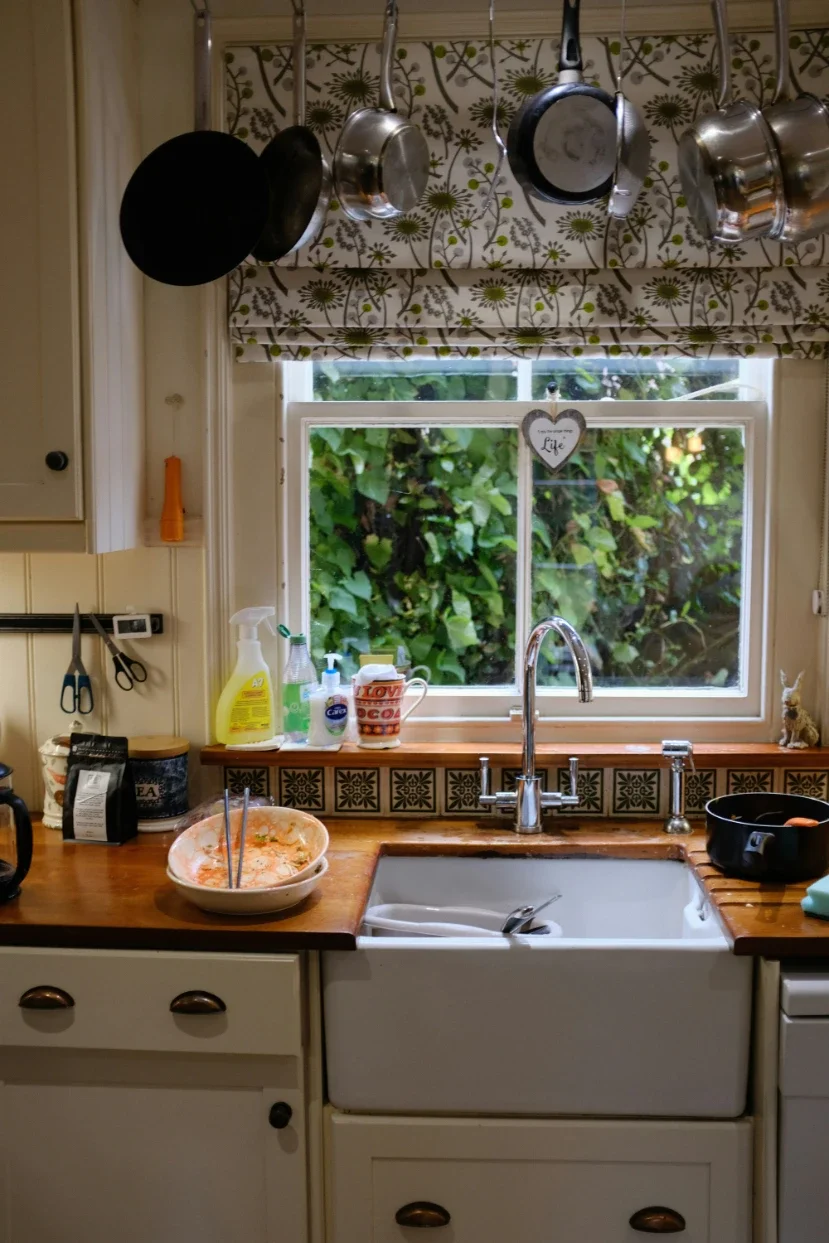
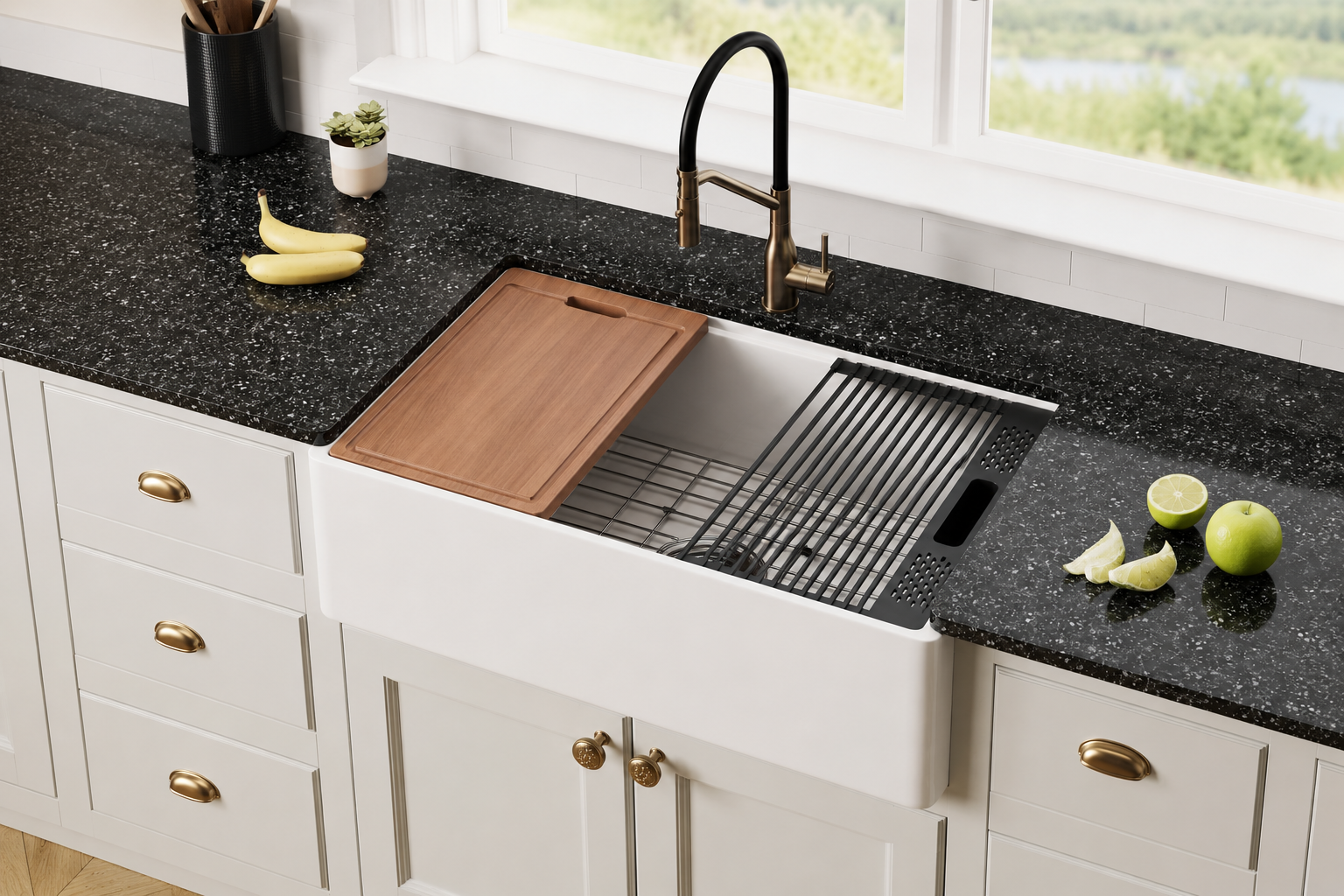
What makes farmhouse sinks stand out is their particular design and appearance. Unlike normal undermount and drop-in sinks, farmhouse sinks have an exposed front that rounds outwards from the cabinetry.
This design serves a practical purpose, apart from looking good. Since the front juts out, the bowl area is larger. You can easily wash larger utensils in the sink without worrying about space.
Before you buy a farmhouse sink, however, there are some things that you should know. You should know if you should get one in the first place and what to look for when you’re buying one.
In this guide, we’re going to tell you all about that.
Is a Farmhouse Sink Right for Your Kitchen?
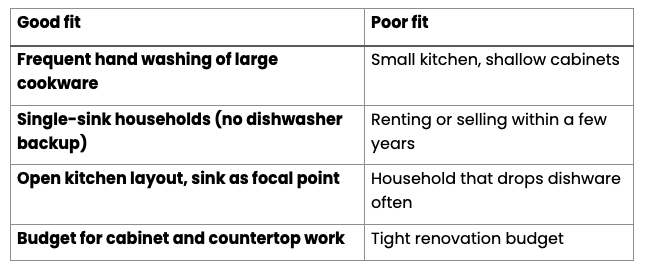
A farmhouse sink earns its keep in some kitchens far more than others. Cooks who regularly hand wash stockpots, roasting pans, or oversized cutting boards notice the extra basin depth immediately. So do households that lean on a single sink for most cleanup rather than splitting the work between a sink and dishwasher. Open concept layouts benefit too, since the apron front gives the kitchen a focal point that a flat undermount sink can't match.
The fit gets shakier in other situations. Small kitchens with shallow cabinet runs often can't accommodate the sink's depth without sacrificing storage. Renters and near-term sellers take on cost they may never recoup, since reversing the cabinet modifications later isn't cheap. And households that go through a lot of dropped dishware should know the exposed basin edge, especially in fireclay or cast iron, offers far less give than a standard sink's rolled rim.
What It Actually Costs to Switch
The sink itself is rarely the biggest line item. Cabinet modification usually is. Most base cabinets are built for a standard drop-in or undermount sink, so the cabinet face often needs cutting down or rebuilding to expose the apron front properly. If your countertop was cut for a different sink profile, you may need a new cutout too, which can mean replacing part of the slab or all of it.
Labor runs higher as well, since a farmhouse install takes longer than a standard swap once you factor in plumbing adjustments and the structural support the sink requires. Ask for a written estimate that breaks out each of these costs separately. "Just swapping the sink" almost never describes what the job involves.
A Quick Gut Check Before You Shop
Run through these questions before you start comparing materials and sizes.
Can your kitchen absorb some lost under-sink storage without becoming a daily annoyance?
Does your budget stretch beyond the sink price to cover cabinet and countertop work?
Are you staying in the home long enough to get real use out of the investment?
If most of your answers land on yes, you're ready to move forward. If you're stuck on more than one, it's worth asking whether the sink solves a problem you have, or one you picked up from scrolling remodel photos.
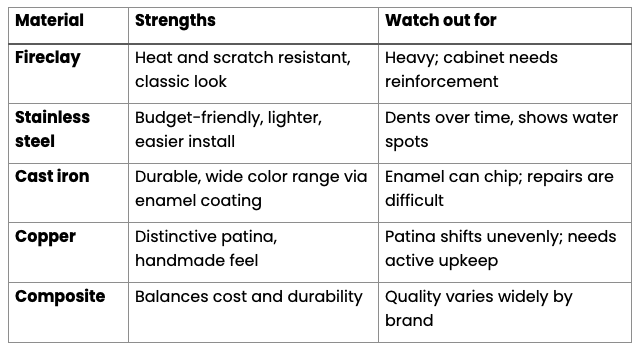
Choosing a Material
Single Bowl or Double Bowl
A single bowl maximizes usable space for oversized pots and pans and keeps the plumbing simpler underneath. It's the better call if large cookware is a regular part of your routine.
A double bowl splits the basin, which some households prefer for keeping wash and rinse separate, or for isolating raw food prep. The tradeoff is less width for any single large item, so think about how you actually use the sink before choosing this route.
Measuring and Installation
Farmhouse sink widths vary more between brands than standard sinks do, so measure your cabinet opening carefully, including the depth needed for the apron front to sit the way you want. Reveal style matters here too:
Flush: the front sits even with the cabinet face
Recessed: the front sits slightly behind the cabinet face
Extended: the front projects past the cabinet face
Installation itself typically requires an apron front or undermount setup, both different from a standard drop-in. Faucet height often needs adjusting for the taller basin, and drain placement may shift depending on the sink's design. A plumber experienced with farmhouse installs is worth the cost here, since a poor install risks leaks or inadequate support.
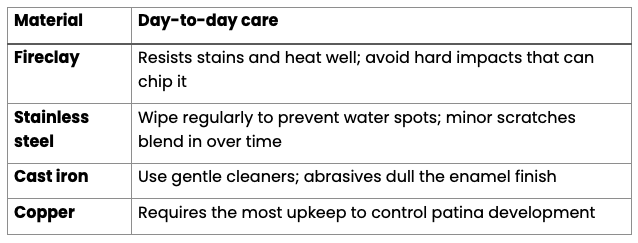
Maintenance by Material
Final Checklist
Before you order a sink or book an installer, confirm the following:
Your cabinet has the depth and reinforcement needed for the sink's weight
Your written estimate covers cabinet and countertop work, not just the sink
You've chosen single or double bowl based on real usage, not just preference
Your measurements match the exact sink model's specs, not a general size category
Your material choice fits your household's habits, not just the look you want
You've lined up a plumber familiar with farmhouse installations
A farmhouse sink can be one of the more rewarding upgrades in a kitchen remodel, but it rewards buyers who plan for the full project rather than the sink alone. Work through these questions now, and you'll skip the regrets that tend to surface a few months after installation.
Stay up to date with our latest ideas!