Built for the Australian Climate: Why Quality and Endurance Matter More Than Price in Roller Shutters
Discover why quality and endurance matter more than price when choosing roller shutters built to withstand the Australian climate and everyday conditions.
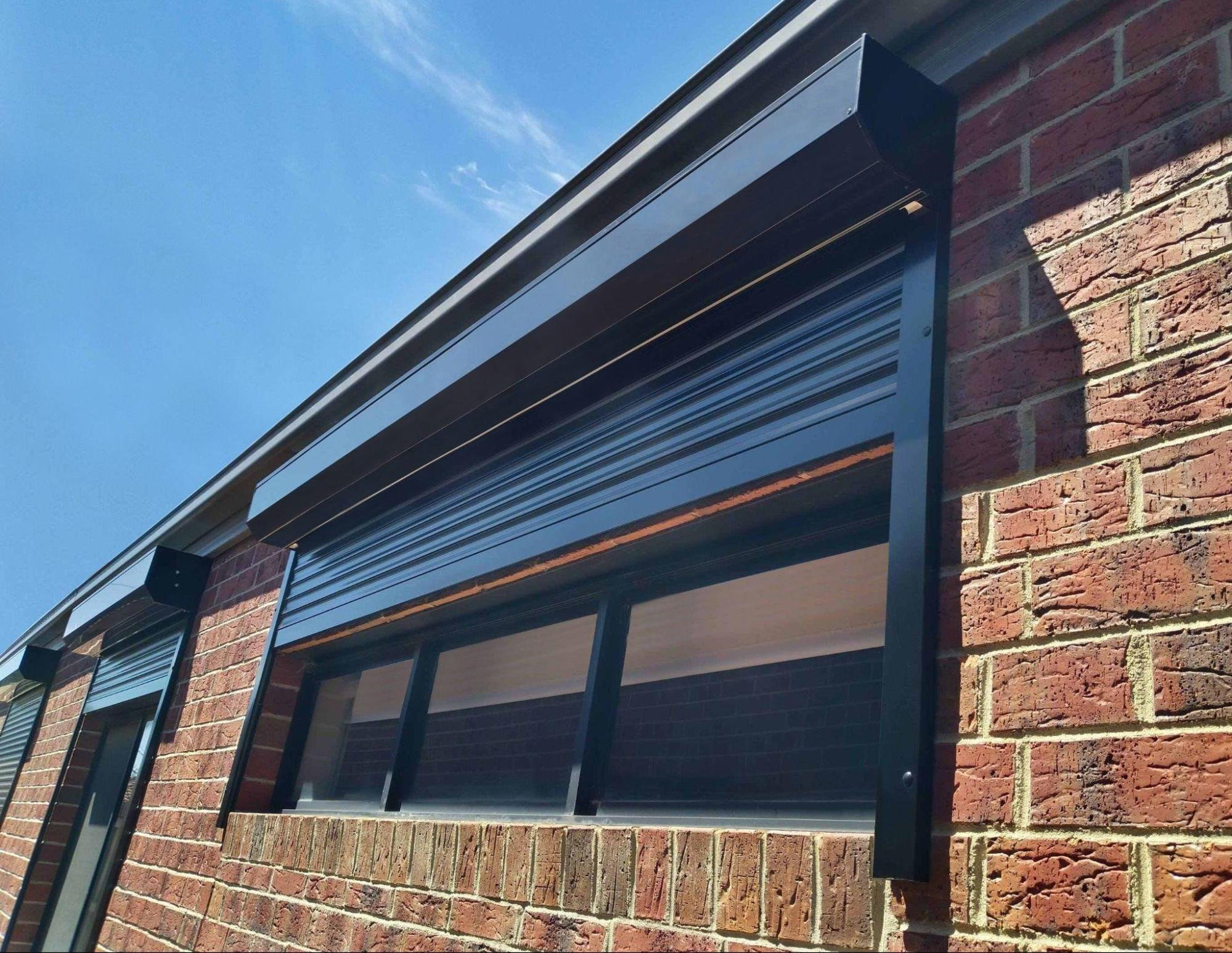
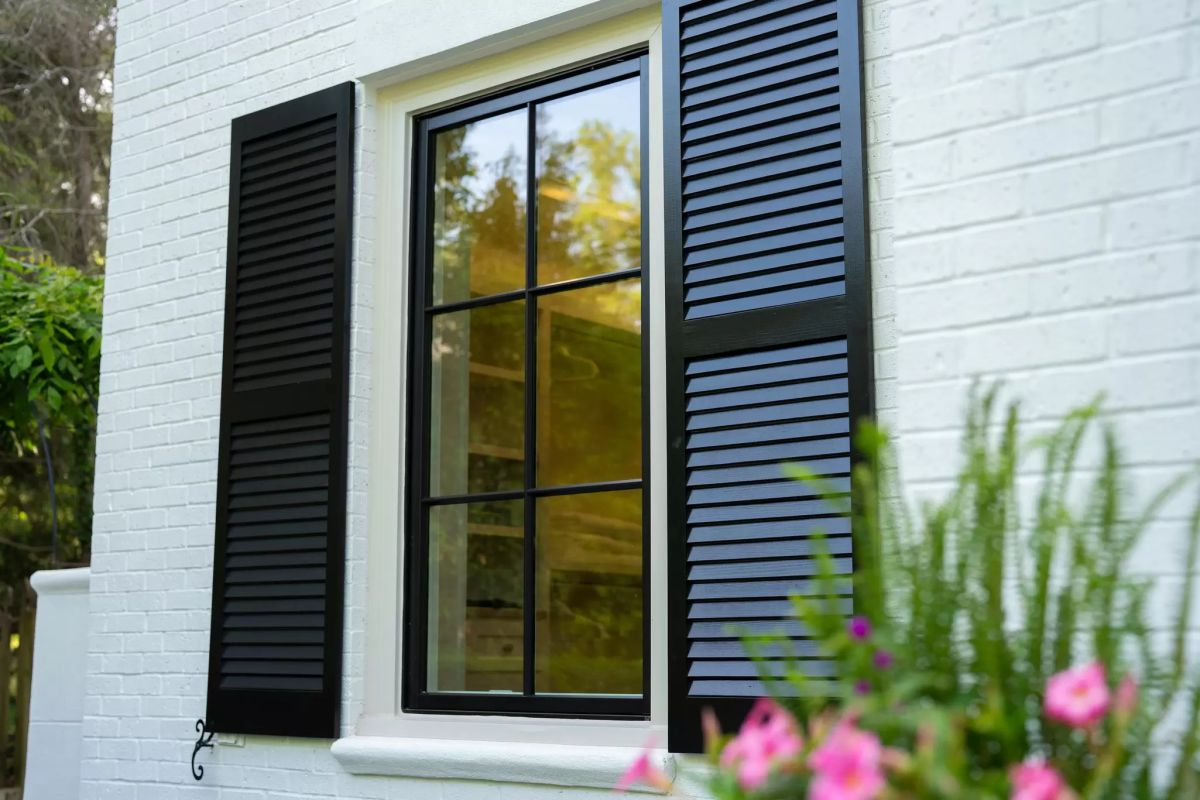
(Feature Image: Roller shutters for Australian climate and conditions. Credit: Titan Shutters)
Roller shutters are one of those home upgrades where options across a price range can look almost identical on a spec sheet. Two products might both be described as aluminium security shutters with electric operation, yet perform completely differently after a few Australian summers, storm seasons, and years of daily use.
The gap comes down to build quality: slat thickness, motor grade, and material specification, none of which are obvious from a glossy brochure photo. For a product that is meant to last decades and take on genuine security and weather responsibilities, that gap is worth understanding before making a decision based on price alone.
Why Australian Conditions Are Genuinely Demanding
Extreme UV exposure across most of the country accelerates fading and material degradation in lower-grade products.
Coastal regions bring salt air corrosion, which weaker aluminium and hardware struggle to resist over time.
Bushfire risk across large parts of Australia means some regions require shutters that meet specific BAL (Bushfire Attack Level) ratings.
Temperature swings between harsh summer heat and cooler nights place ongoing stress on slat materials and mechanisms.
Slat Thickness: A Small Detail With a Big Impact
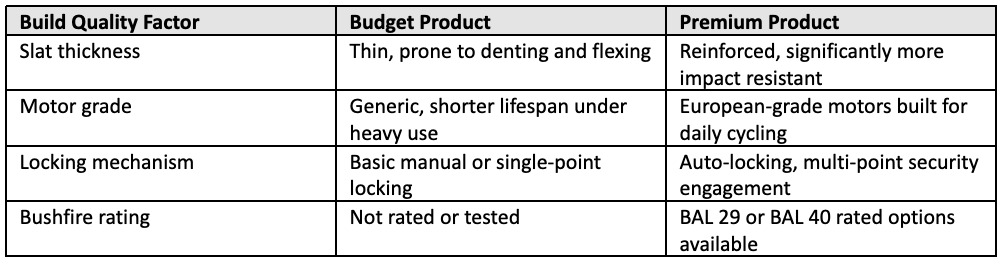
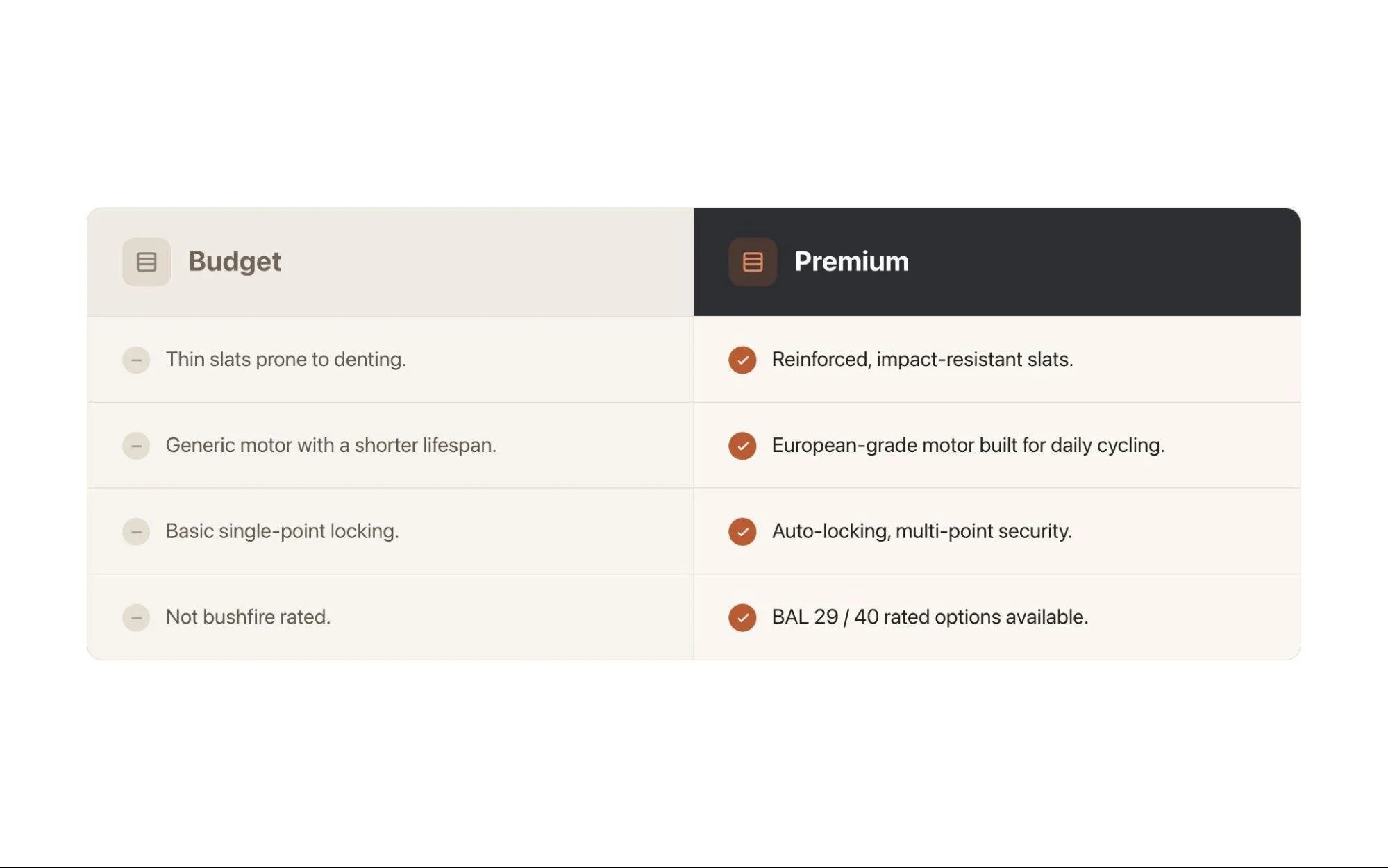
Slat thickness is one of the clearest indicators of build quality, yet it is rarely highlighted by budget suppliers. Thicker slats resist impact, warping, and general wear far better than thin, budget-grade aluminium, and they play a direct role in how much genuine security resistance a shutter provides.
Why the Cheapest Quote Rarely Tells the Full Story
It is common for homeowners comparing quotes to focus almost entirely on the headline price per shutter, without asking what specific slat grade, motor brand, or warranty terms sit behind that number. Two quotes described in near-identical language, aluminium shutters, electric operation, standard installation, can represent genuinely different products once the underlying specifications are compared side by side.
A more useful comparison asks each supplier to specify slat thickness in millimetres, name the motor brand and model, and confirm warranty terms in writing, rather than relying on general descriptions. This levels the comparison and makes it far easier to see where a lower price is coming from a genuine efficiency, and where it reflects a corner being cut on materials or components.
Why Motor Quality Matters as Much as the Slats
Electric shutters live or die by their motors, and this is another area where cheaper products cut corners that are invisible until something fails. A shutter that cycles daily needs a motor built for consistent, long-term use, not one designed for occasional operation. Premium European-grade shutter motors are generally quieter, more reliable, and better suited to daily cycling over many years than lower-cost alternatives.
Bushfire-Rated Shutters: A Category Worth Understanding
For homeowners in bushfire-prone areas, shutters are not just a security or shade feature, they can form part of a property's overall bushfire defence. Bushfire-rated shutters are tested and certified to specific BAL ratings, providing a barrier against radiant heat, embers, and in higher-rated products, direct flame contact. This is a genuine engineering distinction, not a marketing label, and it is worth confirming independently rather than taking a supplier's word for it.
Warranty as a Signal of Build Confidence
Warranty length and coverage are often overlooked during the buying process, yet they say a great deal about how confident a manufacturer actually is in their own product. A supplier offering a short or heavily conditioned warranty is implicitly signalling expected limitations in how long the product will perform under real conditions.
Longer warranty periods, particularly on motors, generally reflect genuine confidence in component quality rather than marketing positioning alone.
Check whether the warranty covers both parts and labour, since some policies only cover replacement components and leave installation costs to the homeowner.
Confirm whether the warranty is void under specific conditions, such as coastal installation, which can be a meaningful exclusion in Australian conditions.
Ask whether servicing is required to maintain warranty validity, and what that servicing involves.
Installation Quality Matters Just as Much as the Product
Even a well-built, correctly specified shutter can underperform if it is poorly installed. Gaps around the housing, incorrect alignment, or inadequate weatherproofing at the fixing points can all undermine the durability a quality product is designed to deliver.
Confirm the installer is experienced specifically with the product being installed, not just roller shutters in general.
Ask how fixing points are weatherproofed, particularly for coastal or high-rainfall installations.
Check that installation comes with its own workmanship warranty, separate to the manufacturer's product warranty.
Questions Worth Asking Before You Buy
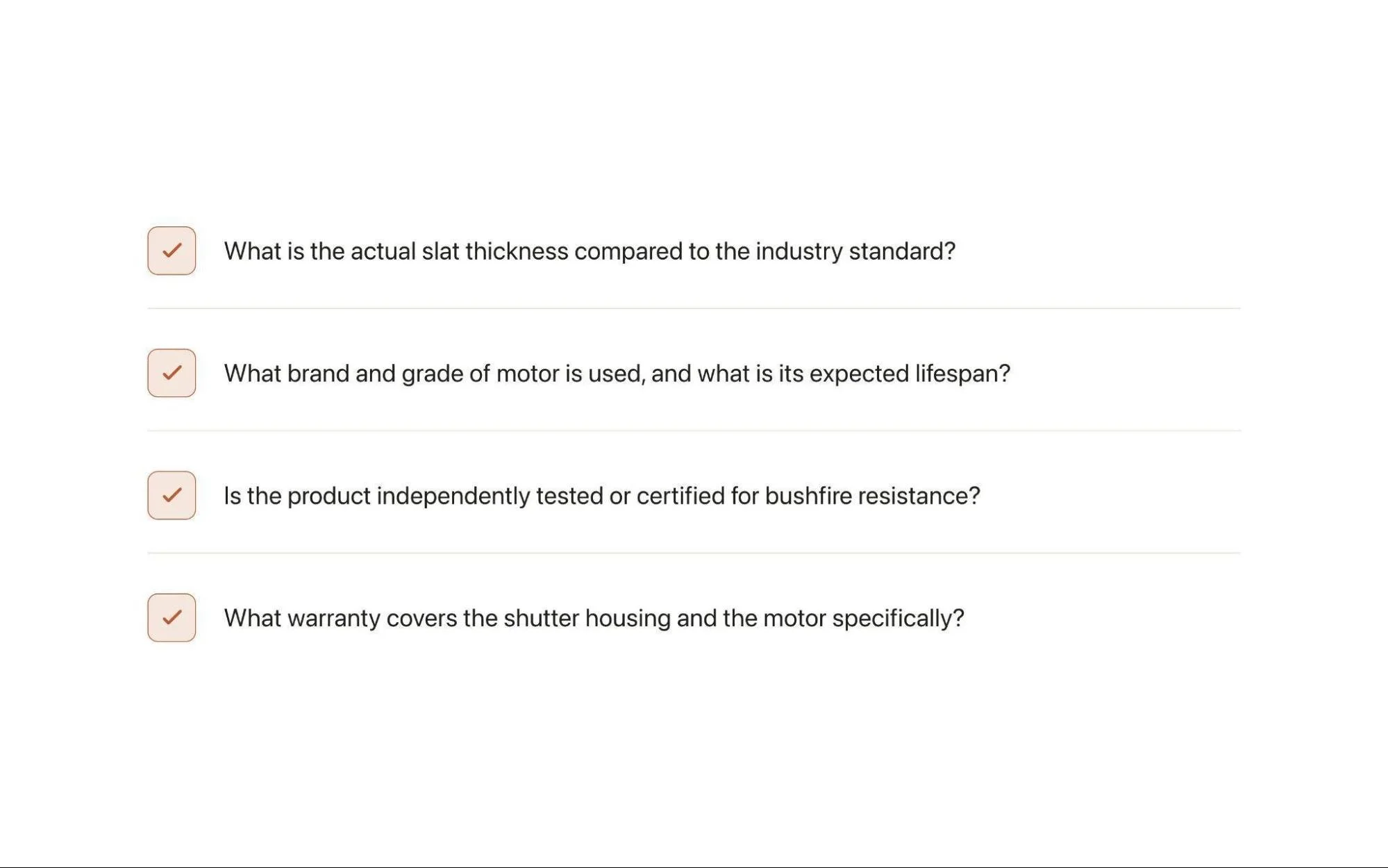
What is the actual slat thickness, and how does it compare to industry standard products?
What brand and grade of motor is used, and what is its expected operational lifespan?
Is the product independently tested or certified for bushfire resistance, if relevant to your area?
What warranty is offered on both the shutter housing and the motor specifically?
Look for a manufacturer that builds their roller shutters specifically around these durability factors, using reinforced slat profiles and premium motors designed to hold up under Australian conditions rather than being adapted from a milder climate.
A roller shutter is a long-term investment in a home's security, comfort, and in some cases, bushfire resilience. Choosing based on upfront price alone, without understanding what sits behind that price in terms of slat thickness, motor grade, and testing, is one of the more common and avoidable mistakes homeowners make with this category of product. Taking the time to ask the right questions upfront, even if it means paying more initially, tends to be far cheaper than replacing an underperforming shutter system a few years into its expected lifespan, particularly once installation costs are factored into a second purchase.
Stay up to date with our latest ideas!