Best Easy Install Mini Split for DIY Homeowners in 2026
Discover the best easy install mini split systems for DIY homeowners in 2026, featuring simple setup, energy efficiency, and reliable performance.
If you've been researching mini splits for your house, you already know that professional installation can cost upwards of $5,000. A steep price to pay when the system itself often costs less than the labor. But, we have good news: a new generation of easy install DIY mini split systems lets you skip the contractor and do the installation yourself, no HVAC license required.
So, what makes a mini split "easy to install"? DIY systems come with pre-charged line sets that eliminate the need for vacuuming before installation, factory-sealed refrigerant connections that don't require brazing, and clear documentation that walks you through every step. Since refrigerant handling must be done by EPA-certified technicians in many areas, these diy systems sidestep that requirement entirely by shipping with refrigerant already sealed inside the line set. DIY mini-split systems can be installed without specialized training, and most installations can be completed in just a couple of hours - compared to conventional HVAC installations that often require several days of work.
Mini splits can achieve up to 24 SEER2 ratings, operate quietly compared to traditional hvac systems, and do not require expensive ductwork for installation. Energy losses account for about 30% of central air's energy consumption, largely because of leaky ducts. Most mini splits can dehumidify air continuously during operation through dry mode, making them a versatile upgrade over traditional air conditioners.
Here's how we evaluated five brands to find the best easy install mini split options for 2026.
How We Chose the Best Easy Install Mini Splits
We evaluated each brand across seven specific criteria, using published specs, installation manuals, warranty documents, and real customer feedback.
Installation complexity and required tools. We assessed how many specialized tools each system demands. The best diy models require only basic hand tools - open-ended wrenches, a torque wrench, a drill, and leak detection spray. No brazing equipment or vacuum pumps.
Pre-charged line set availability. DIY-specific systems use pre-charged line sets to simplify installation. We checked factory pre-charge lengths (most cover up to 25 feet), minimum run requirements, and whether extensions are supported. Obtaining the correct line set length is essential for mini split installations - too short or too long causes efficiency and warranty problems.
Quality of instructions and support. We reviewed each brand's manual for clarity on torque specs, tools lists, wiring diagrams, and troubleshooting steps.
Warranty coverage for DIY installs. DIY models often come with a 5-year parts warranty, but conditions vary. We checked whether self-installation voids coverage and what restrictions apply.
Energy efficiency ratings. We benchmarked SEER2 and HSPF2 ratings against ENERGY STAR requirements, which call for at least 15.2 SEER2 and 8.5 HSPF2 for cold climate heat pumps. Mini splits can achieve a Seasonal Energy Efficiency Ratio (SEER2) up to 24. Most mini splits range from 9,000 to 24,000 BTU.
Price value versus pro install costs. DIY mini-split installations save $3,000 to $5,000 versus hiring a contractor. We calculated total all-in cost including the unit, mounting hardware, line set covers, and electrician fees for the dedicated circuit.
Customer reviews and installation success rates. We tracked real-world reports of leaks, noise issues, warranty claims, and how many homeowners reported their system working great after self-installation.
Top 5 Easy Install Mini Splits for DIY Projects
1. Zone Air DIY Mini Split Systems
Zone Air built its entire product line around the DIY homeowner. Every ductless mini split ships with factory pre-charged line sets supporting runs up to 25 feet (minimum 10 feet), color-coded connection seals, and a step-by-step installation manual with exact torque values for each model and capacity.
Why It Stands Out: No HVAC license required. The pre-charged refrigerant line connections use flared fittings you tighten with standard wrenches - no brazing, no vacuum pump. Homeowners save $3,000 to $5,000 compared to contractor installation.
Best For: Homeowners with moderate DIY skills wanting professional-grade energy efficiency and cold climate performance.
Key Strengths:
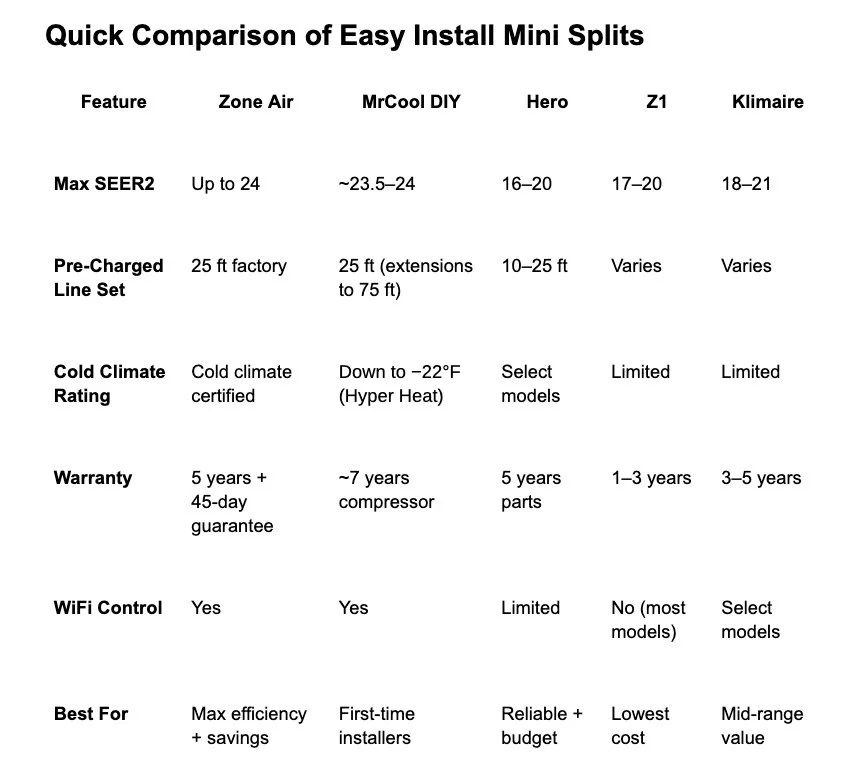
Up to 24 SEER2 rating - the highest in the DIY category
Energy Star certified with cold climate performance ratings
Mini splits can cool or heat multiple rooms efficiently across single and multi zone configurations
DIY mini-split systems can cool spaces up to 1,500 square feet
5-year warranty with a 45-day satisfaction guarantee
WiFi control from your phone
Wall mounted indoor unit options across 9,000 BTU, 12K, 18K, and 24K capacities
Line diameters specified per model (1/4" liquid, 3/8" suction for 9K and 12K units)
Possible Limitations: Zone Air is a newer brand with a smaller installer network if you eventually need service. You'll need basic electrical knowledge for wiring the dedicated circuit, though many homeowners hire an electrician for that portion ($300–$500).
2. MrCool DIY Series
Mr cool is the most established name in the DIY mini split market. Their 5th Generation line uses R-454B refrigerant (lower global warming potential than R-410A) and Quick Connect fittings that simplify the connection process.
Why It Stands Out: Largest brand recognition and the widest size range in the DIY category, from 9,000 BTU to 36K BTU. Fujitsu mini-splits offer sizes from 9,000 to 36,000 BTU in the professional space, but MrCool matches that range while keeping installation accessible.
Best For: First-time DIY installers wanting maximum community support, video tutorials, and proven reliability.
Key Strengths:
Pre-charged R-454B line sets (25 ft standard, extensions available to ~75 ft with caveats)
Smartphone app control and google assistant voice control compatibility
Hyper Heat variants rated down to −22°F for colder climates
SEER2 ratings reaching ~23.5–24 on top single-zone models
Extensive online installation community
Possible Limitations: Higher price point than most competitors. Customer service reviews are mixed - some homeowners report slow warranty response times. Indoor noise levels (~25 dB) are higher than premium brands like mitsubishi systems or Fujitsu, which hit 18–22 dB. Mitsubishi units remain the gold standard for whisper-quiet operation but require professional installation.
3. Hero DIY Mini Splits
Hero takes a no-frills approach to DIY-friendly mini split air systems. Their units ship with factory pre-charged line sets (typically 10–25 feet per zone) and straightforward installation guides.
Why It Stands Out: Strong customer service reputation and competitive pricing. Hero has been in the mini split business long enough to stock replacement parts reliably.
Best For: Budget-conscious homeowners seeking reliable diy installation without paying a premium for smart features.
Key Strengths:
Competitive pricing - often $200–$400 less than MrCool for comparable capacity
5-year parts warranty with decent coverage terms
Proven reliability across thousands of installations
Wide size selection from 9K to 36K BTU
Available in wall mounted, floor-mounted, and ceiling cassette configurations
Possible Limitations: Basic feature set with limited smart home integration. Many models still use R-410A refrigerant. SEER2 ratings typically fall in the 16–20 range - energy efficient but not market-leading.
4. Z1 DIY Systems
Z1 positions itself as the affordable entry point into diy mini split ownership. If budget is your primary concern and you're in a moderate climate, Z1 gets the job done.
Why It Stands Out: Lowest upfront cost in the category. You can shop for a 12K BTU unit under $1,000 in many cases.
Best For: Cost-conscious homeowners in mild to moderate climates with some HVAC experience.
Key Strengths:
Lowest upfront price among the five brands
Decent efficiency ratings for the price
Basic remote control included
Available in multiple capacities
Possible Limitations: Limited warranty terms compared to Zone Air or Hero. Fewer advanced features - no WiFi control on most models. Installation support is basic, and cold climate performance is weaker. Basically, Z1 works best as supplemental air conditioning or heating rather than a primary system.
5. Klimaire DIY Models
Klimaire occupies the middle ground - more features than Z1, lower cost than MrCool or Zone Air.
Why It Stands Out: Reasonable balance of features and affordability for homeowners who want decent specs without premium pricing.
Best For: Homeowners wanting mid-range features at accessible prices.
Key Strengths:
Reasonable pricing across multiple size options
Decent efficiency ratings
Some models include WiFi capability
Multiple indoor unit styles available
Possible Limitations: Limited brand recognition makes it harder to find parts and support long-term. Documentation on cold climate specs and pre-charged line set limits is less transparent than Zone Air or MrCool. Customer support is basic compared to established competitors.
Quick Comparison of Easy Install Mini Splits
Mini splits can be single-zone or multi-zone systems. Multi-zone systems can support multiple indoor units, which means one outdoor condenser can connect to air handlers in different rooms throughout your house. For example, a multi zone setup with three indoor units can independently control temperature in a bedroom, living room, and home office.
How to Choose the Right Easy Install Mini Split
Choose Based on Installation Experience Level
Your DIY experience level should directly influence which brand you choose. If you've never drilled into an exterior wall or wired an electrical circuit, MrCool's extensive video library and community forums provide the most hand-holding. If you've tackled moderate home improvement projects - installing ceiling fans, running electrical, mounting heavy equipment - Zone Air's clear manual and torque-specific instructions give you everything you need to find the right system and install it confidently.
Regardless of experience, every diy installation requires careful mounting and leak checks. Here are the universal installation fundamentals:
Mount indoor air handlers 7 to 8 feet high for optimal airflow
Maintain at least 6 inches of clearance from the ceiling for the indoor unit
Always secure mounting brackets into wall studs for stability
Drill wall holes at a downward angle to ensure proper drainage - drilling angles for line sets must consider gravity for effective drainage
Wall penetrations for refrigerant lines should be around 2.5 to 3 inches in diameter
Bundle refrigerant lines tightly before passing them through the wall
Use a torque wrench to ensure proper tightening of flare nuts
Care must be taken to avoid kinking copper tubing during installation
Using soapy water can help identify leaks in refrigerant line connections
Use a dedicated electrical circuit for most mini split systems
Check local regulations for permits required for HVAC installations
Installation of DIY mini-splits typically takes a few hours once you have all your tools and access to the installation site.
Choose Based on Budget and Features
The money you save on installation costs with a DIY approach is significant, but you should also consider long-term energy savings when you shop for the right unit.
For context on what's available across the broader market: the Fujitsu Altair 500 Series has SEER2 ratings up to 33.7, and LG mini-splits have SEER2 ratings between 25.5 and 27 - but those require professional installation and carry premium prices. Among diy systems, Zone Air's 24 SEER2 leads the pack.
Higher SEER2 means lower electricity bills. For a homeowner in southern california running cooling eight months a year, the difference between a 17 SEER2 unit and a 24 SEER2 unit can save over $200 annually. In colder climates where you rely on the heat pump for winter heating, HSPF2 ratings matter even more - look for 9.5 or higher.
Mini splits offer flexibility that central air systems can't match. You don't pay to condition rooms you're not using, and there are no duct losses eating into your efficiency.
Choose Based on Climate Requirements
If you live in climate zones 5 through 7 (roughly the northern half of the US), cold climate performance isn't optional - it's the most important spec on the sheet. Mini-splits can retain over 70% heating capacity at 5°F, which means a 12K BTU unit still delivers meaningful heat when weather conditions drop well below freezing.
Zone Air's cold climate certification and high HSPF2 ratings make it a strong choice for primary heating in cold regions. MrCool's Hyper Heat line pushes further with a −22°F operating floor, though at a higher price. Hero, Z1, and Klimaire offer less robust cold-weather performance - they're better suited as supplemental heating or for milder climates.
For your research, compare the rated heating capacity at 47°F versus 5°F. That percentage drop tells you how the system actually performs when you need it most. Energy Star's cold climate designation requires meaningful heating at 5°F with a COP of at least 1.75 - any unit meeting this threshold qualifies for federal tax credits and many state rebates.
Which Easy Install Mini Split Is Best for You?
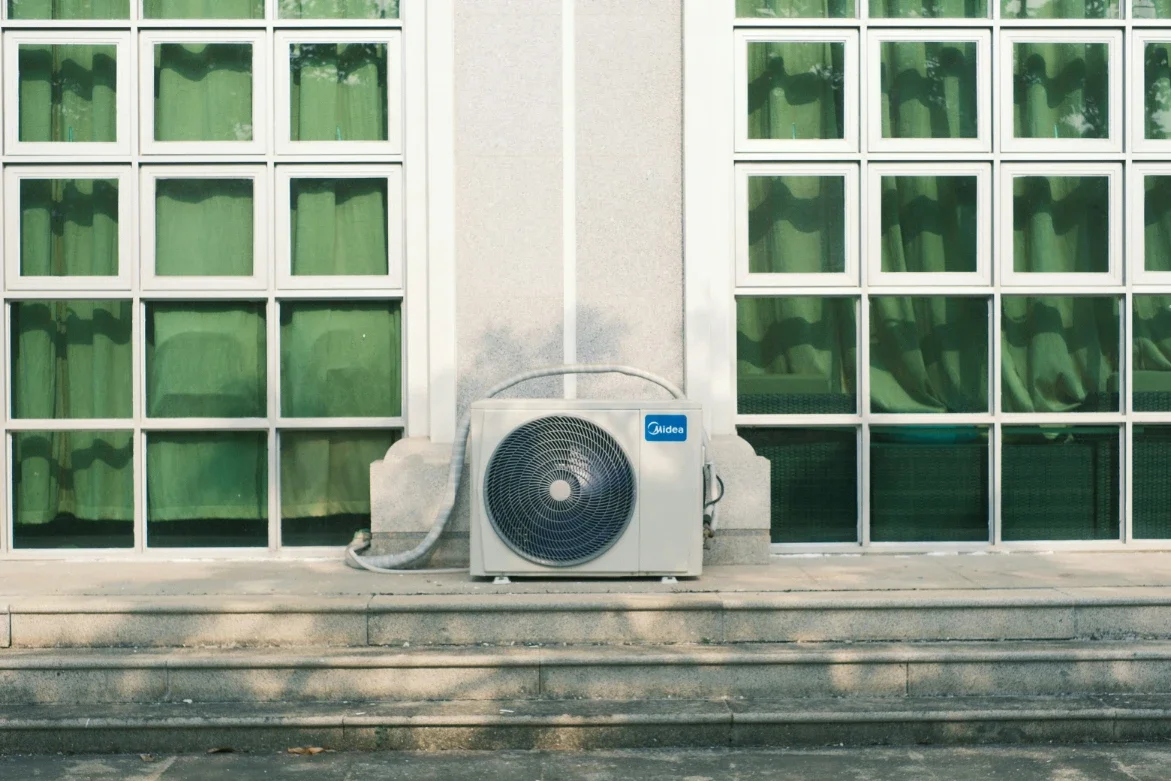
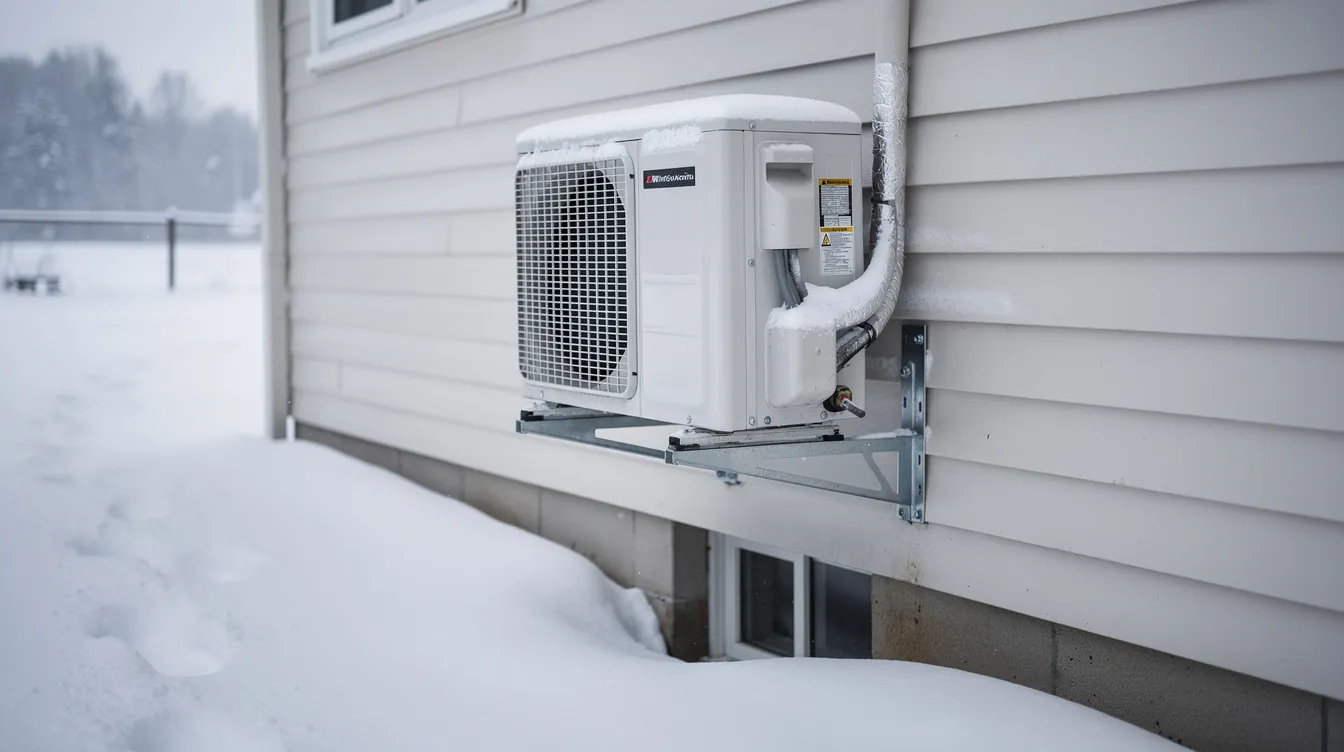
Choose Zone Air if you want maximum energy efficiency, the strongest combination of SEER2 performance and cold climate capability, and the most money saved versus a pro install. The 45-day satisfaction guarantee and 5-year warranty remove the risk. Mini splits can be installed without ductwork, and Zone Air makes the process genuinely accessible. Select an outdoor installation site away from direct sunlight for efficiency, and elevate the outdoor unit to prevent debris and snow buildup.
Choose MrCool DIY if you're a first-time installer who values extensive community support, voice control through google assistant, and the widest BTU range. Be prepared to pay a premium for the brand name.
Choose Hero if you want reliable performance with good warranty coverage at a reasonable price and don't need cutting-edge smart features. Most mini splits in Hero's line handle moderate climates well.
Choose Z1 if budget is your primary concern and you're conditioning a single room or space in a mild climate. Keep expectations realistic about long-term performance and support.
When researching mini splits, remember that the right system depends on your specific square footage, climate zone, and how many rooms you need to condition. A single air handler might be perfect for a garage or addition, while a multi zone setup with multiple indoor units handles an entire house.
Final Thoughts
The easy install mini split category has matured rapidly. In 2026, homeowners have real access to energy efficient heat pumps that they can install themselves - systems that rival what a contractor would put in, at a fraction of the total cost.
Zone Air stands out because it delivers the highest efficiency in the DIY category (up to 24 SEER2), backs every unit with cold climate certification and a satisfaction guarantee, and provides the clearest installation documentation we've tested. You're not sacrificing performance to save on installation - you're getting both.
Regardless of which brand you choose, proper installation matters. Follow torque specs, test every connection for leaks, and hire a licensed electrician if you're not comfortable with the electrical work. The equipment is designed for homeowners, but attention to detail separates a system that runs flawlessly from one that causes headaches.
Finally, don't leave money on the table. Federal tax credits and state energy rebates increasingly favor high-efficiency, cold-climate-certified heat pumps. Check your local utility's rebate program - units meeting ENERGY STAR cold climate specs often qualify for significant incentives that make an already cost-effective upgrade even more compelling.
Stay up to date with our latest ideas!