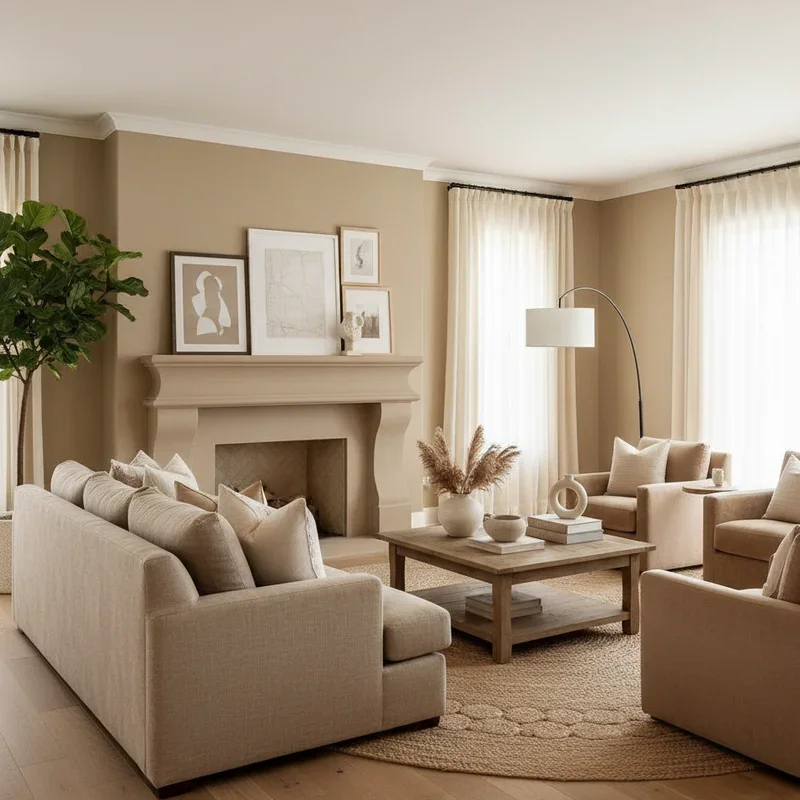
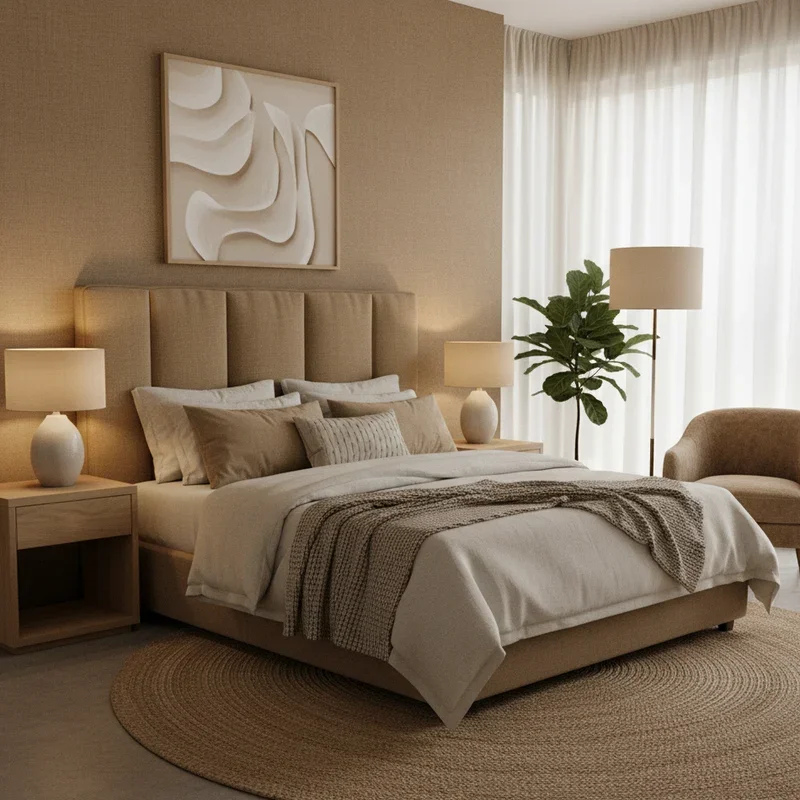
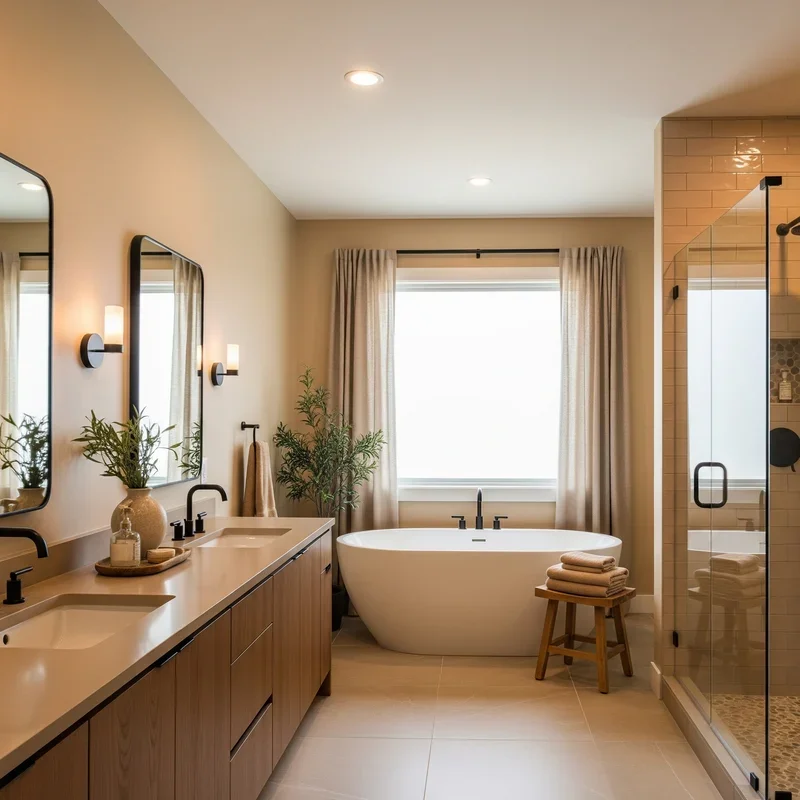
How to Make a Tan Bedroom Feel Warm, Airy and Relaxing
Discover how to make a tan bedroom feel warm, airy, and relaxing with thoughtful color combinations, natural textures, lighting, furniture, and décor.

Tan bedrooms are easy to like but surprisingly easy to get wrong. Too many similar beige tones can make a room feel flat, while overly yellow lighting or heavy brown furniture can turn a soft neutral palette darker than intended.
A comfortable tan bedroom depends less on finding one perfect shade and more on balancing undertones, texture, natural materials, light, contrast, and the way the room feels throughout the day. The goal is not to fill every surface with beige. It is to create enough variation that the room still feels warm, open, restful, and personal.
If you are working with tan walls, warm neutral bedding, natural wood, or a beige-and-cream palette, the ideas below can help you build a room that feels considered rather than overly matched.
1. Start With the Right Shade of Tan
Tan is a broad family of colors rather than a single shade. Some tans lean golden or caramel, some move closer to sand or oatmeal, and others have a gray or taupe undertone. That difference matters because the same furniture and lighting can look completely different against each one.
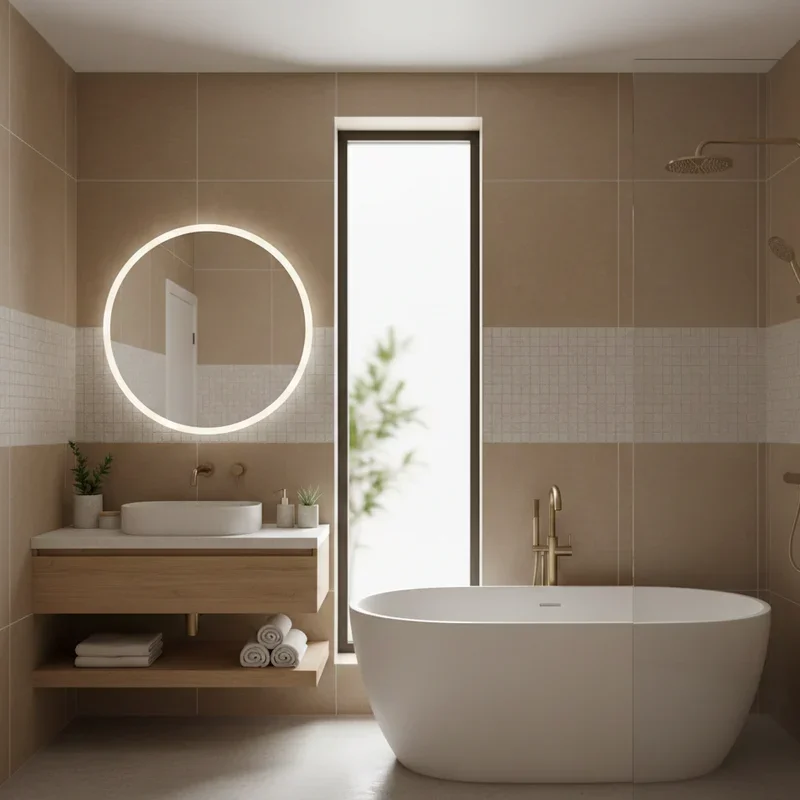
A warmer tan can create an inviting bedroom when paired with cream, ivory, and natural wood. A cooler taupe-based tan often feels quieter and more contemporary, especially with soft white, charcoal, or muted green accents.
Test the Color in Morning and Evening Light
Paint samples should be checked at more than one time of day. Morning light can make a color look clearer, while warm lamps in the evening may pull out yellow or orange undertones that were less noticeable earlier. Testing a large sample near the bed, window, and main light source is more useful than judging a small paint chip under store lighting.
2. Build the Room Around Three Neutral Layers
One of the easiest ways to give a tan bedroom depth is to think in layers instead of trying to match every surface. A simple starting point is to use one main tan or beige tone, one lighter neutral, and one grounding material or accent.
· Base: tan, beige, sand, oatmeal, or taupe on the walls or larger upholstered pieces.
· Lightening layer: cream, ivory, or warm white on bedding, curtains, trim, and soft furnishings.
· Grounding layer: natural wood, deep brown, or a small amount of matte black for definition.
These layers do not need to be evenly distributed. In many bedrooms, the lightest neutral works best on the largest soft surfaces, while darker tones are more effective in smaller doses.
3. Use Cream and Warm White to Keep Tan From Feeling Heavy
If a tan room starts to feel too brown or visually dense, adding another accent color is not always the answer. Often, the better move is to introduce more lightness.
Cream bedding, warm-white curtains, an ivory rug, or pale lampshades can create breathing room without breaking the neutral palette. Keeping the ceiling lighter than the walls can also help the room feel more open, especially when the walls are medium tan or taupe.
The key is to choose a white that works with the undertone of the tan. A very cool, blue-white can feel disconnected from a warm beige room, while a soft warm white usually creates a smoother transition.
4. Add Natural Wood Without Turning the Room Too Brown
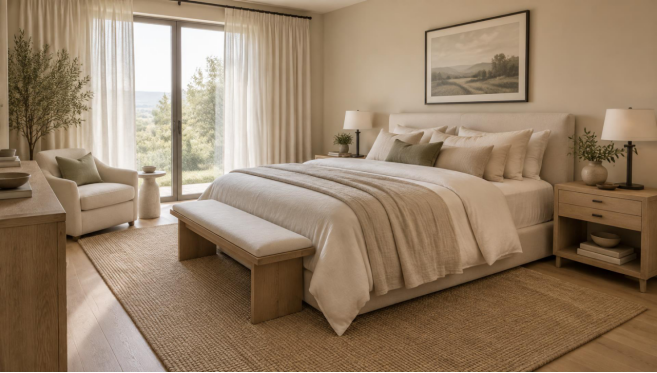
Wood is a natural partner for tan, but too much dark wood can make a bedroom feel heavier than intended. If the walls are already warm, consider balancing them with lighter oak, ash, or a medium walnut rather than using deep brown on every piece of furniture.
A light wood bed with cream bedding can keep a tan room relaxed and airy. Medium walnut can add richness when the rest of the room stays lighter. If the flooring is already dark, choosing visually lighter nightstands or an upholstered bed can prevent the room from feeling bottom-heavy.
It is also fine to mix wood tones. The room usually feels more natural when the woods share a similar warmth but are not exact matches.
5. Layer Texture Before Adding More Color
Neutral bedrooms often feel flat because the surfaces are too similar, not because the palette needs more colors. Texture can create the variation that color normally provides while keeping the room calm.
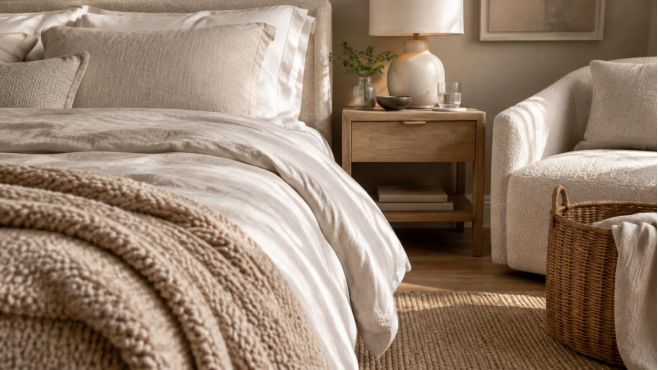
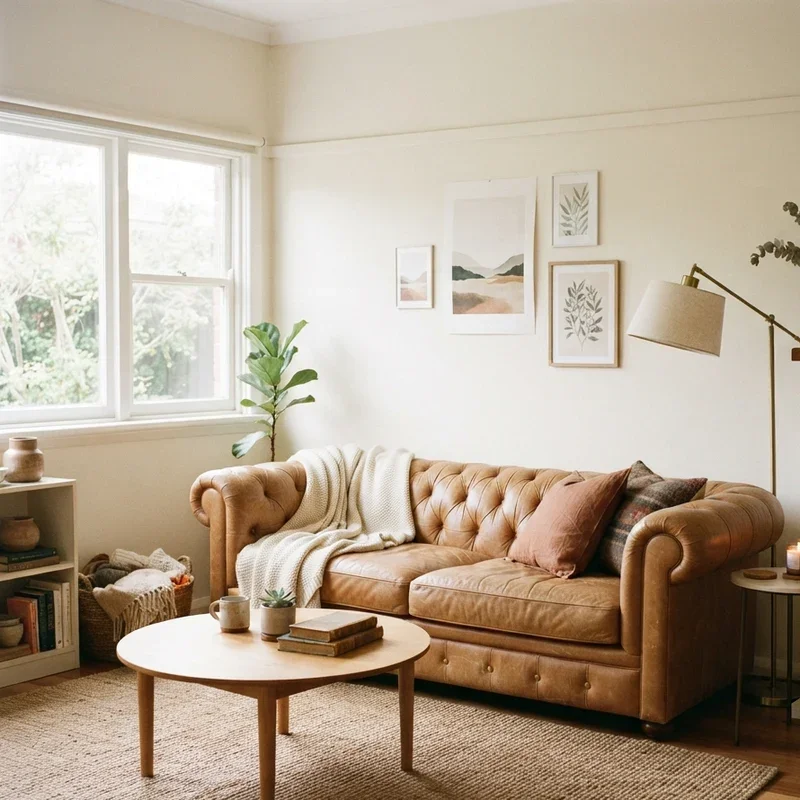
Try combining smooth cotton sheets with a linen duvet, a wool or woven rug, a bouclé or upholstered headboard, and a knit throw. A woven basket or rattan detail can introduce another tactile layer without taking over the space.
A useful rule for neutral rooms is simple: before adding another accent color, add another texture. The contrast between matte, soft, woven, and natural surfaces can make a limited palette feel much richer.
6. Use Dark Accents Sparingly to Give the Room Definition
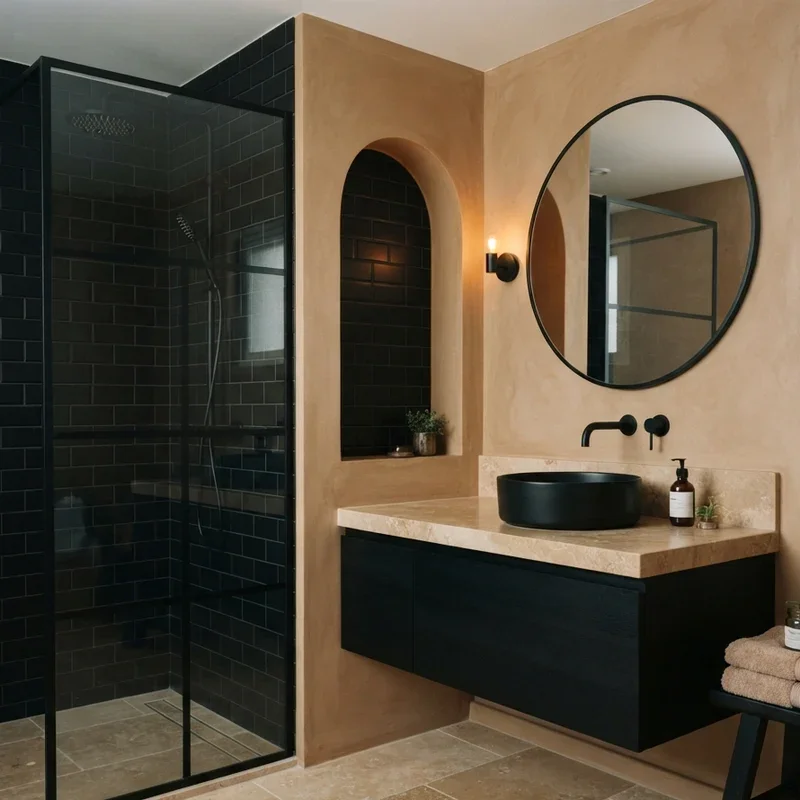
A little contrast can keep a tan bedroom from looking washed out. Matte black, deep brown, or dark bronze can work well on picture frames, drawer pulls, lamp bases, curtain rods, or a slim furniture frame.
The goal is not to turn the bedroom into a black-and-beige scheme. A few darker lines are usually enough to give the softer colors structure. If every decorative item is dark, the contrast becomes the dominant feature instead of a supporting one.
7. Treat the Ceiling as Part of the Bedroom Design
Bedroom design often stops at eye level, even though the ceiling occupies one of the largest uninterrupted surfaces in the room. In a warm neutral bedroom, anything overhead can affect how open, balanced, and visually calm the space feels.
Keep the ceiling itself lighter than the walls when possible, particularly in a smaller room. Then consider lighting and airflow together rather than treating them as unrelated additions.
For bedrooms where both functions are needed, ceiling fans with lights can reduce the number of separate overhead fixtures while providing circulation and general lighting from the same ceiling area. The finish matters as much as the function: light wood tones can blend naturally with sand and oatmeal palettes, while matte black can introduce a sharper modern contrast.

Whatever you choose overhead should support the room rather than becoming the only element the eye notices. Scale is especially important. A fixture that feels too small can look lost, while one that overwhelms the bed and surrounding furniture can make the ceiling feel lower.
8. Layer Bedroom Lighting Instead of Relying on One Bright Source
A relaxing bedroom should not depend on one harsh overhead light. The room feels more comfortable when different light sources handle different jobs.
Ambient Lighting
This is the overall light used for getting dressed, tidying the room, or moving around safely. It should illuminate the space without creating strong glare.
Task Lighting
Bedside lamps, wall-mounted reading lights, or focused sconces are useful when one person wants to read without lighting the entire room.
Accent Lighting
A small picture light, softly lit shelf, or decorative lamp can add depth in the evening without making the bedroom feel overly bright.
Warm light suits many tan rooms, but warmer is not always better. Extremely yellow bulbs can push beige and tan surfaces toward orange or muddy brown. The most comfortable result is usually a balanced warmth that flatters the room without distorting its colors.
9. Choose Bedding That Creates Contrast Without Breaking the Palette
Bedding occupies a large visual area, so it can change the mood of a tan bedroom quickly. If the walls are medium tan, ivory or cream bedding can brighten the center of the room. Taupe walls can work well with soft white, oatmeal, or muted brown. A very pale beige room may benefit from a deeper throw or a single earthy accent.
You do not need a complicated pattern to create interest. A mix of slightly different neutral values often looks more relaxed than a perfectly matching bedding set. For example, an ivory duvet, oatmeal blanket, and one muted sage or rust pillow can provide enough variation without interrupting the calm palette.
10. Use the 70/30 Principle as a Guide, Not a Formula
The 70/30 decorating idea can be useful when a neutral bedroom feels either too uniform or too busy. Think of roughly 70 percent of the visual space as the main neutral family and the remaining 30 percent as contrast, texture, materials, and accents.
In a tan bedroom, that might mean tan, cream, and warm white forming the dominant background, with wood, matte black, muted green, terracotta, or brass making up the smaller supporting layer.
It is a visual guideline rather than a measurement rule. The point is simply to let the room have a clear dominant mood while leaving enough contrast to keep it from feeling flat.
11. Arrange the Bedroom Around Movement, Not Just Symmetry
A bedroom can look balanced in a photograph and still be frustrating to use. Before centering every piece of furniture, think about how you actually move through the room.
Leave comfortable paths around the bed, make sure drawers and wardrobe doors can open fully, and avoid blocking the easiest route to the window or bathroom. Matching nightstands can look polished, but they are not worth forcing into a tight layout if one side of the bed needs more clearance.
Good bedroom design should feel effortless when you are half awake. Clear movement, reachable lighting, and uncluttered surfaces usually contribute more to everyday comfort than perfect symmetry.
12. Keep Nighttime Comfort in Mind
A bedroom can look calm without actually feeling comfortable at night. Temperature, stale air, overly bright lighting, and mechanical noise all affect how pleasant the room feels once the decorative details are no longer the focus.

If overhead air circulation is part of the room plan, pay attention to more than blade color or fixture style. Motor behavior, installation, balance, and airflow settings can all influence the experience. Looking specifically at quiet ceiling fans with lights can be useful for bedrooms where airflow and lighting are both needed but unnecessary operational noise would be distracting.
No ceiling fan should be assumed to be literally silent, and correct installation still matters. The broader idea is to choose bedroom equipment with nighttime use in mind rather than selecting it only for appearance.
13. Avoid the Most Common Tan Bedroom Mistakes
Using the Exact Same Beige Everywhere
Matching the walls, rug, bedding, curtains, and furniture too closely can make the room feel flat. Small shifts in value and texture create a more layered result.
Choosing Lighting That Is Too Yellow
Warm lighting can be inviting, but very yellow light may exaggerate warm undertones and make tan surfaces look darker or more orange than expected.
Matching Every Piece of Furniture
A complete matching set can make a bedroom feel more rigid. Mixing complementary finishes, shapes, or materials often gives the space a more collected and natural look.
Adding Too Many Small Decorative Objects
Neutral rooms can quickly become visually busy when every surface is filled. Fewer, larger objects usually create a calmer impression than many small accessories.
Ignoring Scale
Tiny lamps beside a large bed, an undersized rug, or a ceiling fixture that is out of proportion can make the room feel unsettled even when the colors work well.
14. Make a Small Tan Bedroom Feel More Open
Tan can work well in a small bedroom, but the room benefits from a few choices that preserve visual space. Keep the ceiling lighter, avoid strong contrast on every wall, and choose furniture that does not block more floor than necessary.
Mounting curtains higher can make the walls appear taller, while allowing some floor to remain visible around furniture helps the room feel less crowded. Mirrors can be useful when they reflect natural light or a visually open part of the room, but they should not be added simply because the space is small.
Clutter has a stronger effect in compact rooms, so editing is often more effective than decorating. A few intentional objects can make a small tan bedroom feel calmer and more spacious than a larger collection of accessories.
15. Let the Room Feel Current Without Chasing Every Trend
Tan does not need to depend on a single trend cycle. What changes over time is the way neutral rooms are put together. A room filled with identical beige finishes can feel dated more quickly than a space that combines natural materials, varied textures, restrained contrast, and furniture chosen for the room rather than as a complete set.
If you want a tan bedroom to feel current, focus on elements that are easy to live with: layered textiles, natural wood, thoughtful lighting, a few darker accents, and functional pieces that suit your daily routine. Those choices tend to age better than decorating around one highly specific look.
A Simple Tan Bedroom Formula
If you want a practical starting point, use this as a loose guide and adjust it to the light, size, and existing finishes in your room.
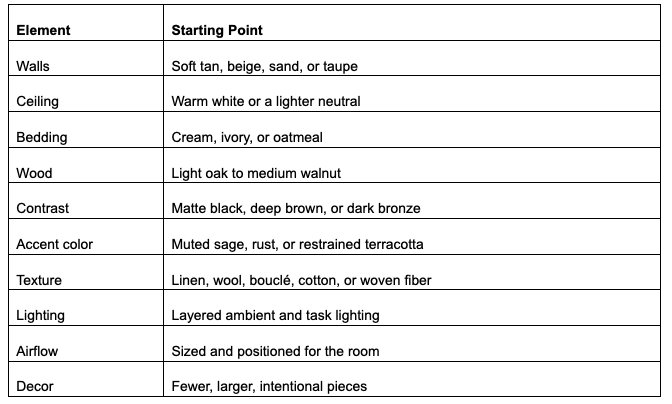
Tan Bedroom FAQs
What colors go well with a tan bedroom?
Cream, ivory, warm white, natural wood, muted black, sage green, rust, and restrained terracotta can all work with tan. The best choice depends on whether the tan has a warm, cool, or taupe undertone.
How do you make a tan bedroom less boring?
Add variation in texture, value, and material before introducing more colors. Linen, wool, woven fibers, wood grain, upholstery, and a few darker accents can create depth while keeping the palette calm.
What color ceiling works with tan bedroom walls?
A lighter neutral such as warm white or soft ivory is a practical choice for many tan bedrooms because it keeps the upper part of the room visually open. The exact shade should still work with the wall undertone and existing trim.
How do you make a tan bedroom feel relaxing?
Keep the palette controlled, reduce visual clutter, layer softer textures, use lighting for different activities, and choose a layout that supports easy movement. Comfort also depends on practical factors such as temperature, airflow, and nighttime noise.
Does black work in a tan bedroom?
Yes. Matte black or another dark neutral can add definition to a tan room when used in smaller amounts. Picture frames, hardware, lamp bases, or slim furniture details are often enough.
Is tan still a good bedroom color?
Tan is versatile enough to work beyond a short-lived trend. How fresh it feels depends more on the surrounding materials, contrast, lighting, furniture, and styling than on the color alone.
Final Thoughts
A tan bedroom feels most inviting when the color is treated as a foundation rather than the entire design. Light neutrals keep the room open, natural wood adds warmth, texture creates depth, and a small amount of contrast gives the softer palette structure.
The best result is not a perfectly matched beige room. It is a bedroom that looks calm in daylight, feels comfortable at night, and has enough variation to remain interesting without losing the relaxed quality that makes warm neutrals so appealing.
Stay up to date with our latest ideas!