Learn how to size and position round mirrors for maximum interior impact, enhancing light, balance, depth, and overall room aesthetics.

A round mirror can be more than a decorative afterthought. You can transform your mirror into an architectural tool by considering proportional relationships between the mirror and the wall, the mirror and the furniture below, and the mirror and the room's overall circulation. Interior designers address these relationships by applying geometric principles. If the proportions are correct, the mirror feels inevitable — an integral part of the wall surface rather than an object attached to it.
The mathematics of selection: finding the correct diameter
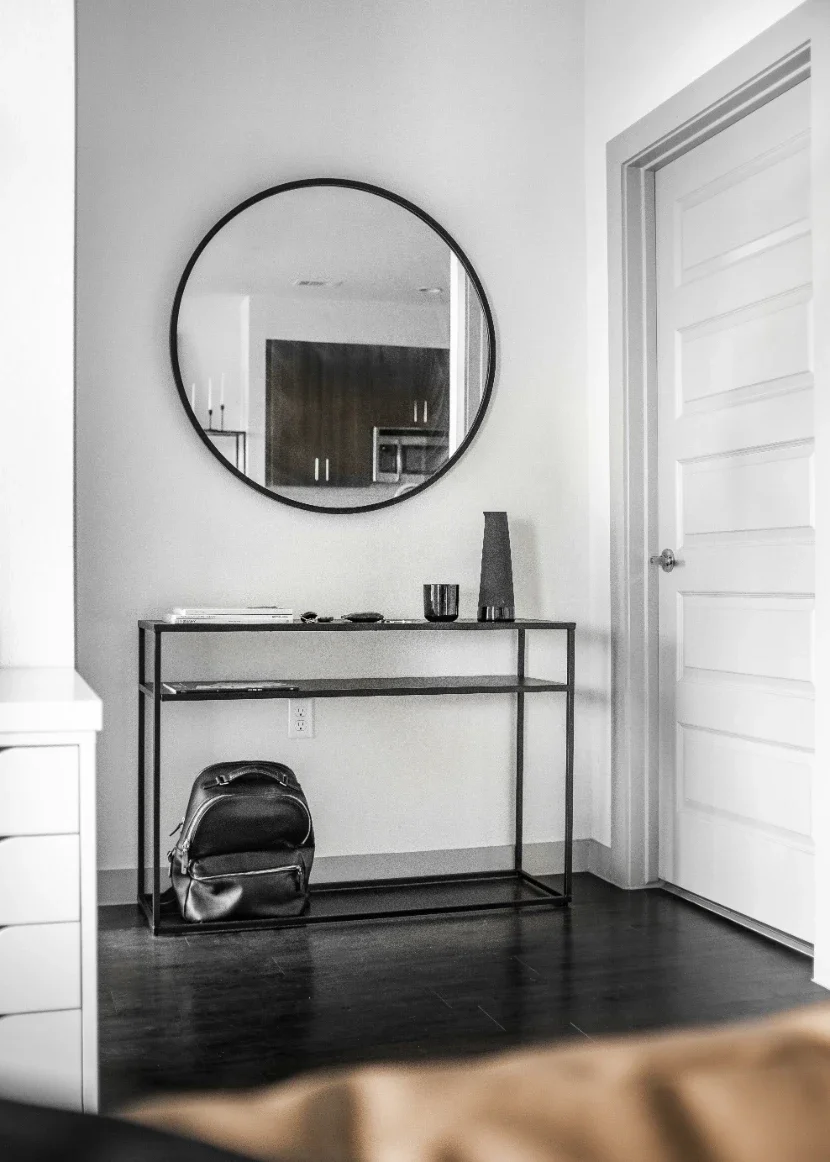
The most common mistake in mirror selection is choosing a piece that is either too small for the wall or too wide for the furniture beneath it. The most popular rule is that the mirror should occupy between 50 and 75 per cent of the width of the furniture below it. Thus, if you have a console table measuring 48 inches across, a round mirror with a diameter of 28 to 36 inches creates visual balance without overwhelming the composition. The same rule applies above mantels, sideboards, and bathroom vanities.
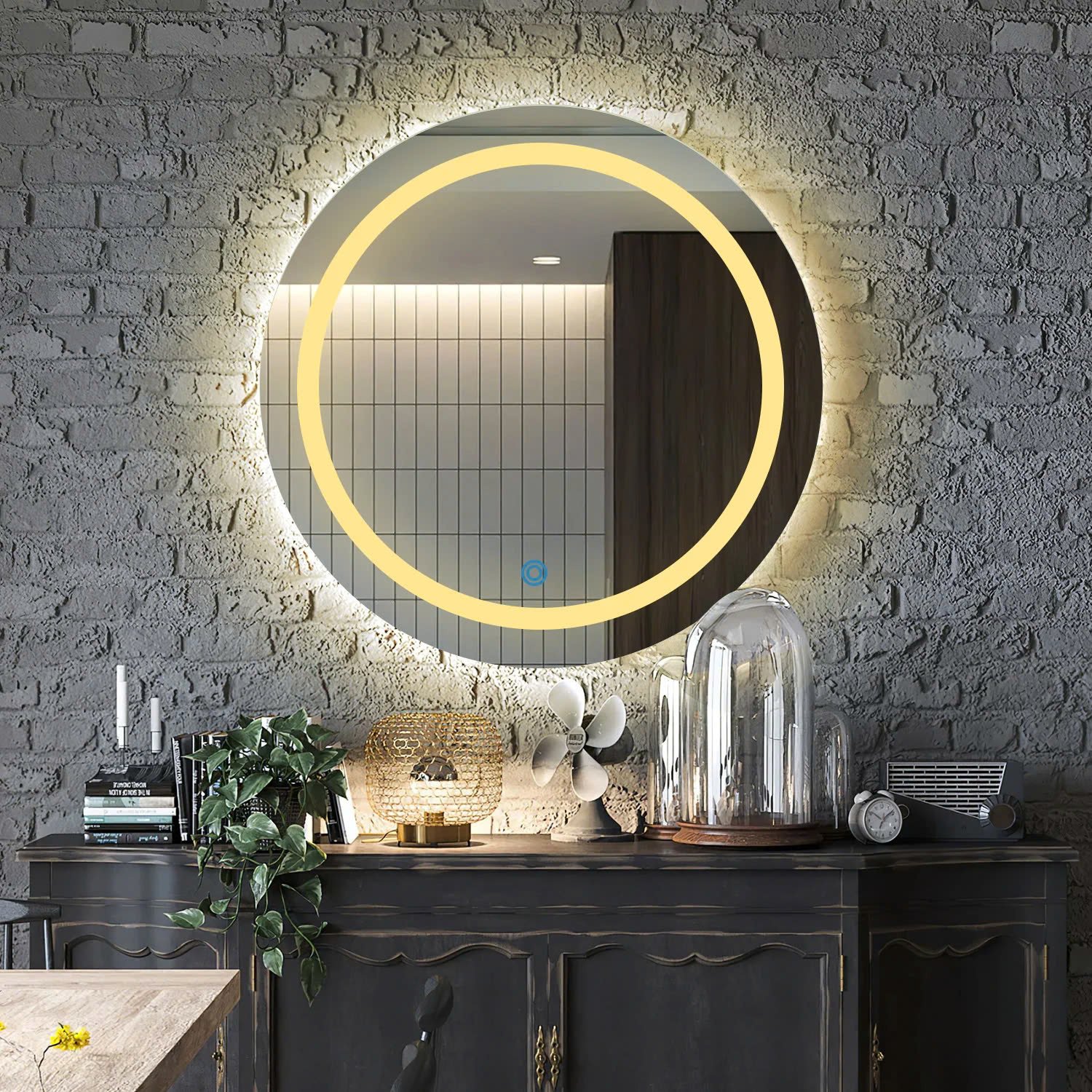
When furniture is not the anchor, the mirror should relate directly to the wall. Leave roughly four to six inches of empty wall space on either side of the mirror. If the mirror feels isolated, the wall reads as unfinished. If it crowds the edges, the composition feels tense. The goal is a stable, centered relationship between the circular form and the rectangular field of the wall.
Vertical placement: height, eye level, and functional zones
Vertical placement follows a different set of rules, determined by how the mirror will be used. For general viewing — a mirror hung in a hallway, above a sofa, or as a purely architectural element — the center of the mirror should sit at eye level, which for most adults falls between 57 and 65 inches from the finished floor.
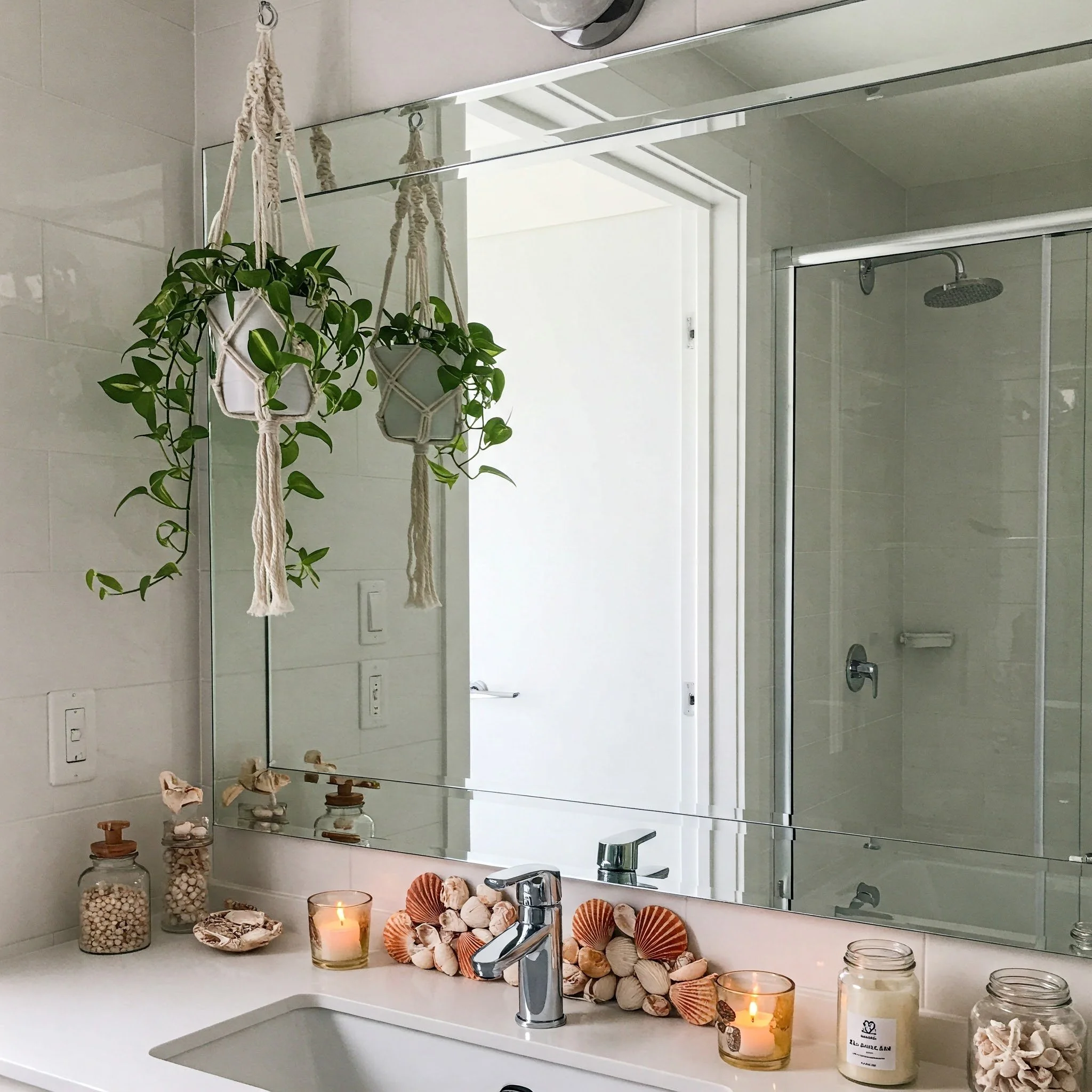
However, if the mirror hangs above a piece of furniture, additional constraints apply. The bottom edge of the frame should sit four to eight inches above the tallest point of the furniture beneath it. In dining areas or rooms with seating, you should keep six to twelve inches of clearance between the top of the furniture and the mirror’s bottom edge to avoid visual compression. Moreover, for vanity applications, the bottom of the mirror should clear the counter by at least eight inches, with adjustments made for user height and fixture placement.
These distances ensure that the mirror remains visually connected to the furniture while leaving enough negative space for the composition to breathe.
Using circumference to plan grouped compositions
When multiple round mirrors are arranged together — as a gallery wall or a clustered installation — geometry becomes even more important. The spacing between frames should remain consistent, typically between two and four inches, depending on the size of the pieces and the desired density of the composition. For a grouping of three smaller round mirrors (ten to eighteen inches in diameter), a spacing of two to four inches between frames allows the set to read as a single installation rather than as separate objects floating independently.
The critical calculation in grouped arrangements involves the total wall coverage. The sum of the mirror diameters, plus the sum of the gaps between them, should not exceed approximately 75 percent of the wall width. Beyond this threshold, the composition begins to feel crowded, and the individual mirrors lose their legibility.
For any round mirror, the circumference is directly proportional to the diameter. Knowing the circumference allows you to quickly derive the diameter — and from there, to calculate total horizontal span across a wall. To save time computing the correct quantities, you can use an online circumference calculator.
The same calculation applies when a round mirror is placed in a corner or a narrow passage. Measuring the available wall space and deriving the maximum allowable diameter from the circumference prevents the common error of selecting a mirror that is simply too large for the space it occupies.
Reflection, light, and room geometry
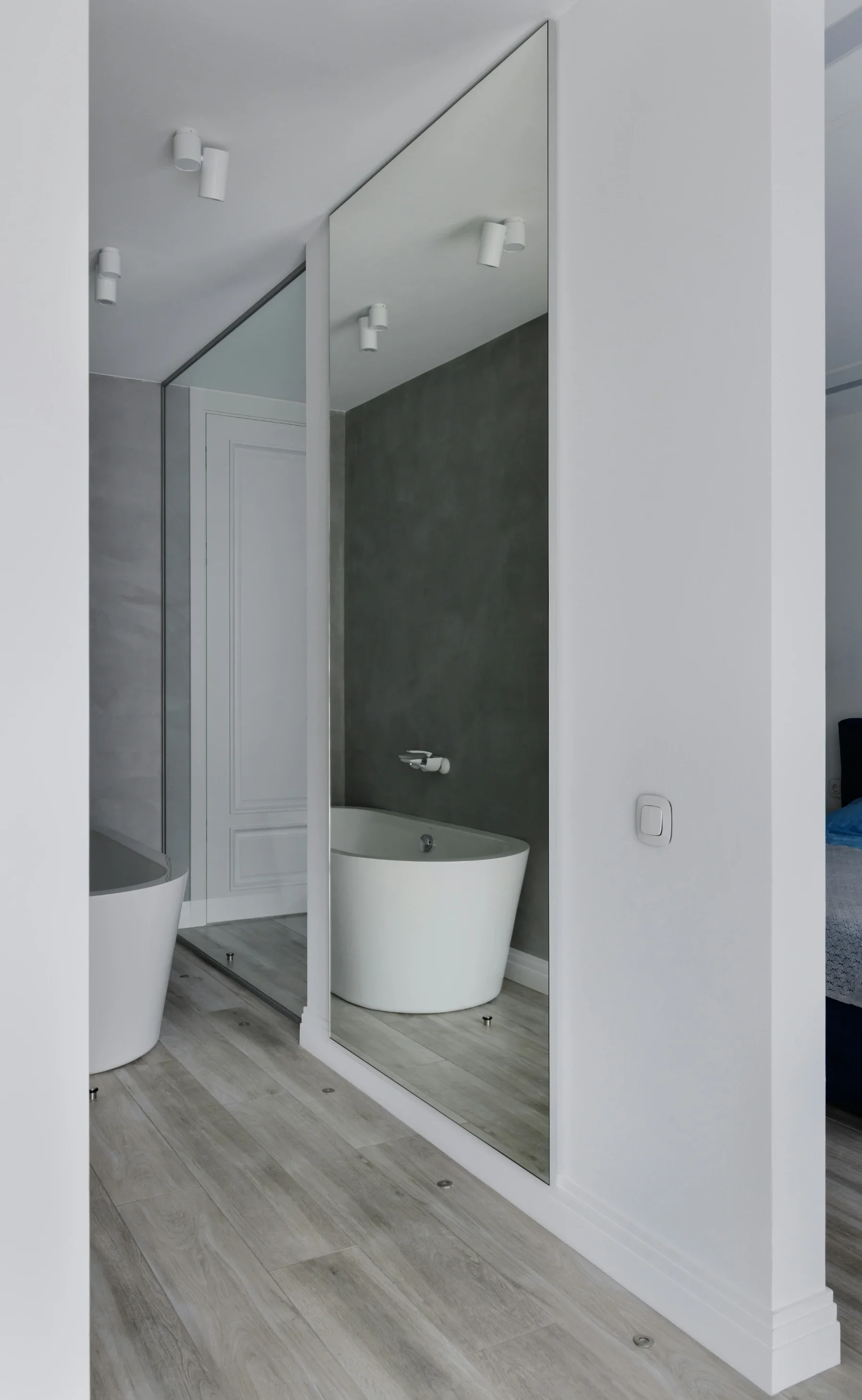
Beyond size and placement, a round mirror’s performance also depends on what it reflects. For instance, you can put the mirror opposite a window to double the effective light in a room — a technique particularly valuable in narrow spaces that lack natural illumination from multiple directions. For small bedrooms, a full‑length round mirror placed in an underused corner adds depth without occupying floor area. This feature is due to a physical principle since curved corners of a round frame scatter light differently than a rectangular mirror, producing a softer, more diffuse reflection that often reads as more natural.
The same principles of intentional placement that govern indoor spaces extend naturally to outdoor rooms. A mirror placed in a covered loggia or a glass‑enclosed terrace follows the same proportional rules as an interior wall, but with the added variable of shifting daylight and reflected landscape. A mirror in these settings — protected from direct weather exposure — can extend views, reflect garden plantings, and double the perceived depth of a covered patio.
Summary: perfect proportions for a perfect fit
The placement of a round mirror reduces to a small set of verifiable measurements:
Diameter relative to furniture: 50–75 percent of furniture width, with two‑thirds as the standard target.
Height: Center at 57–65 inches for general viewing; four to eight inches above furniture for compositions anchored by a piece below.
Group spacing: Two to four inches between frames, consistent throughout the arrangement.
Wall coverage: Total span (mirror diameters plus gaps) not exceeding 75 percent of wall width.
These parameters are more than stylistic preferences. They are derived from the geometry of human vision, the mechanics of reflection, and the long history of architectural proportion. Therefore, a round mirror sized and placed according to them not simply decorates a wall — it completes it.
Stay up to date with our latest ideas!