Creating a Healthy, Low-Maintenance Indoor Jungle
Learn how to create a healthy, low-maintenance indoor jungle with easy-care plants, smart placement, proper lighting, watering routines, and simple maintenance tips.
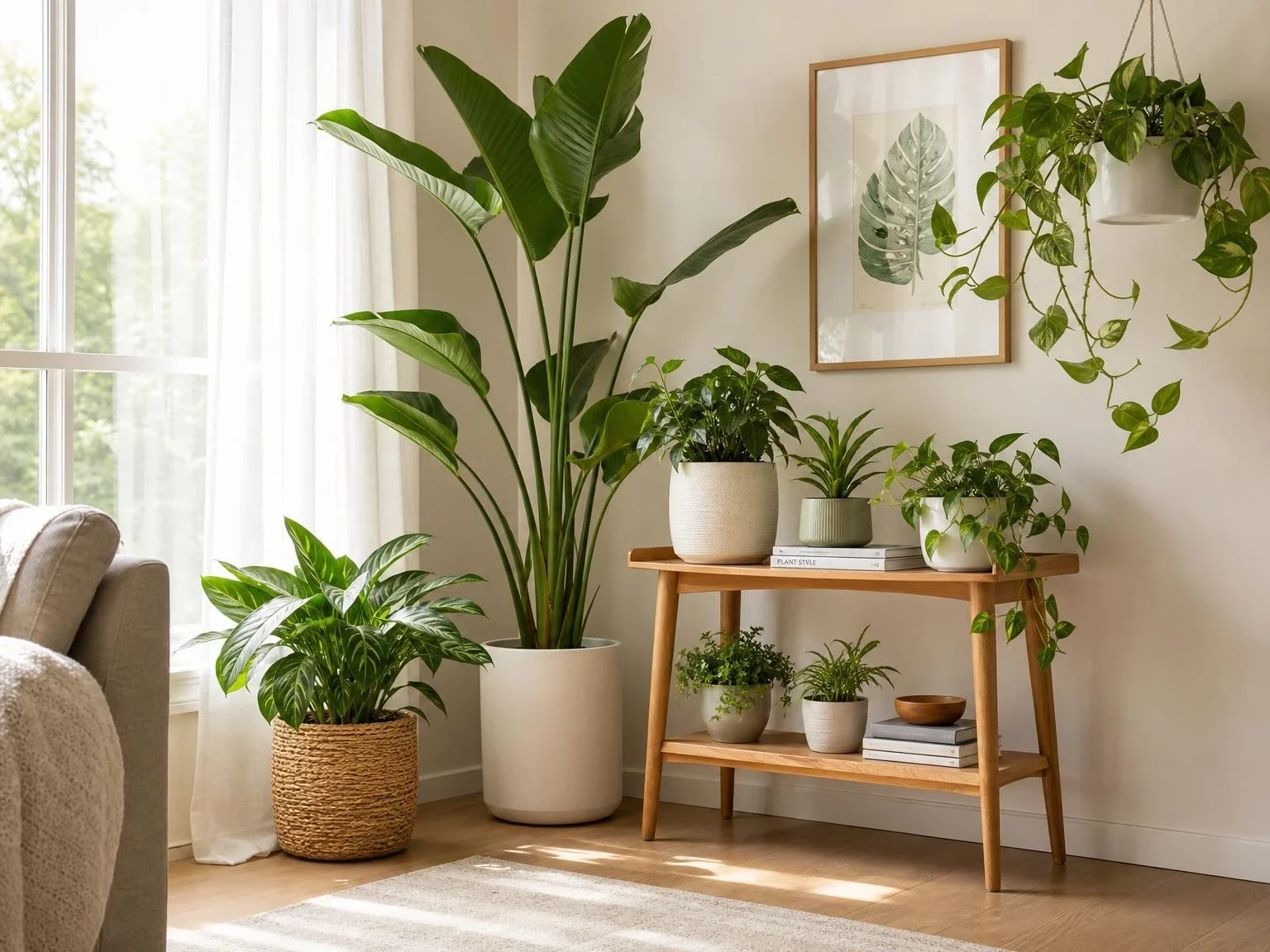
Turning a home into a calming indoor jungle is one of the simplest ways to soften a space and change how a room feels day to day. Houseplants range from compact desk greenery to towering floor specimens, and while their appeal is universal, many people struggle to keep them thriving for more than a few months.
Understanding Your Indoor Environment Before Choosing Plants
Assessing Light, Temperature, and Humidity
Whether you're adding a handful of small succulents to a windowsill or incorporating large indoor plants as dramatic focal points, understanding how plants interact with light, space, and care routines is crucial for long-term success. This guide focuses on plant care basics—the fundamentals of light, water, and humidity—rather than fleeting trends, so the advice holds up no matter what happens to be popular at the moment.
Successful plant care starts with understanding the conditions of your home, not the plant itself. Indoor light generally falls into four categories: low light (far from windows), medium light (a few feet from a window), bright indirect light (near a window but filtered by curtains or bounced off walls), and direct sun (unfiltered rays hitting the leaves directly). Many popular houseplants, including larger tropical species, do best in bright, indirect light. A simple way to gauge this is to spend a day watching how sunlight moves through a room.
Temperature matters too: most indoor plants prefer roughly 18–27°C (65–80°F), with minimal cold drafts or sudden shifts. Humidity is another factor that's easy to overlook—tropical plants with large leaves generally appreciate moderate to high humidity, which you can boost by grouping plants together, using a pebble tray, or running a humidifier.
Key takeaway: Match plants to your existing light, temperature, and humidity—not the other way around.
Safety, Space, and Lifestyle Considerations
Before choosing plants, think about who shares your home. Some common houseplants are toxic if ingested, so it's worth checking a reputable toxicity list if you have pets or young children around. Available space matters as well—tall or wide plants need room to breathe and grow, so measure ceiling height and floor space before committing to a large specimen. Finally, be honest about your lifestyle: a busy professional may prefer drought-tolerant plants, while someone who enjoys daily care can take on more demanding species. Prioritizing pet safety, available floor space, and maintenance level upfront saves you from costly trial and error down the road.
Choosing the Right Mix of Plants for a Balanced Indoor Ecosystem
Creating Visual Harmony: Scale, Form, and Placement
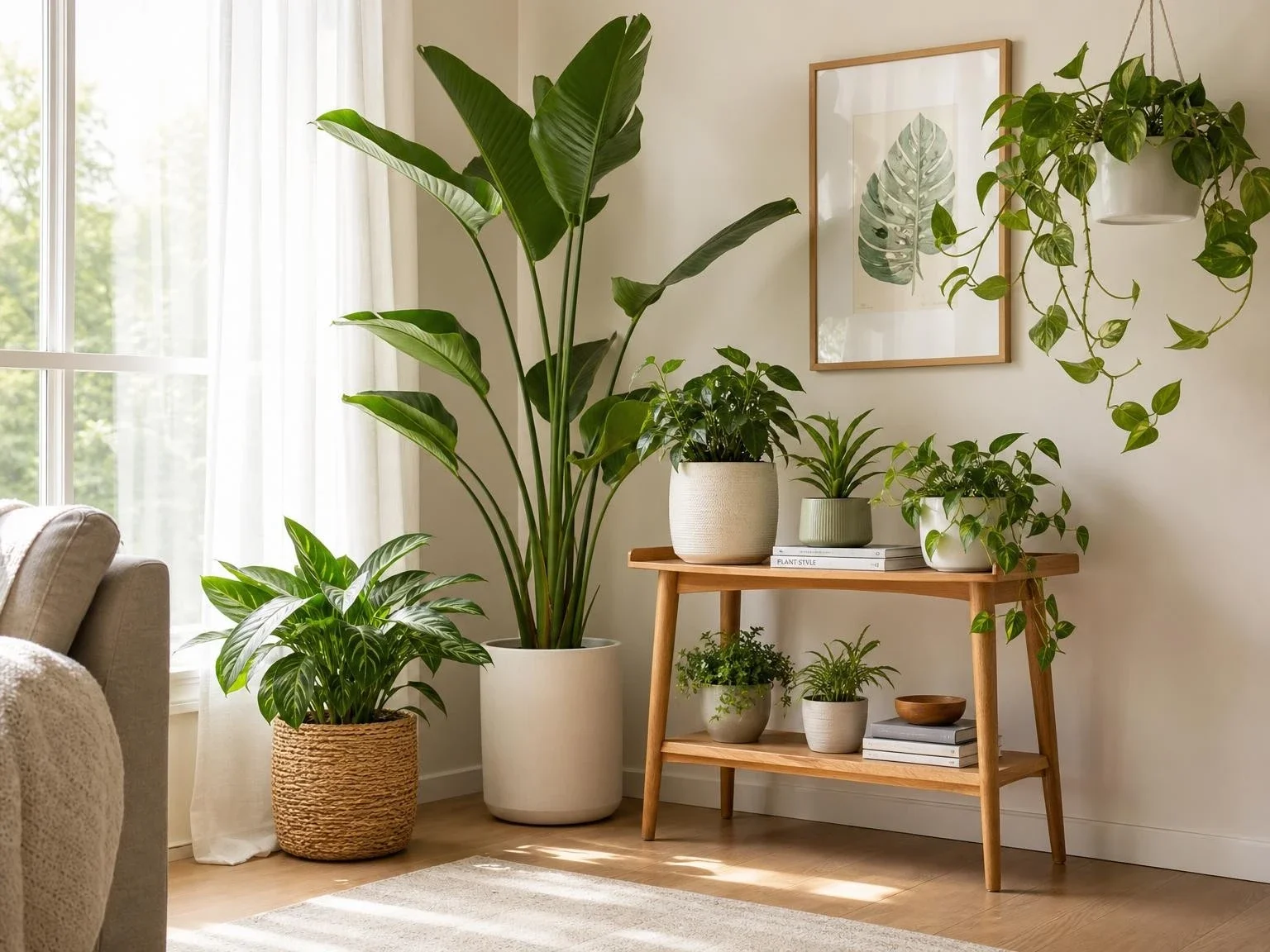
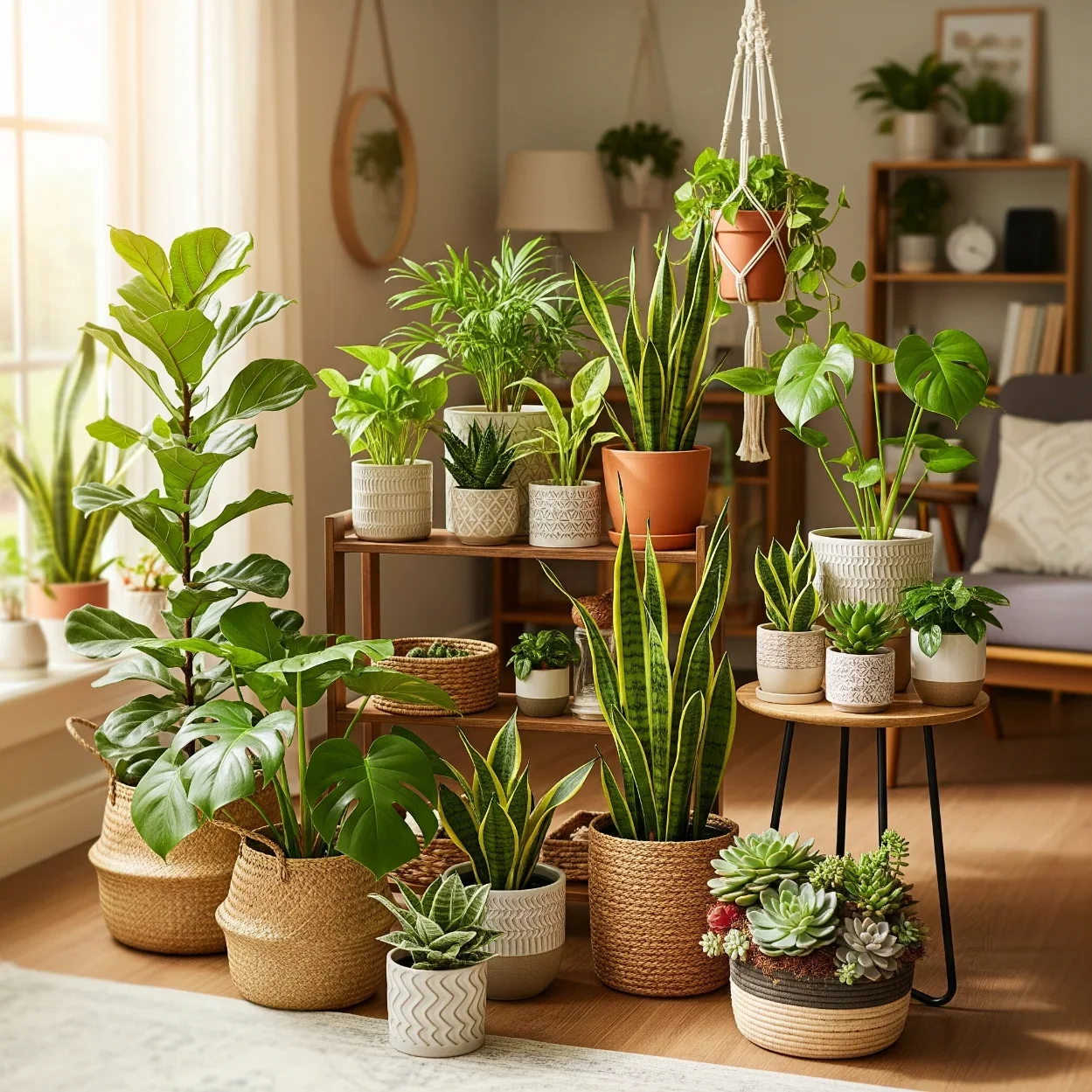
A well-designed plant collection uses scale thoughtfully—combining floor plants, tabletop plants, and hanging varieties to build depth. A single large, architectural plant can serve as a focal point, while smaller plants soften edges and fill in the gaps. Pairing upright forms, like palms, with trailing plants, like pothos, adds visual interest and keeps the eye moving.
Three simple rules for plant placement:
Keep taller plants near corners or beside furniture, never blocking windows or walkways.
Maintain clear sightlines and easy traffic flow through the room.
Layer plant heights to create a natural, balanced look.
Matching Plant Types to Room Functions
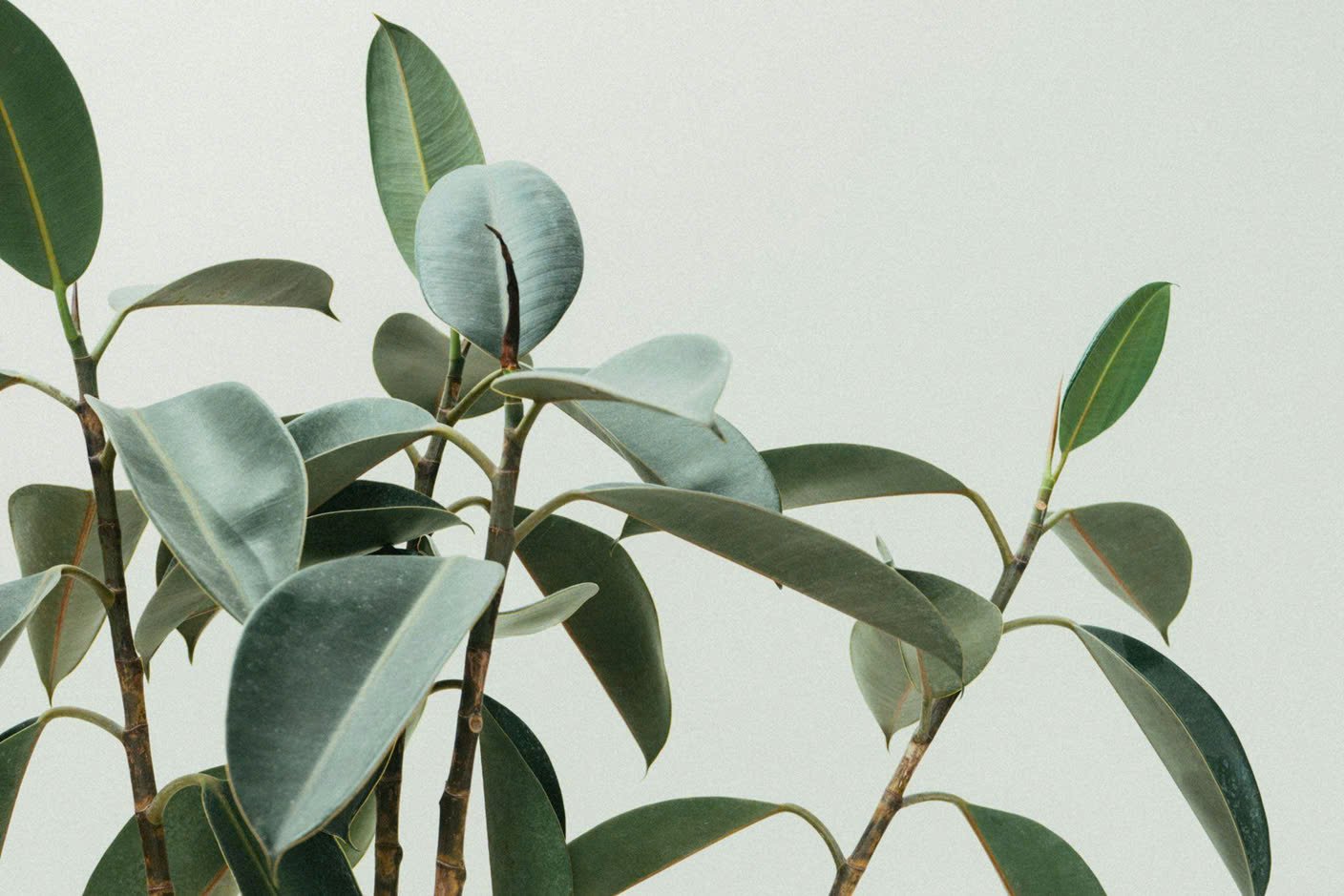
Living spaces benefit from striking, adaptable plants like rubber plants or snake plants. Workspaces suit compact, easy-care varieties that can tolerate typical office lighting. Bedrooms call for low-maintenance plants that handle stable, lower light without needing constant attention. In larger rooms, one or two sizable plants can anchor the design while smaller ones add texture—research suggests plants can positively influence mood and atmosphere, though it's best to focus on aesthetics and comfort rather than making sweeping health claims.
Core Care Principles That Keep Indoor Plants Thriving Long Term
Light and Placement: Avoiding Common Mistakes
Plants naturally grow toward their light source, which can lead to uneven, lopsided growth over time. Rotating larger floor plants every few months helps them keep a balanced shape. It's also worth avoiding spots too close to hot windows or heating vents, since this can scorch leaves before you notice.
Tip: Most common houseplants prefer bright, indirect light rather than harsh, direct sun.
Watering and Soil: Finding the Right Balance
Overwatering is one of the most common causes of houseplant decline. Many tropical plants prefer the top 2–5 cm (1–2 inches) of soil to dry out before the next watering. Larger plants in bigger pots dry more slowly, so it's better to water thoroughly but less often.
Steps to a healthy watering routine:
Check soil moisture with a finger test or moisture meter.
Water evenly until it drains from the pot's bottom.
Empty excess water from trays to prevent root rot.
Using a well-draining soil mix, often containing perlite or bark, gives roots the conditions they need to stay healthy.
Humidity, Cleaning, and Ongoing Maintenance
Many big-leaf and tropical plants benefit from higher humidity, which you can achieve by grouping plants, using pebble trays, or misting occasionally. Dust buildup reduces a leaf's ability to absorb light, so wiping leaves periodically keeps plants healthier and looking their best. Regular maintenance—pruning dead leaves, checking for pests, and repotting once roots become crowded—stops small issues from turning into serious problems.
Designing a Long-Lived Indoor Plant Collection
Starting Small and Scaling Up Responsibly
It's wise to begin with a small, manageable collection so you can learn how plants respond to your home's specific conditions. Choose healthy specimens with even coloring and no visible pests, then gradually add more—including larger plants—as your confidence grows.
Practical Scenarios
Small apartment, limited light: Choose shade-tolerant, compact plants paired with one modest floor plant.
Bright family living room: Combine several medium plants with one or two statement-sized specimens.
Busy lifestyle: Favor drought-tolerant, low-maintenance species that need minimal upkeep.
Final Reflections: Building a Sustainable, Calming Indoor Green Space
Successful indoor greenery comes down to matching plants to your environment, respecting the natural limits of light, water, and humidity. A thoughtful mix of sizes creates visual interest without overwhelming a room, and consistent, moderate care will always outperform sporadic bursts of attention. Start by observing your space today—check the light, tweak a watering habit—and let your collection evolve naturally from there.
Key takeaway: A thriving indoor plant collection rests on three pillars: environment, plant selection, and ongoing care.
Stay up to date with our latest ideas!