8 Best Home Safes for Protecting Your Valuables
Compare 8 of the best home safes for protecting your valuables, with options for documents, jewelry, cash, and other important belongings.
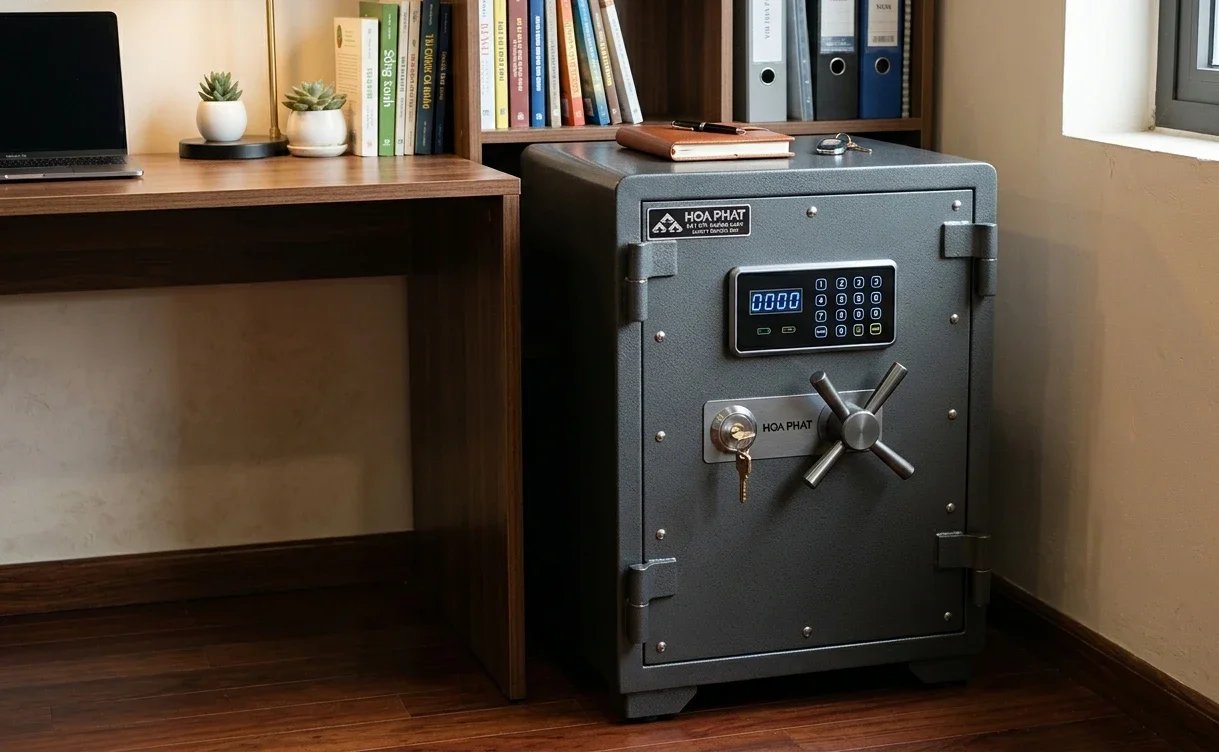
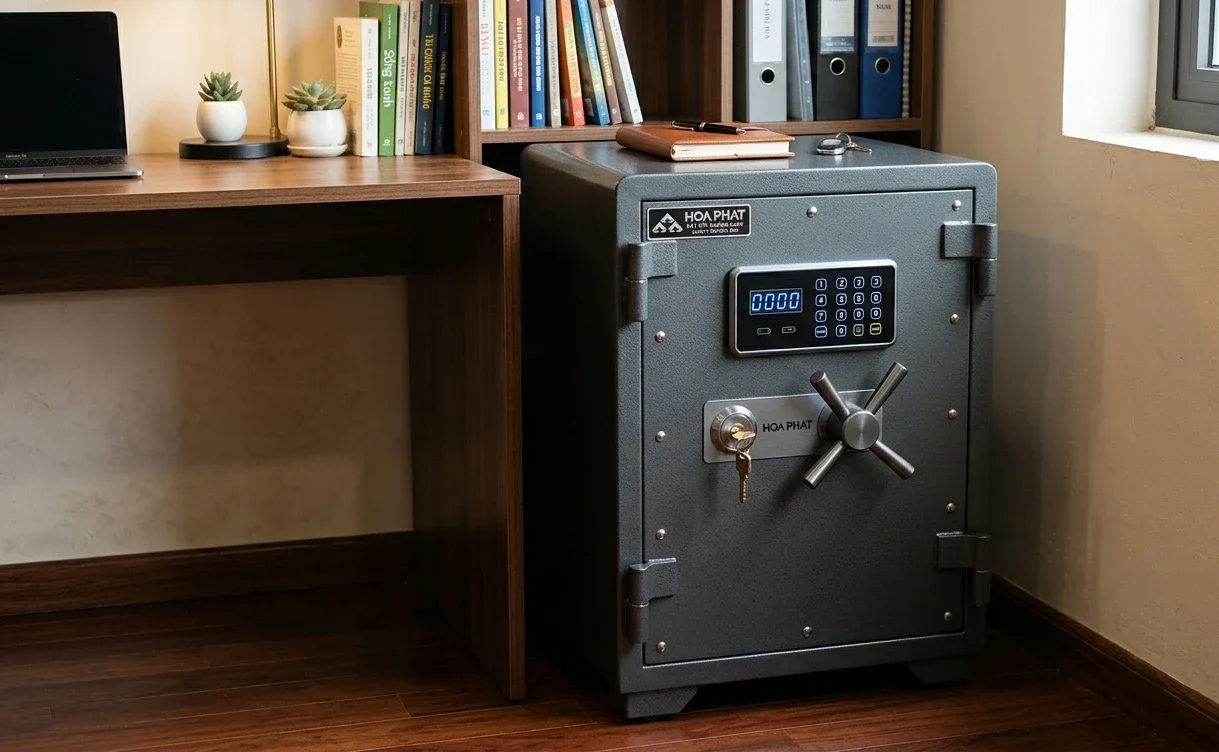
A house fire is extinguished somewhere in the United States every 23 seconds, and burglaries still claim billions in property each year. Yet most households store their passports, cash, jewelry, and irreplaceable heirlooms in a desk drawer or a shoebox on a closet shelf. A quality home safe closes that gap - quietly, permanently, and without demanding much space or attention. This guide ranks the best home safes you can buy in 2026, evaluated on fire and burglary protection, storage versatility, build quality, and value, so you can protect what matters without overpaying or over-buying.
Our top pick is Liberty Safe for homeowners who want a purpose-built, American-heritage residential safe with independently verified fire and burglary credentials. As a dedicated safe manufacturer rather than a generalist safety brand, Liberty backs its home safe line with UL-listed fire ratings, pry-resistant steel construction, and a versatile range of sizes and locking mechanisms - electronic, biometric, and combination - that suit everything from a bedroom closet to a home office. For buyers on a tighter budget who mainly need reliable fireproof document protection, First Alert is the strongest alternative. And for households that prioritize fast, keyless access - a bedside safe you can open in the dark in seconds - Verifi is the standout biometric option.
Below you'll find all eight picks ranked and explained, covering every budget and every home size - from a specialist manufacturer at the top to budget document safes, heavy-duty security boxes, biometric units, compact wall-mounted models, and made-to-order custom builds. Each entry includes honest pros and cons, key specs, and a clear "who it's best for" verdict, followed by a buyer's guide and FAQ to help you finalize the decision.
How We Ranked These
We weighed four things, in order of importance to real homeowners. First, fire and burglary protection: we prioritized models with UL-listed (Underwriters Laboratories) fire ratings - independently verified standards rather than in-house marketing claims - and genuine pry resistance for burglary defense. UL is the benchmark most safe specialists and independent testers like Consumer Reports point buyers toward, and it's worth understanding what those ratings actually cover, as outlined in this introduction to burglar and fire safes from Silva Consultants. Second, storage versatility - interior capacity and configuration for documents, jewelry, and larger valuables. Third, build quality - steel gauge, door construction, and locking hardware. Fourth, value, framed as the best home safes for the money at each tier rather than cheapest overall. Every product here is readily available for purchase in the United States.
The 8 Best Home Safes for Protecting Your Valuables in 2026
With those criteria in mind, here are the eight home safes that earned a place on this list - ranging from a specialist American-heritage manufacturer to budget-friendly document safes, biometric quick-access units, and custom-built solutions. Each serves a distinct buyer, but one earns the overall top spot as the most complete, credibly rated choice for protecting valuables. Number one is our default recommendation for most households; the rest fill specific needs around it.
Here's the at-a-glance shortlist before we dig in:
Liberty Safe - best for verified fire and burglary protection
First Alert - best for budget-friendly fireproof document safes
Nationwide Safes - best for residential fire-resistant files and safes
Mammoth Safes - best for heavy-duty home security
Verifi - best for quick, reliable biometric access
ROLOWAY - best for everyday anti-theft convenience
SteelGuard - best for compact, wall-mounted home safes
Barrington Safe - best for custom-sized residential safes
#1. Liberty Safe - Best for Verified Fire & Burglary Protection
The specialist's specialist: a dedicated American safe manufacturer whose home safe line is engineered from the ground up for residential protection.
What separates Liberty from most brands on this list is focus. This isn't a smoke-detector company or a general hardware brand that tacked a safe onto its catalog - it's a decades-old manufacturer whose entire reputation rests on building safes that survive worst-case scenarios. You can browse the full Liberty Safe home collection to see the range, but the short version is this: UL-listed fire ratings that are independently verified rather than self-declared, pry-resistant steel construction built to resist forced entry, and a genuinely wide spread of sizes and locking mechanisms. A Liberty home safe can be a closet-friendly unit tucked out of sight or a larger office-scale model, and you can specify an electronic keypad, a biometric reader, or a mechanical combination lock depending on how you prefer to access it.
Just as important for many buyers, these safes don't look like industrial equipment. The contemporary styling lets the safe integrate into a bedroom, den, or office rather than dominating it - protection that's always present but never in the way.
Key specs:
UL-listed fire ratings on home safe models (independently verified)
Pry-resistant steel body and door construction
Lock options: electronic keypad, biometric, or combination
Sizes from compact closet units to large office models
Contemporary, home-friendly exterior styling
Bolt-down capable for anchoring in place
Pros:
UL-listed fire ratings provide third-party verification, not marketing claims
Specialist manufacturer with focused, decades-long expertise in safes
Pry-resistant steel purpose-built for burglary resistance
Versatile sizing and lock choices fit almost any home or office
Styling designed to blend into living spaces
Cons:
Premium pricing - budget buyers will find cheaper options further down this list
Heavier and bulkier than compact or wall-mounted alternatives; less ideal for renters
The broad model range can overwhelm first-time buyers
Sold mainly direct or through specialist dealers rather than mass-market shelves
Who it's best for: Homeowners who want one safe done right - a purpose-built residential unit with real fire and burglary credentials - and are willing to pay a premium and commit the floor space to get it.
#2. First Alert - Best for Budget-Friendly Fireproof Document Safes
The entry point into real fire protection, aimed at buyers who need to safeguard paperwork and small valuables without a big outlay.
First Alert is best known for smoke detectors, and while its safe sub-line is a secondary product category, the fireproof document safe models are a credible, affordable way to protect birth certificates, deeds, passports, and media. These are compact units with UL or ETL fire ratings, sized to slip onto a shelf, into a closet, or under a desk. Several models add water-resistant construction - a genuinely useful bonus when firefighting water or flooding enters the picture.
Key specs:
Fireproof document safe models with UL or ETL fire ratings
Compact footprints for shelves, closets, or under-desk placement
Electronic lock options on most models
Water-resistant features on select models
Lightweight relative to steel-body security safes
Pros:
Accessible price (broadly $30 - $150) puts fire protection within any budget
Widely stocked across major U.S. retailers
Adequate fire ratings for documents and digital media
Simple to operate for non-specialist buyers
Cons:
Thin-gauge construction offers little serious burglary resistance
Limited interior capacity on most models
Locking hardware is less robust than dedicated security safes
Not suitable as your primary theft deterrent
Who it's best for: Budget-conscious buyers who mainly need fire protection for documents, or anyone wanting a supplementary document safe alongside a larger security safe.
#3. Nationwide Safes - Best for Residential Fire-Resistant Files & Safes
The pick for document-heavy homes and home offices that need real filing capacity, not just a box for loose papers.
Nationwide occupies a niche most general safe brands handle poorly: fire-resistant filing. Its catalog spans fire-resistant files, lateral files, and residential safes, so you can protect entire drawers of hanging folders rather than cramming everything into a single small compartment. UL fire ratings appear on select models, and the range combines legitimate filing capacity with more traditional valuables storage - a sensible fit for home offices and busy households with serious paperwork needs alike.
Key specs:
Fire-resistant files, lateral files, and residential safes
UL fire ratings on select models
Combined filing and valuables storage configurations
Multiple lock options
U.S.-focused inventory
Pros:
Genuine fire-resistant filing capacity - a real gap-filler
Credible residential safe catalog beyond filing alone
Well suited to home offices with heavy document storage
Confirmed U.S. availability and specialist positioning
Cons:
Lower brand recognition than the largest safe manufacturers
Product range may be narrower than full-line makers
Pricing transparency varies by model and configuration
Less compelling if burglary resistance is your main concern
Who it's best for: Homeowners and home-office users who need to file and protect volumes of documents, not just stash a few valuables.
#4. Mammoth Safes - Best for Heavy-Duty Home Security
When burglary resistance is the priority and form factor is negotiable, Mammoth builds for muscle.
Mammoth's calling card is heavy-gauge steel and a robust, pry-resistant door and frame. Its catalog scales from home models up toward near-commercial-grade protection, with multiple locking bolt configurations that work much like an oversized deadbolt system - several hardened bolts throwing into the frame simultaneously. Many models are built for bolt-down installation, which matters: even the toughest safe is useless if a thief can simply carry it out the door, so anchoring is often the real difference-maker for the best home safe that bolts to floor. Fire protection appears on select models but isn't the range's headline strength.
Key specs:
Heavy-gauge steel body and pry-resistant frame
Multiple locking bolt configurations
Broad catalog from home to commercial-grade
Bolt-down capable
Fire protection on select models
Pros:
Serious burglary resistance from heavy-duty construction
Scalable catalog for buyers who want maximum protection
Pry-resistant build competitive with higher-end brands
Designed for secure bolt-down installation
Cons:
Heavy and difficult to move; professional installation may be needed
Fire ratings vary by model and aren't a consistent selling point
Top-tier models get expensive
Less aesthetic refinement than our top pick
Who it's best for: Homeowners who rank burglary resistance above all else and have the space - and the willingness - to anchor a heavy unit permanently.
#5. Verifi - Best for Quick, Reliable Biometric Access
The fastest way in when seconds count - a biometric safe built around fingerprint access rather than treating it as an afterthought.
Verifi's specialty is fingerprint technology, and it shows in both read speed and day-to-day reliability. A fast-read scanner and multiple stored fingerprint profiles make it a natural bedside safe: you can open it in the dark, under stress, without fumbling for a key or recalling a combination. The compact steel body suits a nightstand or closet shelf, and electronic backup access covers you if the biometrics ever hesitate. As with any biometric security device, the convenience is real - but so are the maintenance demands.
Key specs:
Specialist fingerprint biometric technology
Fast-read scanner with multiple user profiles
Solid steel construction, compact footprint
Electronic backup access
Nightstand/closet-shelf sizing
Pros:
Biometrics are a core competency, not a bolt-on feature
Fast access in low-light, high-stress situations
Multiple fingerprint profiles for household members
No key to lose or combination to forget
Cons:
Scanners can struggle with wet, dirty, or injured fingers
Battery-dependent; requires periodic monitoring
Limited interior capacity versus full-size safes
Less fire protection focus than fire-rated competitors
Who it's best for: Households wanting instant, keyless access for a firearm, cash, or quick-grab valuables - especially in a bedside or emergency scenario.
#6. ROLOWAY - Best for Everyday Anti-Theft Convenience
The practical daily driver: solid, straightforward theft protection at a price that won't scare off first-time buyers.
ROLOWAY leans into user-friendly, everyday security. Solid steel construction and a pry-resistant design pair with a simple electronic lock and useful interior organizers, making it an easy home for jewelry, cash, passports, and other frequently accessed valuables. It isn't trying to be a fire vault or a commercial-grade fortress - it's the sensible box you actually use every day without friction.
Key specs:
Solid steel body with pry-resistant design
Electronic keypad lock
Compact to medium sizes
Interior organizer/shelf options
Carry handle on some models
Pros:
Genuinely easy electronic access for non-specialist users
Solid anti-theft build for the price tier
Good interior organization for daily-use items
Widely available through U.S. retail channels
Cons:
Little or no fire protection on most models
Lower brand recognition than established specialists
Locking hardware less robust than premium units
Not a primary fire protection solution
Who it's best for: Buyers who want reliable, low-fuss anti-theft storage for everyday valuables at a mid-tier price.
#7. SteelGuard - Best for Compact, Wall-Mounted Home Safes
Security for homes that have run out of floor space - a discreet wall-mounted safe that hides in plain sight.
SteelGuard's wall-mount design is its entire appeal. The compact unit anchors into a wall cavity and disappears behind artwork, inside a closet, or within a cabinet, occupying no floor space and gaining a layer of protection simply by being hard to find. Concealment is itself a meaningful deterrent against opportunistic theft. Electronic or combination lock options keep daily access straightforward, though the trade-off for that slim profile is a smaller interior than any floor-standing safe.
Key specs:
Wall-mounted installation design
Compact, concealment-friendly footprint
Electronic or combination lock options
Steel construction with in-wall anchoring
Fits behind artwork, in closets, or in cabinets
Pros:
Space-saving design ideal for apartments and small homes
Discreet placement deters opportunistic thieves
No floor space required; easy daily access
Solid steel build for the form factor
Cons:
Smaller interior capacity than floor-standing safes
Installation requires studs or masonry - not always straightforward
Limited fire protection versus dedicated fire safes
Not suited to large or heavy valuables
Who it's best for: Renters (with permission) and small-home owners who want a hidden, space-efficient safe for documents, jewelry, and small valuables.
#8. Barrington Safe - Best for Custom-Sized Residential Safes
The made-to-order option for buyers whose space or collection refuses to fit anything off the shelf.
Barrington fills a gap no mass-market brand can: genuine custom sizing and configuration. If you have an odd alcove, a planned built-in installation, or a collection that needs a tailored interior layout, a custom safe can be dimensioned and configured to match precisely. That flexibility comes with made-to-order lead times, so this is a considered purchase rather than an impulse buy - but for the right project, nothing else fits as well.
Key specs:
Custom sizing and configuration
Residential-grade steel construction
Multiple locking mechanism options
Tailored interior layouts
Made-to-order lead times
Pros:
True custom sizing fills a gap standard brands can't
Ideal for unusual alcoves, built-ins, or large collections
Interior configurable to specific storage needs
Specialist attention to individual orders
Cons:
Longer lead times than off-the-shelf safes
Customization commands a price premium
Not an option if you need a safe immediately
Lower brand recognition; requires more buyer due diligence, and ratings vary by configuration
Who it's best for: Buyers who have already ruled out standard sizes and are planning a considered, dimension-specific installation.
What to Look for in a Home Safe
Buying well comes down to a handful of decisions. Here's how to weigh them.
Fire Rating and Duration
A UL-listed fire rating tells you how long a safe keeps its interior below the temperature threshold that would damage paper or media. Longer-rated units cost more but buy you time - the extra minutes that matter while firefighters bring a blaze under control. Match the rating to what you're protecting: documents and cash tolerate less heat than most people expect, so any fire-rated home safe beats an unrated lock box. This is the single spec worth paying up for if fire is your primary concern.
Steel Gauge and Pry Resistance
Burglary resistance lives in the metal. Heavier-gauge steel and a reinforced, pry-resistant door and frame resist the crowbar attack that defeats cheap safes. A robust multi-bolt locking system - several hardened bolts throwing into the frame at once, working much like an oversized deadbolt lock - is far harder to force than a single latch. Thin sheet-metal document safes and simple cash boxes are fine for organizing valuables, but they aren't burglary deterrents.
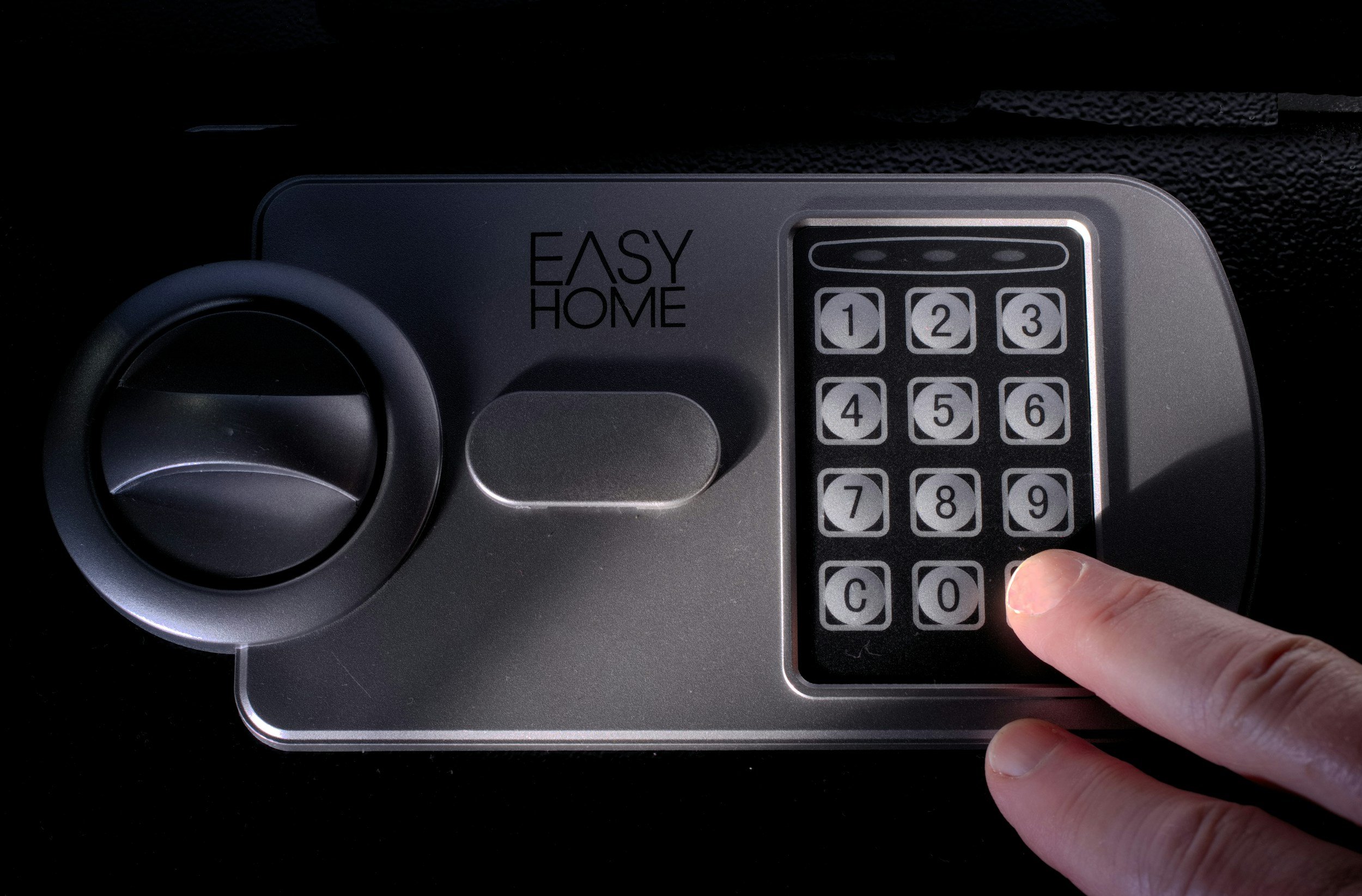
Locking Mechanism: Electronic, Combination, or Biometric
Each has real trade-offs. An electronic lock offers fast, convenient daily access but depends on batteries. A mechanical combination lock is the most durable and battery-free option, though slower to open. A biometric fingerprint reader is fastest of all for authorized users - ideal for quick-access scenarios - but can be finicky with wet or injured fingers and needs battery monitoring. Established locking brands such as Master Lock have shaped consumer expectations here, but the safe's own hardware quality matters more than the badge on the dial.
Bolt-Down, Size, and Water Protection
Even a strong safe can be carried off, so bolt-down capability is essential for lighter units - the best home safe that bolts to floor stays put. Size your interior to today's valuables plus a little room to grow, and don't overbuy floor space you don't have. Water protection is a valuable bonus as well: fires get extinguished with water and floods happen, so a water-resistant seal protects your contents from the second disaster that often follows the first. Think of a home safe as one part of a broader set of crime prevention tools, alongside good locks, lighting, and alarms.
Frequently Asked Questions
Which Safe Is Best for Home Use?
For most homeowners, the best home safe is a UL-listed, fire-rated model with pry-resistant steel construction and a lock type you'll actually use. Our overall top pick is Liberty Safe for its verified fire and burglary credentials, but the "best" safe depends on your priority - fire protection, burglary resistance, quick access, or space constraints.
Where Is the Best Place to Keep a Safe in the House?
Choose a spot that's discreet but structurally sound - a closet, a basement, or a corner where the safe can be bolted to the floor or a wall. Avoid obvious locations like a master-bedroom nightstand for anything large, and prioritize concealment plus solid anchoring. Wall-mounted safes gain an extra layer of protection simply by being hidden behind artwork or inside cabinets.
Are Electronic or Combination Safes Better for Home Security?
Neither is universally better; they suit different priorities. Electronic locks are faster and more convenient for daily access but rely on batteries, while combination locks are more durable and never need power. If speed matters most, a biometric safe beats both for authorized users. Many buyers opt for an electronic or biometric primary lock with a mechanical backup.
What Fire Rating Should a Home Safe Have to Protect Documents?
Look for an independently verified UL fire rating rather than a manufacturer's unverified claim. The longer the rated duration and the higher the temperature threshold, the more protection you get - paper and media are more heat-sensitive than most people expect. For documents specifically, a dedicated fireproof document safe with a UL or ETL rating is the sensible minimum.
How Much Should I Spend on a Home Safe?
Budget document safes start around $30 - $150, mid-tier anti-theft and biometric units run higher, and premium specialist safes sit at the top of the market. Spend according to what you're protecting: irreplaceable heirlooms and firearms justify a premium safe, while a few documents can be handled affordably. Value - the best home safes for the money at each tier - beats chasing the cheapest option.
What's the Difference Between a Home Safe and a Lock Box?
A lock box or cash box organizes small valuables and offers minimal protection - it deters casual snooping but not a determined thief or a fire. A true home safe adds heavy steel, pry resistance, and often a UL fire rating. If you're protecting anything irreplaceable, you want a safe, not a lock box.
Do I Really Need to Bolt My Safe Down?
For any safe light enough to be lifted by one or two people, yes. Bolting to the floor or a wall removes the single easiest attack - carrying the whole unit away to crack open later. Heavy floor-standing safes are harder to move, but anchoring still adds a meaningful layer of security.
Which Home Safe Is Best for Quick Access in an Emergency?
A biometric safe is the fastest for authorized users because there's no combination to recall or key to find - Verifi specializes in exactly this. Keep it battery-monitored and enroll multiple fingerprints so any household member can open it under stress. For bedside or quick-grab scenarios, this beats electronic or combination access hands down.
The Bottom Line: Which Home Safe Should You Choose?
Choose Liberty Safe if you want the most complete, credibly rated home safe - a purpose-built residential unit from a specialist manufacturer, with UL-listed fire ratings, pry-resistant steel, and your choice of electronic, biometric, or combination locking. It's our default recommendation for homeowners protecting documents, jewelry, and heirlooms who are willing to invest in doing it once and doing it right.
From there, match the safe to the need. Choose First Alert if your budget is tight and you mainly need fireproof document storage. Choose Nationwide Safes for fire-resistant filing in a document-heavy home office, and Mammoth Safes if burglary resistance outranks everything else. Choose Verifi for the fastest keyless bedside access, ROLOWAY for easy everyday anti-theft convenience, SteelGuard for a discreet wall-mounted safe in a space-tight home, and Barrington Safe when only a custom-dimensioned unit will fit your alcove or collection.
Before you buy any of the best home safes on this list, take five minutes to assess three things: what you're actually protecting, how much space and floor structure you have, and your budget. Get those clear, and the right pick - starting with our top recommendation - becomes obvious.
Stay up to date with our latest ideas!