A Month with a Standing Desk in a Small London Flat: What Actually Changed
After a month with a standing desk in a small London flat, discover what really changed for comfort, productivity, space, and daily work habits.

I want to be honest about the expectations I had going in. I had read the research. I knew the NHS position on prolonged sitting. I was aware that alternating between seated and standing work was supposed to help with lower back tension and afternoon energy dips, both of which I had in sufficient quantity to take the claim seriously. But I was also sceptical, in the particular way that most British people are sceptical about wellness purchases: willing to believe, reluctant to be sold to, and quietly expecting to be disappointed.
What actually happened over the following month was more interesting, and more genuinely useful, than I had expected. Here is an honest account.
Week One: The Logistics
The first week was almost entirely logistical. Where does the desk go in a room that was not designed to have a desk at all? How high should it be set for seated work, a question that turned out to have a specific, calculable answer rather than the vague approximation I had been operating with for years? How does the adjustment mechanism work, and how much noise does it make in a flat where the walls are thin enough that my neighbours have opinions about my music choices?
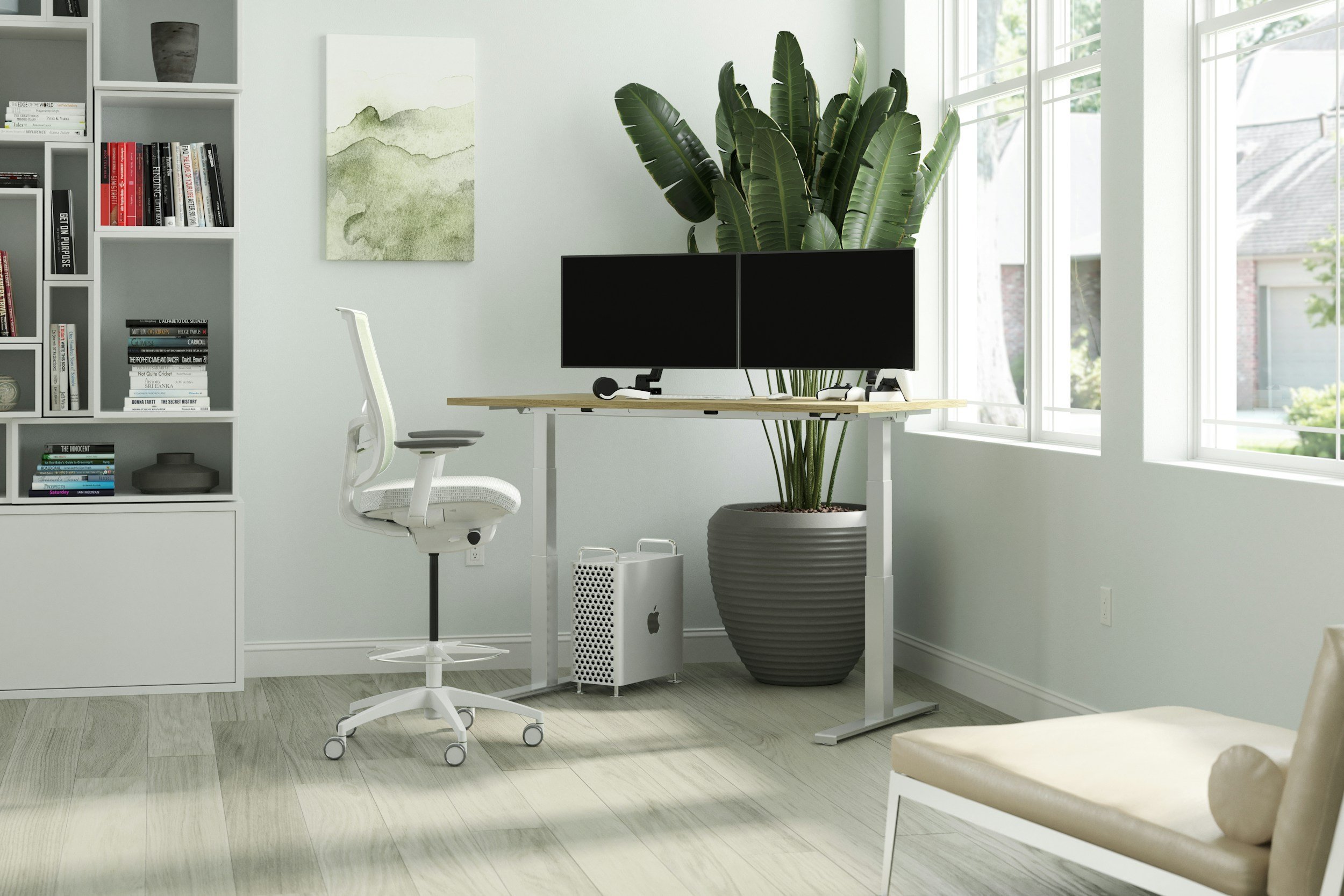
The Hulala Home adjustable standing desk answered these questions without drama. The height adjustment was quiet. Genuinely quiet, not office-quiet, but quiet enough to use without announcing it to everyone else in the building. The height range covered both a correctly calibrated seated position for my specific height and a comfortable standing position, which turned out to be different numbers than I would have guessed.
By the end of the first week, the mechanics had stopped being something I thought about. That is the first real change: the desk started to feel like furniture rather than equipment.
Week Two: The Physical Shifts Begin
The lower back improvement arrived faster than expected. By the middle of the second week, the ambient ache that had become so routine I had largely stopped noticing it had reduced to something close to nothing. Getting the seated height right, which the adjustable desk made possible in a way that a fixed-height desk never had, appeared to account for much of this improvement, even before any meaningful amount of standing had happened.
The post-lunch energy dip did not disappear. It is a biological phenomenon rather than a furniture problem. But its character changed. Standing up, raising the desk and continuing to work on a task that did not require intense concentration, provided a consistent, moderate energy shift that extended the useful afternoon hours by a meaningful amount. Not dramatically. But reliably, day after day, in a way that accumulated across the month into a genuine improvement in the quality of the working day.
The ease of the transition mattered here. The Hulala Home adjustable standing desk moves between heights quickly enough that the decision to stand is not a significant commitment, which means it actually happens, rather than being perpetually deferred.
Week Three: The Room Settles
Something happened in the third week that I had not anticipated: the desk started to look right. Not just accepted. Actually right, in the way that a piece of furniture that belongs in a room feels right rather than merely tolerated.
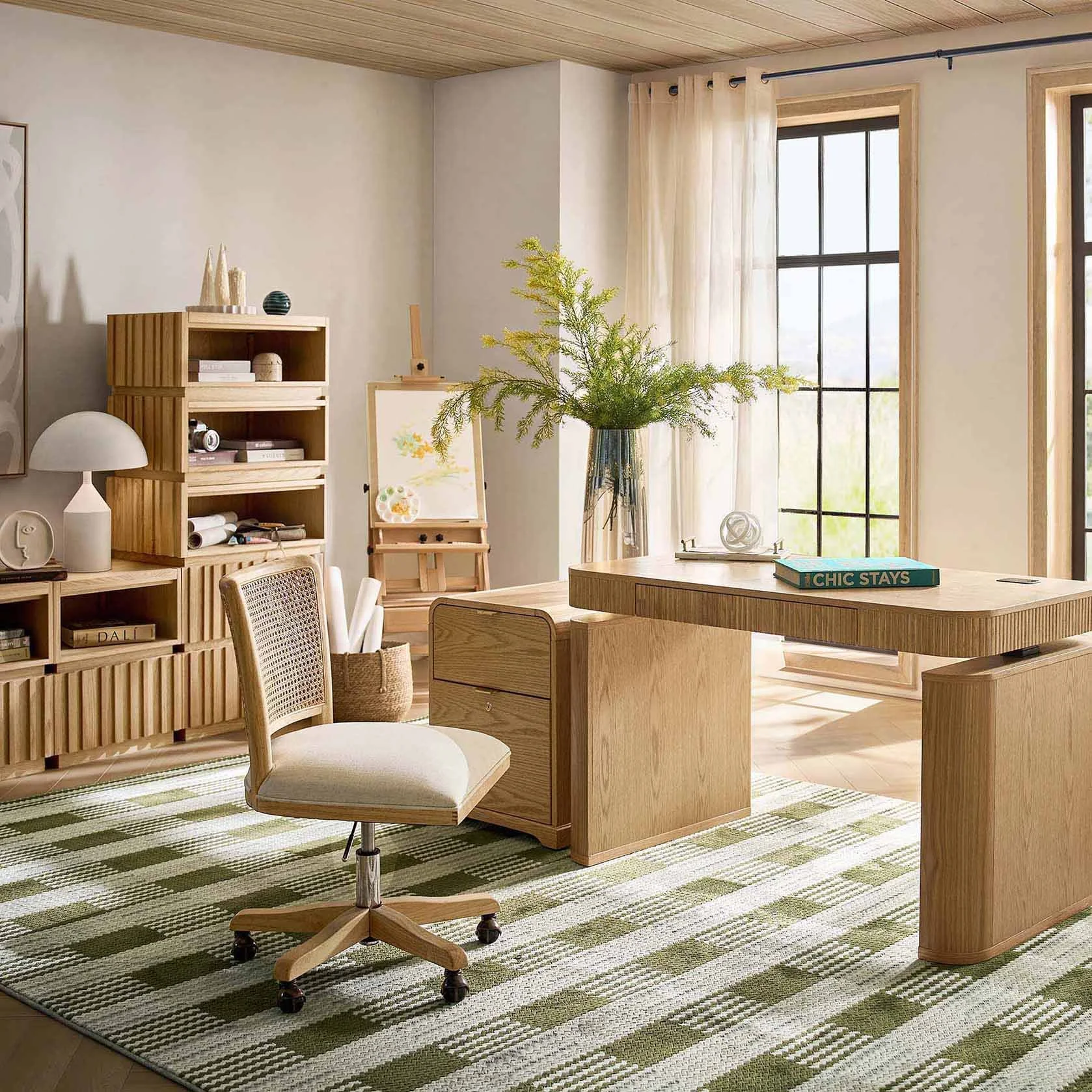
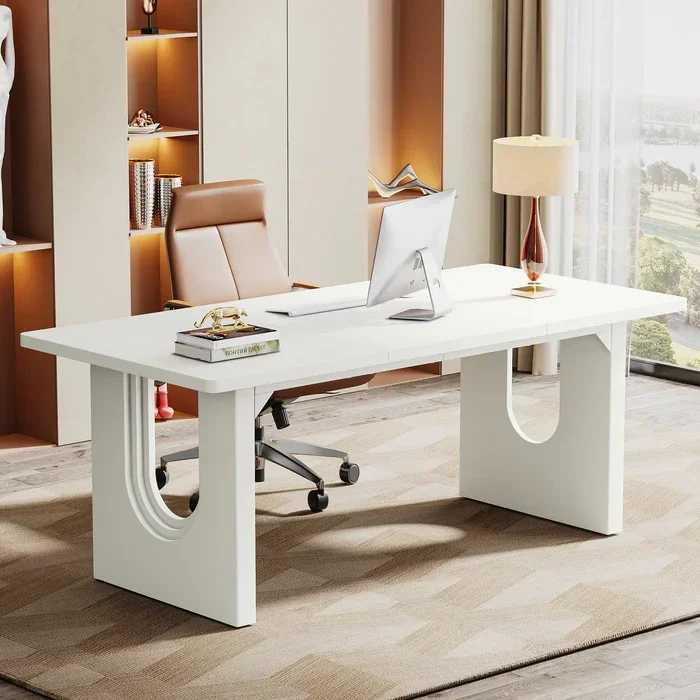
The warm wood surface and clean proportions of the Julia desk sit naturally in a flat that also holds bookshelves, a small sofa, and the accumulated personal objects of a life. At seven in the morning, before the screen is on, it reads as furniture. At seven in the evening, after the screen is off, it reads as furniture. This sounds like a low bar, but it is a bar that most standing desks fail to clear in a small domestic space. And clearing it makes the room better to be in for the large majority of the day when it is not functioning as a workstation.
For anyone who has ever looked at their home office setup and felt that the desk was making the room worse, the design approach behind the Hulala Home UK range is worth understanding. Aesthetics in a domestic context are not vanity. They are a practical concern.
Week Four: The New Normal
By the fourth week, the standing desk had stopped being a standing desk, a distinct, categorised object, and had become simply the desk. The habit of adjusting height throughout the day had become automatic, happening without deliberation in the same way that moving the chair back from the table happens without deliberation. The physical benefits had stabilised at a level that was genuinely better than before.
The flat had not been transformed. The working day had not been revolutionised. But both were measurably better, in the quiet, cumulative way that good furniture makes things better. Which is, when it comes down to it, exactly what a desk is supposed to do.
If you are a UK home worker who has been considering the switch and wondering whether it is actually worth it in a small space, the honest answer is yes, with the right desk. Hulala Home adjustable standing desk is where to start looking.
Stay up to date with our latest ideas!