The Timber Cladding Choices Defining UK Home and Garden Design in 2026
Explore the timber cladding trends shaping UK home and garden design in 2026, with stylish, durable options for modern outdoor and exterior spaces.

Exterior timber cladding has moved from a niche architectural material to a mainstream home design choice over the past decade. The range of species, profiles, and finish options available to UK homeowners has expanded significantly, and the design language of timber-clad exteriors — once the exclusive territory of architect-designed new builds — is now well established across residential extensions, garden rooms, outbuildings, and renovation projects of all scales and budgets.
Two materials in particular have defined the aesthetic direction of the best UK timber cladding projects in recent years: ThermoWood in triple shadow gap profile for contemporary exterior statements, and Nordic spruce for the broad middle of the market where quality and value need to work together. Understanding what each delivers — in terms of appearance, performance, and long-term maintenance — is the foundation of making the right material choice for any home or garden project.
ThermoWood Triple Shadow Gap: The Profile That Defines Contemporary UK Exteriors
The triple shadow gap profile has become the signature cladding detail of contemporary UK residential architecture. Its characteristic appearance — three parallel shadow lines running horizontally across each board, creating a layered visual rhythm that reads dramatically at distance and rewards close inspection with its precision — has appeared on everything from Passivhaus new builds to modest garden studio projects. The reason it has become so prevalent is simple: it is one of the few cladding profiles that looks genuinely different from standard horizontal boarding while being straightforwardly achievable within a normal construction budget.
When the base material is ThermoWood — thermally modified Nordic pine modified with heat and steam to achieve exceptional dimensional stability and durability — the combination delivers a facade that performs as well as it looks. ThermoWood's reduced moisture movement means the shadow lines remain crisp and consistent across seasonal cycles, rather than varying as the boards absorb and release moisture in the way untreated softwood would. The characteristic honey-brown colour weathers to a warm silver-grey that complements contemporary architecture beautifully, or can be maintained with periodic oiling for homeowners who prefer the original tone.
The 32x140mm dimension of the triple shadow gap profile gives it a substantial physical presence — boards with enough depth to cast real shadows and enough width to cover elevation efficiently without excessive board count. On a rear extension or garden room, a triple shadow gap ThermoWood elevation reads as deliberately designed rather than simply clad.
For current projects, ThermoWood triple shadow gap cladding boards are available from UK stock in 32x140mm — the standard specification for residential and garden building applications. The profile is supplied kiln-dried with technical data sheets, fixing guidance, and sample service available before ordering.
Nordic Spruce: The Versatile, Value-Conscious Choice
Where ThermoWood triple shadow gap makes an architectural statement, Nordic spruce cladding serves the broader market — homeowners who want the warmth and character of natural timber without the premium price point of thermally modified or naturally durable species. Used correctly and maintained appropriately, Nordic spruce delivers genuine aesthetic appeal and acceptable performance across a wide range of garden and home applications.
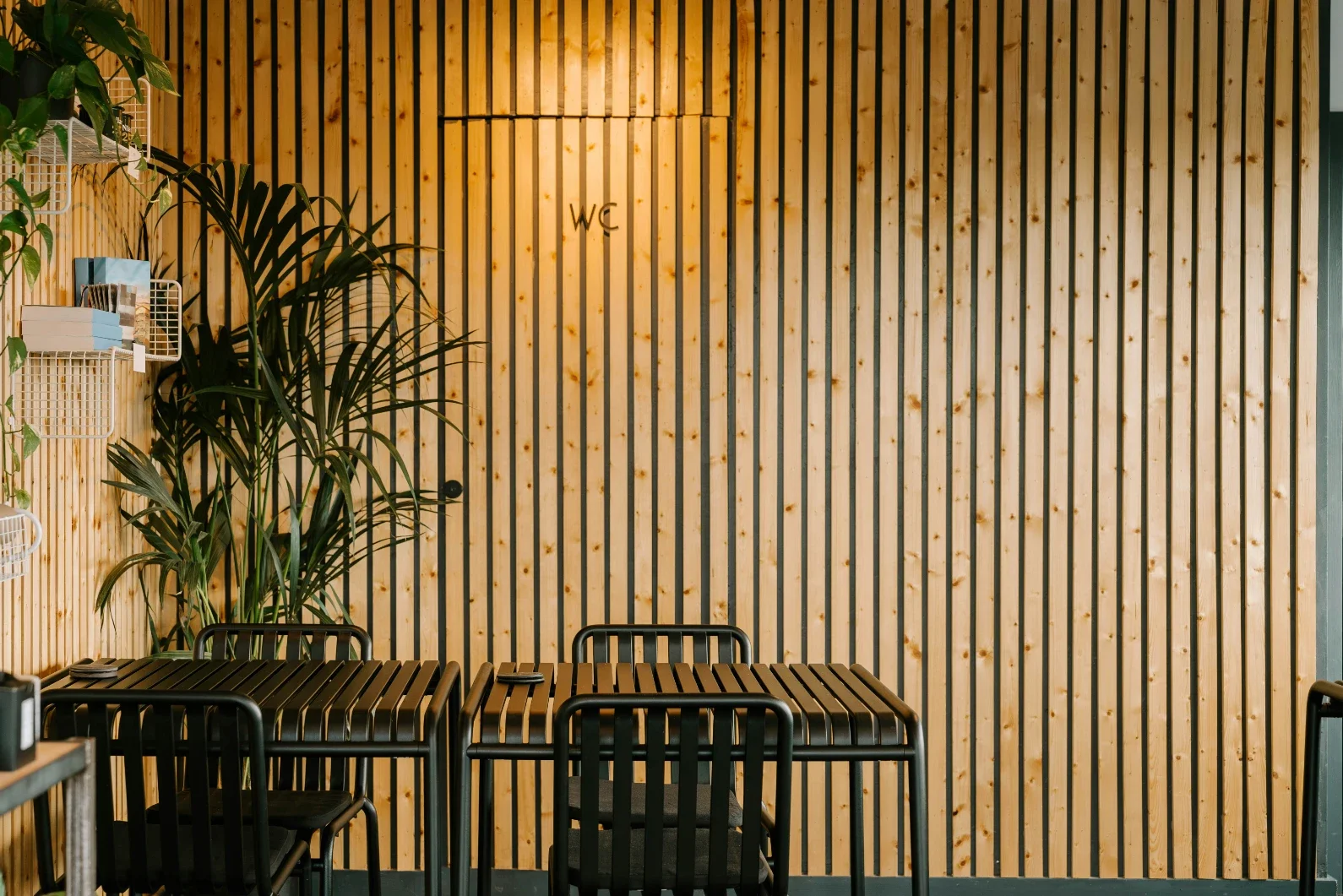
Nordic spruce grows across the boreal forests of Scandinavia and northern Europe, producing a tight-grained, pale timber with a clean, consistent appearance that accepts stain, paint, and oil finishes particularly well. Its natural colour — a warm creamy white — provides an excellent base for tinted exterior oils and stains that can be matched to specific design palettes. For homeowners and garden designers working to a specific colour scheme, this paint and stain receptiveness is a significant practical advantage over species with higher resin content that can interfere with coating adhesion.
The profile range for Nordic spruce is extensive — from traditional shiplap and feather edge boarding that suits cottage and vernacular styles, to tongue and groove, shadow gap, and rainscreen profiles that work equally well on contemporary applications. The material's versatility across aesthetic registers makes it the most widely applicable natural timber cladding species in the UK market.
The maintenance commitment for Nordic spruce is higher than for ThermoWood or naturally durable species like Siberian larch. An initial treatment before installation and a retreating programme every two to three years maintains the timber's protective surface and prevents the greening and checking that affects untreated spruce in UK exposure conditions. For garden buildings, sheds, and outbuildings where maintenance is straightforward and budget is the primary constraint, this commitment is entirely manageable.
The full range of Nordic spruce timber cladding UK profiles — including tongue and groove, double tongue and groove, shiplap, shadow gap, and rainscreen options — is available from UK stock in a range of lengths to minimise wastage on any project size. Pre-treated options are available for homeowners who want the treatment process handled before delivery.
Choosing Between the Two
The choice between ThermoWood and Nordic spruce for a home or garden project comes down to three questions: what is the maintenance commitment you are willing to make over the next decade, what is the aesthetic register the project is working in, and how does the upfront cost difference sit within the overall project budget?
For garden rooms, studios, and home offices that are used daily and form a significant part of the property's visual presentation, ThermoWood's lower maintenance requirement and premium aesthetic make the price difference a sound investment. For sheds, storage buildings, and secondary outbuildings where visual quality is important but not the primary driver, Nordic spruce maintained to a good standard delivers excellent results at a significantly lower supply cost.
The most important decision is not which species to choose but whether the installation is detailed correctly. Both materials perform best in a ventilated rainscreen system with adequate cavity depth, stainless steel fixings, and correct ground clearance. A correctly detailed Nordic spruce installation outlasts a poorly installed ThermoWood one every time — the quality of the system matters more than the quality of the boards alone.
Stay up to date with our latest ideas!