Learn how to choose the right foundation for your backyard outbuilding by comparing options for durability, stability, cost, and site conditions.

The right foundation for a backyard building comes down to four things: the size and weight of the structure, your soil and drainage, your local frost depth, and whether the building is permanent. For most small storage sheds, a compacted gravel pad is the easiest and most reliable base. Larger workshops, garages, or anything that holds heavy equipment usually calls for a concrete slab or concrete piers that reach below the frost line.
Get this part wrong and everything above it suffers. Doors start sticking, floors warp, the frame racks out of square, and rot creeps in from the ground up. Get it right and the building sits level and dry for decades with almost no attention. The good news is that you do not need to overbuild. You just need to match the base to the job.
Does a backyard outbuilding really need a foundation?
Yes. Almost any permanent outbuilding needs a foundation to stay level, dry, and pest free. Setting a building straight on bare soil traps moisture against the floor, invites termites and rot, and lets the ground shift it out of square within a season or two.
As you start collecting shed foundation ideas, keep one rule in mind that applies no matter which base you pick: the floor should sit at least four to six inches above grade. That gap keeps splashback, runoff, and snowmelt away from the wood and gives air a path to move underneath. A building that breathes lasts far longer than one sealed against wet dirt.
The two main foundation categories
Every shed foundation falls into one of two groups: on-grade or frost-proof. On-grade bases sit on top of the ground and work for most small to medium buildings. Frost-proof bases extend below the frost line and are built for larger, permanent structures or cold climates where the ground freezes and heaves.
On-grade options are faster, cheaper, and friendlier to a weekend build because there is little or no digging. Frost-proof options take more labor and usually concrete, but they will not lift and crack when the soil freezes. Knowing which category your project belongs in narrows the field before you ever pick a material.
Common foundation types for backyard buildings
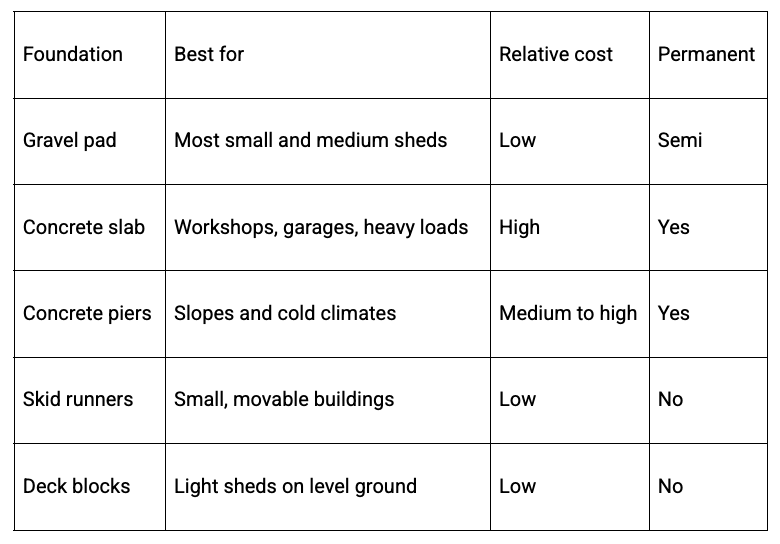
The most common bases are gravel pads, concrete slabs, concrete piers, skid foundations, and deck blocks. Each one fits a different size, budget, and site. Here is how they stack up:
Gravel pad: a leveled bed of compacted crushed stone held inside a pressure-treated timber frame; the best all-around choice for small and medium sheds thanks to strong drainage and a low price.
Concrete slab: a poured, reinforced pad that doubles as the floor; ideal for workshops, garages, and anything storing heavy equipment, though it is the priciest and hardest to move.
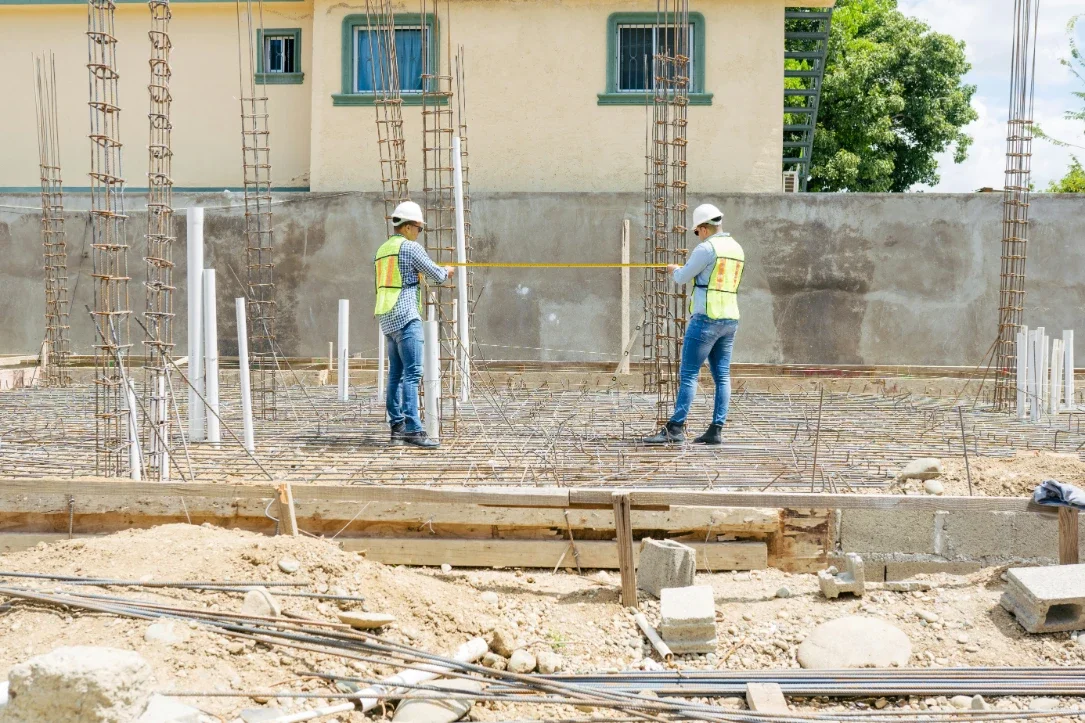
Concrete piers or footings: columns poured below the frost line; a smart fit for sloped lots and cold regions because they resist frost heave and keep the building off the ground.
Skid foundation: pressure-treated runners the building sits on; cheap, quick, and the only option you can drag to a new spot later.
Deck blocks: precast concrete blocks set on a gravel base; a simple, no-pour way to support small, lightweight sheds on fairly level ground.
Quick comparison of foundation types
How to choose the right base for your project
Pick your foundation by weighing four factors in order: size and weight, soil and drainage, climate and frost depth, and local code. Match those to your budget and the way you plan to use the space, and the right answer usually becomes obvious.
Walk through these questions before you buy a single bag of concrete:
How big and heavy is the building, and what goes inside it; a riding mower and a workbench need far more support than garden tools.
Does water drain away from the spot, or does it pool after rain; poor drainage rules out anything that traps moisture.
How deep does the ground freeze in your area; cold climates push you toward frost-proof piers or a monolithic slab.
Is the lot flat or sloped; a slope of more than a few inches favors adjustable piers over a flat pad.
Will you ever want to move the building; if so, skids or blocks keep that option open.
Check frost depth and permits first
Before you choose a base, confirm your local frost line and whether your build needs a permit. Many areas require a frost-proof foundation for sheds larger than 200 square feet or taller than a single story, and codes vary widely from one town to the next.
A quick call to your local building department saves real headaches. They will tell you the frost depth to dig past, the setbacks from property lines, and whether a permit and inspection apply. Skipping this step is how people end up tearing out finished work or paying fines they never budgeted for.
Common foundation mistakes to avoid
The biggest mistakes are setting a building on bare dirt, sizing the pad too small, and ignoring drainage. Each one shortens the life of the structure and is far cheaper to prevent than to repair.
Building directly on soil, which traps moisture and speeds up rot and pest damage.
Laying a pad flush with the walls instead of extending it a few inches past every side.
Forgetting to compact gravel in layers, which leads to settling and a base that drifts out of level.
Placing the building in a low spot where water collects after every storm.
When to bring in a professional
Call a pro when the project involves a concrete pour, a steep slope, or heavy loads. A gravel pad is a realistic weekend job, but a level, properly reinforced slab that will not crack is hard to get right without the gear and the experience.
This is where a specialist earns the cost. A concrete foundation contractor like Site Prep handles the whole groundwork stage, from clearing and grading the site to compacting the base and pouring a slab or piers that sit dead level and drain the way they should. Bringing in that kind of help on the harder builds means the foundation outlasts the structure it carries, and you sidestep the expensive surprises that tend to show up two or three winters later.
Whatever you are putting up, treat the base as the first and most important decision, not an afterthought. Spend your planning time below ground, and everything above it falls into place.
Stay up to date with our latest ideas!