Illuminating the Outdoors: High-Performance Lighting Trends for Modern Landscapes
Explore high performance outdoor lighting trends that enhance modern landscapes through energy efficiency, smart controls, safety, and striking visual impact.
Outdoor spaces have evolved from simple backyards into sophisticated extensions of the home. Whether it is a sprawling manicured garden or a minimalist patio, the demand for high-end renovations has skyrocketed. However, a common pitfall in landscape design is prioritizing aesthetics over functionality.
True luxury in garden design isn’t just about the shape of a fixture; it is about performance. As homeowners and landscape architects look to create lasting outdoor environments, the trend is shifting decidedly toward commercial-grade durability and advanced technology. Here is how to navigate the intersection of beauty and resilience in modern landscape lighting.
The Intersection of Aesthetics and Durability
For years, the residential market was flooded with plastic fixtures that looked pristine on the shelf but became brittle and faded after a single season of sun and rain. The modern standard has changed. The current trend borrows heavily from industrial applications, where failure is not an option.
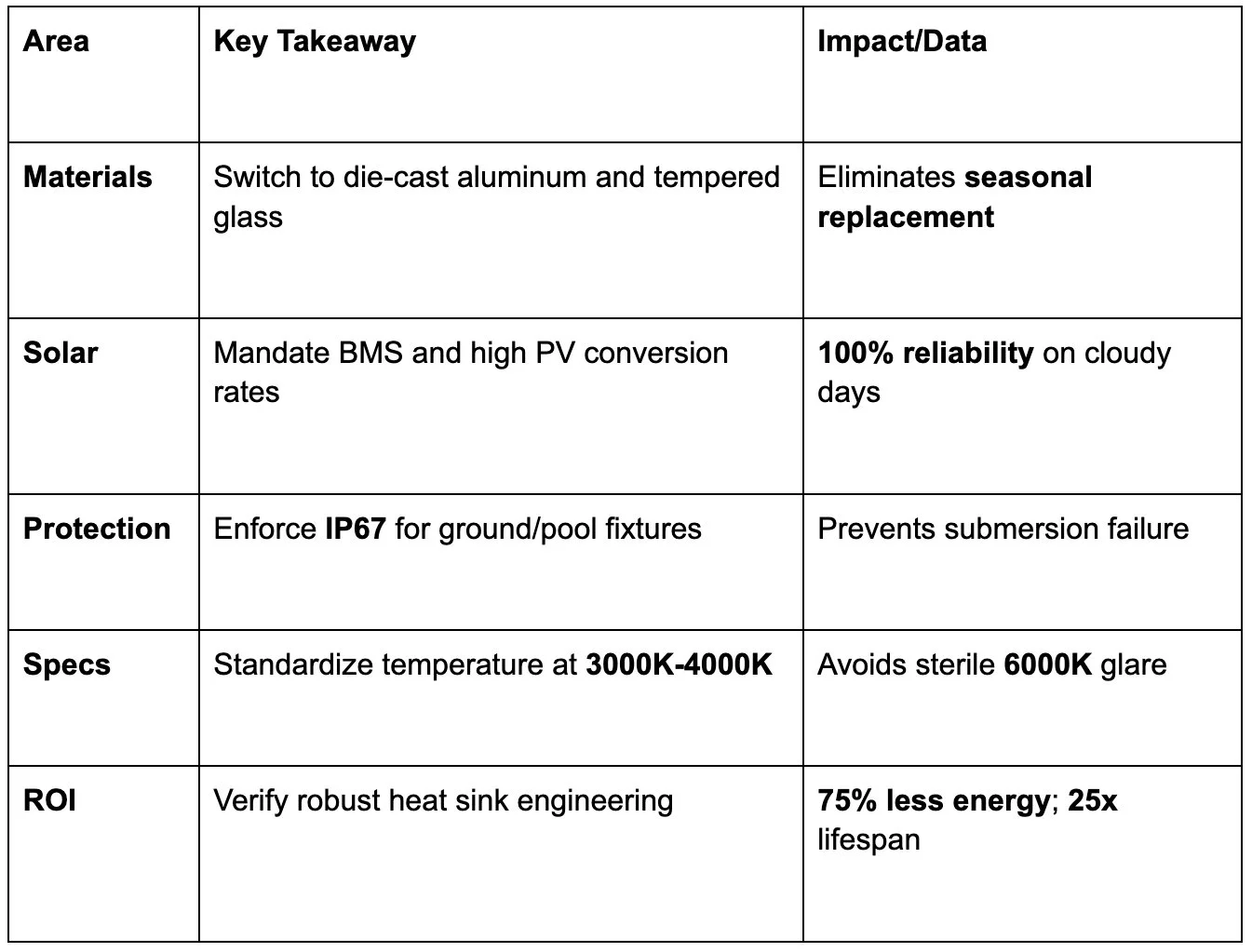
To achieve a high-end look that lasts, material selection is critical. We are seeing a move away from composites and toward die-cast aluminum and tempered glass. These materials allow for sleek, minimalist designs that do not compromise on structural integrity. When planning a landscape renovation, treat lighting as a permanent infrastructure investment rather than a decorative accessory.
Solar Technology: Moving Beyond the "Gimmick"
In the past, "solar garden lights" were synonymous with dim, bluish glows that faded within an hour of sunset. That era is over. Thanks to the electric vehicle industry driving battery innovation, outdoor solar solutions have undergone a massive technical leap.
Modern solar lighting systems rely heavily on the quality of their photovoltaic components and the durability of the housing. Unlike early consumer models, today’s top-tier solutions utilize high-pressure die-casting and advanced battery management systems (BMS) to prevent over-discharging. Leading manufacturers like Wosen have demonstrated that integrating industrial-grade aluminum housing with smart solar controllers can significantly extend the lifespan of outdoor fixtures, making them a viable option even for large-scale residential estates.
The key takeaway is efficiency: look for high photovoltaic conversion rates. This ensures that even on cloudy days, your landscape remains illuminated.
Understanding IP Ratings and Weather Resistance
If you are investing in outdoor lighting, you must speak the language of ingress protection (IP). This rating system defines how well a fixture seals out dust and water. For landscape lighting, a high IP rating is non-negotiable to prevent corrosion and electrical shorts.
Here is a breakdown of what to look for:
IP65: The baseline standard. It is dust-tight and protected against low-pressure water jets (rain/sprinklers). Suitable for general wall lights.
IP66: Protected against powerful water jets. Ideal for exposed areas facing heavy storms.
IP67: Can be temporarily submerged in water. This is essential for in-ground path lights or fixtures near pool decks where standing water might occur.
Strategic Placement for Security and Ambiance
Lighting a garden requires a dual mindset: security and mood. The most effective lighting plans layer these elements so they don't compete.
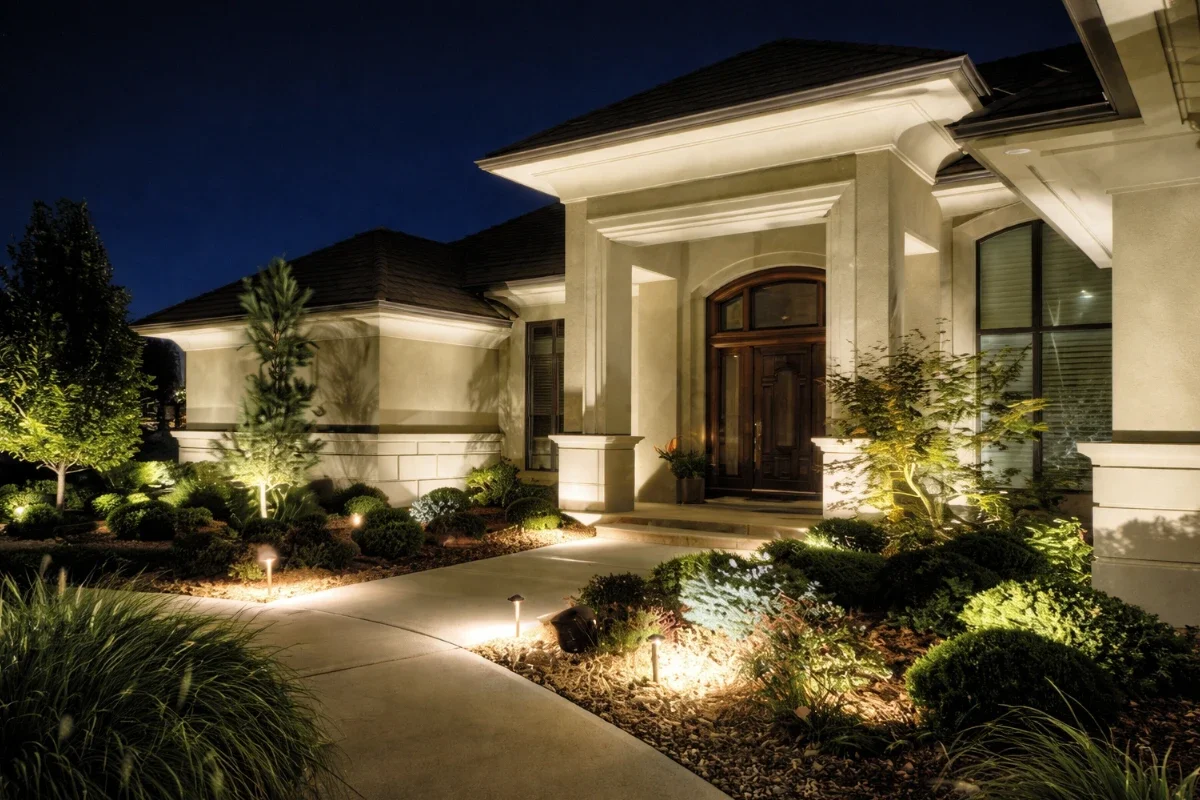
Security lighting (usually floodlights) should be positioned high and cover entry points. However, brightness doesn’t have to be blinding. Opt for wide-angle beams that eliminate dark corners without washing out the texture of the architecture.
Ambient lighting deals with color temperature. For residential landscapes, avoid the clinical "cool white" (6000K) often found in warehouses. Instead, aim for 3000K to 4000K (Warm White). This spectrum mimics the warmth of incandescent bulbs, highlighting foliage and stonework naturally while creating an inviting atmosphere for evening entertainment.
Key Takeaways
Maintenance and Longevity of LED Systems
The transition to LED has revolutionized maintenance cycles. Gone are the days of changing bulbs every few months. However, an LED fixture is effectively a computer chip; it needs protection to function correctly.
The longevity of an LED fixture is directly tied to its ability to dissipate heat. If heat gets trapped, the diode degrades rapidly. According to data from the U.S. Department of Energy, properly engineered LED lighting uses at least 75% less energy and lasts 25 times longer than incandescent lighting. This efficiency is only possible when the internal drivers are protected from overheating by well-designed heat sinks.
By choosing fixtures with superior thermal management and robust waterproofing, your landscape lighting will remain a brilliant asset to your home for years to come.
Stay up to date with our latest ideas!